Blog

  • Claire O’Neill dumped as COP26 president

    Claire O’Neill dumped as COP26 president

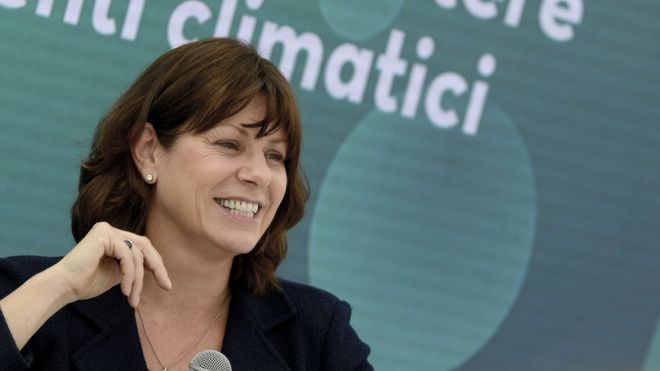
    The first thing that came to mind when I heard Claire O’Neill (formerly Perry, formerly my MP and formerly the minister for clean energy) had been dumped as president for this year’s crunch UN conference on climate change in Glasgow (COP26) was they couldn’t cope with a ballsy woman. Or should I say a titsy woman?

    According to The Guardian:
    “She also issued a putdown to David Davis when he confused her with another female Tory minister, Caroline Nokes. Referring to Davis’s previous campaigning slogan, she is reported to have told him: “David, let me help you: Caroline is a C cup, I am a double D.”

    I remember the sexist vitriol she suffered in the papers, and her edgy outbursts about giving blowjobs to have a say (a quote you could source back to original female hero Ripley in movie Aliens from 1986, and that was probably taken from a real world quote). The embarrassment was not because they were rude but because they put the reality of a woman working in Westminster under a harsh spotlight.

    After all, the current PM and his closest allies aren’t strangers to public gaffs and causing upsets when it suits, and yet they survive.

    Claire has been often, it seems to me, at odds with her role and the establishment. Sometimes she would totally toe the Tory whip line, to protect her position it seemed, and other times she would stick her neck out and rebel, as she did for a time over Brexit.

    She is a hard working and often effective advocate for the climate, instrumental in the net zero legislation, and yet, as a minister, also supported fracking and voted for the third Heathrow runway.

    Is it harder for a woman in Westminster, and harder for anyone trying to have a meaningful family life, to stay true to personal values (and keep their job) in an apparently toxic atmosphere of Punch and Judy politics?

    Former Labour Minister Harriet Harmon recounted at Swindon Festival of Literature that bunking off from an important Commons vote was okay for an extra-marital liaison but not for her child’s birthday.

    When Claire took a sabbatical from her cabinet ministerial position earlier this year due to a family illness, she told me in a CCL local meeting that MPs had no working rights and this was the first time this had been allowed, and only possible with the support of the then PM, Theresa May.

    Fast forward a few months to Boris’ new regime and she found herself relegated to the back benches.

    Whatever the real story behind Claire’s COP26 sacking, the political system needs to be less brutal, more nurturing. These are the people whose job is to care about our interests.

    Fixing the climate isn’t about finding the most economical solution, though we at CCL have to sometimes employ this argument. It’s not about tackling climate change because doing nothing is the most expensive option. To really stop causing this problem now, and different problems in the future, we have to be capable of empathy; to care for and respect ourselves and each other and our liveable world.

    And we, at Citizens’ Climate Lobby, have to leave bitter thoughts at our MP’s door when exploring that crucial common ground, and act how we wish it to be. Our caring and respectful actions and words will help make it so.

    Louisa Davison is on CCL’s Steering Committee. These are her personal opinions and not necessarily the official opinion of CCL.
  • The Climate Priorities of Danny Kruger

    The Climate Priorities of Danny Kruger

    The following was first published in Marlborough News Online and is effectively an open letter to the newly elected MP for the Devizes Constituency (which includes Marlborough).

    The election is over and, given its large majority in parliament, we’re likely to have a Conservative government for the next 5 years. At the same time, serious action on climate change needs to be taken within years, rather than decades, and so we must encourage the current government to take all the necessary steps. We don’t have the luxury of waiting for another government if you happen to not like the Boris Johnson one.

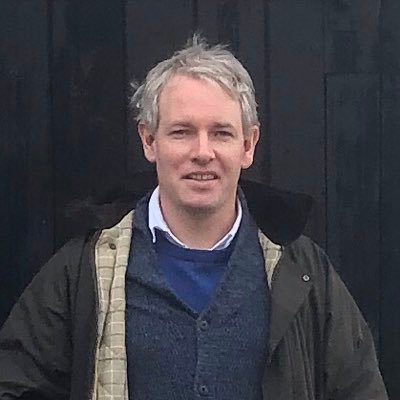
    I was therefore delighted when Danny Kruger dedicated his first blog, as our new Conservative MP, to the issue of climate change. I was also happy with his emphasis on the important role that innovation and free-market economics could play. There’s a Climate Crisis and we must throw everything we have at the problem.

    However, at the moment, you can make money from aggravating climate change (e.g. by finding oil) but you cannot make money from tackling climate change (e.g. by burying carbon dioxide underground). And guess what, our businesses therefore drive climate change because they’d go bust if they did anything else.

    So the markets themselves need to be changed and that can only be done through government policy. If it costs more money to pollute than it does to take climate action then climate action will follow. It’s therefore about taxing “bads” rather than “goods” but such taxes will have to be imposed in a way that does not hit the least well-off in our society. This is not difficult, as my previous column on returning climate-tax revenues to the population as a Climate Income discusses. It was great to see the Telegraph promoting this idea, too, in an article it published on Boxing Day.

    I’m also with Danny Kruger when he states, in his blog, that appropriate grazing methods can reduce (but not eliminate) the climate impact of livestock. But I disagree with his suggestion that grass-fed herds are the solution. To enhance burial of carbon in soils you need to use more radical approaches such as mob-grazing (cycling large herds through a number of small fields) and silvopasture (mixing grasslands, trees and livestock).

    I’ve got one final point of agreement with Danny but, this time, it’s somewhat reluctant. It concerns a comment he made at one of the hustings, leading up to the election, when he said he disliked the term “Climate Emergency”. This earned hisses from the audience but “emergency” is defined, in most dictionaries, as a situation which is both dangerous and unexpected. Climate change is not unexpected. Scientists have been accurately predicting the consequences of increased greenhouse gas levels since the 1890s (that’s not a typo). Perhaps “Climate Crisis” is a better phrase—“Crisis” is defined as a time of intense difficulty or danger. I think that describes the situation nicely.

    First Published in Marlborough News Online

  • Who’s best for the climate in UK elections?

    Who’s best for the climate in UK elections?

    Number one priority?

    Where did climate change feature in manifestos, and how often was it mentioned?

    This is not an analysis of how realistic or effective their policies could be – we’ll leave that up to you to decide.

    The parties that seemed to best understand climate change and how it impacts every aspect of life, referring to it throughout their manifestos, were the Green Party, Labour and the Liberal Democrats.

    Also read our post on how each party fared on climate income.

    Joint 1st – Green Party of England and Wales
    Climate = first out of five headline priorities

    Primary mechanism to tackle Climate Change: Green New Deal
    First mention is the second sentence (after Brexit) then throughout.
    Priorities in order: Green New Deal, Brexit, Democracy, Quality of Life (inc NHS/education/crime), Taxation
    ‘Above all, the climate and environmental emergency rages from the Amazon to the Arctic. The science is clear – the next ten years are probably the most important in our history.’
    Net zero greenhouse gas emissions (GHGs) by 2030.
    Track record: a Green Bristol councillor secured the first declaration of a climate emergency; Brighton MP Caroline Lucas kick started the climate change debates in parliament this year.

    Joint 1st – Labour Party
    Climate = first out of five headline priorities

    Primary mechanism to tackle Climate Change: Green Industrial Revolution
    First mention – second paragraph in foreword (after Brexit) then throughout.
    Priorities in order: a green Industrial Revolution, public services, poverty and inequality, Brexit, internationalism (inc defense)
    ‘This is our last chance to tackle the climate emergency.’
    Net zero GHGs – unclear – energy by 2030, food by 2040
    Track record – Created the Climate Change Act in 2008 and set up the Committee on Climate Change, and entered the UK into the EU emissions trading system in 2003.

    Joint third – Liberal Democrats
    Climate = Third and eighth out of eight headline priorities

    Primary mechanism to tackle Climate Change: Green Revolution
    First mention – first paragraph in foreword (after Brexit) fifth paragraph in introduction (after Brexit), then throughout.
    Priorities in order: Brexit, Economy, Education, Green Society/economy, Health care, fair society, rights and equality, better politics, international
    ‘We will deliver a ten-year emergency programme to cut emissions substantially straight away, and phase out emissions from the remaining hard-to-treat sectors by 2045 at the latest.’
    Net zero GHGs – by 2045 ‘at the latest’
    Track record‘Thanks to Liberal Democrat policies in government, the UK has made major strides in cutting emissions from power generation…’

    Joint Third – Plaid Cymru
    Climate = first of five ‘key priorities’

    Primary mechanism to tackle Climate Change: Welsh Green Jobs Revolution / Renewables Revolution
    First mention: although the Green Jobs Revolution is the number one priority, climate change itself is not mentioned until page 25, and then in detail on page 63.
    ‘We understand that climate change, together with the global collapse of biodiversity, is the defining challenge of our time.’
    Priorities in order: Green jobs, caring, families, housing, crime.
    Net zero GHGs: carbon-free / 100 percent self-sufficient in renewable energy by 2030
    Track record: While they were MPs, Plaid Cymru’s team recently received a 100% rating in the Guardian’s analysis of MPs’ records on 16 indicative climate votes between 2008 and 2018, reflecting our long-standing support for ambitious long-term climate targets.

    Fifth – Scottish National Party
    Climate = 10th out of 11 headline priorities

    Primary mechanism to tackle Climate Change: Green New Deal
    First mention: ‘Protect the environment’ is in the tenth paragraph; ‘climate emergency’ on page five.
    Priorities in order: Independence, Brexit, NHS, austerity, poverty/inequality, drugs, pensions, migration, devolution, climate emergency, Trident.
    Net Zero GHGs: latest 2045 ‘…a 75% reduction in emissions by 2030, net zero carbon emissions no later than 2040 and net zero of all emissions by 2045…’
    Track record: ‘Scotland has the world’s most ambitious emissions reductions targets in law’

    Sixth – Conservative and Unionist Party
    Climate = 16th out of 17 priorities

    Primary mechanism to tackle Climate Change: Environment Bill
    First mention – a reference to carbon emissions in the foreword, point six (‘My guarantee’, after Brexit, NHS, police, immigration, and education) and second page of the introduction. ‘Climate change’ is first mentioned specifically on page 12.
    Priorities in order: Brexit, ‘your priorities’, Britain’s potential (including the Environment Bill), international (including climate change), ‘put you first’.
    Net zero GHGs: 2050
    ‘…[dementia is] one of the ‘grand challenges’ that will define our future along with the impact of climate change or artificial intelligence.’
    ‘We will also prioritise the environment in the next Budget…’

    Track record: first in the world to enshrine in law a net zero GHG emissions target, established UK as the ‘world’s leader in offshore wind’, began the process for a Citizens’ Assembly for Climate Change, ‘doubled international Climate Finance.’

    Seventh – Democratic Unionist Party (Northern Ireland)
    Climate = 23rd to 25th out of 37 priorities

    Primary mechanism to tackle Climate Change: cleaner transport and cleaner air
    Priorities in order: NI Assembly, NHS, schools, economy, welfare, abortion and childcare, environment/agriculture/fishing, animal welfare, communities, crime
    First mention: net zero is mentioned in the manifesto summary, but not climate change specifically until page 18, and then only within the bounds of rural matters.
    Net Zero GHGs: net C02 by 2050

    Eighth – Brexit Party
    Climate = no priority

    Primary mechanism to tackle Climate Change: tree planting
    First mention – no mention
    Priorities in order: Brexit, political reform, investment, living costs, economy, immigration, NHS, education, housing
    ‘Invest in the Environment: in addition to planting millions of trees to capture CO2 we will promote a global initiative at the UN.’
    Net zero GHGs: no mention

    Want more?

    Carbon Brief – a very comprehensive manifesto comparison based on energy and climate change

    BBC – choose your beef and country

    Friends of the Earth – have your election candidates signed the climate pledge?

    Friends of the Earth Manifesto analysis has Labour on top

    Greenpeace analysis has the Green Party on top

  • COP 25 and a future for an international carbon market

    COP 25 and a future for an international carbon market

    Under the 1992 United Nations Framework Convention on Climate Change (UNFCCC), most countries are treaty-bound to avoid “dangerous climate change”. Countries who signed and ratified the 2015 Paris Accord then had to produce nationally defined contributions (NDCs) to meet the decarbonisation targets.

    As the twenty-fifth annual UN Conference of the Parties (COP) begins in Madrid, attention has been focused on Article 6 of the Paris Accord and how this may shape global carbon markets.

    Article 6 of the Paris Accord lays out an opportunity to implement the NDCs through cooperation mechanisms. These mechanisms seek to assist the existing targets and raise the ambition of future targets and forms the legal framework to allow market-based solutions, with an option for a common, cross-border carbon market potentially also linked to existing schemes such as the EU emissions trading system (ETS). This could be de-centralised through bi-lateral cooperation or centralised through an international body designated by COP. And another sub-section in Article 6 leaves the door open for non-market-based approaches although this has yet to be defined. The best way to proceed and enact this Article is to be decided at this year’s COP.

    This is in response to the virtual collapse of the previous regime- the clean development mechanism (CDM). This was the world’s only global system for trading carbon which was designed to allow developed countries to achieve compliance through purchasing offsets from CDM projects in developing countries. This collapse was brought about by a myriad of factors coming together, such as the US’ refusal to ratify Kyoto; emerging economies classified as developing, such as China and India, meaning they have no emission reduction targets; and the recession and Eurozone crisis throughout Europe.

    Eighty-eight of the countries that have continued to commit to the Paris Accord, representing more than half of global emissions, have stated that they plan to use or are using carbon pricing as a tool.

    Now, the question is whether the tool will be fit-for-purpose and be all-encompassing. There is potential to create a sensible international carbon trading market that is fair for all countries- whether their economies are developing or developed. The simplest, transparent and most complete solution is the Climate Income from the Citizens’ Climate Lobby.

    The UK is a successful case-study in implementing a carbon price that has the desired effect. The carbon price floor (CPF) policy was initiated to support the ETS in 2013 and since then electricity generation using coal has decreased to almost zero. However, the CPF only covers electricity generation, which is not the largest sector of emissions, and the pound per tonne of carbon dioxide (£/tCO2) was frozen at £18/tCO2 in 2016. Although the CPF worked as designed it could be more ambitious by targeting all sectors equally; using  pound per tonne of carbon dioxide equivalent (£/tCO2e) to also capture methane emissions and other greenhouse gases; and not allowing a freeze on the price, instead investing more into the alternatives that mature or returning the revenue collected to the public, such as the Climate Income.

    Climate Income works by, through new legislation, charging the businesses that extract or import fossil fuels, according to the amount they burn (£/CO2e). Import fees are levied on products imported from countries without a price on carbon along with rebates to UK industries exporting to those countries, discouraging businesses from relocating where they can emit more greenhouse gases.

    So, a global carbon market that encourages participation across all countries, taxes the emitters at source, gives the revenue back to the citizens of the country from which the tax was collected, and accounts for importing or exporting sources of emissions sounds like the way forward and hopefully this will be discussed and realised at COP 25 with a commitment to implement this essential global carbon market.

  • How can we change people’s minds

    How can we change people’s minds

    I caught this programme on Radio 4 last night and realised that this is really relevant to our campaigning. Personally when I’m talking to volunteers many of them say that their MP ‘won’t listen’ or ‘they don’t do anything’ however this programme gave me an insight into how we can all change and how we can use this research in our work with MPs and others.

    Here’s the link to the programme – it’s well worth a listen https://www.bbc.co.uk/programmes/m0009z89 (30 mins)

    Here’s the blurb:

    “There’s a widespread belief that there’s no point talking to people you disagree with because they will never change their minds. Everyone is too polarized and attempts to discuss will merely result in greater polarization. But the history of the world is defined by changes of mind –that’s how progress (or even regress) is made: shifts in political, cultural, scientific beliefs and paradigms. So how do we ever change our minds about something? What are the perspectives that foster constructive discussion and what conditions destroy it?

    “Margaret Heffernan talks to international academics at the forefront of research into new forms of democratic discourse, to journalists involved in facilitating national conversations and to members of the public who seized the opportunity to talk to a stranger with opposing political views.”

  • Climate change is a problem of injustice

    Climate change is a problem of injustice

    Climate change is essentially a problem of injustice. People are not sufficiently aware of this. Worse still, the theme of justice and responsibility is anxiously avoided in the climate debate. And when it is discussed the focus is on individual responsibility, ignoring the fact that there are people in positions of power who bear an infinitely greater burden of guilt. After all, those who help to maintain an unjust system are surely much more guilty than those who only do their best to live/survive in this system, aren’t they? But as has often been shown, exploiting guilt is a very efficient tactic for silencing people and allowing the impasse to continue. Very little has been achieved in 25 years, and global annual CO2 emissions continue to rise, precisely because this injustice is not being addressed:

    (more…)
  • Climate change is a problem of injustice

    Climate change is a problem of injustice

    Climate change is essentially a problem of injustice. People are not sufficiently aware of this. Worse still, the theme of justice and responsibility is anxiously avoided in the climate debate. And when it is discussed the focus is on individual responsibility, ignoring the fact that there are people in positions of power who bear an infinitely greater burden of guilt. After all, those who help to maintain an unjust system are surely much more guilty than those who only do their best to live/survive in this system, aren’t they? But as has often been shown, exploiting guilt is a very efficient tactic for silencing people and allowing the impasse to continue. Very little has been achieved in 25 years, and global annual CO2 emissions continue to rise, precisely because this injustice is not being addressed:

    Fossil fuel companies make billions of dollars, while their business is killing the planet, but they do not pay for the damage caused. It is the ordinary people who will suffer the consequences of climate change. It is the ordinary people who will have to pay the bill.

    We will have to pay in so many ways. Higher food prices. Damage to our homes from storms, floods and other extreme weather conditions. Deaths from heat waves. Extinction of plant and animal species. A sharp increase in the number of forest fires. Loss of our coastal cities due to rising sea levels. But also: we pay with a loss of happiness. Living in the knowledge that we are destroying our planet is hard to bear.

    This injustice continues, only to make a small group of extremely rich people even richer. It is effectively a transfer of money from the poor to the rich.

    There is a climate policy that can put an end to this injustice: the carbon fee and dividend. By making the big polluters pay for the damage they cause, and by giving that money back to the people, we reverse the money transfer and we restore the balance. When the balance is restored, the world will no longer choose the profits of a few super-rich to the detriment of the losses of billions of ordinary people. Then we will finally get rid of fossil fuels and stop climate change.

    You don’t have to take my word for it. Practically every economist in the world says the same thing: a carbon fee and dividend is essential to get climate change under control. In their words, it is correcting the biggest market failure in history. In January, 3,500 economists, including 27 Nobel Prize winners, published an open letter to advocate a carbon fee and dividend. If we listen to the experts, to the climate scientists, on climate change, is it not logical that we also take the advice of the experts – in other words, the economists – on climate policy into account?

    Recently, a few concerned European citizens set up a citizens’ committee and submitted a European Citizens’ Initiative  on the introduction of a carbon fee and dividend at the EU level. We need to collect a million signatures in one year to defend our proposal in the European Parliament.

    The price of the carbon caused by climate change must and will rise. Pollution can no longer be free. The carbon fee and dividend does this in a fair and transparent way, while putting real money in *your* pocket. Please help fight both climate change and injustice by taking 30 seconds to present this urgent, fair and important policy to the European Commission. Please share this message with everyone you know. Thank you.

  • Why the dividend?

    Why the dividend?

    This week, someone wrote to CCL UK, saying they would like to campaign for a carbon tax but wondered if the dividend was the best use of money.

    This is a great question – why isn’t the money raised used to subsidise, for example, public transport, or house insulation?

    Here’s a few ideas why and something to put in your letter to your MEPs (pick the ones which best fit with their political bent):

    • The dividend is really what CCL is all about – it will probably be impossible to have a high enough carbon tax to make a difference to emissions without the dividend. (It’s also important to say it’s one tool in a range of measures to tackle climate change, albeit a highly effective one which focuses on emissions.)
    • Politically – especially centre and right – raising taxes are unpopular. The dividend ensure that, overall, taxes do not go up.
    • Raising carbon taxes – especially for vehicle petrol, heating and home energy – will cause a lot of impoverishment to the most vulnerable in society. The dividend is divided equally amongst the population and is, effectively, a redistribution of money. This will mean low and middle income families are better off as they buy less stuff and therefore have a lower carbon footprint. So they will receive more in dividends than they will spend on the inevitable higher prices, thus protecting them from impoverishment.
    • As a result, it rewards those who keep their carbon footprint low.
    • It does not judge people on their personal choices, or expect everyone doing their bit to change the world (it won’t) but pushes business and the economy into zero carbon options.
    • It taxes technology on emissions, rather than what looks like the shiny new technology toy or on a limited range of emissions (diesel cars?), thus encouraging true zero greenhouse gas solutions.

    Write to your MEPs about supporting an EU-wide Climate Income AKA carbon fee and dividend for our latest campaign.

    climateincome.org

  • Carbon pricing after Brexit

    Carbon pricing after Brexit

    The Government has been asking people to submit ideas for what kind of carbon pricing we should put in place when we leave the European Union.

    At the moment we are part of the European Union’s Emissions Trading System (EU ETS) and we also have our own carbon tax, the Carbon Price Floor (CPF), that comes into play when the fluctuating EU ETS price drops below £18 per tonne.

    (more…)
  • Campaign: government consultation

    Campaign: government consultation

    Respond to the Government consultation on the best way to tax fossil fuels

    The Government is currently consulting on carbon pricing, in other words, the best way to price the burning of fossil fuels out of our economy.

    The more emails they receive by 11th July, the more likely they are to take notice

    What to do:

    Email [email protected], and copy in your MP

    Include in your email:-

    • Who you are – a concerned citizen, a business owner, a business representative, an organisation or group?
    • That carbon fee and dividend, as a carbon pricing policy, could cut greenhouse gas emissions by 33 percent in nine years.
    • It would protect poor and middle income households and boost the economy.
    • This would make a huge contribution to Net Zero greenhouse gas emissions, much more effective than sticking with the EU Emissions Trading Scheme.
    • Finish with your name, who you represent if applicable (eg business, organisation, charity) and your home address and, if applicable, your work address

    The consultation closes on 11 July 2019.

    We want a much harder-hitting fee on fossil fuels than we already have (petrol duty/road tax/EU ETS) and we can’t do this without a dividend to soften the blow on low and middle income families in particular.

    The more emails they receive at [email protected] – from individuals, activists, charities, business owners, etc, YOU! – the more chance we will have for a carbon fee that really cuts down emissions.