Blog

  • Good COP, Bad COP?

    COP26 Logo

    My confident prediction (for the up-coming climate conference, COP26) is that at least one national paper will use the above headline on the last day of the conference on Nov 12th.  If the final outcome is a bit of a fudge then maybe we’ll also get “COP out” whilst, if things go badly, we may end up with “not much COP”.  The Sun will, of course, go with “COP off” regardless of what happens.

    Hopefully, though, COP26 will see the world’s nations providing updated NDCs (their plans for emissions reductions over coming decades) and a clear agreement on how to monitor progress. So good COP, I hope!

    From CCL’s point of view the real work will start after that. Our flagship policy, of carbon fee and dividend (CF&D), is the most economically-efficient way for nations to achieve their NDC-objectives in a just and equitable way. I think our mission, over the months leading up to COP26, should be to try and get CF&D onto the agenda as the tool for turning good-COP-intentions into significant climate progress.

    So how do we do that?

    We need to be there and we need to prepare the ground. CCL will be there in the shape of Citizens Climate Education which has recognized observer status and should allow, perhaps, 5-10 CCL members from around the world to go. In addition, I’ve contacted the Cabinet Office (who are running the UK organization of COP) to request that we are given additional access as a UK-based NGO. I’ll let you all know if/when I hear anything.

    Our Glasgow-based members can also attend as volunteers. Go to https://ukcop26.org/the-conference/get-involved/ and take a look. This is an excellent way to get a few more CCL members involved and a great opportunity to be part of an historically important event.

    To prepare the ground, it will help to have a clear, simple “ask”—a short statement of what we’re looking for. What we’re looking for, of course, is widespread adoption of CF&D but, as I’m sure many of you have found out, getting across all the finer points of this policy is not straight-forward. Can we engage with others better by asking something simpler? Something like “can we make it cheaper to not pollute than it is to pollute?”

    I’m sure many of you won’t like that; it cuts out too much of what matters to us. But we have hundreds of members and I’m certain than someone out there can do better. So, I’d like to kick off COP-preparation with a competition. Send suggestions of what our “ask” should be. Just write it in the comment box below. If you can do that by Feb 15th that would be great. I’ll then read out the best ones at our next national meeting on Feb 16th.

  • Encouraging article on CF&D in The Guardian.

    Encouraging article on CF&D in The Guardian.

    Today, the 5th January 2021, there is an article in The Guardian endorsing CF&D as the best way to tax carbon, promote decarbonisation and create a fairer post pandemic world! It will be interesting to see the reaction to this article, it may signal wider acceptance of the benefits of CF&D across the political spectrum.

    In the article in the Opinion section of the Guardian Online (5/1/2021), Henry D Jacoby, Emiritus Professor of Management at MIT and former co-director of the MIT joint program on the science and policy of global change, gives an good summary of the CF&D policy, which he calls

    “so elegant that it seems too good to be true”. 

    Jacoby also discusses the main stumbling block for the promotion of CF&D, namely the public and governmental perception of the role of taxation. However he argues that, as governments are all having to go outside their policy comfort zones to mitigate the effects of the pandemic, now may be the best time for a radical new approach to carbon taxation….

    But if now isn’t the time to try bold new solutions – when we’ve seen that governments can move mountains in the right circumstances – then when is? And though it looks radical, the dividend really is just a rather elegant solution to a major problem, which neatly circumvents many of the usual political objections to increased taxation. It might even be the first highly popular tax.

    Happily I managed to get a letter about this article published in the Guardian on the 7th January, despite the tumultuous events over the pond!..

    In his article “There’s a simple way to green the economy – and it involves cash prizes for all (5/1/21)”Harold D Jacoby gives a brilliant analysis of the benefits of a Carbon Fee or Dividend (or Climate Income) carbon pricing policy and why there are some psychological barriers to its wider adoption. Citizens Climate Lobby is an international grassroots environmental group which has been respectfully encouraging politicians to consider adopting Carbon Fee and Dividend since 2007. 

    CF&D has successfully been adapted in Canada and Switzerland (although Switzerland does not currently tax fuel for energy while it moves towards the development of more renewable energy systems). Canadians could have replaced its implementer, Trudeau, last year and ditch the policy, they didn’t…. 

    Our Government acknowledged the merits of the tax in its recent Carbon Pricing Report but there is a psychological barrier as Jacoby points out…  Treasury doesn’t like hypothecated taxes or dividends! We at Citizens Climate Lobby UK are working hard to change their mind!. Do take a look at our website and consider supporting us.

    Catherine Dawson,

    Citizens Climate Lobby UK

  • 10 Point Plan for green recovery?

    10 Point Plan for green recovery?

    Ahead of the ratifying its Paris Agreement targets (NDCs – Nationally Determined Targets) on 12th December, the UK government have released its ’10 Point Plan for a Green Industrial Revolution’.

    Top of the list is power in the form of offshore wind, hydrogen and nuclear. Transport is highlighted through electric vehicles – and the headline-grabbing phasing out of combustion engines by 2030 – public transport, cycling and walking, and, the elusive ones, ‘Jet Zero’ and shipping. The big emitter, home and business heating, is covered via insulation and heat pumps. Finally, carbon capture and storage development, ‘nature’ (tree planting and conservation), and green innovation.

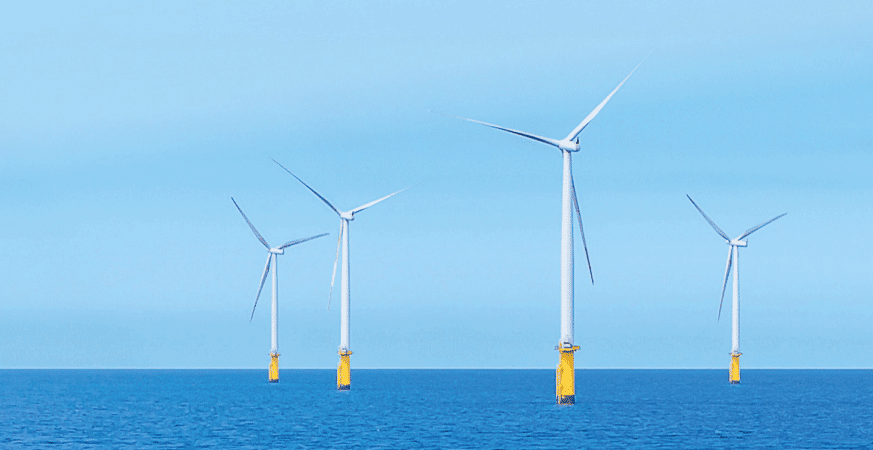
    10 Point Plan offshore wind image

    Conspicuous by its absence in the overview was no reference to ‘climate change’ and, instead, ‘net zero’. Also ignored was urban air pollution and, instead, the Conservative-friendly ‘nature’.

    Carbon brief covers the range of media reaction, and the tempering by the Chancellor’s spending review this week, which cut foreign aid (which may hamper beneficiary countries from investing in their own green revolution and sully the UK’s influence) and pledged a big spend on road building.

    Although Corunavirus may have caused emissions to fall for a while it now threatens the aeroplane’s major alternative, Eurostar, which is currently running at 1 percent of its usual capacity and is asking the government for the same emergency deal as airlines. Covid-19 is also, according to a government adviser in a meeting CCL attended this week, causing an amplification of short termism by government, who now approaches policy on a week-by-week basis – worrying for the kind of longterm vision required to fix climate change.

    Meanwhile, the Climate Coalition is drumming up support for its own Ten Point Plan, aimed at COP26 (but no mention of a carbon price) as is ZeroC which launched its declaration in favour of a carbon charge.

  • The $5,000,000,000,000 Lie……Stephen Fry talks about the errors in the Michael Moore film, Planet of the Humans, and says not taxing carbon is a ‘much larger cover up’.

    The $5,000,000,000,000 Lie……Stephen Fry talks about the errors in the Michael Moore film, Planet of the Humans, and says not taxing carbon is a ‘much larger cover up’.

    This 15 minute You Tube film is a brilliant endorsement of carbon taxation in general and CF&D in particular (although Stephen Fry doesn’t name the policy as such). He points out that 97% of scientists agree that climate change is caused by humans and the IMF states that a 75$per tonne tax on carbon would keep global warming at under 2 degrees! He states that the IMF also claimed that if prices had been corrected in 2015, global carbon dioxide emissions would be 28% lower the same affect of removing all transport emissions, the economy would have grown faster and the death rate would have been halved!

    A great You Tube film to watch and good ammo for the climate deniers in your life! Do add a comment as this is an easy way to make people aware of CCL as an example I have posted this in response to……


    Any carbon tax is a direct tax on the working class make no mistake….

    Carbon Fee and Dividend or Climate Income taxes carbon production at source, it gradually increases so it becomes cheaper to develop renewables. The tax goes back to the citizen as a dividend which offsets the rising price of carbon in the interim. This is the policy Canada and Switzerland use. Unlike current green tariffs it doesn’t penalise the consumer and would make electricity cheaper than gas, thus, for example benefiting people having to use expensive electricity in UK social housing as well as being a market led method of encouraging decarbonisation and making carbon capture cost effective. Please see websites by Citizen’s Climate Lobbies such as https://test.citizensclimatelobby.uk/

    Show less

  • Very cogent argument for CF&D by a member of the centre-right think tank, Centre for Policy Studies. Useful information if you plan to lobby a Conservative MP!

    Very cogent argument for CF&D by a member of the centre-right think tank, Centre for Policy Studies. Useful information if you plan to lobby a Conservative MP!

    This article comes from a centre-right website CapX which…

    was founded to make the case for popular capitalism: now more than ever, it is vital that the case is made for markets, innovation and competition, and for policies that deliver for the masses as well as the elites.

    To that end, our team monitors thousands of news sources, blogs, academic papers and think tank publications to find the day’s most interesting ideas and most important facts and trends. We also commission opinion and analysis pieces by leading experts – though the views contained in any such article are entirely the author’s own.

    The author, Eamonn Ives, is a member of the centre right think tank the Centre for Policy Studies, specialising in energy and environmental policy. He also sits on the advisory board of Climate Assembly UK, and previously worked as a Researcher for Bright Blue, where he authored five publications.

    Eamonn adopts a techno-optimist approach to environmental issues, grounded in laissez faire economics twinned with proportionate government intervention to overcome challenges such as climate change, air pollution, and resource use. He is also interested in transport policy, urbanism, and innovation.

    Eamonn writes that….

    As temperatures outside begin to fall, the Prime Minister has detailed how Britain will help stop them heating up on a global scale. Yes, the long awaited ten-point climate plan is with us at long last – mapping out both policies and funding pots to limit the nation’s greenhouse gas emissions.

    Much of what it said was nothing new – we already knew what the plan’s broad-brush strokes would be thanks to plenty of pre-briefing in the media and other channels.

    To further decarbonise power, a big push is to be made on offshore wind, quadrupling how much electricity we produce via maritime turbines to 40GW by 2030. Support is coming for nuclear power, with a particular focus on developing advanced reactors and smaller, cheaper, modular units. Efficiency upgrades for public sector buildings and domestic properties, meanwhile, will limit the amount of energy we need to produce in the first place.

    To clean up transport, the big news was that 2030 will indeed mark the end of the road for sales of new petrol and diesel cars and vans (with sales of the best hybrid models ending in 2035). Money has been made available to improve public transport, get more of us walking and cycling, and for research into cutting emissions in hard-to-reach transport modes, such as shipping and aviation.

    To green our industrial processes, investments will be made in hydrogen – which will also be deployed in domestic heating and heavy transport. R&D funding for carbon capture and storage technologies should help address emissions in the thorniest industries, such as cement and chemicals production.

    Plans to plant 30,000 hectares of tress every year will lock up more of the carbon already in the atmosphere while providing other benefits like habitat restoration and flood defences. Finally, the Government hopes that new rules will make the City of London the global centre for green finance and carbon offsetting markets.

    One cannot knock the Government’s ambition – the plan looks across the board and leaves little out of its scope. The money, regulatory provisions, and redoubled Government energy behind tackling climate change should all combine to getting the UK closer to its net zero goal – which it legislated for last year.

    But amid the flurry of spending promises and new targets, it was one seemingly unassuming line in the PM’s FT article – where the plan was first released – which piqued my attention. A cursory mention is given to the “carbon prices we will put on emissions”. If we assume this to mean further work is in the pipeline for carbon pricing across the economy, that could spell very good news indeed.

    As Rachel Wolf – co-author of the Government’s 2019 election winning manifesto – has discussed elsewhere on this website, carbon pricing makes those who bring carbon into the economy financially responsible for the damage it does to our climate. Simply put, carbon pricing would mean fossil fuel companies face a per tonne charge on the carbon dioxide their products will eventually release.

    We already have some carbon pricing – either explicitly, such as on electricity, or via rough proxies, such as fuel duty. But the current framework is confused – pockmarked by exemptions like different rates depending on where the carbon is emitted.

    This is regrettable, because as countless eminent economists and climate campaigners will attest, carbon pricing is conceivably the single best way of cracking down on emissions. Importantly, it does so in a way which is economically efficient, steering people towards addressing the most solvable problems first for the lowest cost, and then working towards tackling more complicated matters. It takes power away from vested interests who lobby politicians and civil servants to favour their clients’ pet projects over genuine climate solutions. If the revenues of carbon pricing were recycled back to citizens, it could be made socially progressive, and ensure that climate action is not shouldered by those with the least ability to bear it.

    Without a robust, simplified, and comprehensive price on carbon, the Government is depriving itself of a powerful tool to mitigate climate change – binding its hands and instead opting for more expensive, less effective policies.

    An 11-point plan might not be as media friendly, but bringing carbon pricing into the fold could take the PM’s strategy up a notch. The Government should waste no time in doing just that.


  • Writing to your MP about the Climate Coalition 10 Point plan – a great opportunity to remind them of the benefits of CF&D which they have already acknowledged!

    Writing to your MP about the Climate Coalition 10 Point plan – a great opportunity to remind them of the benefits of CF&D which they have already acknowledged!

    Many members may have received an email from the Climate Coalition requesting that they email their MP about the Coalition’s 10 point plan, (or could go to the website and find out about how to get involved).

    There seems to be no place for easily mentioning the benefits of CF&D in the email template. I decided to add a piece after my name, so it is right at the start of the email. I have also used the government’s own words from the carbon pricing policy report to mention the benefits of CF&D! This is an easy way to remind MPs that the government itself is aware of the advantages of using CF&D to finance the move to net zero and beyond!

    My name is Catherine Dawson.  I am also a member of Citizens Climate Lobby UK  and have written to you about the benefits of Carbon Fee and Dividend and was involved in the Time is Now Zoom meeting in June. As you are aware the Government in  its report on carbon pricing policy acknowledged that …..Placing a price on carbon creates the incentive for emissions to be reduced in a cost effective and technology-neutral way, while mobilising the private sector to invest in emissions reduction technologies and measures…..  It would make it possible to achieve many aspects of the suggested ten point plan without crippling the economy or deterring the market led economic model.

  • Leading scientists back promoting the use of carbon capture technology.

    A article in the Guardian (13/11/20) interviewing Michael Mann (author of the ‘hockey stick study) cites a letter signed by many scientists and activists, including James Hansen, which states that carbon capture technology, derided by many climate activists, has to be part of the solution. The beauty of CF&D, of course is that carbon emitting industries would get their money back in saved tariffs so it becomes cost effective…..

    Leading scientists, academics and campaigners have called on governments and businesses to go beyond “net zero” in their efforts to tackle the escalating climate and ecological crisis.

    The former archbishop of Canterbury Rowan Williams and the leading climate scientist Michael Mann are among a group of prominent environmentalists calling for the “restoration of the climate” by removing “huge amounts of greenhouse gases from the atmosphere”.

    Net zero targets have been a focus of governments, local authorities and campaigners in their attempts to address global heating. The authors of Friday’s letter, however, say that although stopping emissions is “a necessary prerequisite”, governments and businesses must be more ambitious and work to “restore the climate” to as safe a level as possible.

    “The climate crisis is here now,” … “No matter how quickly we reach zero emissions, the terrible impacts of the climate crisis will not just go away … As such, no matter how quickly it is done, solely cutting emissions is not enough.”Hitting net zero is not enough – we must restore the climate.

    The idea of removing emissions from the atmosphere – either directly from the air or by capturing it from power plants – has been a strongly debated subject among environmentalists and engineers for years.

    Critics point out that it has proved difficult to replicate the technology at scale and that constructing the necessary machinery would itself be environmentally damaging.

    Many fear that the idea of carbon capture is a “technological fix” used as an excuse by corporations which are opposed to the radical changes needed to move to a zero-carbon economy. However, there is a growing body of evidence that natural solutions – protecting and restoring natural forests and habitats and allowing native trees to repopulate deforested land – could help remove large amounts of carbon.

    The letter, which is also signed by the Guardian columnist George Monbiot and several leading members of the global school climate strike movement, said their call for restoration was not about “promoting one specific removal technique, but supporting the basic aim of trying to restore the climate”.

    The letter adds: “We urge activists to start including restoration in their campaigning. We urge governments and companies to start acting, not only to reach net zero as soon as possible, but to achieve restoration as well. And we urge every citizen to do what they can to make the dream of restoration a reality.”

    Mann recently stated that it would be game over for the climate if Trump won again, luckily that scenario has been averted, though he has yet to concede… In an article in the Guardian (2/10/20) about the threat of Trump, Mann did, however, state that there is some good news which offers hope if we act now….

    ‘Our destiny is determined by our behavior’

    Fortunately, there is encouraging news about climate science as well. It was long thought that Earth’s climate system carried a substantial lag effect, mainly because carbon dioxide remains in the atmosphere, trapping heat, for many decades after being emitted. Even if all CO2 emissions were halted overnight, global temperatures would keep rising and heatwaves, droughts, storms and other impacts would keep intensifying “for about 25 to 30 years”, Sir David King, the former chief science advisor to the British government, said in 2006.

    Mann says research over the last decade has overturned this interpretation. Using new, more elaborate computer models equipped with an interactive carbon cycle, “what we now understand is that if you stop emitting carbon right now … the oceans start to take up carbon more rapidly,” Mann says. Such ocean storage of CO2 “mostly” offsets the warming effect of the CO2 that still remains in the atmosphere. Thus, the actual lag between halting CO2 emissions and halting temperature rise is not 25 to 30 years, he explains, but “more like three to five years”.

    This is “a dramatic change in our understanding” of the climate system that gives humans “more agency”, says Mann. Rather than being locked into decades of inexorably rising temperatures, humans can turn down the heat almost immediately by slashing emissions promptly. “Our destiny is determined by our behavior,” says Mann, a fact he finds “empowering”.

    This reprieve will not necessarily spare polar ice sheets or evade tipping points that cannot be recrossed, the scientist cautions, and Earth is already experiencing “much more extreme weather … than we expected 10 years ago”. Greenland and Arctic ice is already melting after the current temperature rise of 1C, or 2.7F, above pre-industrial levels, and it will continue melting even without further warming. The resulting possibility of “massive sea level rise” is one example of why Mann says that humanity is “walking out on to a minefield” of tipping points: “The more we warm the planet, the more of those unwelcome surprises we might encounter.

  • Autumn Campaign  – Chance for the Government to implement a better form of carbon taxation, aka CF&D!

    Autumn Campaign – Chance for the Government to implement a better form of carbon taxation, aka CF&D!

    As you read this, the Government is writing the rules for the UK economy, post-Brexit. 

    As we leave the EU carbon-pricing scheme (the ETS), this is an unprecedented moment to push for Carbon Fee & Dividend (the official term for Climate Income).
     
    Choose your Action – or more than 1!
     1)  Write to your MP
     Point out that leaving the EU ETS offers the chance to shift to a simpler, more effective, fairer and less costly method of carbon-pricing: Carbon Fee & Dividend.  Emphasize that, unlike the ETS, CF&D will include the whole economy, provide a clear and predictable signal to industry, maximize public support, and shelter those on low incomes.
     You can also mention that CCL EU has established that, if necessary during a transition period,  CF&D can operate alongside a UK ETS.
     
    Ask for your letter to be forwarded to the ministers of the all the relevant departments:
     Alok Sharma, Secretary of State for BEIS (Business, Energy and Industrial Strategy),
    George Eustace, Secretary of State for the Environment, Food and Rural Affairs,
    Rishi Sunak, Chancelor of the Exchequer. 
    Remind your MP that the Government has accepted that CF&D is a good idea, as do 27 Nobel-prize-winning economists https://www.econstatement.org.
     
    Ask for a response, stressing  the urgent need for a green recovery that will benefit the whole economy and secure our future.
     
     2) Meet your MP
    If at all possible, meet your MP to show the strength of your concern, (offer a Skype or Zoom meeting).
     
    3) Write to the media
    Publicise as widely as possible that the government has already, in response to its own consultation, recognised the merit of CF&D – yet went on to say without explanation, that it was not proposing to adopt it.
    Local publications are particularly important to your MP; national publications can influence wider public opinion
     
    4) Spread the word
    Do you know anyone – especially someone in a different constituency – who might be persuaded to write their own MP, on a subject of such urgency?
     
    Please copy any responses or published media to [email protected]
    Many thanks,Ed, Gina, Louisa and Paul
    CCL UK steering committee
    test.citizensclimatelobby.uk/
    BACKGROUND TO THIS CAMPAIGN 
    The ETS (Emissions Trading Scheme) is a Cap & Trade system: the Government gives permits to certain industries that limit the amount of carbon they can emit (the Cap) and they trade these permits among themselves. It has been heavily criticized as being unfair, inadequate and over-complicated. For more information on carbon pricing systems, including a handy table of comparisons, see https://test.citizensclimatelobby.uk/2019/05/carbon-pricing-be-careful-what-you-ask-for/
    Our Government in its recent Response to the Consultation on the Future of Carbon Pricing acknowledges the merits of CF&D  but does not propose to adopt it at this time, preferring to continue with a UK ETS, an emissions reduction policy modelled after the EU ETS, despite acknowledging that:  https://assets.publishing.service.gov.uk/government/uploads/system/uploads/attachment_data/file/889037/Government_Response_to_Consultation_on_Future_of_UK_Carbon_Pricing.pdf
    Scroll to p.38 and 39
    Para 201: UK Government’s and Devolved Administrations’ response201.The preferred approach, expressed by the UK Government and Devolved Administrations in the consultation document and supported by scheme participants, is for an effective emissions reduction tool. Placing a price on carbon creates the incentive for emissions to be reduced in a cost effective and technology-neutral way, while mobilising the private sector to invest in emissions reduction technologies and measures. While we recognise the merits of a Carbon Fee and Dividend policy, we do not propose to adopt it at this time
    Background to Climate Fee and Dividend
    What is carbon fee and dividend?
    Look at the website page test.citizensclimatelobby.uk/policy-makers. A fee is placed on fossil fuels as they are extracted, or enter the UK. This rises each year until it is high enough to make burning fossil fuels uneconomical.
    The money collected is given back as a climate income equally to UK people; all adults receive the same amount, half for children.When fossil fuels are exported by UK businesses the fee is rebated. Countries with a similar carbon fee importing fossil fuels into the UK will not have to pay the UK fee.

    How does carbon fee and dividend/climate income work?It makes fossil fuels uneconomical and so removes their use.It supports UK household incomes (between two thirds and four fifths of households) and vulnerable people by giving them a financial cushion during the transition to clean energy.It supports business by allowing them to plan for the change to clean energy and stimulates investment in clean energy.


  • The Zero-Carbon Commission

    The Zero-Carbon Commission

    The Zero Carbon Campaign (ZCC) is about as different from CCL as two organisations, with similar aims and acronyms, can get. Both organisations campaign for carbon pricing and both organisations have concluded that a carbon-dividend is vital to ensure fairness and effectiveness. But CCL is a grass-roots band of citizens whilst ZCC was set up by the founder of OVO Energy and is a commission of experts (including a former chair of the Climate Change Committee and the current executive director of Greenpeace UK). This is not a criticism of ZCC; there’s strength in diversity.

    In September 2020, ZCC published its “White Paper”—a report on How Carbon Pricing Can Help Britain Achieve Net Zero By 2050. There’s much in there for CCL to cheer including a call for the UK government to announce “a clear carbon-price trajectory”, to use the proceeds to “cushion rises in household bills” and to “investigate options for a multilateral border carbon adjustment”.

    ZCC is not advocating 100% revenue recycling into a dividend, as CCL does, but this should not stop us making common cause with an organisation whose aims have far more similarities than differences with our own. The publication of the White Paper is also an opportunity for us to publicise “climate income” and CCL-UK as an advocate for that policy.

    So what happens next? ZCC are asking the public (and organisations) to sign their declaration and to lobby MPs (sounds familiar!) They’re also planning a media campaign to pressure the government to adopt carbon pricing ahead of COP-26 in Glasgow. This will be centred around a “mock COP” to run in the second week of November this year, i.e. a year ahead of the real COP. These are all things we, in CCL, would support or are already doing.

    I’ve been asked, by CCL’s steering group, to keep an eye on developments and to involve CCL where appropriate. I’ll try to keep you all up to date and please feel free to contact me, through the comments below, if you want to be involved too.

  • Update on the CET consultation…

    A big thanks to everyone who rallied to our urgent request to submit a response to the government’s consultation on the Carbon Emissions Tax! We will shortly be adding the official CCL UK submission to the website for you all to read. In the meantime, you can pat yourselves on the back and put your feet up (briefly!)