Blog

  • How international trade makes saints out of sinners.

    A common refrain among those who oppose action on climate change is something along the lines of “Why should we take action? It won’t matter what we do, if China doesn’t do anything.”

    There is a superficial logic to this statement, but it lacks a proper understanding of the root causes of many global emissions and how they are allocated to players on the international stage.

    First, it’s right to acknowledge that China is the world’s leading carbon emitter, a mantle that it took over from the USA in 2005 as it went through a huge expansion of its coal-fired power sector.

    During that period of rapid increase in China, countries like the U.K. congratulated themselves as they wound down their coal-fired power sectors and reduced emissions. Today, the U.K. government continuously touts its achievement of bringing down emissions down 44% since 1990.

    Sinners into saints

    However that is really only a conclusion that you can arrive at if you use very incomplete accounting.

    According to CarbonBrief,

    Even though domestic emissions have fallen 27% in the UK between 1990 and 2014, once CO2 imports from trade are considered this drops to only an 11% reduction. Similarly, a 9% increase in domestic US emissions since 1990 turns out to be a 17% increase when trade is included.

    This puts the performance of the US into even sharper contradiction with its political protestations about China’s emissions.

    While the US has seen tiny incremental reductions in its officially accounted emissions between 2014 and 2017, it exported 352 million tonnes of carbon emissions in just the year 2014. And even the most apparently virtuous stewards of nature are not immune to shaming when their trade in carbon emissions is evaluated.

    In one extreme case, Switzerland’s emissions are 209% higher (more than three times as large) once CO2 imports are taken into account, due to large imports and exports containing little in the way of embedded carbon.

    So if the U.K. and the US are effectively exporting their carbon emissions to other countries, then where are they being exported to?

    China acts like the advanced world’s Picture of Dorian Gray

    Well, no prizes for guessing, they are being exported to low-cost, highly carbon intensive manufacturing economies with China at the head of the list for pretty much every advanced country that is currently crowing about its progress on reducing emissions.

    In 2014, China imported 1.37 billion tonnes of carbon emissions from trading partners, equivalent to 13% of its total emissions. With a growing economy, growing connection to new markets with the One Belt One Road strategy and growing share of global trade, that number is likely to be rising.

    None of this is to say that China is anything but a grave threat to the climate and that it does not need to radically and rapidly reform its energy system. But when opponents of domestic action on climate change bleat about China being to blame for everything, remind them that China is in fact just doing our dirty work (literally) and that the true picture of responsibility for emissions shows that we lack a lot of the moral authority that we think we have.

    Border Adjustment Taxes protect domestic industry and lay bare true responsibility for emissions

    The Carbon Fee and Dividend model of carbon pricing includes a border adjustment tax that applies tariffs on imports from countries that do not sufficiently price carbon themselves. This restores proper responsibility for the emissions to the importer of the goods.

    It also has the effect of levelling the playing field for domestic producers bearing the downstream effects of carbon fees from unfair competition from overseas producers using cheap but dirty energy. Indeed as the domestic energy supply decarbonises and the carbon fees applied diminish, the domestic producer gains a bigger and bigger differential advantage against dirty imports as its carbon costs fall while border adjustment taxes continue to apply to carbon-intensive imports.

    Given the current trajectory of the energy system in the U.K. in contrast to that in China, Carbon Fee and Dividend provides a strong, fair and effective protection of the U.K. manufacturing sector against unfairly cheap competition from China, which has been exploiting its unsustainable practices for years to systematically erode U.K. manufacturing.

    CF&D is therefore a jobs- and economy-friendly measure for U.K. industry.

  • Why price carbon?

    Why price carbon?

    That may sound like a stupid question, but when governments are failing to price carbon pollution at anywhere near the cost of the damage caused to society, it’s a question worth asking, though maybe it would be better to ask the reverse question: why aren’t we are pricing carbon? Why are we effectively subsidising fossil fuels?

    (more…)
  • Natural Climate Solutions

    Natural Climate Solutions

    Over the past two centuries we’ve added as much carbon dioxide to the atmosphere as it already contained, and the amount should have doubled. However, the concentration has gone from just below 0.03% to just over 0.04%—about half the increase expected!

    (more…)
  • Cutting Wiltshire Emissions

    Should more Solar Energy be part of Wiltshire’s plan? Photo: Karsten Würth.

    It’s all very well demanding that Wiltshire Council declares a Climate Emergency but what can it actually do? The reaction of several councillors was a request that we set out concrete, practical steps. That seems reasonable to me and here are some ideas.

    To start with, we need a target. How many tonnes of carbon dioxide emissions should be avoided each year? Setting targets ensures we concentrate on approaches that make a significant difference rather than on small-scale measures of purely symbolic importance. It also gives us a way to hold the Council to account—have they actually achieved the targets?

    So what should the target be? Well, if everybody in the world started to reduce now—and reduced steadily—we could aim for net-zero emissions as late as 2050 and still hit a 1.5 °C target. Wiltshire’s share should therefore be at least 3% of current emissions rising by 3% year on year. And perhaps we should be a little more ambitious than that. How about a 5-year plan aiming for a 20% drop?

    Wiltshire’s total emissions in 2016 were equivalent to 2.8 million tonnes of carbon dioxide, so that translates into required savings of 560 thousand tonnes. Here are my top five suggestions of how to get reductions on that sort of scale:

    1. Replacing mixed-source electricity by renewables prevents approximately 2.6 tonnes per year of emissions for each kW of generating capacity. Let’s aim to increase capacity by 50 MW (preventing 130 thousand tonnes of emissions per year). That’s only a 10% increase on the Solar Energy we already produce in the county. Wiltshire Council could encourage this by guaranteeing to buy electricity from a supplier who sets up new renewable energy generation capacity. If the Council also offered land to the supplier, the resulting deal would probably save the council money on its current bills!
    2. Space and water heating of a typical house produces five tonnes of carbon dioxide per year. Hence, Wiltshire’s target of 40 thousand new homes would avoid 200 thousand tonnes of emissions per year if they were required to be carbon-neutral.
    3. Improved insulation of existing houses could aim to save, say, half of their consumption and if this was offered to ten thousand low-income households the savings would be 25 thousand tonnes. The council can borrow the money required at much lower rates of interest than the general public and this could be recovered by requiring beneficiaries to repay a proportion of the savings, on their bills, for several years. Better insulation would also result in warmer homes for our most vulnerable neighbours.
    4. A combination of investment in public transport, further encouragement of car-sharing and installation of charging-points could reduce use of ICE (internal combustion engine) powered vehicles. Road transport was the biggest contribution to Wiltshire emissions in 2016 and produced 1.3 million tonnes of carbon dioxide. Hence, a 10% reduction in ICE journeys within Wiltshire would save 130 thousand tonnes. Fewer cars on the road would also reduce congestion.
    5. Restoration of forests can sequester up to 3 tonnes per year per hectare of CO2. Hence, a programme of tree planting could have a significant impact (e.g. 30 thousand tonnes per year from 100 km2). If these habitats were created in the form of wildlife-corridors they would also improve biodiversity.

    Total avoided emissions, from all of these suggestions, is 515 thousand tonnes of CO2.  That’s 18% of Wiltshire’s total emissions.  A good start, I’d say.

    First published in Marlborough.news

  • A Stone Circle for the 21st Century

    A Stone Circle for the 21st Century

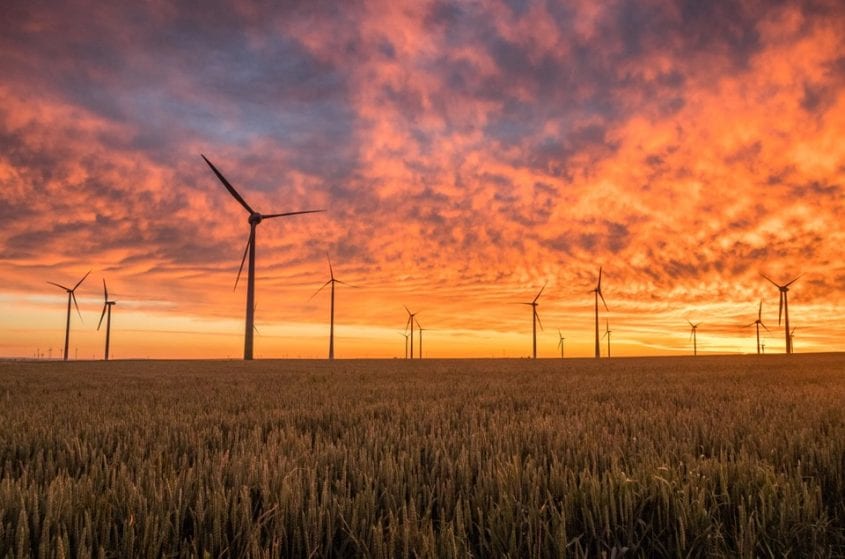
    Wiltshire produces more solar-electricity than any other county in the UK but we’re joint 190th for wind energy. In fact, we produce about 6000 times more energy from the Sun than we do from the wind. That’s quite a contrast and we could do better.

    Of course, many people find wind farms ugly and don’t want them spoiling the view. That’s a valid opinion but, personally, I think wind turbines are rather beautiful and I’d love to see some on the Wiltshire Downs—a stone circle for the 21st century in the county of Stonehenge and Avebury!

    There are good reasons for expanding onshore wind farms. According to the UK government’s Department for Business, Energy and Industrial Strategy, the cheapest gas-generated energy is a third more expensive than onshore wind. Alternate low-carbon options such as offshore wind or nuclear power are even more expensive. Solar energy is the only technology that comes close to being as cheap as the wind!

    Increasing the amount of clean energy we generate would make a big difference to climate change. Most activities that produce greenhouse gasses could be run on electricity so that, at a stroke, emissions would be drastically cut. There’d still be some troublesome gasses generated by flying and by agriculture but there are solutions to those too (as I’ll discuss in a later column). So, problem solved? Not quite!

    There’s also the issue of intermittency—the facts that there’s no daylight at night and the wind doesn’t always blow. Solving this requires effective, large-scale storage of electricity and the world simply doesn’t produce enough batteries for this. We need another way forward.

    One possibility is pumped-water storage in which water is pumped from a low reservoir to a higher one, when electricity is plentiful, and is then allowed to run down from the high reservoir to the low—generating electricity as it does so—when demand exceeds supply. In effect, it’s a giant rechargeable battery.

    This is a well-tested solution which wastes little energy and has been used, on a small scale, for a hundred years. We just need to scale it up. That’s now happening. One scheme, at Coire Glas in the Scottish Highlands, will be able to store 30 GWh of electricity if approved. That’s about the same as a small nuclear power station generates in a day but this is dwarfed by the Fengning-2 plant in China which will have the capacity to store 4.6 TWh—enough to supply the entire UK continuously for 5 days.

    That’s the kind of storage capacity we need to think about building in the UK too. It simply can’t be done using batteries because matching the Fengning-2 capacity would require 21 years-worth of the world’s entire rechargeable-battery manufacturing output.

    The message here is that we know how to make (and store) enough affordable, clean energy to satisfy our needs and it could be done within 10-20 years. This change—in combination with electric vehicles, heat pumps and other ways of switching from fossil-fuels to electricity—could reduce emissions by 90%. We just need to get on with it.

    First published in Marlborough.news

    Photo credit: Karsten Würth

  • What next for the climate emergency?

    What next for the climate emergency?

    So the first rule of attending a conference on climate change and what we can do about it is not to add to the carbon emitted by getting there. So, Milly, Dave and I all traveled up by train to Lancaster to the Climate Emergency conference.

    (I love trains but at £118 for the journey, it isn’t something everyone can afford, which is part of the problem in weaning people off their fossil fuel driven cars. Thank you to the regional Transition Network and Transition Marlborough for paying both mine and Milly’s train fares.)

    The purpose of the conference was, in a nutshell, what happens after declaring a climate emergency? “Declaring a climate emergency is the easy part – what do we do next?” said Cllr Colin Glover, leader of Carlisle City Council.

    It was incredibly well attended by 350 plus local councillors, activists, scientists, researchers, businesses and so on. A fantastic effort and the kind of next step response required by all the climate emergencies declared by local authorities.

    What were our takeaways?

    Milly (Transition Marlborough):

    • This is urgent. This is Huge. Nothing is more important at the moment. Viable, practiced solutions exist and they must be put in place and scaled up now. The biggest barrier to action is ineffective communication. Be courageous and act now.
    • Attendees were mostly white, middle-aged, middle class – how can we attract more diversity? Or are other people approaching this problem in other ways?

    Me:

    • MPs are aware of the climate change issues but don’t feel under pressure from constituents to do anything about it, so said Dr Becky Willis, researcher for Lancaster University and the Green Alliance. “Not enough constituents talk to their MPs about climate change,” she said. Actually I’m going to repeat that in capitals because it’s top of the CCL list of essential actions and anyone can do this and make a difference.
      NOT ENOUGH CONSTITUENTS TALK TO THEIR MP ABOUT CLIMATE CHANGE
    • We need a template list of actions for local councils to clean up their emissions, which includes what’s in their control as well as when they need to influence central government. I was hoping the conference would provide this but, really we’re still at first base on that front. So, for instance, how can a local council influence local farming and agricultural land use? And we’re back to influencing national policy and EU policy (for the time being at least) and councils having a strong Local Neighbourhood Plan.
    • Once again I was struck by how important the school climate strikes have been in grabbing the attention of young people and turning them into activists. There’s our future leaders in the shape of young people like twelve year old Ada Wood from Carlisle, who read from her inspiring, impassioned and very well composed letter to a minister who tried to belittle her concerns about climate change raised in BBC’s Question Time. “Twelve years is more like two years [referring to the IPPC report]. It takes time to set things up,” and, “I want you to act like your house is on fire – because it is.”
    • “Wouldn’t it be great if the weather report would also tell us how much money the wind was making for the economy?” – Paul Allen from Zero Carbon Britain on wind-generated power.
    • When you wake up in the morning think: will what I am doing today matter in 100 years to wildlife and people? – Cllr Simon Pickering, Stroud District Council
    • The science and the emergency is important, but we need to look after ourselves so we don’t become frozen by the extent of the problem.

    Dave (CCL UK / professor of geophysics / expert science witness for Wiltshire Council):

    • There’s lots of source material out there to work out a plan of action.
    • Find an example of success and good practice – Stroud District Council have gone a long way down this road and they aren’t that far away from our area, Marlborough. They have reduced their council emissions by 32 percent and were carbon neutral in 2015.
    • Councils need to set emission reduction targets in their local neighbourhood plan, to legally lock in commitment. They can review an existing local plan if there is a ‘substantial change’ – declaring a climate emergency counts.
    • Local government by law have to consult Natural England when they make changes to their local neighbourhood plan.

    My job at the conference was to connect with other activists and spread the word about carbon fee and dividend. Local governments can clean up their act – and, of course, this is very important, especially with regards public transport and energy generation – but, ultimately, there is only so much they can do.

    To change things substantially and quickly enough we need central government to create the right kind of carrots and sticks. Like carbon fee and dividend.

    The Climate & Environmental Emergency Conference took place at Lancaster Town Hall, 29 March 2019, and was organised by Climate Emergency UK.

  • Climate Canary


    Reef in American Soma. Top: Dec 2014. Bottom: Same location 3 months later.
    Credit: The Ocean Agency / XL Catlin Seaview Survey.

    We are about to lose all our shallow water tropical reefs. From Australia’s Great Barrier to the shifting shoals of the Bahamas, the world’s warm-water ecosystems are facing total destruction—possibly within ten to twenty years. The only way to avoid this catastrophe is to keep global temperature rise below 1.5 centigrade.

    There are many reasons why climate scientists are coming to the view that even a 2 °C rise is too much. From increasing incidence of extreme weather events—such as the still unfolding disaster in southern Africa—to the likely impact on world crops and the complete disappearance of island nations, there is much that could be said on this topic. And the change, from believing that 2 degrees is “safe” to now looking for no more than a 1.5 centigrade increase, is the main reason why we are suddenly seeing headlines such as “only 12 years to save the planet”.

    In a short column I can’t properly discuss all the potential problems. So, I’m going to concentrate on coral reef destruction. There are several reasons for this. For a start, it’s a subject I can claim expertise in as, 30 years ago, I was one of the first people to build computer models of how coral reefs grow. Furthermore, large-scale extinctions are going to be the longest lasting effect of global-warming. The fossil record shows us that, following big losses of biodiversity, it take 5-10 million years for Earth to recover. The final reason for looking at tropical reefs is that they are a “climate canary”. Canaries were taken down mines to give early-warning of dangerous gas build-up and, if increasing loss of our reefs does not provide a wake-up call to the world that greenhouse gas build-up is serious, I suspect nothing will.

    Total destruction of all tropical coral reefs sounds like an exaggeration but there are good reasons for making such a dramatic statement. The issue is coral-bleaching—the fact that excessively warm water turns corals white. This happens because corals are not one organism but two. The coral polyp itself is an animal but it hosts a plant in what’s called a symbiotic relationship—a partnership that provides benefits to both participants. In this case, the plant feeds the coral and the coral shelters the plant. Bleaching happens if water becomes a few degrees too warm, for more than a few weeks, since the warmth kills the symbiotic plant and the coral then loses its colour and eventually dies.

    Bleaching is a natural process that happens now and again and has done so for millions of years. Normally it’s not a problem because new corals grow back after about ten years and the frequency with which coral reefs find themselves in hot water is much less than once a decade. The problem is that global warming is increasing this frequency. Today, with one degree of warming, bleaching occurs about once a decade and our reefs are struggling. By fifteen years’ time or so—when warming will probably get to 1.5 degrees if we don’t do anything—the frequency will have risen to about once every two and half years and most reefs will be dying. If we get to a two centigrade rise, reefs will bleach every year and they are doomed.

    First published in Marlborough.news

  • The Hundred Tonne Diet

    Graph showing total carbon dioxide emissions since 1880 and change in temperature since 1880.  The curves are very similar.
    Blue curve: Total emissions of carbon dioxide since 1880 (source, Oak Ridge Laboratory)
    Red curve: Temperature change since 1880 (source, NASA)

    Don’t take my word—or anyone else’s—for anything. You don’t need to. The data is so clear that you can see, for yourself, the reality of human-induced climate change.

    The graph above has two curves. The first, in blue, shows the cumulative amount of carbon dioxide that we’ve put into the atmosphere since 1880 whilst, in red, you can see how temperatures have risen since that same year. Temperatures fluctuate a bit, as you’d expect, but the two curves are remarkably similar. They rise together, in lockstep, and certainly seem to be strongly linked. However, this doesn’t necessarily mean that human carbon dioxide emissions are causing temperature change. There are four other ways the similarity could be explained:

    Perhaps climate science has got things back to front so that, in reality, temperature rises are causing increased emissions. I hope you can see how ridiculous that is! It implies that the rapid improvements in standards of living (and hence emissions) since the industrial revolution were driven by warming rather than by human innovation. Another possibility is that emissions and temperature are both pushed by some third factor. Personally, I can’t think of anything that could do that. Can you?

    A third alternative is that it’s just a coincidence. Perhaps the two curves will start to look different if we just wait a little longer. Well, this isn’t the place for a statistics lesson but it’s quite easy to work out that two curves will look this similar, by chance, less than 0.1% of the time. So it could be a coincidence but it’s not very likely. Would you bet the future of your grand-children on odds of a thousand to one against?

    The final possibility is fraud. That would require conspiracy on an enormous scale as the data used in these graphs has been collected by thousands of different people over a period of 130 years. There would need to have been collusion, from the beginning, between collectors of economic data (mostly tax collectors) and collectors of temperature data (Victorian vicars, 20th century sea captains and NASA). Seems implausible to me.

    So the only sensible conclusion is the scientifically conventional one—human greenhouse gas emissions are causing climate change.

    The graphs also show that 1500 billion tonnes of carbon dioxide have elevated temperatures by about a degree. So, naively, we can only emit another 750 billion tonnes if we want to keep the temperature rise below 1.5 °C. This simple-minded calculation is backed up by the much more sophisticated calculations of the Intergovernmental Panel on Climate Change (IPCC) whose report last October estimated that we can emit another 770 billion tonnes.

    That sounds a lot but, with seven and a half billion people on the planet, it’s only another 100 tonnes each. Unfortunately, a typical Brit produces about seven tonnes a year and so we’ll all use our remaining share within 15 years. We all need to go on a carbon diet and lose a few hundred kilograms a year each year. Two or three hundred kilograms a year is actually not that hard and I’ll talk about how in a future column. But, in my next one, I want to look at why we think a 1.5 °C rise is the maximum safe limit. It’s not a big temperature difference so why all the fuss?

    First published in Marlborough News Online

  • Wiltshire Declares a Climate Emergency

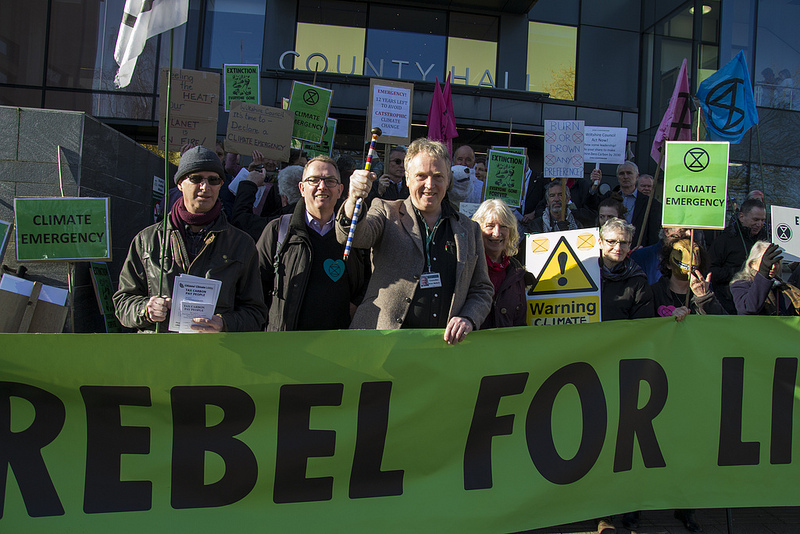
    Demonstrators outside County Hall.
    Demonstrators outside County Hall. Councillor Brian Mathew, who submitted the climate emergency motion to Wiltshre Council, is in the centre. The blog author is to his right.

    Economic activities have now pumped almost as much carbon dioxide into the air as the atmosphere contained, in total, at the start of the Industrial Revolution two centuries ago. Science has known for over 120 years that this should, in theory, cause warming by a few centigrade. Mankind is now testing that theory in the biggest, longest running and most idiotic accidental experiment of all time. Initial results are now in and they confirm the predictions spectacularly well. Detectable climate change is upon us and we have very little time—years not decades—in which to prevent warming from exceeding safe limits.

    This was the context for February 26th’s debate on whether Wiltshire Council should declare a climate emergency. Around 40 local councils across the UK (and approaching 400 world-wide) have now declared a climate emergency as a result of pressure from grass-root movements increasingly frustrated by the inadequate actions of national governments. A motion that Wiltshire should join this movement had been put forward by Liberal Democrats but several Conservative councillors had felt that “climate emergency” was an unnecessarily emotive exaggeration. They responded by putting forward their own motion which supported action but removed that particular phrase. Another area of debate concerned a pledge to become carbon-neutral by 2030; is that really realistic and is it really necessary?

    Let me share my own views. I’ve been a geophysicist for 35 years and I’ve looked carefully at the evidence for manmade climate change and at the counter-claims. In fact, I looked at the data first and only then became a climate activist. In my professional opinion, the evidence that we are heading for dangerous, manmade climate change is overwhelming and the counter-arguments are shockingly weak. The link between human-activities and climate change is to too tight for it to be a coincidence and it simply doesn’t make sense for the link to be backwards (i.e. warming temperatures stimulating economic activity rather than the other way around).

    But how urgent is the need for action? Most of the world’s nations have now pledged to control their emissions but the promises are insufficient even if they are kept. Even with these unenforceable commitments, global annual emissions will rise to about 50 billion tonnes per year of CO2 whilst, to keep temperature rises below 1.5°C, we must not produce more than about another 770 billion tonnes (source, IPCC report on “Global Warming of 1.5 °C”). So, it’s simple arithmetic, 15 years until we bust the budget. The best case scenario is that we start and maintain steady reductions immediately, in that case we could stretch things out and not need to get to zero emissions for another 30 years. Unfortunately, there is no sign whatsoever of national governments getting the ball rolling on that. So, there really is a climate emergency and it is irresponsible to pretend otherwise.

    To my delight, Wiltshire Councillors came to the same conclusion. After a well-informed debate, the Conservative-led Council voted by a narrow margin to accept the Liberal Democrat motion and then, unanimously, to accept the Conservative one. It was a remarkable example of democratic debate in action; one Conservative councillor even announced that he had changed his mind as a result of the debate. Changing your mind in response to arguments is a mark of good science but is not, often, associated with politics. It was a moving moment that gave me some hope for the future.

    And there is hope. There is much that can be done to reduce emissions. We can’t go zero yet but we can buy time; time that will allow us to find permanent solutions. I’ll talk about how we do that in future columns.

    First published in Marlborough News Online

  • Zero carbon London plans unveiled

    Zero carbon London plans unveiled

    An ambitious plan for London was unveiled today by Sadiq Khan – ‘Zero carbon London – a 1.5 degree compatible plan’.

    Stating the UK was in a climate emergency, the plan aims to bring down carbon dioxide emissions by 40 percent by 2022, and to zero from transport and buildings by 2050.

    But London can’t do it alone – national government is called upon to give more power and funding to London to make it happen.

    The plan rests on the energy efficiency of home and business buildings, decarbonisation of power from the national grid as well as more support for clean energy within the community, and converting Londoners to zero carbon public transport, walking and cycling.

    The plan includes actions points for all level, from government, GLA, business, London boroughs and Londoners themselves.

    Thanks to climateaction.org for the tip off.