Tag: Climate Change

  • A simple, fair and effective solution to the UK cost of living crisis – Climate Income.

    A simple, fair and effective solution to the UK cost of living crisis – Climate Income.

    I posted this article on the Linked In Citizens’ Climate Europe page on the 22nd January and have been asked to reproduce it here. I hope you find it a helpful ‘take’ on the current crisis.

    The current fuel crisis is creating problems for governments in the UK and Europe. The conundrum is based on the combination of underlying energy costs, environmental taxation, poverty alleviation and climate policy, all overlapping in a complex mix. Finding a solution that keeps advocates of each policy and it’s raison d’etre supportive is challenging. Here we look at how leaving the EU offers the UK a simpler approach. Climate Income can be used to address the short term imperatives of the rising gas prices, “levelling up” the inequality in the UK, provide a clear pathway to NetZero and make the UK economy more competitive.

    Some of the main elements in the mix …

    Gas prices are rising, and will continue for up to 2 years. Average household energy costs are set to rise by around £600 p.a. in 2022. Energy costs impact everyone, but while low and middle income families use less energy it’s a higher proportion of their income, hence why governments implement policies to address this.

    To protect the vulnerable, old and poor, there have been various means tested financial supports introduced roughly every decade: in 1988 Cold Weather Payments; in 1997 Winter Fuel Payments; and in 2011 Warm Home Discounts. All essentially aiming to reduce the number of people suffering from cold or hunger in our first world economy.

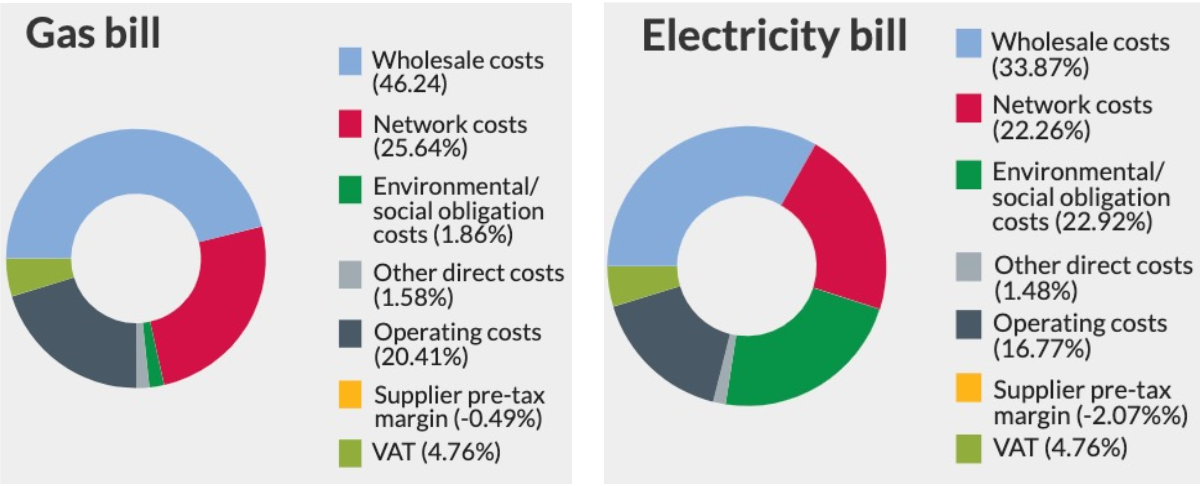
    In 2013 the UK Gov introduced the “Environmental and social levies” to fund energy efficiency, encouraging low carbon generation and reducing fuel poverty. The levies are 10x higher for electricity bills than gas bills. At the time 35% of the UK’s electricity production was from coal, the most harmful fossil fuel for the climate and air quality.
    No alt text provided for this image

    Consequently in 2013 the UK Gov also introduced the Carbon Floor price, initially at £16 (above the EU-ETS at the time) and set to rise to £30 by 2020 (which would now be below the EU-ETS). This has seen Coal reduced to 2% or less (20x smaller) for electricity production. The UK established (EU approved) measures to protect industry and now the EU itself is driving international dialogue on Carbon Border Adjustments.

    Whilst prices fluctuate over time, these policies raise prices for things that pollute (or used to pollute), and at the same time try to alleviate the financial burden on the poorest. The apparently conflicting problems of poverty and climate change. Ironically most of the people living a lifestyle compatible with 1.5ºC are the poorest in society, with the richest 10% causing as much pollution as the other 90% combined.

    Climate Income – the solution?

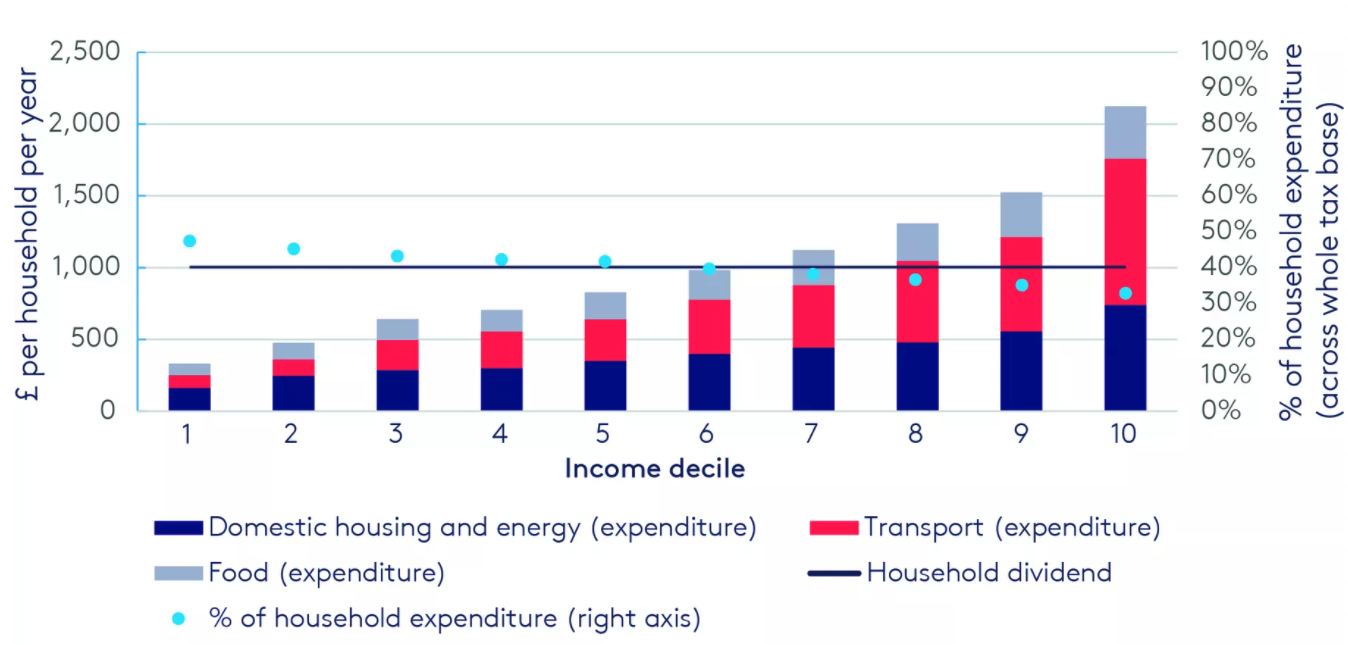
    Climate Income is a revenue neutral, steadily increasing price on pollution fully rebated to all citizens. Revenue neutral means there is no cost to the government, and, significantly, no revenue for the government. The steadily increasing Carbon Price follows the polluter pays principle embedded in UK legislation for nearly 50 years. The key part is returning the money to all citizens equally in a fair monthly payment, much like how child benefits or pensions are paid. Despite the rising costs, the poorest 20% could be £500 better off, enough to match the one of the current UK government suggestions.
    No alt text provided for this image

    London School of Economics data from 2019.

    The rest of society would be proportionally affected depending on the pollution they cause. Once the gas price spike settles over half the population would be better off. The exact amount depends on the level of price introduced. LSE modelled a £40 /tCO2 charge, above the current £18 and the planned £30 level, though significantly below the current UK ETS price circa £75.
    No alt text provided for this image

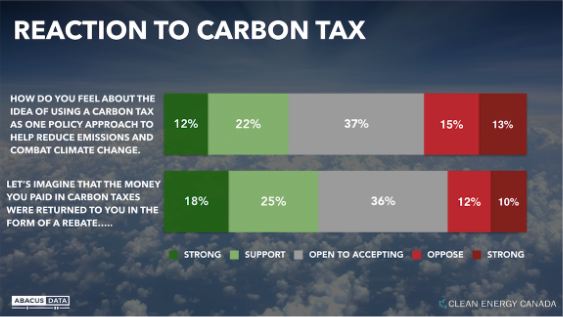
    This type of approach is intrinsically fair, sharing the responsibility and rewards equally on everyone. In Canada a form of Climate Income has been operational since 2019 and the public increasingly understand and support it, re-electing in 2021 parties in favour.

    Above all, it must be clear to the public that this represents a rebalancing of the tax base, in order to incentivise greener technologies and activities, and not simply a backdoor way of the Treasury taking more cash from their pockets.

    What does this mean for the Net Zero goal?

    A clear path to NetZero is supported by aligning the steadily increasing price to the data from the IPCC 1.5ºC report and the latest International Energy Authority report which suggest most (70%+) of NetZero can be achieved with such pricing. What this illustrates is that the long term NetZero objective actually helps clarify how the UK Gov might proceed with other related policy options currently under discussion. 

    e.g.

    1. Subsuming the current Environmental and social levies – reducing the bias against cleaner electricity and shifting the costs more to polluting gas, whilst delivering on the environmental and social objectives.
    2. Removing VAT from household energy bills would be a cost to the treasury that would enable a higher Carbon price, reinforcing 1 above.
    3. Both above measures reduce pressure on the various means tested support programs over time. As the Carbon price rises each year the policy is increasingly progressive, enabling simplification and reduced bureaucratic burden on people and the state.
    4. Windfall taxes might also reduce the immediate financial burden on the treasury enabling more of the existing carbon price (via the UK ETS) to be returned to citizens.
    5. Rebating the money to citizens gives industry the confidence to pass costs on to consumers regardless of how the price rises domestically.
    6. The ETS (copied from the EU) could be replaced by a simpler and more predictable economy-wide carbon price that allows industry to plan and invest with more certainty.
    7. Such pricing strengthens the UK economy to exploit the international trade advantage that already exists in the eyes of this US assessment as the EU and others pursue Border Carbon Adjustments. It also helps create the investment case for industry in the inevitable green revolution the world needs over the next 30 years.

    It could be argued, however, that the current path, with various different ways to raise energy prices and tax revenue whilst only offering minimal and creeping support for the most vulnerable mirrors exactly what unfolded in France with the Yellow Vest movement. Indeed the parallel is further matched by a spike in prices being the trigger to public discontent to such policy creep. In France it was an oil price spike after 4 years of gradual price increases that drew public anger, today it’s gas.

    So to round up here’s a summary other expert opinions that endorse some or all of what is proposed in Climate Income:

    None of these experts are saying this is a magic bullet that fixes everything. They all broadly agree that it is the single most important tool to address climate change. It can also show us how to navigate the short term energy price spike and re-align our worthy intentions in other areas. As Our World in Data summarises: 

    “What’s frustrating about the challenge of climate change is not that we have no options, but that we do not take the options we have. “

    No alt text provided for this image

  • Another fantastic plug for Climate Income from one of our members!

    Another fantastic plug for Climate Income from one of our members!

    Last year Rob Paton and Citizens:MK succeeded in gaining unaminous support for Climate Income from Milton Keynes Council. Rob then went on to write about the campaign in the national Quaker magazine, The Friend.

    Rob has now succeeded in getting a full article published which he has given me permission to reproduce here. I attended a Zoom meeting organised by Rob for a local climate group and was able to see the issues people have with the concept of CI (which it is easy to lose sight of when you have been immersed in the campaign for three years!) which Rob describes – his approach has lessons for us all! Note that ‘testimony’ refers to the Quaker values of equality, peace, truth, justice and simplicity.

    A year of climate campaigning: What Rob Paton learned

    6 Jan 2022 | by Rob Paton

    ‘It’s often the testimony that does it.’

    ‘The alternative is to look for common ground.’ | Photo: by Li-An Lim on Unsplash

    I had been a ‘greenie’ for years, but not heard about Carbon Fee & Dividend (also known as Climate Income) until a Friend told me about it a couple of years ago. I visited the website of Citizens Climate Lobby UK – and wow! So simple. An arrangement that would turbo-charge all other carbon reduction policies, or render them superfluous. A way to make higher carbon prices not just acceptable, but popular. Like every good convert I set off with missionary zeal. At which point things became… interesting.

    Yes, sometimes people ‘got it’ quite quickly. What really struck me, though, was how often people didn’t (or couldn’t?) ‘get it’. For example, when another Friend passed on something I had written to her daughter, active in XR, the daughter was enthused. She shared it in her circle… to no avail whatsoever! Even professional campaigners who knew their economics seemed to ignore carbon pricing. It was the elephant in the room. As for Climate Income, well, on a good day it would be damned with faint praise. I asked several: ‘What should we be asking for at COP26? Wouldn’t it be great if we had one simple, specific “ask” that everyone could get behind, like “Drop the Debt”?’ Everyone liked the question, but their answers were either lengthy, or pithy but plaintive (‘just keep your promises’). No one expressed much interest in Climate Income. Gradually I came to realise – or re-learn – some important lessons.

    If people are not open, or ready, then I was probably wasting my time as well as theirs. It wasn’t just that trying to persuade people seldom helped. Things went better when people were stimulated to find out for themselves. For example, our local Citizens:mk climate campaign asked the leaders of the three main parties on Milton Keynes Council to consider supporting the idea. Initially, all were wary, but they agreed to check it out. When it came to the debate, genuinely enthusiastic speeches in support came from all sides, and the motion passed unanimously. Likewise, when we asked the local Anglican bishop to consider the idea and how he might use his position to promote it, he was sympathetically cautious: he would meet with us but the issues were complicated and he needed to find out more. But then before we knew it he was on board, asking a pointed question in the House of Lords!

    That illustrated another important point: it’s often the testimony that does it. A remarkable teenager in our campaign group had recounted being confronted with the harsh realities of what climate change would mean for her and her generation. She spoke simply, clearly and from the heart. It was moving and memorable in a way that bald facts and reasoning are not.

    I also noticed how widespread adversarial thinking is among green campaigners. The default stance is to campaign against things – and people. When I asked what was needed for a consensus in support of cutting out carbon, the answer was, essentially, for lots more people to care like we do. We have seen the light; we must convert others to our way of thinking. Worse still, I, too, slipped into adversarial thinking. At one point I was seeing the Treasury as a bogeyman. They didn’t like hypothecated taxes and would be bound to resist this idea. But one of the beauties of the arrangement is that it is revenue neutral – it is a transfer rather than a tax. It doesn’t add to government spending. Better still, by turbo-charging the switch to renewables, it reduces the need to subsidise green technologies which are a drain on the exchequer. It also gives a further basis for cutting out those subsidies still being paid to fossil fuel companies.

    The alternative is to look for common ground. Climate income provides such a common ground, securing support for long-term carbon reduction. In Canada, where this ‘fee & dividend’ approach has been adopted, governors of some provinces with high levels of fossil fuel activity thought they might roll back the legislation… until they found how popular it had become with voters.

    What really took me by surprise, though, was the way climate lobbying led into a deep consideration of truth, and our compromised capacity as humans to face it. I joined a Zoom course on how to engage with political leaders on climate issues. At one point the young course leader said words to this effect: ‘Look, we have enough information in this group to plunge half the country into a state of deep clinical depression. It’s just as well that many people are “in denial” – the health services would be overwhelmed if everyone suddenly woke up to what the disaster will mean for them. That wouldn’t do the planet any good.’

    Instead he introduced us to ways of meeting our leaders where they are, helping them recognise their own ambivalences and uncertainties, and helping them find their own safe next steps. This doesn’t mean that we should only engage with the political system in therapeutic mode – listening supportively, asking gentle questions, building trust. As we Quakers know, discernment requires threshing as part of the process. So explanations, facts, clarifications and analysis all have their place, collegially conducted, among those seeking further understanding. Here too I learned lessons.

    I had to treasure the disagreements and challenges I encountered. They were informative about what I had not explained. For example, if someone said, ‘Won’t people just use all their climate income paying for the higher price of fuels?’ I had to be ready to agree: yes, some would, to begin with. It would be their choice. Only then would it be worth my explaining how the steadily-increasing price of carbon (and climate income) would play out over the medium term: the higher the price the more incentive everyone has to switch to green alternatives. Instead of it being against our economic interests to ‘do the right thing’, we become (even) better off by ‘doing the right thing’.

    Another example: one councillor said we shouldn’t increase the price of fossil fuels until the cost of green alternatives had fallen to the level of current fuel prices, otherwise the poorest would be hard hit. This overlooks how climate income protects the least well off. But I sensed something else was confused in this observation, and it took me time to pin it down. In fact, the price of the alternatives will not fall until they are adopted on a large scale. So we need to make the green alternatives cheaper than fossil fuels in order to bring about large scale adoption. This is precisely what steadily increasing the price of carbon makes happen.

    I also came to appreciate the uncertainty in our predicament: no one knows what will be an achievable and sustainable mix of green fuels. The technologies are still a big cloud of unknowing. Some say heat pumps. Some believe hydrogen is the answer. According to others, the future is electric. Some think that Carbon Capture and Storage is crucial. Each of these has its advocates – and, happily, investors willing to back them.

    Finally I have had further lessons in patience and trust. Having been through panics about nuclear war, the scares about the millennium bug, and the fear that oil was running out, it is a little easier to hold my nerve. Yes, I do know about tipping points. The dangers are very, very real. But so are the emerging opportunities with many signs that the tide has turned. And so we choose life, doing what we can where we are.

  • CCL member decides to shake up Woman’s Hour!

    CCL member decides to shake up Woman’s Hour!

    Wiltshire CCL member Jane Renwick recently realised that a hallowed broadcasting institution which likes to think it is ‘cutting edge’ could do with shaking up when it comes to the most important issue of our time!

    But I know that CF&D makes sense and it frustrates me that so few people are talking about making it happen. 

    ” …..My grasp of CF&D is pretty akin to my knowledge of plumbing: I have a gist of an idea of the general principles (and the disasters that can occur if it’s not done properly) but not a lot of confidence when it comes to discussing anything beyond the tap that I’m turning or the chain that I’m flushing. Similarly, my knowledge of the workings of government and politics is weak, as is my understanding of economics, power production and the science of climate change. I do know a lot….. but nothing very relevant to this important issue it seems. 

    Our Parish Magazine carried an article by Rev Michael McHugh quoting James F Byrnes: “Curiosity will conquer fear even more than bravery will.” What an inspiring and liberating thought! So now, instead of thinking that I don’t know enough to join the debate I will think ‘I wonder what would happen if I sent a letter to Woman’s Hour’ or the Women’s Institute or another letter to my MP. What’s to lose? Surely the more people talking about it, the better.

    Dear Woman’s Hour

    Thank you for your recent item about women who are choosing not to have children because of fears about climate change – which illustrates just how much women are worrying about this. It is a HUGE issue for women and families. As a mother I am terrified. Sadly, I think women are struggling to visualise a positive route to addressing climate change that protects their family. 

    I would really like to hear Woman’s Hour address climate change, in a positive way, that presents politically effective family friendly strategies that women can campaign for, to make a real difference (in addition to recycling our clothes, reducing waste, eating less meat etc etc……) 

    For example – ‘Carbon Fee and Dividend’ is an approach that has been recognised by the Government as an effective method of carbon pricing that ‘has merits’ and is being considered as a way forward (The Times, 9 July 2021).

    The principles are simple:

    • Carbon fuels are still being used because they are relatively cheap.
    • If the Government introduced an incrementally rising charge on carbon fuels, industry would be motivated to explore other options quickly.
    • Money raised would be returned to every citizen (adult and child) which offsets rising household fuel bills and benefits those who live a less carbon hungry lifestyle. 
    • This is a fair, effective and free policy which supports families and those most vulnerable in the community.
    • 27 Nobel prize winning economists support CF&D   https://www.econstatement.org , as well as many prominent women in the UK e.g. the successful children’s author illustrator Mini Grey and another successful children’s author Judy Hindley who speaks very articulately on the subject.

    Talking about us all ‘doing our bit’ just isn’t working and women need to feel empowered to push for a change at a much higher level that supports families as well as industry through the tough choices and changes ahead. 

    Please would you consider raising this as a topic on Woman’s Hour – firstly by going on record in declaring a climate emergency and then by raising awareness of strategies such as Carbon Fee and Dividend as a way forward that puts families and the most vulnerable into the solution.

    Yours faithfully

    Jane Renwick

    p.s. A much better explanation than mine can be found at http://citizensclimatelobby.uk/

  • Members respond to the IPPC report – Part 2

    Members respond to the IPPC report – Part 2

    Please note that these essays are not the official view of CCL UK but of some of our members…..

    Carbon Fee and Dividend is structured to provide subsidy to ordinary householders as they begin to confront the costs of transitioning to a net zero carbon economy.  

    In addition, Carbon Fee and Dividend can be expected to accelerate the overdue reallocation of capital towards regenerative enterprise that fossil fuel divestment, by for example pension funds, has already provoked.  For the mainstream of society this is vital, since a transition to a low carbon circular economy based on regeneration and sustainable limits will provide the worthwhile and purposeful new jobs needed.  Hopefully, much of this innovation will be local or even community based and so lead to a multiplier effect as more of the money circulates locally and in turn leads to yet more enterprise and benefits. 

    A capsule of the actual problems lying behind Alok Sharma’s IPPC derived warnings might read: 

    The words assumption, belief, self-interest and delusion are all words that apply to the economic model (Neoliberalism) that has grown ever since money was finally liberated, in 1971, from the limits that being tied to the gold standard imposed.  There were no externality (environmental) costs built in, not least because of lobbying and deception strategies operated by large corporations.

    They appear to overlook that their concept is also the source of inequality; or put another way “too many in Maslow Deficit” (lower 3 tiers) and moreover, that their concept is the source of the debt which begets the growth dependency needed to pay it down.  With externalities largely ignored this all translates into the environmental destruction / climate breakdown that is bringing the world to its knees!   

    Andrew Stott

    On the 9th August 2021, the Intergovernmental Panel on Climate Change (IPCC) released the first part, ‘Working Group I’, of its Sixth Assessment Report. Compiling over 14,000 scientific papers, the work of 234 scientists from 66 different countries, the report outlined and emphasised the need for immediate and drastic action to avoid a rise of over 2°C in the global temperature. A system where fossil fuels are taxed and the money returned to the public is one way to approach this, tackling both the environmental concern and dealing with the required economic traction to get it started. This is known as a carbon fee & dividend (CF&D) scheme.

    The declining cost of renewables

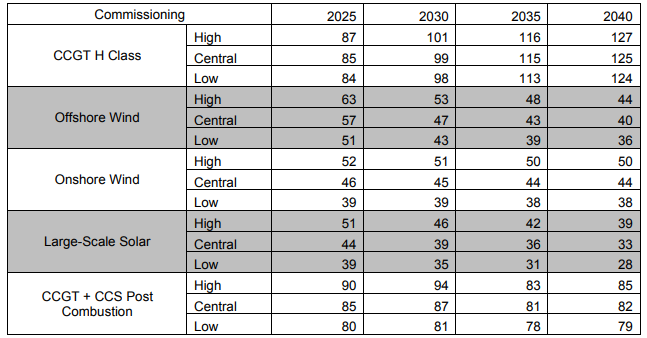
    Renewable energy prices are at the lowest they’ve ever been (according to an analysis by Lazard Ltd.) and the UK government predicts that levelised cost of electricity (LCOE) prices for renewables will drop even further while prices for fossil fuels will largely remain the same. 

    Figure 1 – Table showing LCOE for the next 20 years in £/MWh as predicted by the UK government in their 2020 report on Electricity Generation Costs.

    The earlier a complete change to renewable energy happens, the more money that will be saved in the long run. A myriad of reasons have prevented the switchover to renewables, despite the apparent advantages they currently have over fossil fuels. The associated costs with starting a new energy plant, new fracking technology significantly lowering the cost of natural gas, existing contracts tied up with fossil fuel suppliers, increased electricity bills for the general public and seasonal inconsistencies with renewable electricity generation are just some of the reasons why, initially, a switch to renewables may not be as economically attractive as one first expects. This is why a carbon tax would ‘even the playing field’ so to speak and incentivise investment into renewables.

    The EU ETS and Britain’s departure

    Economic incentives for reducing carbon emissions are not a foreign idea to the UK. The country used to be part of a cap and trade scheme used throughout the EU. The European Union Emission Trading System (EU ETS) is the largest of its kind in the world and consists of a scheme designed to limit the CO2 released into the atmosphere by allocating emissions allowances to member nations. If a country needs to generate more emissions they can trade for these allowances from a country that has successfully reduced its own. Thus, creating an economic incentive for a country to reduce its emissions. 

    Unfortunately, on the 31st January 2020, Britain left the EU and with it the EU ETS. A similar system was designed and incorporated known as the UK ETS. Emissions trading would continue but between the 4 nations of the UK rather than the 27 member nations and 3 trading partners (Norway, Iceland and Liechtenstein) of the EU. However, the Grantham Research Institute on Climate Change and the Environment (GRICCE) indicated in their 2019 study that this would be “suboptimal” and a carbon tax would be more beneficial in reducing carbon emissions. Again, in 2019, the GRICCE theorised that “a tax of £40 per tonne of CO2 equivalent emissions turned into a £1000 annual return for UK households” would be one of the most ideal ways at reaching net zero emissions by 2050. It also recommends the £40 per tonne tax is just a starting point and the price should slowly be increased.

    How will the money be used?

    One of the main arguments against a carbon fee & dividend scheme is that the general public will bear the brunt of the tax and although environmentally beneficial, it will increase the cost of living. To low income families, an increase in the heating or electricity bill every month is very unappealing, especially as they would not experience the immediate benefits of reduced CO2 emissions. However, the scheme ensures that the money is equally distributed to everyone in a monthly dividend.

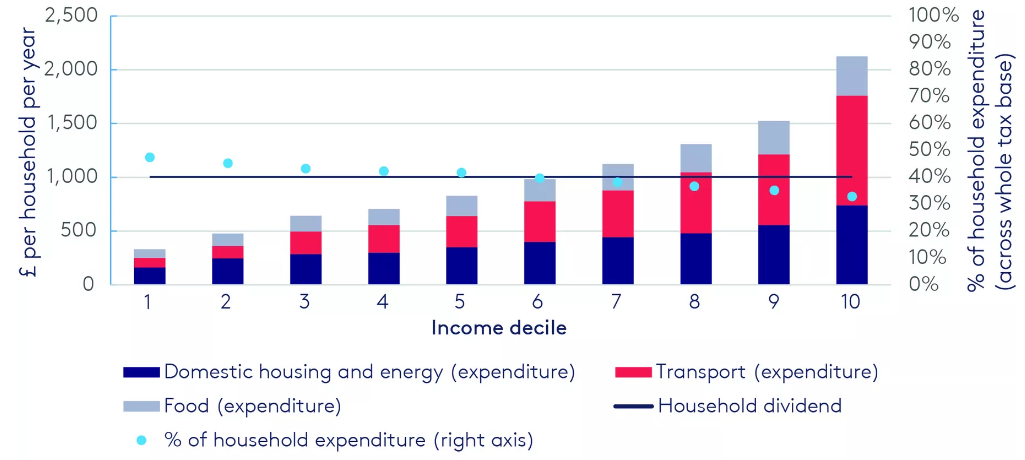
    Figure 2 – Courtesy of the Grantham Research Institute at LSE. Graph showing tax payments and dividend received by income decile.

    Looking at figure 2 we see that the lowest income decile households (1) would be better off with the flat £1000 dividend as it is a larger percentage of their total household expenditure. 

    Canada has a similar system and has been using it since as far back as 2008 (in British Columbia). Helen Mountford of the World Resources Institute states that citizens of Manitoba province, for example, would expect to see a rise of $174 CAD in cost due to the carbon tax. But receive a total rebate of $252 CAD resulting in a net gain of $78 CAD (~£45). Canada may only have a population of just over half of the UK but its CO2  emissions almost treble ours. If an industrial giant like Canada can implement a CF&D scheme and make it work, then so can we.

    The benefits of a CF&D scheme are clear. A switch to a more modern, cheaper and greener economy that will see benefits not only for our children and our children’s children but also us, we who are living currently. Alok Sharma’s warnings, ahead of COP26, are dire and desperately need to be listened to. Change is hard but if we don’t, our planet will.

    Luke Clews

  • The consensus is growing –  what surveys, petitions and the media are saying and what we can do about it…

    The consensus is growing – what surveys, petitions and the media are saying and what we can do about it…

    Reading the daily email alert from Carbon Brief is fascinating and getting more and more time consuming! I have certainly noticed a real shift of media opinion towards the climate emergency over the past year, as the effects of climate change are becoming more and more immediate. There are very few denial editorials these days even if the solutions are still hotly debated.

    The media is reporting growing support for the government to go further and faster such as a Guardian report that ‘Over-50s want climate crisis addressed ‘even if it leads to high prices’. There were also reports in the Independent and Daily Telegraph. It is noteworthy that The Times and Daily Telegraph have written about the threat of famine in Madagascar without disputing the first ‘climate change famine’ description.

    What I found most encouraging in today’s email alert was a report on an editorial entitled ‘Don’t let climate goals be lost in culture wars – cutting emissions means decarbonising the way we live, not giving it up’ which appeared in yesterday’s Financial Times.

    The editorial suggests how politicians and, by implication, campaigners should be approaching the issue of gaining public support for the changes needed to fight climate change now we can no longer rely on the low hanging fruit of removing coal from the energy mix…..

    “…trying to convince everyone they must change their lifestyles radically” in order to tackle climate change is “unlikely to work: demands that essentially put the onus on individuals will alienate too many people in an environment of insufficient knowledge about what net zero means and distrust about the intentions of politicians”..

    Instead, the message politicians must communicate is twofold. First, emphasise the facts: climate change is an urgent threat, it requires all of us to act – but if we act together, the sacrifices are far from prohibitive. Second, acknowledge that people will need help to take the right choices – and ensure that it is forthcoming. A consensus around mass adoption of carbon-reducing technologies can be achieved if adoption is rewarded and costless for those at the bottom. The alternatives – insufficient action, or calls for asceticism — will lead to division and failure.

    If that’s not an endorsement of Climate Income I don’t know what is! I also think it is a very useful hook for an email to a constituency MP, along with mentioning that over 100,000 people signed the ZeroC. petition  and even baby boomers are willing to put their money where their mouth is. (I am afraid I fit in that category but I am sure I am not alone in wanting more support and reassurance before I replace the fairly new gas boiler!)

    The UK has the chance to set an example to the world to make sure there will be no more climate change famines.

    If you email your MP please don’t forget to bcc us/forward to at [email protected].

  • CCL (UK) Members respond to the IPCC report.

    CCL (UK) Members respond to the IPCC report.

    Many thanks to all the members who responded to our request for comments and articles about the benefits of CF+D in relation to the IPCC report. It’s great to see a variety of points of view (remember they are members views and not official CCL policy).

    Here are the first 3……

    In light of the IPCC AR6, urgent action is needed to reduce our nation’s GHG emissions and transition to a carbon neutral economy.

    Why is the Carbon Fee & Dividend the right approach to this goal?

    Primarily, it targets the largest contributors to the climate crisis, the fossil fuel corporations.  The carbon fee will increase the cost of fossil fuel and make future investment into burning fossil fuels less profitable and as such we will incentivize a faster transition to cleaner renewable energy.

    The fee companies will pay a fee which is proportional to the amount of fossil fuels they burn, as a result of this fee the prices of carbon will rise and customers will be encouraged to swap to greener companies.

    CF&D redistributes wealth to all UK citizens, which is especially useful after the economic downturn onset by the pandemic, protecting the people that are most vulnerable during this transitional period.

    Our government can act quickly to address the climate crisis, with COP29 coming at the end of October, now is the perfect time to tackle the monumental challenge of decarbonising our economy.

    Lily Zayli

    Climate Change – A market failure

    November is rapidly approaching, and with it the UN COP26 climate meeting in Glasgow. The incredible sequence of natural disasters this year, including wildfires in the US and flooding in Germany, has only emphasised the need for international agreements to reduce fossil fuel use and prevent catastrophic climate change. And yet, little progress is being made.

    Economists have long agreed that climate change is a market failure: the normally efficient markets have not captured the true social cost of climate change in the price of fossil fuels. Markets instead price fuels at extraction cost, because markets left to themselves focus on costs incurred by buyers and sellers now, not at some future date when the climate has been damaged further. 

    It’s up to governments to create rules which ensure that markets account for future social costs of the carbon dioxide pollution which causes climate change. A carbon tax is the obvious government intervention which would make market economies such as the UK systemically recognise the social costs of burning coal, oil and gas. However, politicians around the world, naturally worried about passing further unpopular taxes, have largely resisted taxing carbon, especially after the French yellow-vest protests against Macron’s fuel tax. 

    Carbon taxes can in fact be made more politically palatable through the “carbon fee and dividend” policy, which would tax all fuels at point of extraction or import, and return the carbon tax revenue to taxpayers as a flat dividend per person. Returning the tax revenue to the public would mean that there would be no net tax burden and no unemployment caused. The flat dividend per taxpayer would also compensate lower income people who might otherwise be forced into “fuel poverty” by higher fuel prices. The higher cost of fossil fuels across the board would encourage their replacement with other energy sources. These benefits are the reason that Citizens Climate Lobby tries to encourage carbon fee and dividend. 

    The UK already has a carbon tax, but has not raised it to the point where fossil fuels are more expensive than renewable or nuclear power, which is the only way that markets will completely replace fossil fuels. The only way such increases in carbon taxes are likely to be acceptable to the public is through a policy of carbon fee and dividend. The UK should immediately take steps to raise its carbon tax through a carbon fee and dividend, and encourage other countries to follow its lead. Otherwise we are like to see in Glasgow yet another failed climate meeting. 

    Zeeshan Hasan

    Carbon fee and dividend and the levelling up agenda.

    In his book Poverty Safari, Darren McGarvey describes in often harrowing detail the experience of life on the Pollok housing estate near Glasgow. McGarvey blends powerful accounts of his emotional experiences with expressions of frustration at attempts by politicians and bureaucrats to address his community’s social deprivation. Some of the experiences McGarvey describes are recognisable from a short period when I lived on the Hulme estate in Manchester in the mid-1990s. I believe that McGarvey’s book is essential reading for those who want to advocate for policies such as Carbon Fee and Dividend. Let me try to explain why.

    The basic message of Poverty Safari is that the two poles of mainstream politics, right and left, have failed communities like Pollok, leaving people alienated and disillusioned. Yet both poles also capture what is best in such communities. On the one hand, the political right emphasises a culture of personal and financial responsibility and respect for people’s property. McGarvey’s father instilled such values in his son, but it is difficult to live up to them when one is struggling financially and when basic services such as schools and libraries barely function, and are often being actively run into the ground. On the other hand, the left emphasises concerns about social justice and solidarity that have a long history in places like Pollok.  However, mainstream left wing policies are often overly bureaucratic: the money invested often goes to paying well-meaning middle-class employees of what McGarvey calls the ‘poverty industry’.

    What does all this have to do with Carbon Fee and Dividend? I believe that, if well-designed and implemented, Carbon Fee and Dividend is a policy that would empower people in communities like Pollok, while addressing the disillusionment and frustration that McGarvey describes. In short, Carbon Fee and Dividend offers direct payments to individuals (the ‘dividend’). These payments are funded by ‘fees’ that are charged directly at the sources of greenhouse gases, such as industries that extract fossil fuels. On the one hand, this policy resonates with the culture of individual responsibility that McGarvey’s father valued: individuals are directly empowered to choose how they use their dividend. On the other hand, it also resonates with the culture of social justice: individuals are not left feeling that the costs of climate policies are being unfairly pushed onto them – and the direct nature of the payments mitigates the need for a bureaucratic ‘poverty industry’ to administer the policy.

    One might assume that issues such as climate change are distant concerns for people faced with the immediate consequences of social deprivation. Yet McGarvey’s description of a 30-year protest against the M77 motorway shows that the environment is an important issue for his community, and that environmental action can be a source of positive activity and a boost to self-esteem. Imagine what could be done if people had the resources and time to make their own choices about environmental issues.

    Of course, a policy like Carbon Fee and Dividend cannot, on its own, address all the issues that communities like Pollok face – and neither is it a single magic bullet solution for climate change. However, the policy is vital as a way to show that climate change policies can be fair and efficient – that they are not just a luxury that only the middle classes can afford. Carbon fee and dividend is a way for politicians who advocate a levelling up agenda to put their money where their mouth is.

    We need to get people in communities like Pollok on board with Carbon Fee and Dividend – and we should embrace the challenges this brings. McGarvey describes an incident in which a visiting politician was so frightened of the people he was talking to that he had to constantly doodle in a notebook to stop his hands from shaking. People in Pollok are not naïve: successfully explaining Carbon Fee and Dividend to them would be one of the best tests of its credibility we could hope for.

    John Pearson

  • Who’s best for the climate in UK elections?

    Who’s best for the climate in UK elections?

    Number one priority?

    Where did climate change feature in manifestos, and how often was it mentioned?

    This is not an analysis of how realistic or effective their policies could be – we’ll leave that up to you to decide.

    The parties that seemed to best understand climate change and how it impacts every aspect of life, referring to it throughout their manifestos, were the Green Party, Labour and the Liberal Democrats.

    Also read our post on how each party fared on climate income.

    Joint 1st – Green Party of England and Wales
    Climate = first out of five headline priorities

    Primary mechanism to tackle Climate Change: Green New Deal
    First mention is the second sentence (after Brexit) then throughout.
    Priorities in order: Green New Deal, Brexit, Democracy, Quality of Life (inc NHS/education/crime), Taxation
    ‘Above all, the climate and environmental emergency rages from the Amazon to the Arctic. The science is clear – the next ten years are probably the most important in our history.’
    Net zero greenhouse gas emissions (GHGs) by 2030.
    Track record: a Green Bristol councillor secured the first declaration of a climate emergency; Brighton MP Caroline Lucas kick started the climate change debates in parliament this year.

    Joint 1st – Labour Party
    Climate = first out of five headline priorities

    Primary mechanism to tackle Climate Change: Green Industrial Revolution
    First mention – second paragraph in foreword (after Brexit) then throughout.
    Priorities in order: a green Industrial Revolution, public services, poverty and inequality, Brexit, internationalism (inc defense)
    ‘This is our last chance to tackle the climate emergency.’
    Net zero GHGs – unclear – energy by 2030, food by 2040
    Track record – Created the Climate Change Act in 2008 and set up the Committee on Climate Change, and entered the UK into the EU emissions trading system in 2003.

    Joint third – Liberal Democrats
    Climate = Third and eighth out of eight headline priorities

    Primary mechanism to tackle Climate Change: Green Revolution
    First mention – first paragraph in foreword (after Brexit) fifth paragraph in introduction (after Brexit), then throughout.
    Priorities in order: Brexit, Economy, Education, Green Society/economy, Health care, fair society, rights and equality, better politics, international
    ‘We will deliver a ten-year emergency programme to cut emissions substantially straight away, and phase out emissions from the remaining hard-to-treat sectors by 2045 at the latest.’
    Net zero GHGs – by 2045 ‘at the latest’
    Track record‘Thanks to Liberal Democrat policies in government, the UK has made major strides in cutting emissions from power generation…’

    Joint Third – Plaid Cymru
    Climate = first of five ‘key priorities’

    Primary mechanism to tackle Climate Change: Welsh Green Jobs Revolution / Renewables Revolution
    First mention: although the Green Jobs Revolution is the number one priority, climate change itself is not mentioned until page 25, and then in detail on page 63.
    ‘We understand that climate change, together with the global collapse of biodiversity, is the defining challenge of our time.’
    Priorities in order: Green jobs, caring, families, housing, crime.
    Net zero GHGs: carbon-free / 100 percent self-sufficient in renewable energy by 2030
    Track record: While they were MPs, Plaid Cymru’s team recently received a 100% rating in the Guardian’s analysis of MPs’ records on 16 indicative climate votes between 2008 and 2018, reflecting our long-standing support for ambitious long-term climate targets.

    Fifth – Scottish National Party
    Climate = 10th out of 11 headline priorities

    Primary mechanism to tackle Climate Change: Green New Deal
    First mention: ‘Protect the environment’ is in the tenth paragraph; ‘climate emergency’ on page five.
    Priorities in order: Independence, Brexit, NHS, austerity, poverty/inequality, drugs, pensions, migration, devolution, climate emergency, Trident.
    Net Zero GHGs: latest 2045 ‘…a 75% reduction in emissions by 2030, net zero carbon emissions no later than 2040 and net zero of all emissions by 2045…’
    Track record: ‘Scotland has the world’s most ambitious emissions reductions targets in law’

    Sixth – Conservative and Unionist Party
    Climate = 16th out of 17 priorities

    Primary mechanism to tackle Climate Change: Environment Bill
    First mention – a reference to carbon emissions in the foreword, point six (‘My guarantee’, after Brexit, NHS, police, immigration, and education) and second page of the introduction. ‘Climate change’ is first mentioned specifically on page 12.
    Priorities in order: Brexit, ‘your priorities’, Britain’s potential (including the Environment Bill), international (including climate change), ‘put you first’.
    Net zero GHGs: 2050
    ‘…[dementia is] one of the ‘grand challenges’ that will define our future along with the impact of climate change or artificial intelligence.’
    ‘We will also prioritise the environment in the next Budget…’

    Track record: first in the world to enshrine in law a net zero GHG emissions target, established UK as the ‘world’s leader in offshore wind’, began the process for a Citizens’ Assembly for Climate Change, ‘doubled international Climate Finance.’

    Seventh – Democratic Unionist Party (Northern Ireland)
    Climate = 23rd to 25th out of 37 priorities

    Primary mechanism to tackle Climate Change: cleaner transport and cleaner air
    Priorities in order: NI Assembly, NHS, schools, economy, welfare, abortion and childcare, environment/agriculture/fishing, animal welfare, communities, crime
    First mention: net zero is mentioned in the manifesto summary, but not climate change specifically until page 18, and then only within the bounds of rural matters.
    Net Zero GHGs: net C02 by 2050

    Eighth – Brexit Party
    Climate = no priority

    Primary mechanism to tackle Climate Change: tree planting
    First mention – no mention
    Priorities in order: Brexit, political reform, investment, living costs, economy, immigration, NHS, education, housing
    ‘Invest in the Environment: in addition to planting millions of trees to capture CO2 we will promote a global initiative at the UN.’
    Net zero GHGs: no mention

    Want more?

    Carbon Brief – a very comprehensive manifesto comparison based on energy and climate change

    BBC – choose your beef and country

    Friends of the Earth – have your election candidates signed the climate pledge?

    Friends of the Earth Manifesto analysis has Labour on top

    Greenpeace analysis has the Green Party on top

  • Campaign: government consultation

    Campaign: government consultation

    Respond to the Government consultation on the best way to tax fossil fuels

    The Government is currently consulting on carbon pricing, in other words, the best way to price the burning of fossil fuels out of our economy.

    The more emails they receive by 11th July, the more likely they are to take notice

    What to do:

    Email [email protected], and copy in your MP

    Include in your email:-

    • Who you are – a concerned citizen, a business owner, a business representative, an organisation or group?
    • That carbon fee and dividend, as a carbon pricing policy, could cut greenhouse gas emissions by 33 percent in nine years.
    • It would protect poor and middle income households and boost the economy.
    • This would make a huge contribution to Net Zero greenhouse gas emissions, much more effective than sticking with the EU Emissions Trading Scheme.
    • Finish with your name, who you represent if applicable (eg business, organisation, charity) and your home address and, if applicable, your work address

    The consultation closes on 11 July 2019.

    We want a much harder-hitting fee on fossil fuels than we already have (petrol duty/road tax/EU ETS) and we can’t do this without a dividend to soften the blow on low and middle income families in particular.

    The more emails they receive at [email protected] – from individuals, activists, charities, business owners, etc, YOU! – the more chance we will have for a carbon fee that really cuts down emissions.

  • Give hope with a workable solution

    Give hope with a workable solution

    This week (27/28 Nov 2018) I attended two conferences in London: the New Zealand High Commission event on the Impact of Climate Change in the Pacific and the Conservative Environment Network (CEN) Net Zero conference.

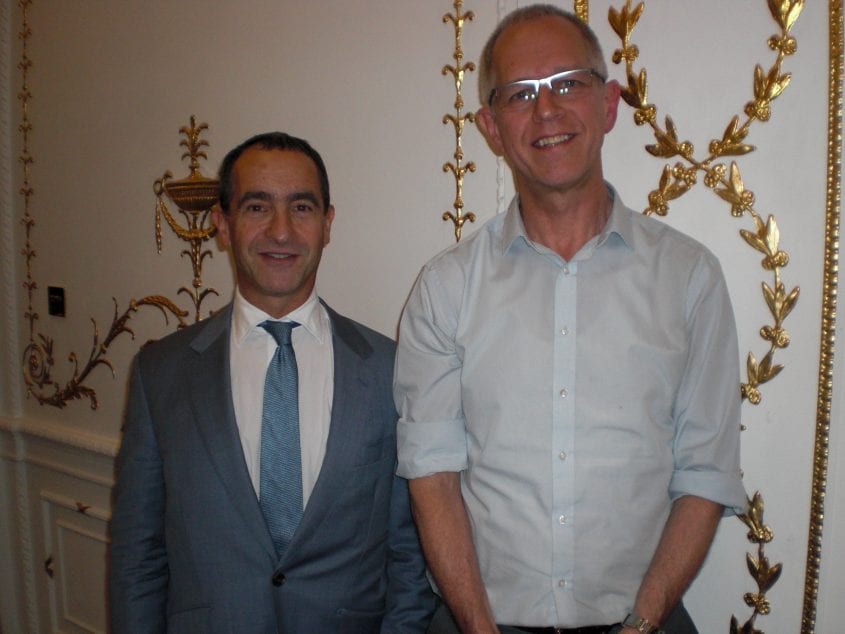
    I was photographed with Michael Liebreich, one of the panel members on shipping at the CEN conference (above).

    A heartfelt video was shown at the NZ conference, but I’m afraid the whole thing was short on plausible, workable solutions. As usual, I pointed out that 140 million people join the middle class every year (Brookings) – that’s another China every ten years – so personal sacrifices alone will not save us. I explained how Carbon Fee & Dividend (the CCL emissions tax solution to climate change) works to a couple of people afterwards who said they would get in touch. I must remember to practice my spiel, in order to do a better job in a public comment.

    The CEN conference was more informed, with several mentions of carbon pricing. They said there was strong resistance to border carbon adjustments from trade lawyers, who say this will disrupt many existing trade mechanisms. However, I was heartened to hear Michael Liebreich say “A conservative principle is Polluter Pays!”

    It was interesting to hear about plans for new ships to be powered by hydrogen, ammonia or even just wind, but resistance is apparently being met by shipyards, most of which are in Asia.

    Even the CEN conference seemed mostly hope-based, once again on a distant target being reached – net-zero by 2050.

    At the end I jumped up to grab the keynote speaker, Lord Deben (John Gummer, chair of the independent Committee on Climate Change which advises the government) before he got inundated. I asked him how we could best support government initiatives to introduce a rebated carbon tax. He said we needed to reach into the existing big groups such as WWF and Friends of the Earth, to educate them.

    On my way out, the young CEN Director invited me to join CEN (£20/annum), saying I would “get invited to parties”. I learned they were all off to one at the Shard, and wondered if I could afford that lifestyle, and whether people would want to discuss carbon pricing at them.

    Post by Clive Elsworth, co-founder of CCL UK.

  • Rebel Alliance?

    Rebel Alliance?

    Did a shaft of light just break through the media eclipse of Brexit? A brief moment when Earth’s destruction became a mere 12 stories behind the flimsiest thoughts of newly-promoted Tory cannon-fodder?

    Yes. I hope you caught it. Credit for this brief anomaly goes to Extinction Rebellion (XR), a new civil disobedience outfit responsible for blockading five bridges in Central London on Saturday. A reported six thousand protesters appeared, me included, to voice concern over government inaction on tackling Climate Change. XR is part of the Rising Up network, committed to nonviolent protest and boasting a very broad remit. Rising Up has the will and ability to execute protests on a wide range of social ills, most recently Universal Credit. It also has a Draft manifesto, which is a far more thoughtful and relevant sketch than the sixthform daydreaming that stereotypically commands the protest scene.

    Not that the gathering and the organization were one and the same. The XR team were there somewhere, busily coordinating speakers, poets, singers. But the throng itself was a broader church. Many people were there merely to express their anger on an issue that doesn’t get the coverage it deserves, an issue bigger than politics itself. And Rebellion Day was the handiest vessel for it.

    In the back of my mind, however, was the last time I protested. That was a day that left me with less hope than I had started with. The event was hijacked by organizations promoting themselves rather than any climate solutions. Corbyn’s a good egg in many ways, but not very climatey. He was keen to reopen coalmines at that time, yet turned up as star eco-speaker. Other marauding revolutionaries sought recruits to their causes, colours rarely green. The day ended with a sense that ‘they’ had not heard our message. Perhaps there was no ‘us’. And the message didn’t contain a solution. But how could it have been different?

    XR has an unusual approach. It involves playing the media, and it has an emotional component. A portion of the volunteers must be arrested, generating news stories. And the gathering is intended as a chance to publicly, collectively and peacefully grieve our dying world, displaying the tragedy and desperation of our situation. And pay attention to the name. Extinction Rebellion. We, the gathered, are humans protesting against our own coming extinction! This deeper reality of the situation is familiar to readers of New Scientist or is perhaps implicit in Naomi Klein, but has never yet held court on Westminster Bridge.

    It was a wow moment for me. There was a stir of feeling, of love for the Earth that sustains us, and a yearning to heal it. Discussion and camaraderie bloomed since we were mingling, not marching. One speaker was a Green, Jenny Jones. Brilliant, but not given star billing. Most other speakers were just ordinary people who told XR they wanted to speak. They represented young, old, London, Dorking, India, Ghana, Lincolnshire. They represented us.

    If we were grieving, we were also hoping. I spoke to many who were excited about Carbon Fee & Dividend, especially in the light of Canada’s recent commitment. And those who hadn’t heard of it mostly wondered why, with a “that sounds brilliant!” and a head-scratching “there must be some reason why it wouldn’t work…” Others were simply hostile to anything that resembled a system, but there was a healthy passion even among them. They enthused over rewilding projects, and the growing thirst for a better politics.

    These issues need to grow into something politicians can ride on. Right now, my hopes are up. Carbon Fee & Dividend is on the up (thanks to Policy Exchange taking it to Westminster) and Extinction Rebellion have galvanized the hordes of worried and wise voters across the UK and 14 other countries, with dozens of future events planned.

    The eco-passionate are not uniform, but we all benefit from coming together like this. We are becoming hard to ignore. Thank you, XR.