Blog

  • Come back Mark Carney, we need you – Canada has already got it!

    Come back Mark Carney, we need you – Canada has already got it!

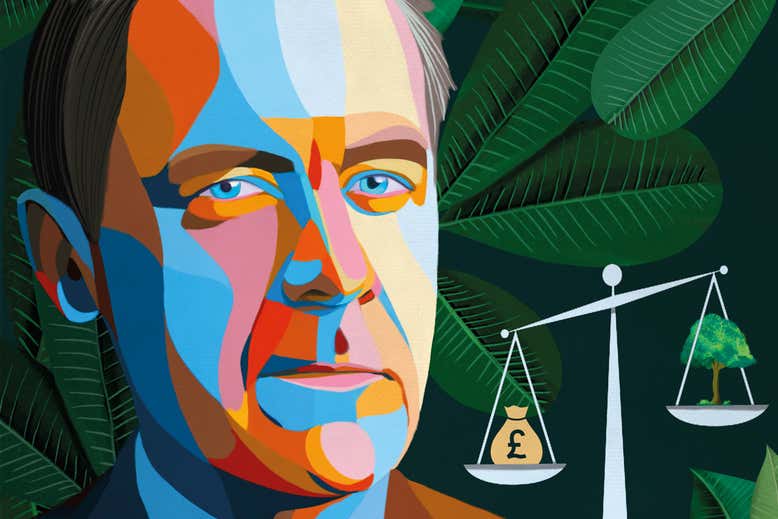
    If we still had Mark Carney as the Governor of the Bank of England we might have been looking forward to a COP 26 where the UK delegation steers the world away from climate change disaster. The UK would be encouraging other countries to follow its example by adopting CF&D and Border Carbon Adjustments. I have come to that depressing conclusion after reading an interview in the New Scientist (pay wall) in which he gives a convincing argument for CF&D.

    Mark is rightly hopeful about the technological advances which are making a zero carbon economy so much more doable than it was even a decade ago (which is what Boris is relying on, despite the fiscal policy doing little to encourage risky investments). Mark is, however, clear headed enough to see that the current fiscal and legislative regime doesn’t reveal the true cost of fossil fuels or prevent regressive legislative delays/short term policies in the building, steel, aviation, transport industries, to name but a few. Indeed, today’s Carbon Brief Daily, reporting on an article in Reuters, (paywall), says it all…..

    by not paying for their damaging effects on the climate and human health, US coal, natural gas and motor fuel producers (gain) “implicit benefits worth tens of billion of dollars a year”.

    Mark agrees with the interviewer that carbon pricing is necessary and cites the example of Canada to prove that the ‘gilets jaunes’ effect, which has obviously recently spooked Boris, can be avoided….

    The problem is that a uniform carbon price is a regressive tax. The amount the less well-off pay for petrol or the carbon embodied in their food or heating is a bigger proportion of their incomes than it is for the better-off. But it is important to have a uniform carbon price. The solution is to rebate individuals, as Canada has done with its recently designed scheme.

    The article concludes with an information ‘box’ (for want of a better description) written by the interviewer, Richard Webb. I can only wish that the rest of our media would get the message, and I don’t just mean the redtops…..

    In contrast, some of the schemes afoot now, for example in the European Union and Canada, plan to impose a flat tax per tonne of carbon dioxide or equivalent, with the aim of nudging entire economies away from polluting activities. As economies adjust, the carbon price is gradually raised, with the aim of promoting a virtuous circle of lower-carbon living.

    That has the potential to be very unpopular. For that reason, economists suggest the best move is to rebate the money raised to individual consumers, particularly the less well-off. It might seem pointless taking money and giving it back. But it means that products like food or fuel that are more carbon-intensive are also more expensive, and this could help change consumer behaviour – while not putting anyone at any overall economic disadvantage.

    Canada’s federal carbon tax plan has all these features. Its carbon price, currently $30 a tonne, is planned to rise to $170 a tonne by 2030. The system is designed so that people in the bottom two-thirds of the income bracket get a rebate that pays them more than they put in, in the form of a quarterly “carbon dividend” to their bank account. Richard Webb

    If you subscribe to New Scientist please consider writing to congratulate them and especially Richard Webb for this brilliant interview which is so much better than the interviews published elsewhere. Also do put in a plug for CCL, it would be great to get more New Scientist readers on board!

  • ‘A climate summit in every county’, pt.2

    ‘A climate summit in every county’, pt.2

    Our speaker at the March meeting was Kevin Frea, who is a Deputy leader of Lancaster City Council, Council Cabinet Member for Climate Emergency and Rural Affairs and founder of Climate Emergency UK. Kevin pointed out that while 3/4 of UK councils have declared a climate emergency and 126 councils have set a target to reach zero carbon by 2030, for some it has been just words.

    Interestingly the ambition to really put their money where their mouth is occurs across the political spectrum. Councils which have been ambitious and active include Lib Dem Cornwall, Labour Nottingham and Conservative Isle of Wight. Despite budget constraints councils like the above are doing what they can in areas they have control over such as social housing stock and public transport policy. Conservative led Wiltshire council, for instance, is building modular, zero carbon council homes, retrofitting older council homes and supporting housing associations to do the same.

    The Conservative Cabinet Member for Climate Change and Biodiversity at the Staffordshire Moorlands District Council here writes about the council’s Green Infrastructure Delivery Plan. And to top it all, borrowing a concept from the Cold War, Lewes and Amber Valley have joined Barcelona and Vancouver in signing the Fossil Fuel Non-Proliferation Treaty.

    The sole focus of CCL UK remains to campaign and lobby for a national carbon pricing policy to render all other strategies possible and probable. We are convinced, however, after our successful experience in Wiltshire, that it is worthwhile to engage with your council and other local environmentalists.

    Being involved in pushing council action ahead of the central government response can only help to persuade central government that the country is ready and willing to act on climate change with the most effective methods, including taxation! Some areas of the UK are holding citizen’s assemblies on climate change, and the clear message is that any transition must be fair…

    Reshaping the economy to fight climate change must not result in making life “even harder” for disadvantaged communities. (Susie Ventris-Field, Climate.Cymru Campaign.

    Campaigning with other local environmentalists can also help spread the word about the benefits of CF&D, and maybe even get your MP discussing the issue with Alok Sharma ahead of COP 26!

  • Mitt Romney argues for  CF&D.

    Mitt Romney argues for CF&D.

    It seems to me that the recent polar vortex is convincing many more people in the US about the urgent need to combat climate change. People are also encouraged by the pro-free market/carbon pricing approach argued for in the recent books by Bill Gates and Michael Mann.

    Hopefully we will be seeing far more Republicans supporting the need for decarbonisation (and CF&D as the means to do so) and Democrats realising it can complement the Green Deal.

    If CF&D gets on the statute books of the US our own government will have to take note! After all, as I have mentioned before once or twice, the report on the Future of Carbon Pricing in the UK (June 2020) stated that…

    Placing a price on carbon creates the incentive for emissions to be reduced in a cost effective and technology-neutral way, while mobilising the private sector to invest in emissions reduction technologies and measures. (p 39, para 201).

    Here you can see Mitt Romney giving a brilliantly simple explanation of Carbon Fee and Dividend and why he is supporting a new bill….

    https://www.facebook.com/CitizensClimateLobby/videos/446532953432756/

  • Why is respect important?

    Why is respect important?

    A gender equality charity reported recently its research on the representation of women in parliament.

    Only one third of MPs are women with only three female cabinet ministers.

    The reasons for this are many and varied, such as sexism or an absence of maternity or compassionate leave and sexism, but one stands out as something we, as constituents and activists, can all do our bit towards countering: The Fawcett Society found that seven out of ten women would not enter politics because of perceived potential abuse or harassment.

    I have witnessed this myself – the anger shown towards our politicians on social media; in town councils where unpaid councillors have been shouted out, belittled and berated.

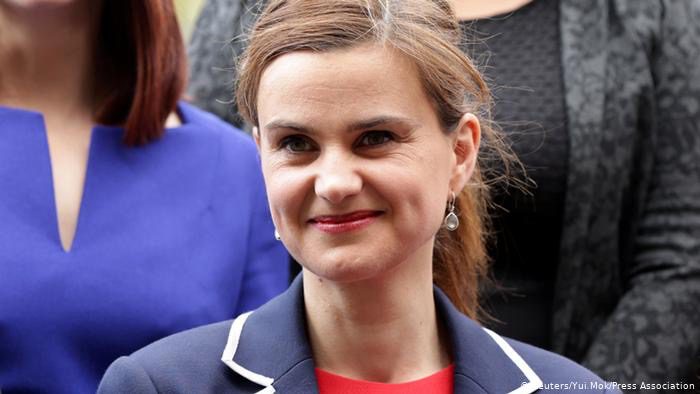
    And this isn’t just words, remember Jo Cox.

    What kind of elected representatives should we expect if we subject them to such an environment? Only the ones who can survive a deeply hostile environment and possibly thrive on the drama. Do we only want those sorts of people to represent us? Or do we want kind people, honest people, empathetic people? ‘Soft’ people?

    CCL’s key values include respect and gratitude for the work our elected representatives do, regardless of their politics. Our MPs are human beings who are there as our public servant and, as any of us do, respond better to praise.

    My MP has stated that his staff go through his correspondence and bin anything offensive – this was after the school meals extension vote (he voted along government lines, ie against) and constituents vented their passion in writing calling him ‘scum’ and the like. Despite my personal feelings on this matter, it’s important to work through those strong emotions before putting finger to keyboard. Your MP will far more likely respond to a reasonable counter argument, or a personal story as to the detrimental affect of such a vote. If you feel your MP is working off duff evidence, then direct them to fresh evidence. If you think their experience does not include the dire experience of not having enough food to feed their children, share that experience with them, kindly, and help build their empathy.

    And the best way to build empathy is for you to show empathy.

    Even better, write to them and politely ask for their reasons, get their best arguments out so you can respond to them with empathy. Another way to depersonalise an unhelpful stance – say, standing against climate change measures – is to ask them to pass your thoughts to the relevant minister and get back to you with an answer. Usually, if an MP values their position within their party they will vote along party lines, whipped or no, so it’s more relevant for them to pass comment along to the most senior minister with the power to affect policy.

    I aim to have a interesting conversation with my MP, one which invites their opinion and which they will be happy to continue.

    I hope that our brilliant and respectful members of CCL will be a reason that women (and people of all backgrounds, ethnicity and more) feel able to put themselves forward to do the important job of representing our interests in parliament.

    We can all do our bit in lowering the temperature over hot issues whether that’s in correspondence or on social media or personal interactions – increasing trust – but remaining firm – will get the job done faster than shaming and shouting – and help keep our MPs safe from harm.

    Everyone should feel able to do their job without fear of abuse and harassment, and that especially includes MPs.

    Pictured: Jo Cox

    If you haven’t already, I urge you to take part in our Motivational Interview training by Vince Schutt. He coaches us in the art of keeping on top of those reactive actions and how to open conversation up rather than closing it down, persuasion through trust.

  • If you are a Labour Party member you can help persuade the party to adopt CF&D as a policy.

    If you are a Labour Party member you can help persuade the party to adopt CF&D as a policy.

    One of our members has noticed that an article on CF&D has been posted on the National Policy Forum (NPF). The article states that Labour should adopt CF&D as the key policy to achieve the UK’s climate ambition. The Forum is the main discussion platform for informing Labour policy and so it’s important that this post generates favourable comments and votes.

    If you are a Labour Party member please do vote and add your comments using the link above.  It would also be valuable for members to send letters to their Labour MP and a member of the Environment, Energy & Culture commission of the NPF.

  • A climate summit in every county

    A climate summit in every county

    A climate summit can be a great way of bringing local environmental groups together to show the strength of feeling for climate change action – as Wiltshire found out, we are stronger together.

    It can also be a platform to raise awareness of Climate Income and collate views for your MP to feed back into the UK’s approach to the UN’s COP26, later this year in Glasgow.

    Making a climate summit happen

    Ask your MP to call one in your county – show them what Wiltshire did.

    Ask other environmental groups in your area to do the same thing.

    Write to the other MPs in your county, encouraging them to join in.

    Suggest they host a range of speakers – Wiltshire hosted the chair of the Farmer’s Union, the MOD, young people, county and parish councillors, a representative from the UK’s COP delegation, and the former chair of COP26.

    Maybe you know of, or are involved in, a local group which has succeeded in implementing a grassroots scheme such as electricity generation or flood defences. Examples of successful action and I hope, CCL’s positive message, should help steer MPs who are uncertain of engaging with the issues, away from “it’s not in the job description” negativity!

    It is well worth checking if your MP is already on the list of MPs endorsing the Local Electricity Bill, which received its first reading on the 15th January. Support for the bill would suggest that the MP may well be very open to hearing more from local environmental activists and setting up a summit. You may be surprised to see an MP you have considered highly unlikely to support such a bill to be on the list, it is attracting all sides!

    Need help or advice? Contact Gina.

    Featured image: Lt General Nugee, Climate Change and Sustainability Strategy Lead for the Ministry of Defence, appearing at the Wiltshire Climate Summit, February 2021

  • What engagement with our MP has led to……

    What engagement with our MP has led to……

    When the Devizes CCL group arranged a meeting with our new MP Danny Kruger in early 2020 he admitted that he was no expert on the issue of climate change and had no particular opinion on it but he was willing to learn more…..

    We were not disheartened and did our research on Danny’s concerns and how to engage with him. Thanks to the persistence of one of our members, Richard Day, in writing to Danny on the issue of CF&D, and the engagement of other local environmental groups such as Sustainable Devizes, Danny has recently hosted the Wiltshire Climate Summit (A.M) and P.M

    Judy Hindley, one of the founder members of CCL UK wrote a report on the summit for the online Marlborough News…….

    Roughly two years ago,  Wiltshire Council declared a climate emergency and called for Wiltshire to become carbon neutral by 2030.  On Friday, 19 February,  200 of us joined an all-day Zoom to begin for the first time to discuss, as a community, the specifics of how this might be achieved.

    The session included contributions from the Council, The MOD, (who are taking the security threat of climate change very seriously and acting fast), farmers, conservation and energy businesses, a Green Party representative, a government spokesman, our former MP Claire O’Neill and our local hero Joe Brindle…

    Eighteen-year-old Joe Brindle, leader of the Teach the Future Campaign (whose presentation was perhaps the best received of all), called for a new deal in schools, so that teachers are trained to convey the full facts of the changing climate, and pupils leave school with the right skills and knowledge to find secure, future-fit work in the green economy.

    Despite connection difficulties which were a sharp reminder of the shortcomings of the rural broadband roll out, CCL leader Louisa Davison delivered a strong argument for the CF&D policy…

    A Wiltshire farmer Tim Wade raised the unasked question of how much Johnson’s Ten Point Plan  – and this transition to Net Zero –  will cost.  ‘Who will pay?’ he asked.

    But immediately afterwards, Louisa Davison of Citizens’ Climate Lobby UK supplied a large part of the answer. 

    With Climate Income, the policy advocated by CCL UK,  fossil fuel companies themselves will start to do so,  via a steadily rising fee returned in equal shares to all of us citizens.  It’s been estimated that this policy alone will lower emissions by 40% in just 12 years – at no cost to government or tax-payer.

    With the environment constantly in the headlines at the moment (was there ever such a concern about the environmental effects of a forthcoming Budget?), now is the perfect time to get a dialogue going with your MP and other local environmental groups on local and national solutions to climate change including, of course, CF&D!

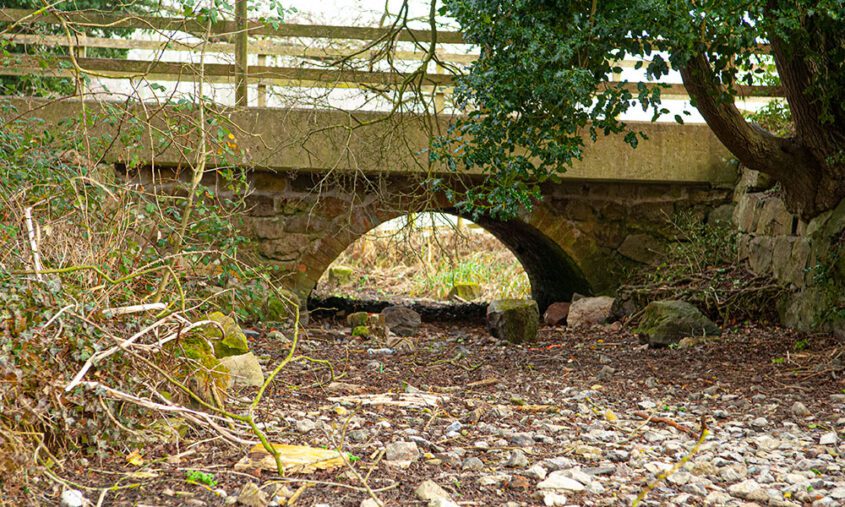
    Pictured above : The dried up River Kennet at Manton, Wilts last summer – a sign of things to come?

  • CCL-UK Launches Helpdesk

    CCL-UK Launches Helpdesk

    Photo by Alex Kotliarskyi on Unsplash

    It takes courage to write a letter to your MP (or any of the many other people we lobby in CCL) and we’re incredibly proud of all of those members who have done so. Every letter makes a difference!

    But once you’ve made that first contact you may find, as many members have, that the reply is a standard letter that ignores your key points or is jargon-filled and almost incomprehensible. What do you do next?

    The temptation is to give up and move on; life is too short for “wading through treacle”. However, as many members have again seen for themselves, this can be the critical moment—an opportunity to clinch true engagement. Most correspondents do give up at this point and so you will stand out if you persist.

    However, we know that this next step is daunting and that’s why we’ve created a helpdesk, an email account you can contact if you’ve had a reply and you’re not sure how to respond. It’s not quite as fancy as the picture above (it’s just three of us working from home) but we’ll do what we can to help. Just email us (if that link doesn’t start your email, right click on it and copy the address manually into an email). Attach any reply that you’ve had. We’ll get back to you and see if we can help find a constructive and respectful, yet incisive, way to take your correspondence to the next stage.

  • Jim Hansen’s Letter to the PM

    I hope many of you caught the news of top climate scientist, Jim Hansen, and his letter to Boris. I’m reposting it in this blog with Jim’s permission but without further comment except to say that much of the, unreported, segment concerns carbon fee and dividend with CCL-UK being recommended as Boris’s next port of call!

  • A wise comment from The Wall Street Journal

    A wise comment from The Wall Street Journal

    I have rather belatedly succumbed to subscribing to Carbon Brief Daily (weekly is also an option) it is a very useful and free way to find out what is been reported about climate policy…….

    Carbon Brief is a UK based website covering the latest developments in climate science, climate policy and energy policy. We specialise in clear, data-driven articles and graphics to help improve the understanding of climate change, both in terms of the science and the policy response. We publish a wide range of content, including science explainers, interviews, analysis and factchecks, as well as daily and weekly email summaries of newspaper and online coverage.

    Amidst all the deservedly jubilant comments about Biden’s decisive U turn on Trump’s denialism, deregulation and support of fossil fuels there is a note of caution…..

    Holman W Jenkins Jr, a Wall Street Journal columnist writing in an article titled “Biden’s age of climate decadence”, (26/01/21) takes a negative look at the president’s actions. He writes that “no ideas are present in the climate spasms of the Biden administration, just a doubled helping of patronage handouts to established interest groups”. He continues: “Suppose you actually cared about climate change. You would not throw episodic subsidies at things that can survive only as long as you are subsidising them. You would try to set in motion long-term trends that have the advantage of being in accordance with existing trends”. Central to his suggestions is a carbon tax which would “spread a low-carbon incentive through every transaction in the economy”.

    Jenkins explains that Obama and Gore didn’t feel the need to use ‘unpopular’ carbon taxes as public opinion enabled the administration to support decarbonisation through subsidies and regulations. I would guess that had they gone down the carbon tax route and it had proved popular Trump wouldn’t have been able to have such a field day!

    At the moment our Government also seems set on using subsidy and regulation despite acknowledging in The Future of Carbon Pricing in the UK that….

    Placing a price on carbon creates the incentive for emissions to be reduced in a cost effective and technology-neutral way, while mobilising the private sector to invest in emissions reduction technologies and measures. While we recognise the merits of a Carbon Fee and Dividend policy, we do not propose to adopt it at this time.

    CCL US is working hard to lobby the US government to see the benefits of carbon pricing with some regulations, lobbying for the Energy Innovation and Carbon Dividend Act. Some regulation and subsidisation will be necessary where cost benefits of the greener option will not be adequate to encourage change (as with cars), but it works best in conjunction with carbon pricing.

    So keep in mind that we are campaigning for a sensible and tested solution which does not require complete societal and economic overhaul, is well regarded by economists and that carbon pricing in general is the preferred solution of the IMF and UN!

    PS On February 2nd an editorial in The Financial Times (paywall) reiterates this point: “conspicuous omissions that underline the vast political effort that will be required to turn policy into reality”. These include the order to pause new oil and gas leases that apply to federal land only, and his “failure to set out a detailed national plan for pricing carbon

    It is encouraging that the most respected mainstream financial media are making the same point!