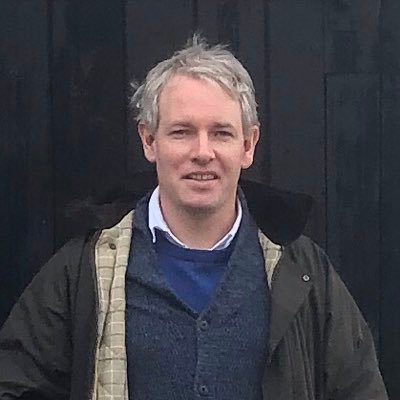
The following was first published in Marlborough News Online and is effectively an open letter to the newly elected MP for the Devizes Constituency (which includes Marlborough).
The election is over and, given its large majority in parliament, we’re likely to have a Conservative government for the next 5 years. At the same time, serious action on climate change needs to be taken within years, rather than decades, and so we must encourage the current government to take all the necessary steps. We don’t have the luxury of waiting for another government if you happen to not like the Boris Johnson one.
I was therefore delighted when Danny Kruger dedicated his first blog, as our new Conservative MP, to the issue of climate change. I was also happy with his emphasis on the important role that innovation and free-market economics could play. There’s a Climate Crisis and we must throw everything we have at the problem.
However, at the moment, you can make money from aggravating climate change (e.g. by finding oil) but you cannot make money from tackling climate change (e.g. by burying carbon dioxide underground). And guess what, our businesses therefore drive climate change because they’d go bust if they did anything else.
So the markets themselves need to be changed and that can only be done through government policy. If it costs more money to pollute than it does to take climate action then climate action will follow. It’s therefore about taxing “bads” rather than “goods” but such taxes will have to be imposed in a way that does not hit the least well-off in our society. This is not difficult, as my previous column on returning climate-tax revenues to the population as a Climate Income discusses. It was great to see the Telegraph promoting this idea, too, in an article it published on Boxing Day.
I’m also with Danny Kruger when he states, in his blog, that appropriate grazing methods can reduce (but not eliminate) the climate impact of livestock. But I disagree with his suggestion that grass-fed herds are the solution. To enhance burial of carbon in soils you need to use more radical approaches such as mob-grazing (cycling large herds through a number of small fields) and silvopasture (mixing grasslands, trees and livestock).
I’ve got one final point of agreement with Danny but, this time, it’s somewhat reluctant. It concerns a comment he made at one of the hustings, leading up to the election, when he said he disliked the term “Climate Emergency”. This earned hisses from the audience but “emergency” is defined, in most dictionaries, as a situation which is both dangerous and unexpected. Climate change is not unexpected. Scientists have been accurately predicting the consequences of increased greenhouse gas levels since the 1890s (that’s not a typo). Perhaps “Climate Crisis” is a better phrase—“Crisis” is defined as a time of intense difficulty or danger. I think that describes the situation nicely.
First Published in Marlborough News Online