Category: lobbying

  • The power of the pen/keyboard!

    The power of the pen/keyboard!

    The CCL Media Team (open to anyone) inspires members to write to newspapers and journals. We alert each other to opportunities and encourage each other’s efforts. It seems to be getting easier to get letters published because of the growing concern about climate change.

    I wrote a letter in response to the article by Mark Carney in the New Scientist back in March, not only was my letter published, but also a second letter responding to a criticism of my first letter!  This week another CCL Media team member, Gareth Ackland, has had his brilliant letter published: 

    Your excellent feature on the Climate Crisis was helpful in including a “What can I do?” section. While the impact of personal lifestyle changes is dwarfed by the impacts governments can make, if enough of us commit to reducing our carbon footprint, it can still accomplish a lot.

    However, the best option for an individual is surely to collapse that power gap. Organizations such as Hope for the Future and Citizens Climate Lobby insist that the most significant action an individual can take is to engage their elected representatives in the problems we face and their possible solutions. Those of us who live in democracies often forget that the wheels of power are intended to be subject to our views and interventions. If you’re not bending your government’s ear, then who is?

    Maybe I am being optimistic but three letters within two months seems to imply a growing interest in hearing about a fair and effective solution to creating the right conditions for a low carbon economy to take root. Our MPs and Councils may also be more receptive, especially if they are aware of the new IEA report!

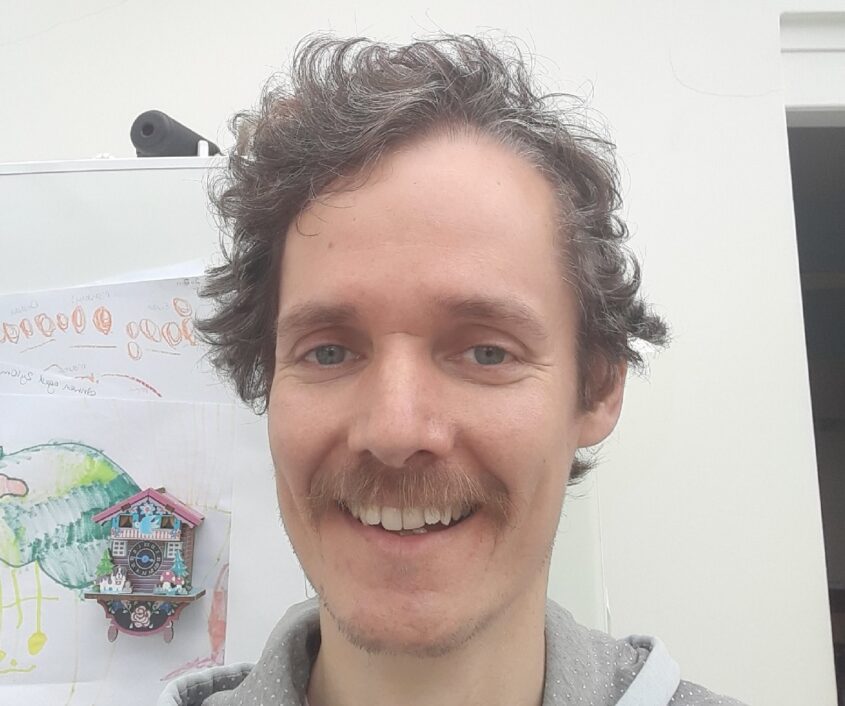
    For further advice on letter writing or lobbying please see the Who supports a Climate Income, Climate Income/Carbon fee and dividend – further information and Take Action pages for inspiration and information and consider joining our media team for team support and inspiration (email here). Finally, in case you were wondering, our star letter writer is not standing in front of his letter to The New Scientist!
  • April Action – Local Elections Count

    April Action – Local Elections Count

    As Kevin Frea, the speaker at last month’s national meeting told us, we need to seize the opportunity offered by these elections to tell our local representatives about Climate Income and gain their support for this brilliant policy. Climate Change is set to be on the agenda; the Liberal Democrat leader Sir Ed Davey, for example, has urged more council involvement in climate policies (BBC). There may even already be an environmental organisation in your area which is coordinating a campaign on this issue, such as Wiltshire Climate Alliance. The Alliance held a debate (Facebook, starts properly at 9.45 mins), involving the Wiltshire leaders of the main political parties on the 15th April.

    Although local councils have no say in national fiscal policy many are setting an example to the government by introducing greener policies in areas they do have control over such as social housing and transport, in advance of government regulations.

    Councillors can show MPs how much local support there is for green measures and thus, if they realise its benefit, could act as advocates for the policy of Climate Income to national politicians.

    We need to contact all the candidates of whatever political party or none.

     On THURSDAY MAY 6th there are elections covering:

    Local Councils, Mayoral and London Assembly, Police and Crime Commissioners and the Scottish and Welsh parliaments. All of these institutions have a great deal of influence.

    Full information about these elections can be found here:

    April 22nd’s action comes in 3 stages:

    1. Check you’ve received your polling card and know where to go to vote.

    If you need to register you must do so by 19th April. Apply here

    2. Check the names and contact details of the candidates:

    Local Elections: Look on your local council website for a list of candidates, do you personally know anyone you could contact?

    Mayors, Police and Parliamentarian: Once again if you have a personal contact use it.

    3. Contact:

    Even if you can’t contact them as a personal contact you can email and ask about their views on climate change and how their role or organisation can influence local and national policy to mitigate climate change. Include your name and postal address so they know you are in their area. Don’t forget to wish them good luck and ask for a response. You may have to look up their contact details on the Who Can I Vote For? website.

    Remember this is just the start of a conversation; you can carry on and explain the climate income policy once they have been elected.

    Our page on contacting your M.P gives ideas for emails and can easily be adapted:

  • Time to Push BCAs?

    Time to Push BCAs?

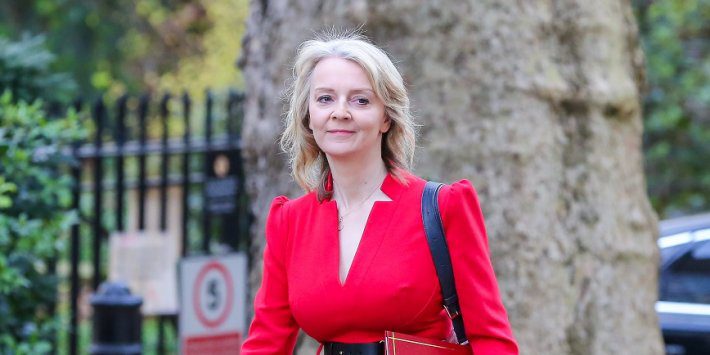
    BCAs are currently quite a hot topic. The Sun recently reported that UK Secretary of State for International Trade (Liz Truss) will promote them at the G7 meeting in June. BCAs are also a key component of the EU’s “Green New Deal” and may well be introduced by the EU from the start of 2023.

    So, perhaps this is the moment for us to promote one specific component of a carbon-fee and dividend scheme. Perhaps the time has come for a big push for BCAs. We could start by writing to our MPs to suggest they ask Liz Truss to engage with the free-allocations consultation. She may not even be aware of it and may not have yet made the link between BCAs and ETS free-allocations. Something like:

    Dear XXX

    As a constituent deeply concerned about climate change, I was delighted to see that our International Trade Secretary (Liz Truss) has become interested in Border Carbon Adjustments (BCAs, as reported by The Sun on March 30th). Could you possibly ask the Trade Secretary, on my behalf, if she is aware of the current Government Consultation on free allocations in the UK-ETS? Could you also ask her whether discussions within BEIS have looked at the option of phasing out free-allocations and replacing them by BCAs?

    Yours sincerely

    Further information on BCAs:

    Canada Laser talk on Border Carbon Adjustments (BCA)

    Current Developments in Domestic Climate Mitigation Measures (by WTO) – downloads powerpoint presentation

    BCAs – powerful if combined with just transition, article by OECD

    BCAs in the EU – report by European Roundtable on Climate Change and Sustainable Transition

    Article by Centre for Strategic and International Studies

  • Climate Income and how to influence your local MP!

    Climate Income and how to influence your local MP!

    I became interested in joining Citizens Climate Lobby after attending an excellent presentation on Climate Income (CF & D) in Devizes from CCL activist Dave Waltham in 2019. After Dave’s talk I decided that the best way to get CCL’s message across to our top politicians was to contact my local MP, who is obliged to respond to a letter from a constituent. Researching his website, I was able to find out his general interests and sign up for a copy of his regular Newsletter.

    I discovered that our MP, Danny Kruger, had established an organisation helping ex convicts and championed other social concerns before becoming a parliamentarian in 2019. It is a good idea to acknowledge the MP’s particular area of interest when you correspond with them, even if just to say I agree with so and so but not your choice of football team!

    Another useful website to refer to is They Work For You where you can find out a great deal about your local MP including their parliamentary roles, committee membership and voting history. The UK Parliament website is useful for checking how a MP prefers to be addressed and their email contact details. For further advice on letter writing you can email [email protected]. If you send an email to your MP please cc [email protected] so we can keep track of who has been written to.

    I would suggest a real letter for your initial correspondence, addressed to your MP’s correct title …

    The Right Hon Blah Blah, MP

    House of Commons,

    London,

    SW1A 0AA

    When writing on any subject do remember to praise your MP and their team for the work they are currently doing. It is helpful to encourage a considered response by asking a question and state that you are looking forward to their response. Unless your MP is in the Cabinet it is worth asking that they pass on your letter to the relevant cabinet member or department such as Alok Sharma or the Treasury Office.

    For an opposition MP it may be more realistic to ask them to pass your letter onto the relevant shadow minister. Follow up any communication received as persistence shows that you really care about the issue and want the Government to act on your concerns. The helpdesk can advise on how to respond to replies, especially when the BEIS are trying to blind you with science!

    My first letter to Danny was written just under a year ago. A year later, my correspondence, along with a few letters from other Devizes CCL members and lobbying from a local transition group has paid off! Our MP, who had admitted to little knowledge of, or interest in climate change a year ago, has since organised the Wiltshire Climate Summit and frequently fields questions to Alok Sharma!

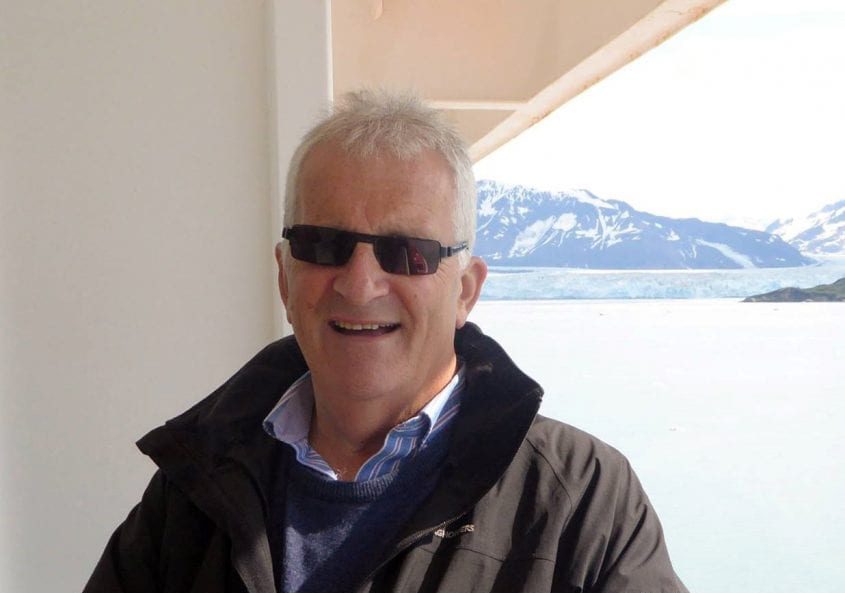
    The photo features me hoping a glacier won’t melt too soon on a (pre-Covid) trip of a lifetime in Alaska!

    Good Luck!

    Richard Day

    CCL Devizes

  • Why is respect important?

    Why is respect important?

    A gender equality charity reported recently its research on the representation of women in parliament.

    Only one third of MPs are women with only three female cabinet ministers.

    The reasons for this are many and varied, such as sexism or an absence of maternity or compassionate leave and sexism, but one stands out as something we, as constituents and activists, can all do our bit towards countering: The Fawcett Society found that seven out of ten women would not enter politics because of perceived potential abuse or harassment.

    I have witnessed this myself – the anger shown towards our politicians on social media; in town councils where unpaid councillors have been shouted out, belittled and berated.

    And this isn’t just words, remember Jo Cox.

    What kind of elected representatives should we expect if we subject them to such an environment? Only the ones who can survive a deeply hostile environment and possibly thrive on the drama. Do we only want those sorts of people to represent us? Or do we want kind people, honest people, empathetic people? ‘Soft’ people?

    CCL’s key values include respect and gratitude for the work our elected representatives do, regardless of their politics. Our MPs are human beings who are there as our public servant and, as any of us do, respond better to praise.

    My MP has stated that his staff go through his correspondence and bin anything offensive – this was after the school meals extension vote (he voted along government lines, ie against) and constituents vented their passion in writing calling him ‘scum’ and the like. Despite my personal feelings on this matter, it’s important to work through those strong emotions before putting finger to keyboard. Your MP will far more likely respond to a reasonable counter argument, or a personal story as to the detrimental affect of such a vote. If you feel your MP is working off duff evidence, then direct them to fresh evidence. If you think their experience does not include the dire experience of not having enough food to feed their children, share that experience with them, kindly, and help build their empathy.

    And the best way to build empathy is for you to show empathy.

    Even better, write to them and politely ask for their reasons, get their best arguments out so you can respond to them with empathy. Another way to depersonalise an unhelpful stance – say, standing against climate change measures – is to ask them to pass your thoughts to the relevant minister and get back to you with an answer. Usually, if an MP values their position within their party they will vote along party lines, whipped or no, so it’s more relevant for them to pass comment along to the most senior minister with the power to affect policy.

    I aim to have a interesting conversation with my MP, one which invites their opinion and which they will be happy to continue.

    I hope that our brilliant and respectful members of CCL will be a reason that women (and people of all backgrounds, ethnicity and more) feel able to put themselves forward to do the important job of representing our interests in parliament.

    We can all do our bit in lowering the temperature over hot issues whether that’s in correspondence or on social media or personal interactions – increasing trust – but remaining firm – will get the job done faster than shaming and shouting – and help keep our MPs safe from harm.

    Everyone should feel able to do their job without fear of abuse and harassment, and that especially includes MPs.

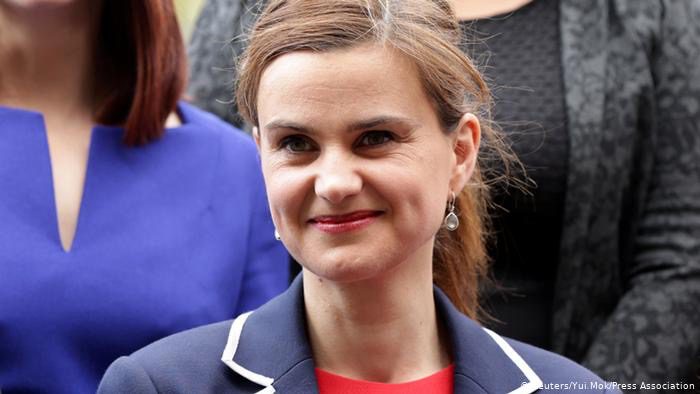
    Pictured: Jo Cox

    If you haven’t already, I urge you to take part in our Motivational Interview training by Vince Schutt. He coaches us in the art of keeping on top of those reactive actions and how to open conversation up rather than closing it down, persuasion through trust.

  • What engagement with our MP has led to……

    What engagement with our MP has led to……

    When the Devizes CCL group arranged a meeting with our new MP Danny Kruger in early 2020 he admitted that he was no expert on the issue of climate change and had no particular opinion on it but he was willing to learn more…..

    We were not disheartened and did our research on Danny’s concerns and how to engage with him. Thanks to the persistence of one of our members, Richard Day, in writing to Danny on the issue of CF&D, and the engagement of other local environmental groups such as Sustainable Devizes, Danny has recently hosted the Wiltshire Climate Summit (A.M) and P.M

    Judy Hindley, one of the founder members of CCL UK wrote a report on the summit for the online Marlborough News…….

    Roughly two years ago,  Wiltshire Council declared a climate emergency and called for Wiltshire to become carbon neutral by 2030.  On Friday, 19 February,  200 of us joined an all-day Zoom to begin for the first time to discuss, as a community, the specifics of how this might be achieved.

    The session included contributions from the Council, The MOD, (who are taking the security threat of climate change very seriously and acting fast), farmers, conservation and energy businesses, a Green Party representative, a government spokesman, our former MP Claire O’Neill and our local hero Joe Brindle…

    Eighteen-year-old Joe Brindle, leader of the Teach the Future Campaign (whose presentation was perhaps the best received of all), called for a new deal in schools, so that teachers are trained to convey the full facts of the changing climate, and pupils leave school with the right skills and knowledge to find secure, future-fit work in the green economy.

    Despite connection difficulties which were a sharp reminder of the shortcomings of the rural broadband roll out, CCL leader Louisa Davison delivered a strong argument for the CF&D policy…

    A Wiltshire farmer Tim Wade raised the unasked question of how much Johnson’s Ten Point Plan  – and this transition to Net Zero –  will cost.  ‘Who will pay?’ he asked.

    But immediately afterwards, Louisa Davison of Citizens’ Climate Lobby UK supplied a large part of the answer. 

    With Climate Income, the policy advocated by CCL UK,  fossil fuel companies themselves will start to do so,  via a steadily rising fee returned in equal shares to all of us citizens.  It’s been estimated that this policy alone will lower emissions by 40% in just 12 years – at no cost to government or tax-payer.

    With the environment constantly in the headlines at the moment (was there ever such a concern about the environmental effects of a forthcoming Budget?), now is the perfect time to get a dialogue going with your MP and other local environmental groups on local and national solutions to climate change including, of course, CF&D!

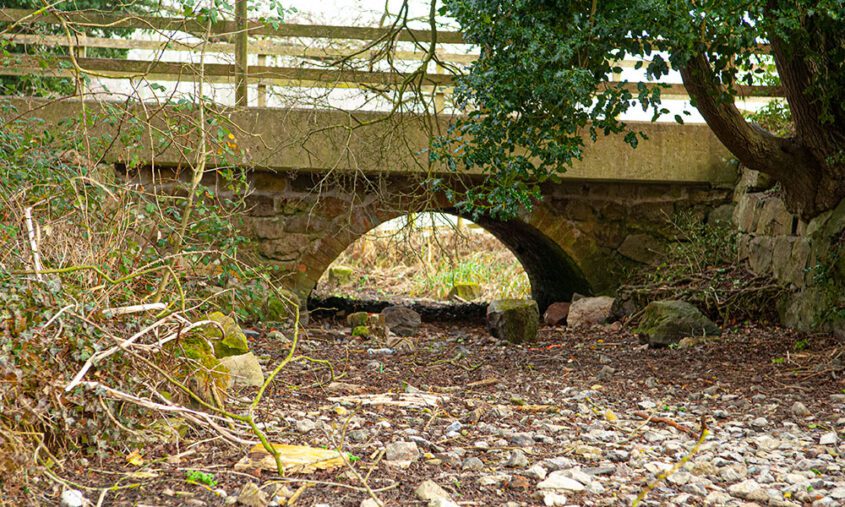
    Pictured above : The dried up River Kennet at Manton, Wilts last summer – a sign of things to come?

  • CCL-UK Launches Helpdesk

    CCL-UK Launches Helpdesk

    Photo by Alex Kotliarskyi on Unsplash

    It takes courage to write a letter to your MP (or any of the many other people we lobby in CCL) and we’re incredibly proud of all of those members who have done so. Every letter makes a difference!

    But once you’ve made that first contact you may find, as many members have, that the reply is a standard letter that ignores your key points or is jargon-filled and almost incomprehensible. What do you do next?

    The temptation is to give up and move on; life is too short for “wading through treacle”. However, as many members have again seen for themselves, this can be the critical moment—an opportunity to clinch true engagement. Most correspondents do give up at this point and so you will stand out if you persist.

    However, we know that this next step is daunting and that’s why we’ve created a helpdesk, an email account you can contact if you’ve had a reply and you’re not sure how to respond. It’s not quite as fancy as the picture above (it’s just three of us working from home) but we’ll do what we can to help. Just email us (if that link doesn’t start your email, right click on it and copy the address manually into an email). Attach any reply that you’ve had. We’ll get back to you and see if we can help find a constructive and respectful, yet incisive, way to take your correspondence to the next stage.

  • Jim Hansen’s Letter to the PM

    I hope many of you caught the news of top climate scientist, Jim Hansen, and his letter to Boris. I’m reposting it in this blog with Jim’s permission but without further comment except to say that much of the, unreported, segment concerns carbon fee and dividend with CCL-UK being recommended as Boris’s next port of call!

  • The Zero-Carbon Commission

    The Zero-Carbon Commission

    The Zero Carbon Campaign (ZCC) is about as different from CCL as two organisations, with similar aims and acronyms, can get. Both organisations campaign for carbon pricing and both organisations have concluded that a carbon-dividend is vital to ensure fairness and effectiveness. But CCL is a grass-roots band of citizens whilst ZCC was set up by the founder of OVO Energy and is a commission of experts (including a former chair of the Climate Change Committee and the current executive director of Greenpeace UK). This is not a criticism of ZCC; there’s strength in diversity.

    In September 2020, ZCC published its “White Paper”—a report on How Carbon Pricing Can Help Britain Achieve Net Zero By 2050. There’s much in there for CCL to cheer including a call for the UK government to announce “a clear carbon-price trajectory”, to use the proceeds to “cushion rises in household bills” and to “investigate options for a multilateral border carbon adjustment”.

    ZCC is not advocating 100% revenue recycling into a dividend, as CCL does, but this should not stop us making common cause with an organisation whose aims have far more similarities than differences with our own. The publication of the White Paper is also an opportunity for us to publicise “climate income” and CCL-UK as an advocate for that policy.

    So what happens next? ZCC are asking the public (and organisations) to sign their declaration and to lobby MPs (sounds familiar!) They’re also planning a media campaign to pressure the government to adopt carbon pricing ahead of COP-26 in Glasgow. This will be centred around a “mock COP” to run in the second week of November this year, i.e. a year ahead of the real COP. These are all things we, in CCL, would support or are already doing.

    I’ve been asked, by CCL’s steering group, to keep an eye on developments and to involve CCL where appropriate. I’ll try to keep you all up to date and please feel free to contact me, through the comments below, if you want to be involved too.

  • Virtual mass lobby – useful, but not the only chance

    Virtual mass lobby – useful, but not the only chance

    I have been a member of CCL for just over a year, having been persuaded by a talk by Prof. David Waltham that this was a group which had an effective and doable solution to climate change and a democratic and sensible way of achieving their goal. 

    I wasn’t really sure how much the mass lobby last year had achieved and signed up to attend this one with some trepidation, especially as our Devizes CCL group had already started correspondence with our new Conservative MP Danny Kruger and a Zoom meeting at which we had managed successfully to get him to agree to look into the current government thinking on climate policy issues and report back to us. I was worried that the virtual lobby may  jeopardise the good rapport we had built (which is so embedded in the principles of CCL but not in that of other pressure groups).  

    We started thinking about strategy in advance and decided to use a question based on the carbon pricing report published earlier in the month (which we would have lobbied our MP about even if the mass lobby hadn’t happened) and to suggest all CCL lobby participants used it.  This was a question which all MPs could do something about, by agreeing to ask about this issue in parliament, and could be the ‘beginning of a beautiful friendship’ or at least a productive one between CCL groups or individuals and the local MP. 

    The Constituency Office had asked for questions to be submitted beforehand which meant the MP could be prepared to a certain extent and time wouldn’t be wasted. We decided that one person who had been most active in engaging with our MP and building a good rapport would field the question. I think this helped the MP to feel comfortable with the process. Strategy was finalised in a Zoom meeting the night before.

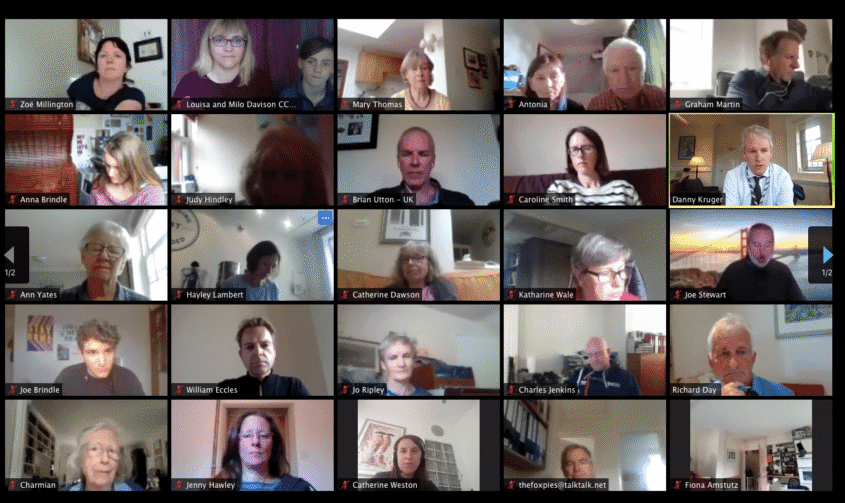
    I think because of the rapport we had built with Danny Kruger he decided to have our question first, which was a huge relief because I was worried that the lobby would be taken over by lots of vague demands that no Conservative MP would be likely to have truck with and we would have no time to field our question. We were allowed to ask secondary questions, ‘putting a hand up’ in the chat box if we wanted to ask a question, the MP could then decide who would speak next. 

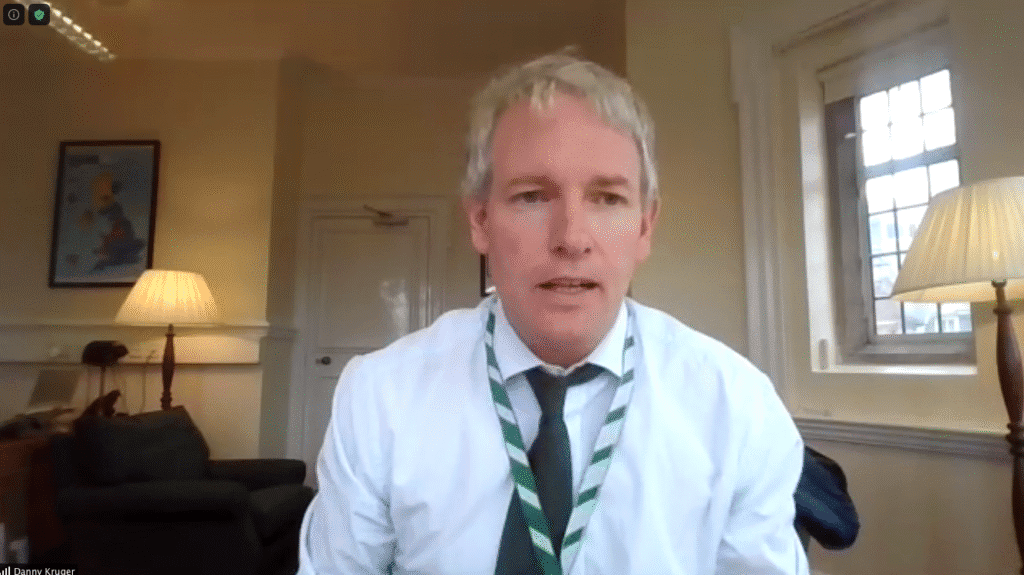
    MP Danny Kruger in the Zoom virtual lobby

    The Government’s plan to revive the economy had also been published the day before and this also enabled the other questions fielded to be very ‘concrete’  (pun intended) as they were asking about the emphasis on new build and roads rather than investing in retrofitting which had even been promised in the election manifesto. One participant was an expert in passive house construction, again this meant sensible questions could be asked about policy which the MP was capable of looking into. The chat function also enabled participants to add facts or links to information, I copied this to the CCL participants and the MP after the lobby as I am not sure what happens to the content of ‘chats’ afterwards. 

    The hour long ‘lobby’ went very well and was a means of showing our faces. I do feel that the success of the lobby owed a lot to the fact that we had already built a working relationship with the MP before the lobby, he knew that our approach would be respectful and positive and we knew his background and interests (as a new MP we had to do the research and know what not to mention!). In short, the lobby was a useful tool but should not be seen as the only opportunity to engage with your mp so if your voice wasn’t heard don’t despair, write a letter and hopefully get the ball rolling!  

    Judging by Danny Kruger’s constituency newsletter released on Saturday the 4th the lobby has achieved what we had hoped for! Danny has gone public on his commitment to discuss carbon fee and dividend (aka climate income) with the government and to look into the retrofitting issue further. Result!

    Catherine Dawson took part in The Climate Coalition’s The Time is Now virtual lobby on 30th June 2020. More than 30 people, of which a third were CCL UK members, took part in the Devizes Constituency meeting with Conservative MP Danny Kruger.