Category: Carbon fee and dividend

  • The power of the pen/keyboard!

    The power of the pen/keyboard!

    The CCL Media Team (open to anyone) inspires members to write to newspapers and journals. We alert each other to opportunities and encourage each other’s efforts. It seems to be getting easier to get letters published because of the growing concern about climate change.

    I wrote a letter in response to the article by Mark Carney in the New Scientist back in March, not only was my letter published, but also a second letter responding to a criticism of my first letter!  This week another CCL Media team member, Gareth Ackland, has had his brilliant letter published: 

    Your excellent feature on the Climate Crisis was helpful in including a “What can I do?” section. While the impact of personal lifestyle changes is dwarfed by the impacts governments can make, if enough of us commit to reducing our carbon footprint, it can still accomplish a lot.

    However, the best option for an individual is surely to collapse that power gap. Organizations such as Hope for the Future and Citizens Climate Lobby insist that the most significant action an individual can take is to engage their elected representatives in the problems we face and their possible solutions. Those of us who live in democracies often forget that the wheels of power are intended to be subject to our views and interventions. If you’re not bending your government’s ear, then who is?

    Maybe I am being optimistic but three letters within two months seems to imply a growing interest in hearing about a fair and effective solution to creating the right conditions for a low carbon economy to take root. Our MPs and Councils may also be more receptive, especially if they are aware of the new IEA report!

    For further advice on letter writing or lobbying please see the Who supports a Climate Income, Climate Income/Carbon fee and dividend – further information and Take Action pages for inspiration and information and consider joining our media team for team support and inspiration (email here). Finally, in case you were wondering, our star letter writer is not standing in front of his letter to The New Scientist!

  • A blunt warning from the International Energy Agency but we can do something….

    The IEA has just published Net Zero by 2050: A roadmap for the global energy sector. The report states that:

    The world needs a “radical” shift towards renewables to reach net-zero emissions by 2050 and secure the 1.5C goal.

    It argues for a total transformation of the energy systems that underpin our economies, with no new oil or gas sites to be developed beyond this year. Current emissions reduction pledges are inadequate, and indeed despite past pledges emissions have risen by 60% since the United Nations Framework Convention on Climate Change was signed in 1992! (This really makes me shudder as 1992 was the year I became a mother).

    “Beyond projects already committed as of 2021, there are no new oil and gas fields approved for development in our pathway, and no new coal mines or mine extensions are required.”

    Responses have been mixed as you can imagine. The Energy Monitor article, Net zero: keeping fossil fuels in the ground is the only corporate strategy possible discusses what fossil fuel companies should be doing and gives good examples of how some European companies have transformed themselves.

    Happily by the end of May 21st G7 members had decided to heed the IEA demands on financing coal production in the main….

    “We commit to promoting the increased international flow of public and private capital toward Paris Agreement-aligned investments and away from high-carbon power generation to support the clean energy transition in developing countries. In this context, we will phase out new direct government support for carbon-intensive international fossil fuel energy, except in limited circumstances at the discretion of each country, in a manner that is consistent with an ambitious, clearly defined pathway towards climate neutrality in order to keep 1.5C within reach, in line with the long-term objectives of the Paris Agreement and best available science.

    “Consistent with this overall approach and recognising that continued global investment in unabated coal generation is incompatible with keeping 1.5C within reach, we stress that international investments in unabated coal must stop now and commit to take concrete steps towards an absolute end to new direct government support for unabated international thermal coal power generation by the end of 2021, including through Official Development Assistance, export finance, investment, and financial and trade promotion support.”

    All the more reason to keep pushing for CFD to facilitate the move away from fossil fuels!

    I am sure you will have noticed the explosion of coverage on the climate crisis over the last year, even in sections of the press which have hitherto been in denial! Often, of course, you will find that if a carbon price is mentioned it is presumed to be an assault on our way of life – cheese, meat and holidays in the sun! I do wonder if fear of the ‘red tops’ is one of the reasons why the Government stated in The Future of Carbon Pricing Report (2020) that..

    While we recognise the merits of a Carbon Fee and Dividend policy, we do
    not propose to adopt it at this time.

    Articles or letters claiming that climate change policies are bound to be punitive offer a great opportunity to respond with the case for CF&D (or use the more appropriate term Climate Income), pointing out that CI is not like the green levy or even fuel duties because the fee is returned as a dividend to offset the rising cost of fossil fuels until they are basically priced out of the market, thus making the promises made at the G7 and to be made at COP26 more likely to be achievable!

    The IEA report emphasises the need for this to start now!

  • Launch of a new tool to track progress in reaching net zero.

    Launch of a new tool to track progress in reaching net zero.

    The 10 Point Plan and subsequent emission reduction targets were far from lacking in ambition. Many commentators, however, are saying that words are easier than actions and, for example, agriculture and hydrogen use strategy remain unpublished 6 months after the 10 Point Plan and 6 months before COP26.

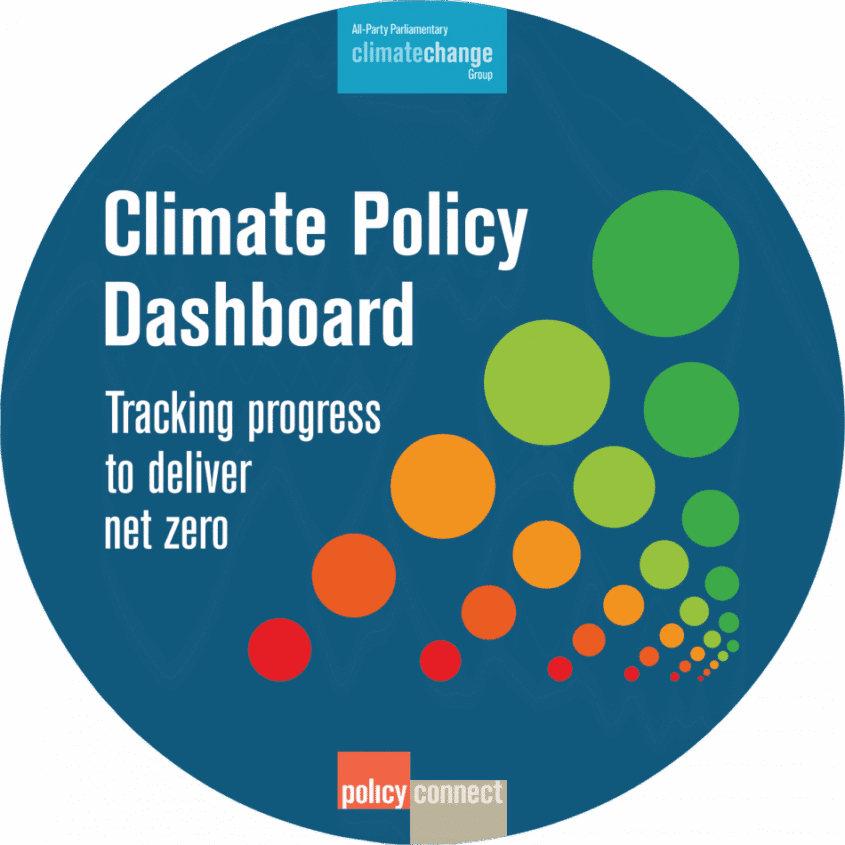
    I have just watched a presentation by the All Party Parliamentary Group on Climate Change on the launch of an online tracker which enables anyone to see what progress the government is making against the objectives stated in the Committee on Climate Change’s 6th Carbon Budget. 

    It looks like a very useful tool to use when preparing to write to/lobby your MP or Council to make the case that Climate Income would go a long way in smoothing the path to Net Zero.

    It was also encouraging to see the APPCC panel’s concern with the delays in policy formulation and implementation – although it was pointed out that MPs no longer have to spend their time trying to reason with climate change deniers in the House! I particularly appreciated the comment by the Chair, broadcaster Tom Heap, of how many trees could have been planted (and then stewarded) as part of a Covid exercise/mental health policy! I might add, as a range anxious EV car user, how many more EV chargers could have been installed over the last year!

    On the 18th May Policy Connect sent further information with useful links:

    The Dashboard is objectivemulti-levelconstructive and transparent. The Dashboard uses around 100 independent policy recommendations from the Climate Change Committee (CCC) to define good-practice in climate policy. Providing an in-depth analysis of each individual policy recommendation and aggregating this to provide an overall progress score for each sector, the Dashboard gives a multi-level perspective on policy development. The Dashboard provides constructive criticism and recommendations to the Government on how best to improve climate policy and, by publishing all workings and methodology, is a transparent assessment of progress.

    Government policy is most highly ranked in the power sector, which receives a 6/10 progress score, while the Government receives a score of 2/10, or critically insufficient, for its development of climate policy in the waste sector. The Dashboard will be updated as the Government releases new policies and the CCC provides new recommendations, and will continue to track Government progress in introducing policy to get the UK on track to meet its climate targets.

    All speakers agreed that the Dashboard was an excellent tool that would help parliamentarians, campaigners and the wider public support and scrutinise the Government in developing climate policy. Tom Heap summarised the Dashboard as “easy to use and available to all, providing excellent analysis on UK climate policy.”

    In the following discussion with MPs, a range of topics were discussed, including areas where the Government has been successful in introducing climate policy, areas where further action is essential and the need for cross-Governmental and cross-societal engagement in climate policy development and implementation. There was also specific discussion around the Hydrogen Strategy, the role of trees and nature-based solutions in meeting our climate targets, and decarbonising the buildings and transport sectors.…..see our write-up on the Policy Connect website. Take a look at the Climate Policy Dashboard, and to learn more about the APPCCG and their work in the run-up to COP26.

  • Might your local Council call for Carbon Fee & Dividend?

    Might your local Council call for Carbon Fee & Dividend?

    In the next few months such a call may well be made by Milton Keynes Council. Here is the back-story.

    First, the local context. MK has a hung Council with good green credentials – it was very early to declare a Climate Emergency, for example. MK also has a lively chapter of Citizens UK, which works through community organizing (building local alliances of civil society, faith institutions, and grass-roots groups). Our local chapter, Citizens:mk, working as part of a emerging Thames Valley Citizens, staged a pre-election Assembly, with the principal PCC candidates and the Council Leader candidates all invited and turning up. One of the Citizens:mk campaigns was for Action on Climate and the Environment (ACE) – other campaigns concerned Digital Exclusion, Police & Young people, Timely Burials and Action on Misogyny. So this was quite a complex programme with limited time to present supporting testimony as well as make the asks themselves, and to hear responses from the various candidates.

    The ACE campaign had three ‘asks’ prefaced by testimony from the Rt Rev Olivia, Bishop of Reading and from two remarkable primary School children. One ask, framed by COP 26 and pursuit of its 2030 carbon neutrality target, was

    Within three months of taking office as Council Leader, will you commit to seeking all-party support for a Council resolution that commends a national policy based on Carbon Fee & Dividend; and meeting with us to discuss appropriate wording for this?

    Through pre-meetings, the Council Leader hopefuls were aware that something on these lines would be presented. So how did they respond? The short answer is positively. All three were unequivocal about meeting, with this as the agenda item. One gave a clear-cut ‘yes’ to bringing such a resolution forward. Another was hopeful of agreeing to bring forward the resolution, but wanted to check it out further so as to be sure the poorest would not be adversely affected The third, drafted in at very short notice that afternoon (the Council Leader’s father had died) felt uneasy about committing on an area for which she was not the Cabinet Member.

    The tenor of their comments seemed as significant as these specific responses: all three, in different ways, acknowledged that this was a policy idea they had not come across, and said they found it attractive and credible. One gave an impromptu pitch for it, another expressed gratitude for having been introduced to it. All this in front of a zoom audience of 200+.

    What happens next? All we can be sure of is that we will have that meeting. I believe we are ‘odds on’ to get a resolution as well. However, without the election pressure, and in the face of so many competing calls on their attention, not to mention party loyalties and ambitions, some backsliding on the part of the next Council Leader would be no surprise, even understandable. Which is why the ACE campaign is working on the follow through: mobilising further support and preparing a range of options for how the resolution could be framed and to whom it would be directed (these matters were deliberately left open).

    What might this mean for you as a CF&D activist where the situation is very different? Perhaps there are other existing groupings and networks you can work through. Might there be support for an all-party resolution in your Council? Ask to have coffee with someone who has some sort of standing, to seek their advice…

    At the risk of sounding corny, nothing is as powerful as an idea whose time has come.

  • April Action – Local Elections Count

    April Action – Local Elections Count

    As Kevin Frea, the speaker at last month’s national meeting told us, we need to seize the opportunity offered by these elections to tell our local representatives about Climate Income and gain their support for this brilliant policy. Climate Change is set to be on the agenda; the Liberal Democrat leader Sir Ed Davey, for example, has urged more council involvement in climate policies (BBC). There may even already be an environmental organisation in your area which is coordinating a campaign on this issue, such as Wiltshire Climate Alliance. The Alliance held a debate (Facebook, starts properly at 9.45 mins), involving the Wiltshire leaders of the main political parties on the 15th April.

    Although local councils have no say in national fiscal policy many are setting an example to the government by introducing greener policies in areas they do have control over such as social housing and transport, in advance of government regulations.

    Councillors can show MPs how much local support there is for green measures and thus, if they realise its benefit, could act as advocates for the policy of Climate Income to national politicians.

    We need to contact all the candidates of whatever political party or none.

     On THURSDAY MAY 6th there are elections covering:

    Local Councils, Mayoral and London Assembly, Police and Crime Commissioners and the Scottish and Welsh parliaments. All of these institutions have a great deal of influence.

    Full information about these elections can be found here:

    April 22nd’s action comes in 3 stages:

    1. Check you’ve received your polling card and know where to go to vote.

    If you need to register you must do so by 19th April. Apply here

    2. Check the names and contact details of the candidates:

    Local Elections: Look on your local council website for a list of candidates, do you personally know anyone you could contact?

    Mayors, Police and Parliamentarian: Once again if you have a personal contact use it.

    3. Contact:

    Even if you can’t contact them as a personal contact you can email and ask about their views on climate change and how their role or organisation can influence local and national policy to mitigate climate change. Include your name and postal address so they know you are in their area. Don’t forget to wish them good luck and ask for a response. You may have to look up their contact details on the Who Can I Vote For? website.

    Remember this is just the start of a conversation; you can carry on and explain the climate income policy once they have been elected.

    Our page on contacting your M.P gives ideas for emails and can easily be adapted:

  • Climate Income and how to influence your local MP!

    Climate Income and how to influence your local MP!

    I became interested in joining Citizens Climate Lobby after attending an excellent presentation on Climate Income (CF & D) in Devizes from CCL activist Dave Waltham in 2019. After Dave’s talk I decided that the best way to get CCL’s message across to our top politicians was to contact my local MP, who is obliged to respond to a letter from a constituent. Researching his website, I was able to find out his general interests and sign up for a copy of his regular Newsletter.

    I discovered that our MP, Danny Kruger, had established an organisation helping ex convicts and championed other social concerns before becoming a parliamentarian in 2019. It is a good idea to acknowledge the MP’s particular area of interest when you correspond with them, even if just to say I agree with so and so but not your choice of football team!

    Another useful website to refer to is They Work For You where you can find out a great deal about your local MP including their parliamentary roles, committee membership and voting history. The UK Parliament website is useful for checking how a MP prefers to be addressed and their email contact details. For further advice on letter writing you can email [email protected]. If you send an email to your MP please cc [email protected] so we can keep track of who has been written to.

    I would suggest a real letter for your initial correspondence, addressed to your MP’s correct title …

    The Right Hon Blah Blah, MP

    House of Commons,

    London,

    SW1A 0AA

    When writing on any subject do remember to praise your MP and their team for the work they are currently doing. It is helpful to encourage a considered response by asking a question and state that you are looking forward to their response. Unless your MP is in the Cabinet it is worth asking that they pass on your letter to the relevant cabinet member or department such as Alok Sharma or the Treasury Office.

    For an opposition MP it may be more realistic to ask them to pass your letter onto the relevant shadow minister. Follow up any communication received as persistence shows that you really care about the issue and want the Government to act on your concerns. The helpdesk can advise on how to respond to replies, especially when the BEIS are trying to blind you with science!

    My first letter to Danny was written just under a year ago. A year later, my correspondence, along with a few letters from other Devizes CCL members and lobbying from a local transition group has paid off! Our MP, who had admitted to little knowledge of, or interest in climate change a year ago, has since organised the Wiltshire Climate Summit and frequently fields questions to Alok Sharma!

    The photo features me hoping a glacier won’t melt too soon on a (pre-Covid) trip of a lifetime in Alaska!

    Good Luck!

    Richard Day

    CCL Devizes

  • Come back Mark Carney, we need you – Canada has already got it!

    Come back Mark Carney, we need you – Canada has already got it!

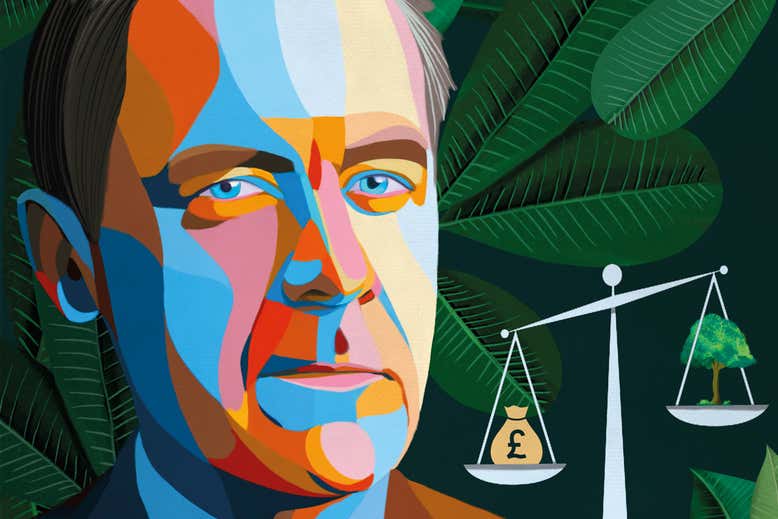
    If we still had Mark Carney as the Governor of the Bank of England we might have been looking forward to a COP 26 where the UK delegation steers the world away from climate change disaster. The UK would be encouraging other countries to follow its example by adopting CF&D and Border Carbon Adjustments. I have come to that depressing conclusion after reading an interview in the New Scientist (pay wall) in which he gives a convincing argument for CF&D.

    Mark is rightly hopeful about the technological advances which are making a zero carbon economy so much more doable than it was even a decade ago (which is what Boris is relying on, despite the fiscal policy doing little to encourage risky investments). Mark is, however, clear headed enough to see that the current fiscal and legislative regime doesn’t reveal the true cost of fossil fuels or prevent regressive legislative delays/short term policies in the building, steel, aviation, transport industries, to name but a few. Indeed, today’s Carbon Brief Daily, reporting on an article in Reuters, (paywall), says it all…..

    by not paying for their damaging effects on the climate and human health, US coal, natural gas and motor fuel producers (gain) “implicit benefits worth tens of billion of dollars a year”.

    Mark agrees with the interviewer that carbon pricing is necessary and cites the example of Canada to prove that the ‘gilets jaunes’ effect, which has obviously recently spooked Boris, can be avoided….

    The problem is that a uniform carbon price is a regressive tax. The amount the less well-off pay for petrol or the carbon embodied in their food or heating is a bigger proportion of their incomes than it is for the better-off. But it is important to have a uniform carbon price. The solution is to rebate individuals, as Canada has done with its recently designed scheme.

    The article concludes with an information ‘box’ (for want of a better description) written by the interviewer, Richard Webb. I can only wish that the rest of our media would get the message, and I don’t just mean the redtops…..

    In contrast, some of the schemes afoot now, for example in the European Union and Canada, plan to impose a flat tax per tonne of carbon dioxide or equivalent, with the aim of nudging entire economies away from polluting activities. As economies adjust, the carbon price is gradually raised, with the aim of promoting a virtuous circle of lower-carbon living.

    That has the potential to be very unpopular. For that reason, economists suggest the best move is to rebate the money raised to individual consumers, particularly the less well-off. It might seem pointless taking money and giving it back. But it means that products like food or fuel that are more carbon-intensive are also more expensive, and this could help change consumer behaviour – while not putting anyone at any overall economic disadvantage.

    Canada’s federal carbon tax plan has all these features. Its carbon price, currently $30 a tonne, is planned to rise to $170 a tonne by 2030. The system is designed so that people in the bottom two-thirds of the income bracket get a rebate that pays them more than they put in, in the form of a quarterly “carbon dividend” to their bank account. Richard Webb

    If you subscribe to New Scientist please consider writing to congratulate them and especially Richard Webb for this brilliant interview which is so much better than the interviews published elsewhere. Also do put in a plug for CCL, it would be great to get more New Scientist readers on board!

  • Mitt Romney argues for  CF&D.

    Mitt Romney argues for CF&D.

    It seems to me that the recent polar vortex is convincing many more people in the US about the urgent need to combat climate change. People are also encouraged by the pro-free market/carbon pricing approach argued for in the recent books by Bill Gates and Michael Mann.

    Hopefully we will be seeing far more Republicans supporting the need for decarbonisation (and CF&D as the means to do so) and Democrats realising it can complement the Green Deal.

    If CF&D gets on the statute books of the US our own government will have to take note! After all, as I have mentioned before once or twice, the report on the Future of Carbon Pricing in the UK (June 2020) stated that…

    Placing a price on carbon creates the incentive for emissions to be reduced in a cost effective and technology-neutral way, while mobilising the private sector to invest in emissions reduction technologies and measures. (p 39, para 201).

    Here you can see Mitt Romney giving a brilliantly simple explanation of Carbon Fee and Dividend and why he is supporting a new bill….

    https://www.facebook.com/CitizensClimateLobby/videos/446532953432756/

  • If you are a Labour Party member you can help persuade the party to adopt CF&D as a policy.

    If you are a Labour Party member you can help persuade the party to adopt CF&D as a policy.

    One of our members has noticed that an article on CF&D has been posted on the National Policy Forum (NPF). The article states that Labour should adopt CF&D as the key policy to achieve the UK’s climate ambition. The Forum is the main discussion platform for informing Labour policy and so it’s important that this post generates favourable comments and votes.

    If you are a Labour Party member please do vote and add your comments using the link above.  It would also be valuable for members to send letters to their Labour MP and a member of the Environment, Energy & Culture commission of the NPF.

  • What engagement with our MP has led to……

    What engagement with our MP has led to……

    When the Devizes CCL group arranged a meeting with our new MP Danny Kruger in early 2020 he admitted that he was no expert on the issue of climate change and had no particular opinion on it but he was willing to learn more…..

    We were not disheartened and did our research on Danny’s concerns and how to engage with him. Thanks to the persistence of one of our members, Richard Day, in writing to Danny on the issue of CF&D, and the engagement of other local environmental groups such as Sustainable Devizes, Danny has recently hosted the Wiltshire Climate Summit (A.M) and P.M

    Judy Hindley, one of the founder members of CCL UK wrote a report on the summit for the online Marlborough News…….

    Roughly two years ago,  Wiltshire Council declared a climate emergency and called for Wiltshire to become carbon neutral by 2030.  On Friday, 19 February,  200 of us joined an all-day Zoom to begin for the first time to discuss, as a community, the specifics of how this might be achieved.

    The session included contributions from the Council, The MOD, (who are taking the security threat of climate change very seriously and acting fast), farmers, conservation and energy businesses, a Green Party representative, a government spokesman, our former MP Claire O’Neill and our local hero Joe Brindle…

    Eighteen-year-old Joe Brindle, leader of the Teach the Future Campaign (whose presentation was perhaps the best received of all), called for a new deal in schools, so that teachers are trained to convey the full facts of the changing climate, and pupils leave school with the right skills and knowledge to find secure, future-fit work in the green economy.

    Despite connection difficulties which were a sharp reminder of the shortcomings of the rural broadband roll out, CCL leader Louisa Davison delivered a strong argument for the CF&D policy…

    A Wiltshire farmer Tim Wade raised the unasked question of how much Johnson’s Ten Point Plan  – and this transition to Net Zero –  will cost.  ‘Who will pay?’ he asked.

    But immediately afterwards, Louisa Davison of Citizens’ Climate Lobby UK supplied a large part of the answer. 

    With Climate Income, the policy advocated by CCL UK,  fossil fuel companies themselves will start to do so,  via a steadily rising fee returned in equal shares to all of us citizens.  It’s been estimated that this policy alone will lower emissions by 40% in just 12 years – at no cost to government or tax-payer.

    With the environment constantly in the headlines at the moment (was there ever such a concern about the environmental effects of a forthcoming Budget?), now is the perfect time to get a dialogue going with your MP and other local environmental groups on local and national solutions to climate change including, of course, CF&D!

    Pictured above : The dried up River Kennet at Manton, Wilts last summer – a sign of things to come?