Rob Paton updates us on the fantastic progress made by Citizens:mk and its future ambitions to go global, or at least England and Wales!
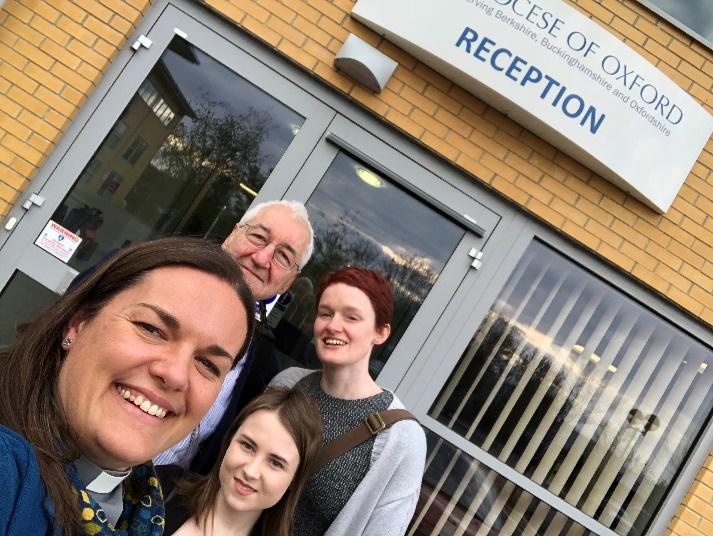
Last September at the Citizens:mk climate assembly, the Bishop of Oxford agreed to a request for a meeting to discuss Climate Income, and whether he might use his position on the House of Lords Climate & Environment Committee to promote the idea. He has a very full schedule, so December was the first available date… and then just beforehand, he suffered a nasty bout of Covid!. Finally, in late April, the meeting took place.
So what happened? Lauren Jeffrey presented our first ‘ask’: we wanted to cite him as a supporter of Climate Income and of our campaign, as we took it national through the network of chapters that make up Citizens UK. Would he consent to this? The reply was immediate – yes indeed (and without us needing to clear statements through his office in advance).
Then our second ‘ask’: would he invite us to the Lords to a meeting, whether formal or informal, as he thought best, to help increase understanding and support for Climate Income among parliamentarians?
Again he replied positively, though not unconditionally. Characteristically thoughtful, he said he needed time to consider when and how the meeting could best be ‘anchored’ in the processes of the Lords (and its Climate and Environment committee in particular – of which he is a member). Then he gave us an important and unexpected bonus – direct access to his two advisors (both of whom were clearly willing, thoughtful, and very well informed on Parliamentary processes as well as climate issues).
It was an intense two hours including some lively exchanges around how to bring the need for rising carbon prices into the policy process and public debate. We left feeling tired but elated. We had an important ally for what we see as our next steps – both locally, and working across the Citizens UK network to spread this word and bring other chapters on board, turning it into a national campaign. All that is needed is lots more hard work! – if you might like to be involved, please get in touch.
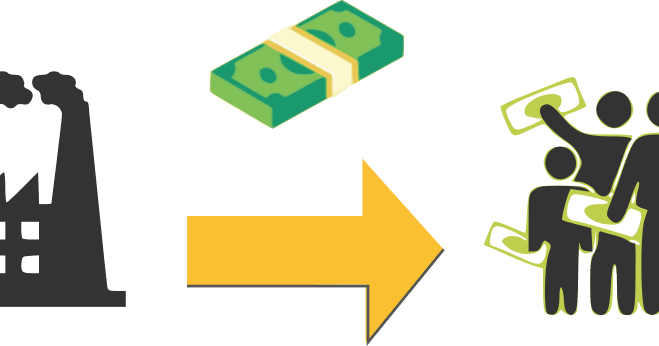
The progressive think tank Autonomy, which researches solutions for climate change, the future of work and economic planning published a (very readable) report titled ‘Toll Gates and Money Pumps: Why carbon taxation could be a simple, fair and transformative policy instrument’ on the 21st of March. The report outlines how a globally applied carbon fee and dividend policy would be extremely effective at lifting the poorest countries out of poverty and more than a billion people above the global poverty line, as well as combating climate change. There is an article on the report in the Independent.
The researchers modelled the global, European and nation state application of the scheme using two carbon prices. The lower carbon price is the current highest carbon tax worldwide, that of Sweden, at $137 per tonne, a price which makes it into the range indicated by IPCC to be needed by 2030 to stay below 1.5°C-warming. The higher carbon price modelled was $195, this is the rate for advanced economies proposed by the Federal Environment Agency of Germany. It states that the policy is not intended to preclude public spending on decarbonising industry, agriculture, homes and transport and commodities should be clearly labelled with the GHG emissions expended in manufacture.
The report states that the (lower) Swedish carbon price, applied globally, would be transformative, raising $2.69tn annually ……
While countries in South America, Sub-Saharan Africa, South-Asia and many other parts of the Global South would profit immensely, most developed economies would only see proportionally relatively small losses.
…..As a global policy, it could wipe out extreme poverty and easily dwarf the scope of any existing development aid and debt relief schemes, illustrating that, in this sense, it is the Global North that owes an immense debt to the populations in the Global South, not the other way round. It would also go a long way to alleviate the disastrous impacts the Covid pandemic has had on the world’s poorest and most vulnerable, with for instance an additional 100m children falling into poverty, and prevent global disparities from deepening as richer countries recover while poorer countries fall even further behind (UNICEF 2021b). Such a global carbon dividend scheme could end the bitter reality of mass hunger and destitution and be a key building stone of a fairer, more sustainable and more inclusive post-pandemic economy.
The authors do not address the issue of diminishing returns as the world economy decarbonises but the assumption is that the proceeds of the tax will enable all countries to embrace sustainable and fair economic development. The authors even suggest that the visible benefits of the fair distribution of the dividend could lead to…
the introduction of a more comprehensive, far-reaching UBI – implementing a global infrastructure for roll-out and, more importantly, materially recognize and implement the right to equal use of our planet.
Now that the results of our dependence on fossil fuels are so visible in the war on ‘our doorstep’ the world may be ready to welcome such ideas!
I posted this article on the Linked In Citizens’ Climate Europe page on the 22nd January and have been asked to reproduce it here. I hope you find it a helpful ‘take’ on the current crisis.
The current fuel crisis is creating problems for governments in the UK and Europe. The conundrum is based on the combination of underlying energy costs, environmental taxation, poverty alleviation and climate policy, all overlapping in a complex mix. Finding a solution that keeps advocates of each policy and it’s raison d’etre supportive is challenging. Here we look at how leaving the EU offers the UK a simpler approach. Climate Income can be used to address the short term imperatives of the rising gas prices, “levelling up” the inequality in the UK, provide a clear pathway to NetZero and make the UK economy more competitive.
Some of the main elements in the mix …
Gas prices are rising, and will continue for up to 2 years. Average household energy costs are set to rise by around £600 p.a. in 2022. Energy costs impact everyone, but while low and middle income families use less energy it’s a higher proportion of their income, hence why governments implement policies to address this.
To protect the vulnerable, old and poor, there have been various means tested financial supports introduced roughly every decade: in 1988 Cold Weather Payments; in 1997 Winter Fuel Payments; and in 2011 Warm Home Discounts. All essentially aiming to reduce the number of people suffering from cold or hunger in our first world economy.
Consequently in 2013 the UK Gov also introduced the Carbon Floor price, initially at £16 (above the EU-ETS at the time) and set to rise to £30 by 2020 (which would now be below the EU-ETS). This has seen Coal reduced to 2% or less (20x smaller) for electricity production. The UK established (EU approved) measures to protect industry and now the EU itself is driving international dialogue on Carbon Border Adjustments.
Whilst prices fluctuate over time, these policies raise prices for things that pollute (or used to pollute), and at the same time try to alleviate the financial burden on the poorest. The apparently conflicting problems of poverty and climate change. Ironically most of the people living a lifestyle compatible with 1.5ºC are the poorest in society, with the richest 10% causing as much pollution as the other 90% combined.
Climate Income – the solution?
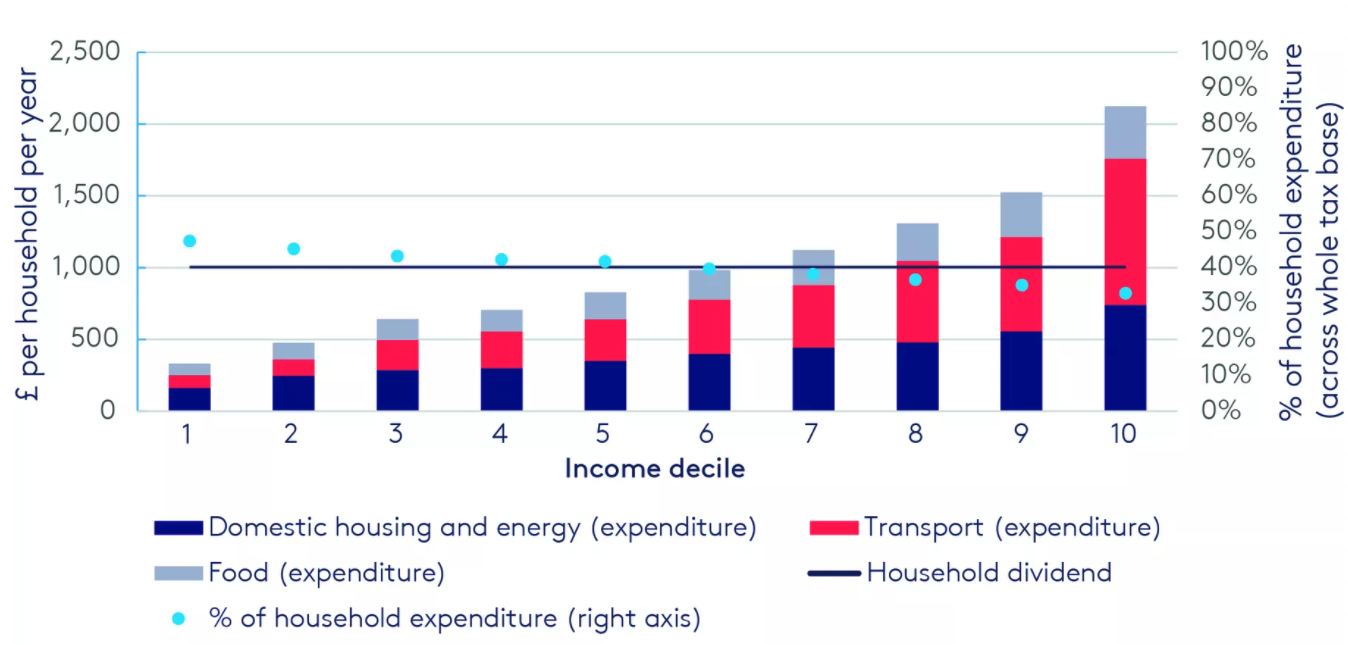
Climate Income is a revenue neutral, steadily increasing price on pollution fully rebated to all citizens. Revenue neutral means there is no cost to the government, and, significantly, no revenue for the government. The steadily increasing Carbon Price follows the polluter pays principle embedded in UK legislation for nearly 50 years. The key part is returning the money to all citizens equally in a fair monthly payment, much like how child benefits or pensions are paid. Despite the rising costs, the poorest 20% could be £500 better off, enough to match the one of the current UK government suggestions.
London School of Economics data from 2019.
The rest of society would be proportionally affected depending on the pollution they cause. Once the gas price spike settles over half the population would be better off. The exact amount depends on the level of price introduced. LSE modelled a £40 /tCO2 charge, above the current £18 and the planned £30 level, though significantly below the current UK ETS price circa £75.
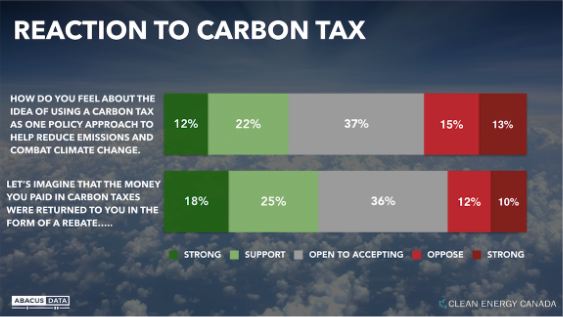
This type of approach is intrinsically fair, sharing the responsibility and rewards equally on everyone. In Canada a form of Climate Income has been operational since 2019 and the public increasingly understand and support it, re-electing in 2021 parties in favour.
Above all, it must be clear to the public that this represents a rebalancing of the tax base, in order to incentivise greener technologies and activities, and not simply a backdoor way of the Treasury taking more cash from their pockets.
What does this mean for the Net Zero goal?
A clear path to NetZero is supported by aligning the steadily increasing price to the data from the IPCC 1.5ºC report and the latest International Energy Authority report which suggest most (70%+) of NetZero can be achieved with such pricing. What this illustrates is that the long term NetZero objective actually helps clarify how the UK Gov might proceed with other related policy options currently under discussion.
e.g.
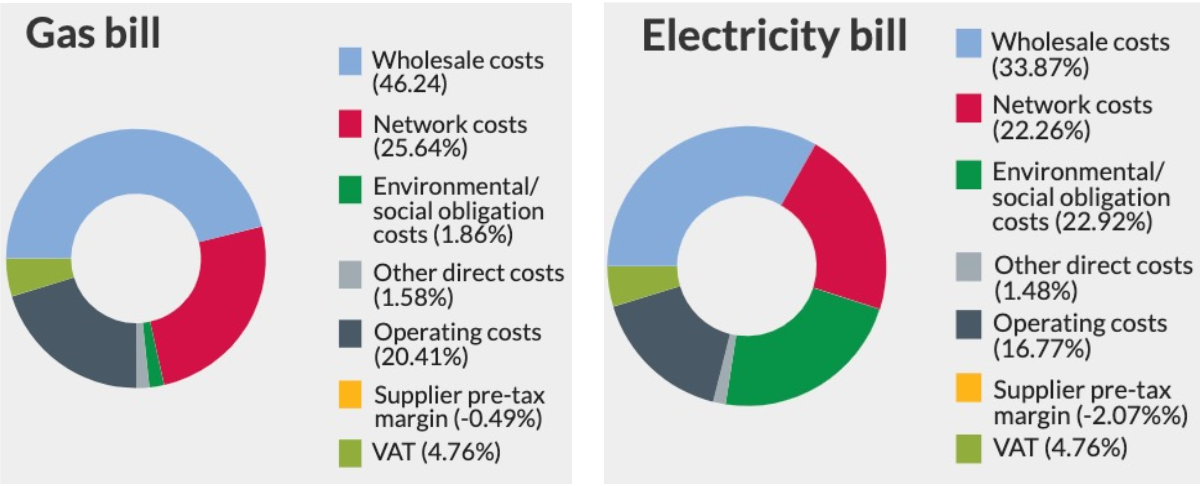
Subsuming the current Environmental and social levies – reducing the bias against cleaner electricity and shifting the costs more to polluting gas, whilst delivering on the environmental and social objectives.
Removing VAT from household energy bills would be a cost to the treasury that would enable a higher Carbon price, reinforcing 1 above.
Both above measures reduce pressure on the various means tested support programs over time. As the Carbon price rises each year the policy is increasingly progressive, enabling simplification and reduced bureaucratic burden on people and the state.
Windfall taxes might also reduce the immediate financial burden on the treasury enabling more of the existing carbon price (via the UK ETS) to be returned to citizens.
Rebating the money to citizens gives industry the confidence to pass costs on to consumers regardless of how the price rises domestically.
The ETS (copied from the EU) could be replaced by a simpler and more predictable economy-wide carbon price that allows industry to plan and invest with more certainty.
Such pricing strengthens the UK economy to exploit the international trade advantage that already exists in the eyes of this US assessment as the EU and others pursue Border Carbon Adjustments. It also helps create the investment case for industry in the inevitable green revolution the world needs over the next 30 years.
It could be argued, however, that the current path, with various different ways to raise energy prices and tax revenue whilst only offering minimal and creeping support for the most vulnerable mirrors exactly what unfolded in France with the Yellow Vest movement. Indeed the parallel is further matched by a spike in prices being the trigger to public discontent to such policy creep. In France it was an oil price spike after 4 years of gradual price increases that drew public anger, today it’s gas.
So to round up here’s a summary other expert opinions that endorse some or all of what is proposed in Climate Income:
None of these experts are saying this is a magic bullet that fixes everything. They all broadly agree that it is the single most important tool to address climate change. It can also show us how to navigate the short term energy price spike and re-align our worthy intentions in other areas. As Our World in Data summarises:
“What’s frustrating about the challenge of climate change is not that we have no options, but that we do not take the options we have. “
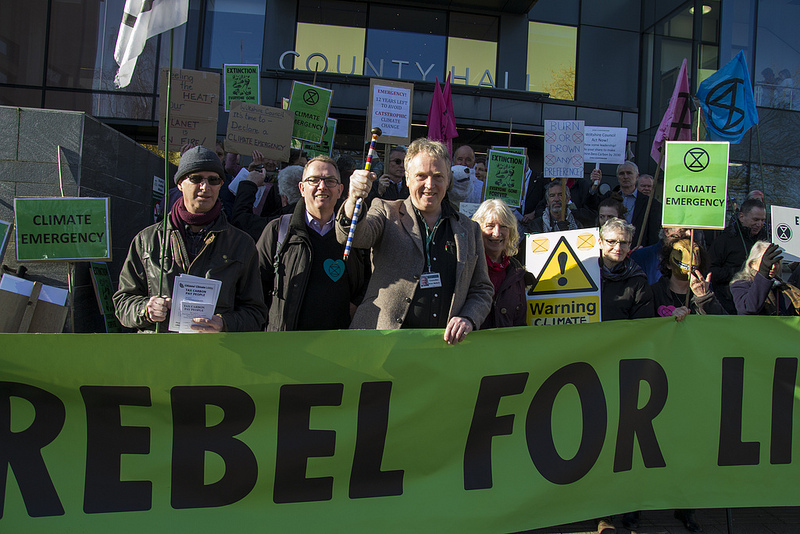
Last year Rob Paton and Citizens:MK succeeded in gaining unaminous support for Climate Income from Milton Keynes Council. Rob then went on to write about the campaign in the national Quaker magazine, The Friend.
Rob has now succeeded in getting a full article published which he has given me permission to reproduce here. I attended a Zoom meeting organised by Rob for a local climate group and was able to see the issues people have with the concept of CI (which it is easy to lose sight of when you have been immersed in the campaign for three years!) which Rob describes – his approach has lessons for us all! Note that ‘testimony’ refers to the Quaker values of equality, peace, truth, justice and simplicity.
A year of climate campaigning: What Rob Paton learned
6 Jan 2022 | by Rob Paton
‘It’s often the testimony that does it.’
‘The alternative is to look for common ground.’ | Photo: by Li-An Lim on Unsplash
I had been a ‘greenie’ for years, but not heard about Carbon Fee & Dividend (also known as Climate Income) until a Friend told me about it a couple of years ago. I visited the website of Citizens Climate Lobby UK – and wow! So simple. An arrangement that would turbo-charge all other carbon reduction policies, or render them superfluous. A way to make higher carbon prices not just acceptable, but popular. Like every good convert I set off with missionary zeal. At which point things became… interesting.
Yes, sometimes people ‘got it’ quite quickly. What really struck me, though, was how often people didn’t (or couldn’t?) ‘get it’. For example, when another Friend passed on something I had written to her daughter, active in XR, the daughter was enthused. She shared it in her circle… to no avail whatsoever! Even professional campaigners who knew their economics seemed to ignore carbon pricing. It was the elephant in the room. As for Climate Income, well, on a good day it would be damned with faint praise. I asked several: ‘What should we be asking for at COP26? Wouldn’t it be great if we had one simple, specific “ask” that everyone could get behind, like “Drop the Debt”?’ Everyone liked the question, but their answers were either lengthy, or pithy but plaintive (‘just keep your promises’). No one expressed much interest in Climate Income. Gradually I came to realise – or re-learn – some important lessons.
If people are not open, or ready, then I was probably wasting my time as well as theirs. It wasn’t just that trying to persuade people seldom helped. Things went better when people were stimulated to find out for themselves. For example, our local Citizens:mk climate campaign asked the leaders of the three main parties on Milton Keynes Council to consider supporting the idea. Initially, all were wary, but they agreed to check it out. When it came to the debate, genuinely enthusiastic speeches in support came from all sides, and the motion passed unanimously. Likewise, when we asked the local Anglican bishop to consider the idea and how he might use his position to promote it, he was sympathetically cautious: he would meet with us but the issues were complicated and he needed to find out more. But then before we knew it he was on board, asking a pointed question in the House of Lords!
That illustrated another important point: it’s often the testimony that does it. A remarkable teenager in our campaign group had recounted being confronted with the harsh realities of what climate change would mean for her and her generation. She spoke simply, clearly and from the heart. It was moving and memorable in a way that bald facts and reasoning are not.
I also noticed how widespread adversarial thinking is among green campaigners. The default stance is to campaign against things – and people. When I asked what was needed for a consensus in support of cutting out carbon, the answer was, essentially, for lots more people to care like we do. We have seen the light; we must convert others to our way of thinking. Worse still, I, too, slipped into adversarial thinking. At one point I was seeing the Treasury as a bogeyman. They didn’t like hypothecated taxes and would be bound to resist this idea. But one of the beauties of the arrangement is that it is revenue neutral – it is a transfer rather than a tax. It doesn’t add to government spending. Better still, by turbo-charging the switch to renewables, it reduces the need to subsidise green technologies which are a drain on the exchequer. It also gives a further basis for cutting out those subsidies still being paid to fossil fuel companies.
The alternative is to look for common ground. Climate income provides such a common ground, securing support for long-term carbon reduction. In Canada, where this ‘fee & dividend’ approach has been adopted, governors of some provinces with high levels of fossil fuel activity thought they might roll back the legislation… until they found how popular it had become with voters.
What really took me by surprise, though, was the way climate lobbying led into a deep consideration of truth, and our compromised capacity as humans to face it. I joined a Zoom course on how to engage with political leaders on climate issues. At one point the young course leader said words to this effect: ‘Look, we have enough information in this group to plunge half the country into a state of deep clinical depression. It’s just as well that many people are “in denial” – the health services would be overwhelmed if everyone suddenly woke up to what the disaster will mean for them. That wouldn’t do the planet any good.’
Instead he introduced us to ways of meeting our leaders where they are, helping them recognise their own ambivalences and uncertainties, and helping them find their own safe next steps. This doesn’t mean that we should only engage with the political system in therapeutic mode – listening supportively, asking gentle questions, building trust. As we Quakers know, discernment requires threshing as part of the process. So explanations, facts, clarifications and analysis all have their place, collegially conducted, among those seeking further understanding. Here too I learned lessons.
I had to treasure the disagreements and challenges I encountered. They were informative about what I had not explained. For example, if someone said, ‘Won’t people just use all their climate income paying for the higher price of fuels?’ I had to be ready to agree: yes, some would, to begin with. It would be their choice. Only then would it be worth my explaining how the steadily-increasing price of carbon (and climate income) would play out over the medium term: the higher the price the more incentive everyone has to switch to green alternatives. Instead of it being against our economic interests to ‘do the right thing’, we become (even) better off by ‘doing the right thing’.
Another example: one councillor said we shouldn’t increase the price of fossil fuels until the cost of green alternatives had fallen to the level of current fuel prices, otherwise the poorest would be hard hit. This overlooks how climate income protects the least well off. But I sensed something else was confused in this observation, and it took me time to pin it down. In fact, the price of the alternatives will not fall until they are adopted on a large scale. So we need to make the green alternatives cheaper than fossil fuels in order to bring about large scale adoption. This is precisely what steadily increasing the price of carbon makes happen.
I also came to appreciate the uncertainty in our predicament: no one knows what will be an achievable and sustainable mix of green fuels. The technologies are still a big cloud of unknowing. Some say heat pumps. Some believe hydrogen is the answer. According to others, the future is electric. Some think that Carbon Capture and Storage is crucial. Each of these has its advocates – and, happily, investors willing to back them.
Finally I have had further lessons in patience and trust. Having been through panics about nuclear war, the scares about the millennium bug, and the fear that oil was running out, it is a little easier to hold my nerve. Yes, I do know about tipping points. The dangers are very, very real. But so are the emerging opportunities with many signs that the tide has turned. And so we choose life, doing what we can where we are.
Reading the daily email alert from Carbon Brief is fascinating and getting more and more time consuming! I have certainly noticed a real shift of media opinion towards the climate emergency over the past year, as the effects of climate change are becoming more and more immediate. There are very few denial editorials these days even if the solutions are still hotly debated.
The media is reporting growing support for the government to go further and faster such as a Guardian report that ‘Over-50s want climate crisis addressed ‘even if it leads to high prices’. There were also reports in the Independent and Daily Telegraph. It is noteworthy that The Times and Daily Telegraph have written about the threat of famine in Madagascar without disputing the first ‘climate change famine’ description.
What I found most encouraging in today’s email alert was a report on an editorial entitled ‘Don’t let climate goals be lost in culture wars – cutting emissions means decarbonising the way we live, not giving it up’ which appeared in yesterday’s Financial Times.
The editorial suggests how politicians and, by implication, campaigners shouldbe approaching the issue of gaining public support for the changes needed to fight climate changenow we can no longer rely on the low hanging fruit of removing coal from the energy mix…..
“…trying to convince everyone they must change their lifestyles radically” in order to tackle climate change is “unlikely to work: demands that essentially put the onus on individuals will alienate too many people in an environment of insufficient knowledge about what net zero means and distrust about the intentions of politicians”..
Instead, the message politicians must communicate is twofold. First, emphasise the facts: climate change is an urgent threat, it requires all of us to act – but if we act together, the sacrifices are far from prohibitive. Second, acknowledge that people will need help to take the right choices – and ensure that it is forthcoming. A consensus around mass adoption of carbon-reducing technologies can be achieved if adoption is rewarded and costless for those at the bottom. The alternatives – insufficient action, or calls for asceticism — will lead to division and failure.”
If that’s not an endorsement of Climate Income I don’t know what is! I also think it is a very useful hook for an email to a constituency MP, along with mentioning that over 100,000 people signed the ZeroC. petition and even baby boomers are willing to put their money where their mouth is. (I am afraid I fit in that category but I am sure I am not alone in wanting more support and reassurance before I replace the fairly new gas boiler!)
The UK has the chance to set an example to the world to make sure there will be no more climate change famines.
If you email your MP please don’t forget to bcc us/forward to at [email protected].
So the first rule of attending a conference on climate change and what we can do about it is not to add to the carbon emitted by getting there. So, Milly, Dave and I all traveled up by train to Lancaster to the Climate Emergency conference.
(I love trains but at £118 for the journey, it isn’t something everyone can afford, which is part of the problem in weaning people off their fossil fuel driven cars. Thank you to the regional Transition Network and Transition Marlborough for paying both mine and Milly’s train fares.)
The purpose of the conference was, in a nutshell, what happens after declaring a climate emergency? “Declaring a climate emergency is the easy part – what do we do next?” said Cllr Colin Glover, leader of Carlisle City Council.
It was incredibly well attended by 350 plus local councillors, activists, scientists, researchers, businesses and so on. A fantastic effort and the kind of next step response required by all the climate emergencies declared by local authorities.
What were our takeaways?
Milly (Transition Marlborough):
This is urgent. This is Huge. Nothing is more important at the moment. Viable, practiced solutions exist and they must be put in place and scaled up now. The biggest barrier to action is ineffective communication. Be courageous and act now.
Attendees were mostly white, middle-aged, middle class – how can we attract more diversity? Or are other people approaching this problem in other ways?
Me:
MPs are aware of the climate change issues but don’t feel under pressure from constituents to do anything about it, so said Dr Becky Willis, researcher for Lancaster University and the Green Alliance. “Not enough constituents talk to their MPs about climate change,” she said. Actually I’m going to repeat that in capitals because it’s top of the CCL list of essential actions and anyone can do this and make a difference.
NOT ENOUGH CONSTITUENTS TALK TO THEIR MP ABOUT CLIMATE CHANGE
We need a template list of actions for local councils to clean up their emissions, which includes what’s in their control as well as when they need to influence central government. I was hoping the conference would provide this but, really we’re still at first base on that front. So, for instance, how can a local council influence local farming and agricultural land use? And we’re back to influencing national policy and EU policy (for the time being at least) and councils having a strong Local Neighbourhood Plan.
Once again I was struck by how important the school climate strikes have been in grabbing the attention of young people and turning them into activists. There’s our future leaders in the shape of young people like twelve year old Ada Wood from Carlisle, who read from her inspiring, impassioned and very well composed letter to a minister who tried to belittle her concerns about climate change raised in BBC’s Question Time. “Twelve years is more like two years [referring to the IPPC report]. It takes time to set things up,” and, “I want you to act like your house is on fire – because it is.”
“Wouldn’t it be great if the weather report would also tell us how much money the wind was making for the economy?” – Paul Allen from Zero Carbon Britain on wind-generated power.
When you wake up in the morning think: will what I am doing today matter in 100 years to wildlife and people? – Cllr Simon Pickering, Stroud District Council
The science and the emergency is important, but we need to look after ourselves so we don’t become frozen by the extent of the problem.
Dave (CCL UK / professor of geophysics / expert science witness for Wiltshire Council):
There’s lots of source material out there to work out a plan of action.
Find an example of success and good practice – Stroud District Council have gone a long way down this road and they aren’t that far away from our area, Marlborough. They have reduced their council emissions by 32 percent and were carbon neutral in 2015.
Councils need to set emission reduction targets in their local neighbourhood plan, to legally lock in commitment. They can review an existing local plan if there is a ‘substantial change’ – declaring a climate emergency counts.
Local government by law have to consult Natural England when they make changes to their local neighbourhood plan.
My job at the conference was to connect with other activists and spread the word about carbon fee and dividend. Local governments can clean up their act – and, of course, this is very important, especially with regards public transport and energy generation – but, ultimately, there is only so much they can do.
To change things substantially and quickly enough we need central government to create the right kind of carrots and sticks. Like carbon fee and dividend.
The Climate & Environmental Emergency Conference took place at Lancaster Town Hall, 29 March 2019, and was organised by Climate Emergency UK.
Stating the UK was in a climate emergency, the plan aims to bring down carbon dioxide emissions by 40 percent by 2022, and to zero from transport and buildings by 2050.
But London can’t do it alone – national government is called upon to give more power and funding to London to make it happen.
The plan rests on the energy efficiency of home and business buildings, decarbonisation of power from the national grid as well as more support for clean energy within the community, and converting Londoners to zero carbon public transport, walking and cycling.
The plan includes actions points for all level, from government, GLA, business, London boroughs and Londoners themselves.