Category: Politics

  • How to respond to spouters of ‘Net Zero stupid’

    The Citizens’ Climate Lobby is all about solutions. It’s about how society can make the changes needed, to avoid climate catastrophe, as rapidly and equitably as possible. Our starting point is that global warming is real, dangerous and caused by humans.

    This approach made a lot of sense until recently. There was broad political consensus that climate change was a serious issue and that the UK should aim to get its net emissions down to zero by 2050. Our politicians were proud to be world-leaders in this endeavour.

    Unfortunately, that has changed. We now have anti-science politicians in the UK, and elsewhere, who openly dispute the need for net-zero. Instead, they champion a cynical philosophy in which every country pursues its own, blinkered self-interest even though this is a proven route to a poorer world for everyone.

    As the impacts of climate change become ever more obvious, these short-sighted politicians will change their direction when it suits them to do so. But, in the meantime, when discussing CCL-UK policies we may find ourselves increasingly encountering push-back on whether greenhouse gas emission reductions are necessary at all.

    The problem is anti-net-zero soundbites that have been well crafted to sound plausible even though they disintegrate on closer inspection. Examples I’ve heard, recently, from senior politicians include “2050 is an arbitrary target” and “We can’t afford net-zero”.

    To counter these. I’ve set up a new website (netstupidzero.org) that takes these soundbites and explains, in simple terms, why they’re misleading. You may notice that the site name, itself, is a direct quote from the Reform Party’s Richard Tice who is, perhaps, the most prominent promoter, in the UK, of anti-science disinformation.

    In my website I’ve tried to use common-sense rather than go into detailed scientific explanations. My aim is just to make it easy for anyone to counter anti-net-zero propaganda whenever and wherever it’s used. I hope you find it illuminating and useful.

  • ‘Its been a great meeting!’ … as the activist said to the Bishop

    ‘Its been a great meeting!’ … as the activist said to the Bishop

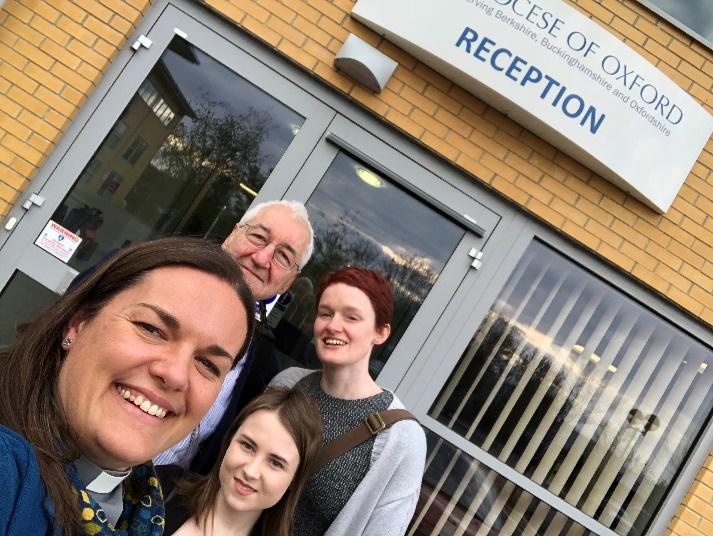
    Rob Paton updates us on the fantastic progress made by Citizens:mk and its future ambitions to go global, or at least England and Wales!

    Last September at the Citizens:mk climate assembly, the Bishop of Oxford agreed to a request for a meeting to discuss Climate Income, and whether he might use his position on the House of Lords Climate & Environment Committee to promote the idea.  He has a very full schedule, so December was the first available date… and then just beforehand, he suffered a nasty bout of Covid!. Finally, in late April, the meeting took place. 

    So what happened?  Lauren Jeffrey presented our first ‘ask’: we wanted to cite him as a supporter of Climate Income and of our campaign, as we took it national through the network of chapters that make up Citizens UK.  Would he consent to this?  The reply was immediate – yes indeed  (and without us needing to clear statements through his office in advance).

    Then our second ‘ask’: would he invite us to the Lords to a meeting, whether formal or informal, as he thought best, to help increase understanding and support for Climate Income among parliamentarians?

    Again he replied positively, though not unconditionally.  Characteristically thoughtful, he said he needed time to consider when and how the meeting could best be ‘anchored’ in the processes of the Lords (and its Climate and Environment committee in particular – of which he is a member).  Then he gave us an important and unexpected bonus  – direct access to his two advisors (both of whom were clearly willing, thoughtful, and very well informed on Parliamentary processes as well as climate issues).

    It was an intense two hours including some lively exchanges around how to bring the need for rising carbon prices into the policy process and public debate.  We left feeling tired but elated. We had an important ally for what we see as our next steps – both locally, and working across the Citizens UK network to spread this word and bring other chapters on board, turning it into a national campaign.   All that is needed is lots more hard work! – if you might like to be involved, please get in touch.

    For more about the meeting, visit http://www.citizensmk.org.uk/2022/05/16/onwards-and-upwards-for-climate-campaign/ 

    To see if there is a Citizens UK chapter in your neck of the woods click here.

    Pictured above:

    Representatives of the Citizens:mk Climate team, L to R: Rev. Catherine Butt (St Frideswides); 

    Rob Paton (MK Quakers); Lauren Jeffrey (Lakes Estate Renewal Forum); Stephanie Laing, Community Organizer.

  • Further information on the government response to the Zero C petition.

    Further information on the government response to the Zero C petition.

    I have to apologise for being pressed for time yesterday when writing about the parliamentary debate on the Zero C petition. In my haste I failed to take in the fact that the government had produced a briefing on the petition. The briefing states that…..

    The Government response to the petition refers to the UK Emissions Trading Scheme (ETS). The UK ETS sets a limit on emissions from energy generators and energy intensive industries, which incur a cost if limits are exceeded.  The Government response also points to the Government’s intention (set out in the Energy White Paper) to extend the scheme, and to explore expanding the UK ETS to cover two thirds of the UK’s remaining emissions.

    Carbon pricing can take a wide variety of forms. There were some reports that the Government was considering the options for broader carbon taxes or pricing earlier this year, but that it is no longer the case.

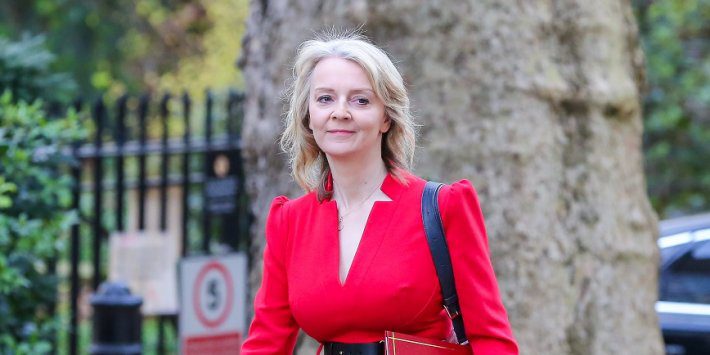
    This is very interesting (and disappointing) but it explains why we heard nothing further after the claims that Liz Truss was supporting a Carbon Border Adjustment Mechanism and the July ‘leak’ to the Times about introducing Climate Income based on the Canadian model.

    The government also states that support for poorer households will be targetted capital support from the tax payer, arguing that….

    Given the significant variation within income groups, it will be more effective to focus on individual technology transitions, with taxpayers providing targeted capital support for those low-income groups most acutely affected by a specific technology transition(and in advance of policies that penalise or phase-out use of high carbon technologies), than to consider the transition in aggregate and develop universal and untargeted policies to support households – such as, changes to tax and welfare. This would also mean that low-income groups could benefit sooner from the household savings that arise from a transition.

    It appears that the debate was used by participants to refute these claims rather than debate universal carbon pricing, although Alan Brown did make a strong case for the lost opportunities caused by the lack of tax hypothecation and a sovereign wealth fund.

    The complicated, costly and intrusive ‘targetting’ of support envisaged by the government in its net zero strategy will, it seems to me, not lead to fair and equitable transition. There is still all to play for!

  • How did the debate on carbon emission charges go?

    How did the debate on carbon emission charges go?

    On November 1st the much anticipated debate on the Zero C petition was held in a extremely uncrowded Westminster Hall. Catherine Mckinnell (Newcastle upon Tyne Central, Lab) moved the petition, stating that its aim is  to impose a single carbon price across all sectors. ……

    In its simplest terms, the petition calls for the Government to work towards a single carbon price across almost all sectors. The campaign argues that a single carbon price would amalgamate the many existing price instruments, including the carbon price support and the UK emissions trading scheme—a different form of carbon charging—into a simple, transparent carbon charge. Zero Carbon points out that our current policies cover emissions across only about a third of the economy, giving the biggest polluters free allowances while the consumers are left to pay. I pay tribute to the petition’s creator, Isabella Goldstein, who is the senior campaign manager at the Zero Carbon campaign.

    The theory behind this form of carbon charging is straightforward. If we had, for example, a single carbon price of £75 per tonne of CO2, it would incentivise people and businesses to pursue any methods of emission reduction that cost less than £75. Hon. Members will be aware that we are far from having a single carbon price across sectors. Instead, we have a patchwork of policies that incentivise or disincentivise emissions in ways that are often unclear. While overall they have the effect of, for example, discouraging the burning of fossil fuels, the cost varies hugely depending on the source of the emissions. It is argued that the key benefit of working towards a uniform carbon price is that it avoids a situation where some sectors face higher carbon prices, and must therefore make more expensive carbon reductions, while others could more easily and cheaply reduce their emissions but do not.

    Mckinnell also pointed out that Zero C are asking for the policy to be fair and equitable…

     Alan Brown (Kilmarnock and Loudoun, SNP)……In a similar vein, I represent a former coalfield area. Carbon taxes had been applied to the extraction of coal over the years, but a few years ago, when the open-cast coal industry collapsed in my constituency, it left massive craters that needed reinstatement work at a cost of millions of pounds. Carbon taxes came from my constituency to the Treasury, but they just went into the black hole. When we asked for assistance for restoration work on those abandoned coalmines, the answer that came was, “No. Too bad. That money came in and it has been used. There is no money coming back to your constituency. It doesn’t work that way.” That shows the folly of not ring-fencing a tax for the purpose that it should be ring-fenced for. Again, transparency is utterly critical if we are to go forward.

    Jerome Mayhew (Broadland, Con) argued cogently for a Carbon Border Adjustment Mechanism policy, as he has been championing for a while. There was interest in CBAM earlier this year  but in July the Board of Trade published a report extolling free trade as the answer, the subject is still under review.

    Unfortunately although the speakers all argued that carbon pricing was necessary and should be fair there was no discussion on how to implement it, such as suggesting a solution like Climate Income. The argument for a single uniform carbon price wasn’t really debated, instead the arguments were vague, focussing on stating that the Net Zero Strategy isn’t doing this, that or the other, our party would spend more and be more equitable than the government and when will the ETS net zero consistent cap be announced. 

    This line of arguing therefore enabled the financial secretary to the treasury, Lucy Frazer, to argue that while “The petition specifically calls for a carbon charge to encourage industries and organisations to reduce their carbon emissions” the government is already doing this through the UK ETS scheme and Carbon Price Support, but she didn’t feel the need to address the petition’s main ask as no-one else had been discussing it.

    In summary the gist of the petition, arguing for a single, uniform carbon price seems to have been lost in the discussions about other aspects of the Net Zero Strategy and finance. 

    One has to wonder if the timing of the debate, falling as it did during COP26, inevitably led to the paucity of ideas and discussion, with no-one from the government, for instance, discussing the ideas leaked in July

  • What is the IPPR report suggesting?

    What is the IPPR report suggesting?

    In April there was a news report on citizen’s juries which were set up in areas which would be most affected by decarbonisation. Their deliberations fed into a cross party environmental justice commission along with business leaders, union leaders and the Institute for Public Policy Research which produced its report on the 14th July.

    The authors state that the gilets jaunes (yellow vest) protests in France show that fuel tax increases will bring a backlash if they are perceived as unfair. Instead, they cite Canada as an example of redistributing carbon tax revenues among citizens. 

    The report is arguing for grants and support for better ‘well being’ rather than the fair dividend paid to the populace regardless of personal merit or circumstance which Canada has implemented and Citizens Climate Lobby, including Citizens Climate Lobby UK support. 

    The report suggests using the proceeds of a price on carbon and borrowing at current low interest rates to ensure fundamental change in the ‘country’s economic model’.

    The main suggestions are:

    Adding £30bn of public investment each year in a low carbon economy until at least 2030.

    A new £7.5bn-a-year “GreenGO scheme”, which would serve as a financial one-stop shop, akin to the government’s Help to Buy scheme, to help households switch to green alternatives on heating, home insulation and transport.

    Upgrade local public transport and making it free to all users throughout the UK by 2030, with free bus travel by 2025 as a first step.

    Introducing a “3 x 30 x 300” rule for local planning that would ensure at least three natural features are visible from every new home, every neighbourhood has at least 30% tree canopy cover, and no new home is further than 300 metres from an accessible green space.

    Establish a permanent, UK-wide climate and nature assembly, alongside a “wellbeing of future generations” act in England, Scotland and Northern Ireland (Wales already has this) to ensure that all business and policy decisions must take account of their long-term effects.

    Involve communities so policies reflect local priorities. This would include granting local authorities new powers over economic strategy and giving the public a direct say over how local budgets are spent.

    Yes, the proceeds of a price on carbon should go to society rather than into government revenue. This plan however would not directly compensate every household for rising fuel prices evenhandedly. Most of the dividend and borrowed money is intended to benefit people living in certain areas, particularly new developments in urban areas.

     It will not directly combat fuel poverty or support rural communities who may not be considered low income but would be hard hit by rising fuel prices in transport and heating. No free bus service would be able to replace the car for every farm and small village. There is a danger in prioritising certain areas which historically has left more rural counties struggling with less money for education, health, social care etc. Note that under the Canadian plan the Federal Government report states that…

    In recognition of the fact that people who live in small and rural communities have reduced access to cleaner transportation options, a supplementary amount in addition to the baseline Climate Action Incentive payment is provided for eligible individuals and families who live outside a census metropolitan area, as defined by Statistics Canada. This supplement increases the baseline amount by 10%.(p.26). 

    Under the Canadian plan the majority of households are better off, this is a fairer and more politically neutral way to hand out the proceeds of the carbon price.

    Illustration by Mini Grey.

  • Damning report by the Public Accounts Committee….

    Damning report by the Public Accounts Committee….

    The House of Commons Committee of Public Accounts report, Environmental Tax Measures, published today, is savage in its condemnation of the failure of the Government to align its environmental ambitions with the means to achieve them through its fiscal policy:

    Tax is an important instrument for pursuing government’s environmental goals, particularly getting to net zero greenhouse gas emissions by 2050. The potential of the tax system in this respect has long been recognised by government, academics and stakeholders, notably the Institute for Fiscal Studies in the Mirrlees Review published in 2011 and more recently the Climate Change Committee. We were therefore concerned that HM Treasury and HM Revenue & Customs (HMRC)—the departments responsible for the strategic oversight and administration of the tax system—have taken a very limited view of the role of tax so far. They could not explain clearly to us how the tax system is used in achieving the government’s environmental goals.

    At present HMRC and HM Treasury only recognise four environmental taxes as these are the only ones with specific environmental objectives. They have limited understanding of the environmental impact of these taxes because their management has focussed on the revenue these taxes raise. The departments have not kept track of the impact of other tax measures with environmental objectives, such as tax reliefs to support energy saving and clean technologies, or the impact of tax measures affecting the consumption of fossil fuels. We were encouraged to hear that the departments have started to assess the impact of fuel duty freezes on the environment, but environmental assessments should be made for all taxes.

    We see a lack of leadership and coordination, which mirrors findings in our recent reports on Achieving government’s long-term environmental goals and Achieving net zero. The tax system interacts with environmental policy areas which are the responsibility of other government departments. These interactions risk being overlooked without greater monitoring and transparency of tax measures affecting the environment. Given HM Treasury’s cross-government remit, it is disappointing to see silo thinking, which we often see in other Whitehall departments, extending to the Treasury itself. HM Treasury is still considering how tax should fit within a comprehensive programme for funding net zero. It acknowledges that further action is needed to hit the 2050 target.

    Given the scale of the climate emergency, HM Treasury and HMRC need to act now. We are concerned that the departments have yet to plan for the impact of the government’s environmental ambitions on tax revenues, including on fuel duty which raised £28 billion in 2019–20 but will decline as people change to electric vehicles. The two departments need to be clear and transparent on the role that tax will play so that: taxpayers can make informed decisions; other government departments can plan; and Parliament has the information it needs to hold government to account. With the UK hosting the UN Climate Change Conference in November 2021 we look to HM treasury to lead by example.

    Analysis of press coverage is available here, including the comment by Labour peer Lord Triesman that:  

    “Government and regulators now need to create an environment where investors and lenders are rewarded for taking the long-term view. What will ultimately bring down green financing costs is longevity and pipeline security.” Interestingly this echoes comments on the similar gap in climate change mitigation plans across the pond:

    An editorial in the Washington Post says of the expected new US climate pledge to cut emissions 50% below 2005 levels by 2030: “Such promises are easy. Making good on them, and on this one in particular, is hard.” Like another recent editorial from the paper, the piece argues for a carbon tax: “What’s missing [from Biden’s proposals] is an economy-wide policy that would cut demand for fossil fuels in every industry in every state. A substantial, steadily rising carbon tax would ensure emissions reductions happened even if some of Mr. Biden’s government-funded green projects failed because it would dampen underlying demand for fossil fuels.”

    The publication of this report offers another very targeted opportunity to write to your MP, especially if they are members of the Public Accounts Committee. You could point out how Climate Income with Border Carbon Adjustments would be the ideal fiscal policy to send the right message to producers and consumers on the needed direction of travel and make investment in low emission technology so much more attractive, as the Government has acknowledged:

    Placing a price on carbon creates the incentive for emissions to be reduced in a cost effective and technology-neutral way, while mobilising the private sector to invest in emissions reduction technologies and measures. While we recognise the merits of a Carbon Fee and Dividend policy, we do not propose to adopt it at this time.

    * Committee of Public Accounts members

    Name /Party /Constituency
    Meg Hillier MP Labour Hackney South and Shoreditch, Chair
    Gareth Bacon MP Conservative Orpington
    Kemi Badenoch MP Conservative Saffron Walden
    Shaun Bailey MP Conservative West Bromwich West
    Olivia Blake MP Labour Sheffield, Hallam
    Dan Carden MP Labour Liverpool, Walton
    Sir Geoffrey Clifton-Brown MP Conservative The Cotswolds
    Barry Gardiner MP Labour Brent North
    Peter Grant MP Scottish National Party Glenrothes

  • April Action – Local Elections Count

    April Action – Local Elections Count

    As Kevin Frea, the speaker at last month’s national meeting told us, we need to seize the opportunity offered by these elections to tell our local representatives about Climate Income and gain their support for this brilliant policy. Climate Change is set to be on the agenda; the Liberal Democrat leader Sir Ed Davey, for example, has urged more council involvement in climate policies (BBC). There may even already be an environmental organisation in your area which is coordinating a campaign on this issue, such as Wiltshire Climate Alliance. The Alliance held a debate (Facebook, starts properly at 9.45 mins), involving the Wiltshire leaders of the main political parties on the 15th April.

    Although local councils have no say in national fiscal policy many are setting an example to the government by introducing greener policies in areas they do have control over such as social housing and transport, in advance of government regulations.

    Councillors can show MPs how much local support there is for green measures and thus, if they realise its benefit, could act as advocates for the policy of Climate Income to national politicians.

    We need to contact all the candidates of whatever political party or none.

     On THURSDAY MAY 6th there are elections covering:

    Local Councils, Mayoral and London Assembly, Police and Crime Commissioners and the Scottish and Welsh parliaments. All of these institutions have a great deal of influence.

    Full information about these elections can be found here:

    April 22nd’s action comes in 3 stages:

    1. Check you’ve received your polling card and know where to go to vote.

    If you need to register you must do so by 19th April. Apply here

    2. Check the names and contact details of the candidates:

    Local Elections: Look on your local council website for a list of candidates, do you personally know anyone you could contact?

    Mayors, Police and Parliamentarian: Once again if you have a personal contact use it.

    3. Contact:

    Even if you can’t contact them as a personal contact you can email and ask about their views on climate change and how their role or organisation can influence local and national policy to mitigate climate change. Include your name and postal address so they know you are in their area. Don’t forget to wish them good luck and ask for a response. You may have to look up their contact details on the Who Can I Vote For? website.

    Remember this is just the start of a conversation; you can carry on and explain the climate income policy once they have been elected.

    Our page on contacting your M.P gives ideas for emails and can easily be adapted:

  • Time to Push BCAs?

    Time to Push BCAs?

    BCAs are currently quite a hot topic. The Sun recently reported that UK Secretary of State for International Trade (Liz Truss) will promote them at the G7 meeting in June. BCAs are also a key component of the EU’s “Green New Deal” and may well be introduced by the EU from the start of 2023.

    So, perhaps this is the moment for us to promote one specific component of a carbon-fee and dividend scheme. Perhaps the time has come for a big push for BCAs. We could start by writing to our MPs to suggest they ask Liz Truss to engage with the free-allocations consultation. She may not even be aware of it and may not have yet made the link between BCAs and ETS free-allocations. Something like:

    Dear XXX

    As a constituent deeply concerned about climate change, I was delighted to see that our International Trade Secretary (Liz Truss) has become interested in Border Carbon Adjustments (BCAs, as reported by The Sun on March 30th). Could you possibly ask the Trade Secretary, on my behalf, if she is aware of the current Government Consultation on free allocations in the UK-ETS? Could you also ask her whether discussions within BEIS have looked at the option of phasing out free-allocations and replacing them by BCAs?

    Yours sincerely

    Further information on BCAs:

    Canada Laser talk on Border Carbon Adjustments (BCA)

    Current Developments in Domestic Climate Mitigation Measures (by WTO) – downloads powerpoint presentation

    BCAs – powerful if combined with just transition, article by OECD

    BCAs in the EU – report by European Roundtable on Climate Change and Sustainable Transition

    Article by Centre for Strategic and International Studies

  • Mitt Romney argues for  CF&D.

    Mitt Romney argues for CF&D.

    It seems to me that the recent polar vortex is convincing many more people in the US about the urgent need to combat climate change. People are also encouraged by the pro-free market/carbon pricing approach argued for in the recent books by Bill Gates and Michael Mann.

    Hopefully we will be seeing far more Republicans supporting the need for decarbonisation (and CF&D as the means to do so) and Democrats realising it can complement the Green Deal.

    If CF&D gets on the statute books of the US our own government will have to take note! After all, as I have mentioned before once or twice, the report on the Future of Carbon Pricing in the UK (June 2020) stated that…

    Placing a price on carbon creates the incentive for emissions to be reduced in a cost effective and technology-neutral way, while mobilising the private sector to invest in emissions reduction technologies and measures. (p 39, para 201).

    Here you can see Mitt Romney giving a brilliantly simple explanation of Carbon Fee and Dividend and why he is supporting a new bill….

    https://www.facebook.com/CitizensClimateLobby/videos/446532953432756/

  • Why is respect important?

    Why is respect important?

    A gender equality charity reported recently its research on the representation of women in parliament.

    Only one third of MPs are women with only three female cabinet ministers.

    The reasons for this are many and varied, such as sexism or an absence of maternity or compassionate leave and sexism, but one stands out as something we, as constituents and activists, can all do our bit towards countering: The Fawcett Society found that seven out of ten women would not enter politics because of perceived potential abuse or harassment.

    I have witnessed this myself – the anger shown towards our politicians on social media; in town councils where unpaid councillors have been shouted out, belittled and berated.

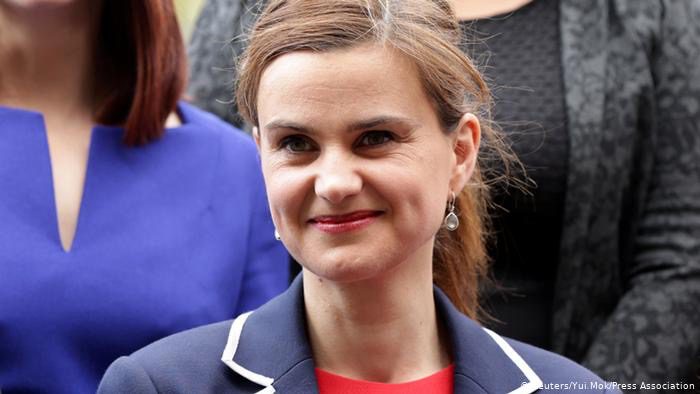
    And this isn’t just words, remember Jo Cox.

    What kind of elected representatives should we expect if we subject them to such an environment? Only the ones who can survive a deeply hostile environment and possibly thrive on the drama. Do we only want those sorts of people to represent us? Or do we want kind people, honest people, empathetic people? ‘Soft’ people?

    CCL’s key values include respect and gratitude for the work our elected representatives do, regardless of their politics. Our MPs are human beings who are there as our public servant and, as any of us do, respond better to praise.

    My MP has stated that his staff go through his correspondence and bin anything offensive – this was after the school meals extension vote (he voted along government lines, ie against) and constituents vented their passion in writing calling him ‘scum’ and the like. Despite my personal feelings on this matter, it’s important to work through those strong emotions before putting finger to keyboard. Your MP will far more likely respond to a reasonable counter argument, or a personal story as to the detrimental affect of such a vote. If you feel your MP is working off duff evidence, then direct them to fresh evidence. If you think their experience does not include the dire experience of not having enough food to feed their children, share that experience with them, kindly, and help build their empathy.

    And the best way to build empathy is for you to show empathy.

    Even better, write to them and politely ask for their reasons, get their best arguments out so you can respond to them with empathy. Another way to depersonalise an unhelpful stance – say, standing against climate change measures – is to ask them to pass your thoughts to the relevant minister and get back to you with an answer. Usually, if an MP values their position within their party they will vote along party lines, whipped or no, so it’s more relevant for them to pass comment along to the most senior minister with the power to affect policy.

    I aim to have a interesting conversation with my MP, one which invites their opinion and which they will be happy to continue.

    I hope that our brilliant and respectful members of CCL will be a reason that women (and people of all backgrounds, ethnicity and more) feel able to put themselves forward to do the important job of representing our interests in parliament.

    We can all do our bit in lowering the temperature over hot issues whether that’s in correspondence or on social media or personal interactions – increasing trust – but remaining firm – will get the job done faster than shaming and shouting – and help keep our MPs safe from harm.

    Everyone should feel able to do their job without fear of abuse and harassment, and that especially includes MPs.

    Pictured: Jo Cox

    If you haven’t already, I urge you to take part in our Motivational Interview training by Vince Schutt. He coaches us in the art of keeping on top of those reactive actions and how to open conversation up rather than closing it down, persuasion through trust.