A climate summit can be a great way of bringing local environmental groups together to show the strength of feeling for climate change action – as Wiltshire found out, we are stronger together.
It can also be a platform to raise awareness of Climate Income and collate views for your MP to feed back into the UK’s approach to the UN’s COP26, later this year in Glasgow.
Ask other environmental groups in your area to do the same thing.
Write to the other MPs in your county, encouraging them to join in.
Suggest they host a range of speakers – Wiltshire hosted the chair of the Farmer’s Union, the MOD, young people, county and parish councillors, a representative from the UK’s COP delegation, and the former chair of COP26.
Maybe you know of, or are involved in, a local group which has succeeded in implementing a grassroots scheme such as electricity generation or flood defences. Examples of successful action and I hope, CCL’s positive message, should help steer MPs who are uncertain of engaging with the issues, away from “it’s not in the job description” negativity!
It is well worth checking if your MP is already on the list of MPs endorsing the Local Electricity Bill, which received its first reading on the 15th January. Support for the bill would suggest that the MP may well be very open to hearing more from local environmental activists and setting up a summit. You may be surprised to see an MP you have considered highly unlikely to support such a bill to be on the list, it is attracting all sides!
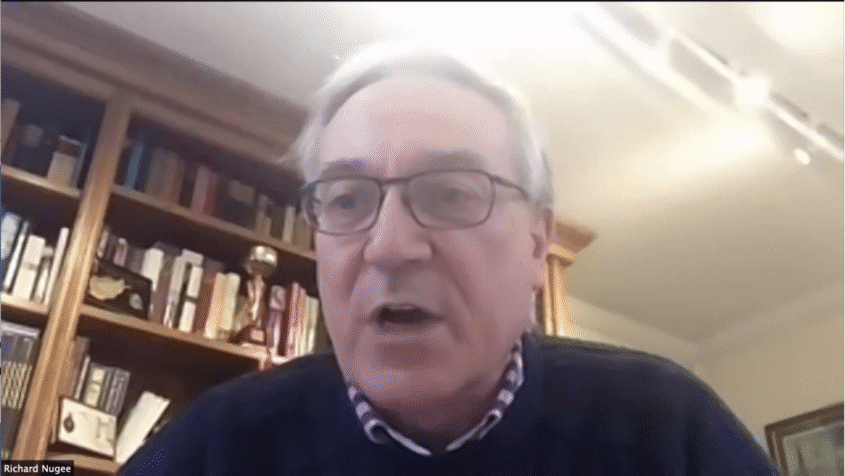
Featured image: Lt General Nugee, Climate Change and Sustainability Strategy Lead for the Ministry of Defence, appearing at the Wiltshire Climate Summit, February 2021
We had a great response to our urgent action to contact the experts at the Climate Assembly -Many thanks to everyone who wrote. Here are a couple of examples.
Dear
Rebecca
Thank you for your
efforts on the Climate Assembly – it’s essential work and very exciting for our
global future.
I was lucky enough
to be part of the Oxford Citizen’s Assembly on Climate Change. It was an amazing
and enlightening experience. Often, how to change individual behaviour seemed to
be the issue, especially as the majority of emissions were coming from buildings
(space heating) and travel.
How do we change
behaviour? By making the
desired behaviour the easiest option and/or the cheapest option, so making the
right choices is a no-brainer.
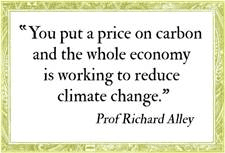
Pricing carbon can
make this happen. But we know a rise in prices for fuel is unpopular – see
President Macron’s struggle with the Gilets Jaunes. So it seems that carbon
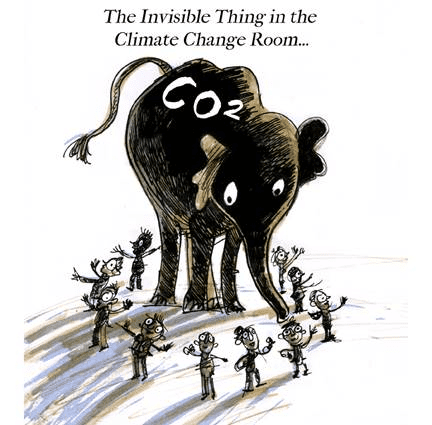
pricing is avoided as a strategy – a bit of an elephant in the
room.
But it is possible
to price carbon in a way that is fair, empowering, simple and
visible.
Carbon Dioxide is a
difficult subject to inspire passion. Unlike plastic, it
is invisible. When we emit it, we can’t see it. We can see the plastic trail
that we leave, but it’s impossible to grasp what size your own carbon dioxide
emission are. But carbon dioxide is key, because the blanket of greenhouse gases
is making Earth warm, melting the arctic and Antarctic and pushing temperatures
worldwide out of the range of recorded history, towards a new climate that none
of us or other life-forms on earth are adapted for.
But the good thing
is, we CAN change this by shutting down the flood of CO2 leaking from humankind
into the atmosphere.
HOW can we take
action on CO2?
We can take action
by putting a meaningful price on carbon, aiming towards $80-$100/tonne.
It is the nudge the
world needs. A puny 5p plastic bag charge drastically reduced plastic bag use by
85%. Pricing really changes behaviour “Our modern economy reflects countless
choices, made by billions of people all over the world. A broad-based carbon
price influences them all. Nothing else can.”
But what is the best
way to price carbon?
I’ve compared
different carbon pricing options. What I’ve discovered
is:
A Carbon Fee and
Dividend (Climate Income) stands out as the most fair, empowering, simple, and
visible way to put a significant price on Carbon.
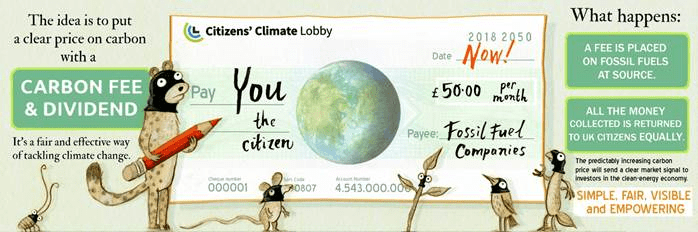
What is Carbon Fee
& Dividend?
The government
places a price on CO2 at source.
The revenue is returned equally to all citizens via a monthly/annual lump sum or ‘dividend’
I think it is the
only way to make a carbon price that is high enough for effective change to be
palatable.
There are a few good
things about a carbon fee and dividend plan. Here they are.
It can appeal to
people who call for social justice and want to battle
inequality
The lump sum system
is progressive:
it
really benefits lower earners most. The richest (and
largest users of CO2-intensive energy) benefit least. Anders Fremstad
of Colorado State University and Mark Paul of Duke University calculate that
taxing a tonne of CO2 at $49 would leave 59% of Americans worse off,
including 75% of the bottom half, if the revenue were used to lower
personal-income taxes. By contrast, recycling the receipts as lump-sum payments
(Dividends) would leave 89% of the bottom half with an average net gain of
$788.
The 6 lowest income
groups all break even or are better off, with the poorest getting the biggest
benefits. The wealthiest, highest fuel users, are the worst
off.
Compared to tax
rebates, it’s demonstrably
fair as all get an equal
dividend.
It’s also possible
to get dividends to the poorest and most marginalised sections of society, by,
for example “investigating inventive ways of paying the dividend to ensure that
the most vulnerable receive it. Linking the dividend to national insurance
numbers would be one way to pay the dividend, but this may mean that the most
vulnerable miss out. The Government should investigate whether new technology
can be used to pay the dividend securely through a mobile app to ensure as many
eligible people as possible receive it.” The Future of Carbon Pricing,
policyexchange.org.uk
It
is motivating and empowering
Through their
dividend the public can support renewables in their choice of what energy to
buy. The dividend is a visible sign of your purchasing power, and the public is
trusted to choose how to spend it; wise choices bring a win-win virtuous spiral
of energy-source-change away from fossil fuels. The dividend also gives voters
an immediate interest in the fight against climate change – a lump sum
arriving in your bank account is a very interesting event. All green energy
sources benefit by becoming comparatively cheaper.
It
sends a signal to industry that the carbon price will be a permanent
policy
The Dividend, once
people are used to it, is hard to withdraw by future governments (see what’s
happened with UK Winter Fuel Payments) – and so acts as a pledge to industry
that the carbon price will endure.
These three aspects
of carbon fee and dividend mean is can appeal to: Green and Social Groups who
want action on climate change but also social justice; the general public who
will find higher fuel prices unacceptable; businesses who want a clear steer to
what the carbon future will be.
Carbon is infused in
all our lives and all our choices. We need to tackle climate change with a way
that involves and empowers everybody, is fair and acceptable and progressive,
and that also is able to set a high enough price for carbon to bring about
change, in a way industry can see will not be overturned by a change of
government.
Finish with your name, who you represent if applicable (eg business, organisation, charity) and your home address and, if applicable, your work address
We want a much harder-hitting fee on fossil fuels than we already have (petrol duty/road tax/EU ETS) and we can’t do this without a dividend to soften the blow on low and middle income families in particular.
The more emails they receive at [email protected]– from individuals, activists, charities, business owners, etc, YOU! – the more chance we will have for a carbon fee that really cuts down emissions.
The climate problem presents a profound challenge to the current economic paradigm. Markets have largely evolved as systems for rewarding those who externalise the most. Pricing in the environmental cost of burning fossil fuels will entail a system-level reworking of the global economy.
There’s also the problem of what kinds of policy are politically viable. Who is going to get elected by proposing to make our fossil fuel powered lifestyle more expensive?
This is where we can make a difference as an alliance of concerned citizens. It’s vital that we let our elected representatives know that we want them to take bold and decisive action on this issue. We want a price on carbon that reflects its environmental cost. And there are solutions to the impact this has on prices for consumers. The revenues from an upstream carbon price can be redistributed to citizens as a dividend, as in the Fee and Dividend policy proposal.
The Carbon Price Floor was introduced in 2013 in order to ensure that the price on carbon in the UK remained in line with our decarbonisation targets – the carbon price the EU Emissions Trading Scheme was delivering wasn’t (and still isn’t) high enough.
The original target was to achieve a price of £30 per tonne of carbon dioxide in 2020 with a starting price of about £16 per tonne.
However in the 2014 Budget the Government announced that prices would be capped at £18 per tonne from 2016 to 2020 to “limit the competitive disadvantage faced by business and reduce energy bills for consumers.”
This decision came after concerted lobbying by business and industry.
The Confederation of British Industry was a major player in this lobbying effort.
Rhian Kelly, the CBI’s director for business & environment explained in 2013 that “British business supports an ambitious but credible EU-wide emissions reduction target…” and that
“This must be underpinned by long-term reform of the EU ETS, creating a robust carbon price across Europe – thus making the UK’s Carbon Price Floor a redundant backstop – with improved provisions to protect vulnerable industries.”
This was – and still is – misleading equivocation.
We need policies that demonstrate the UK is taking a leadership role in the EU decarbonisation effort.
Without the cap on the CPF the UK would be in a stronger position to drive forward the long term reform of the EU ETS.
The cap on the CPF demonstrates the power that industry has to stall action on climate change at policy level.
What can be done to ensure UK climate policy is protected from lobbying by business and industry?
We need to challenge the business/industry lobby and ensure our voices are heard in support of decisive action on climate change by policymakers.
It was anounced yesterday that David Cameron, Nick Clegg and Ed Miliband have signed a joint pledge to tackle climate change. (1)
The joint declaration states.
“Climate change is one of the most serious threats facing the world today. It is not just a threat to the environment, but also to our national and global security, to poverty eradication and economic prosperity.
Acting on climate change is also an opportunity for the UK to grow a stronger economy, which is more efficient and more resilient to the risks ahead. It is in our national interest to act and ensure others act with us.
2015 offers a unique opportunity to accelerate that opportunity, with countries pledging their contributions to action before the world comes together at Paris at the end of the year to reach an agreement on tackling climate change. It is vital that this agreement is a success, and that the UK will play its part in ensuring an ambitious outcome.”
In signing the declaration David Cameron, Ed Miliband and Nick Clegg have jointly pledged:
– To seek a fair, strong, legally binding, global climate deal which limits temperature rises to below 2°C.
– To work together, across party lines, to agree carbon budgets in accordance with the Climate Change Act.
– To accelerate the transition to a competitive, energy efficient low carbon economy and to end the use of unabated coal for power generation.
This is all good news.
The question is how are our elected representatives going to deliver on these pledges?