Author: Catherine Dawson

  • If you can’t beat them, join them!

    If you can’t beat them, join them!

    I have just read an article in the Bloomberg Green newsletter which discusses carbon pricing. Indonesia has announced that it will impose a carbon tax of about $5 per ton of emissions in order to raise revenue as well as meet climate goals. Whilst this is about a tenth of the current EU ETS carbon price it will be welcomed by the IMF which recently suggested that low-income emerging markets should aim for a price of $25 a ton by 2030 (with advanced countries at $75). The IEA is also arguing for international carbon pricing, stating that advanced economies should be at $250 a ton and emerging markets $55 a ton by 2050.

    Carbon pricing is often criticised as an own goal – will it lead to importing countries taking advantage with non carbon priced imports? Canada and the EU are in the process of establishing a Carbon Border Adjustment Mechanism (CBAM) so that importing countries will pay higher tariffs or offset them by imposing their own carbon prices.

    The CBAM ‘threat’ is already having an effect, in the process of watching an ERCST (European Roundtable on Climate Change and Sustainable Transition) discussion today I learnt that it is estimated that Turkish exporters would have to pay 580 million euros in CBAM tariffs and lose 1.125 million jobs in the heavy industry sector. Establishing their own ETS system could raise revenue of 13 billion euros. Could the threat of CBAM also be part of the reason for the Chinese ETS system being established?

    In the Bloomberg Green article Akshat Rathi states that carbon pricing doesn’t raise prices as high as critics claim. According to the Energy Transitions Commission (also arguing for international carbon prices)…..Taking into account all the costs for making zero-carbon cement, steel and plastic, for example, only boosts the price of a house by 3%, a car by 1% and a soda bottle by 1%.

    Akshat then goes on to discuss carbon pricing with Sam Fankhauser, professor of climate change economics and policy at Oxford University. Sam points out the need for an economy wide carbon price, especially in developing countries like Indonesia where emissions are more likely to be generated by agriculture than heavy industry.

    Sam then argues for the Climate Income method (he cites British Columbia)……..,

    Taxes aren’t popular. What’s the best way to overcome that perception?

    The argument should be that a carbon tax is about making polluters pay—it’s not simply yet another way for states to extract more money from people and businesses. In Canada’s British Columbia, they’ve found some clever ways to deal with the problem by sending citizens regular checks from the carbon tax revenues raised.

    Note the Canadian federal backstop ‘Climate Action Incentive Payment’, like the British Columbia policy Sam cites, has been used in Ontario, Manitoba, Yukon, and Nunavut since early 2019….The federal carbon pollution pricing system is not about raising revenues. It is about recognizing that pollution has a cost, empowering Canadians, and encouraging cleaner growth and a more sustainable future. Under the federal approach to pricing carbon pollution, all direct proceeds are returned to the province or territory of origin.

    Sam also argues against the claim that taxing carbon will lead to lower economic growth…..

    What about the argument that taxing carbon may lead to lower economic growth?

    Lower relative to what? If it’s relative to other regulations that cut emissions, then a carbon tax is probably cheaper because it can more efficiently reduce emissions across the economy. That’s one of the attractions for a carbon tax. Lower relative to what? If it’s relative to other regulations that cut emissions, then a carbon tax is probably cheaper because it can more efficiently reduce emissions across the economy. That’s one of the attractions for a carbon tax.

    But if it’s relative to a world where there are no carbon regulations, then countries like Indonesia need to ask, why do they want to cut emissions? Would the cost of climate change in the long term be more affordable? That’s unlikely.

    Some of the hits to the economy of a carbon tax are short-term costs that come from structural adjustment, moving an economy from high carbon to low carbon. That’s not easy. But once you come out at the other end, the penalty will disappear.

    His final comment, on the EU’s CBAM policy, is corroborated by what I heard about Turkey …. From a developing country perspective, they might think, why should I let the Europeans tax my industry and keep that revenue when I can do it myself?
  • The reality of climate change can no longer be ignored in North America but what is the best policy to combat it?

    The reality of climate change can no longer be ignored in North America but what is the best policy to combat it?

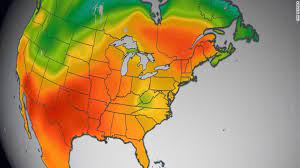
    The reality of climate change has hit hard over the past week with the deadly heatwave in the Pacific NW. The issue of how to combat rising emissions can no longer be kept off the front pages. On Friday 2nd Carbon Brief Daily reported that a frontpage story in the Times stated that “ministers have drawn up radical plans to reduce carbon emissions that would increase gas bills and the cost of running a car by hundreds of pounds a year”. They are proposing a carbon reduction scheme, copying the EU ETS plan to cover emissions caused by heating buildings and transport. The paper states that it “has been told that the prime minister does not want to include petrol in the scheme amid concerns that it would penalise motorists”, while the government “said last night that no decisions had been made”. This is the trouble with designing a regressive policy which will adversely affect most households. To be cynical is this a ‘leak’ in the hope that a backlash will mean it can be scrapped? 

    On Sunday there was an editorial in the Washington Daily Post arguing why a carbon fee and dividend plan would be a far more effective means of mitigating climate change in the US than Biden’s current strategy. One of the authors, Republican nonogenarian James A Baker co-authored the 2018 Baker Shultz Carbon Dividends Plan (this is not the plan supported by CCL US but shares similar principles). 

    The editorial points out the elephant in the room in discussions about climate change mitigation. Republicans in the US are worried that Biden’s plans, based on limiting US fossil fuel production without any plan to affect the price of imports, will reduce its competitiveness with China….Most nations won’t risk their own economic well-being in the hope of reversing what is clearly a global problem……  A plan co-authored by Secretary Baker and the late George P. Shultz holds the key to placing market pressure on China and other nations to start doing their part. It would place a fee on all carbon emissions in the United States, an approach that most economists believe is the most efficient and effective way to reduce such emissions.

    But rather than giving that money to the federal government, all of the revenue from the fee would be returned to Americans in the form of a quarterly dividend. A household of four would receive $2,000 annually, enough to provide the vast majority of households with more money than they would pay in higher energy costs. As a result, this fee would not expand the federal government, and therefore should not be considered a tax.

    But it would incentivize the private sector to find new and better ways to reduce emissions. This is a far better route than forcing the United States to wean itself from fossil fuels (while other nations fail to do so) because it harnesses a set of critically important strategic assets of our country: our abundance of affordable and cleaner energy, and our unmatched powers of innovation. 

    It discusses the European Carbon Border Adjustment Mechanism (CBAM) plans  to place a tariff equivalent to the carbon price  on imports which have not had a price imposed in the country of origin – probably easier than trying to talk them into equally restricting their output!  It points out that…..The economic upside here is unmistakable. U.S. steelmakers, for example, are far more efficient in low-carbon production than their major global competitor, according to a recent study commissioned by the Climate Leadership Council. By applying a carbon fee to domestic and imported steel, U.S. industry would win across the board. Overall, the study found, the U.S. economy is 40 percent more carbon efficient than the world average, and nearly every U.S. industrial sector enjoys a carbon advantage over most of our key trading partners.

  • How do we talk to ‘big oil’?

    How do we talk to ‘big oil’?

    We had a very interesting national meeting this month entitled ‘How could the oil industry help decarbonise the global economy?’ It included a panellist from the US, Dr Larry Kremer,who  joined two of our UK CCL expert members, Dave Waltham, Professor of Geophysics, who used to lecture about releasing oil and now lectures about how to lock it up and Brian Utton, (ex Castrol), who between them can clock up almost a century of experience in the oil sector! 

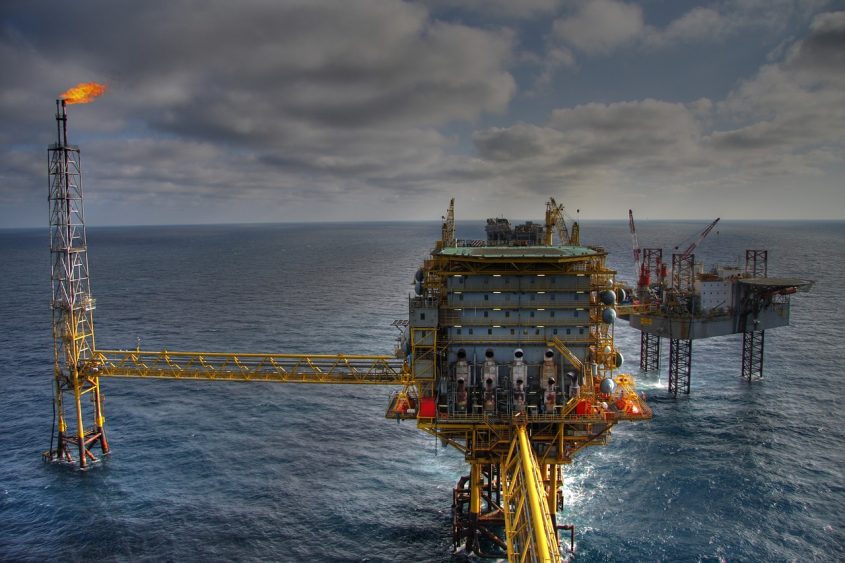
    Oil and natural gas companies are fully aware that they will have to adapt to survive and that fossil fuels are in danger of becoming a stranded asset. Happily for the industry they have the technology, expertise and locations needed to operate Carbon Capture and Storage (CCS). Indeed the expertise has been developing since the 1930’s,  but there was no incentive because releasing carbon dioxide into the atmosphere didn’t cost anything. Not having to pay for the consequences of extraction was a very big invisible subsidy for the industry and it is interesting that Norway developed CCS at the Sleipner gasfield in order to offset the effects of a carbon price!

    The new Northern Lights project will be taking carbon ‘waste’ from all over Europe, because despite the carbon dioxide shortage causing a beer and lemonade crisis a few years back the beverage sector can’t absorb it all! It only takes a carbon price of $50 per tonne to make CCS cost effective. Larry pointed out that the corn oil ethanol production industry in US states with a carbon tax found CCS to be cost effective at a carbon price level of $32.

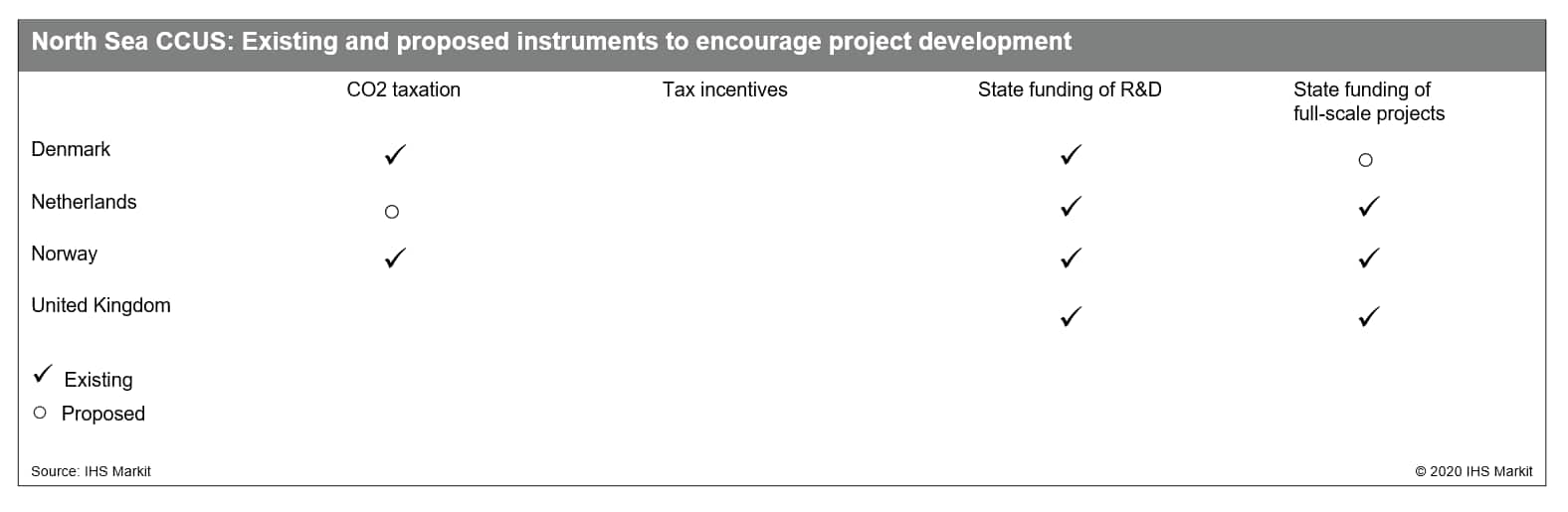
    The North Sea Basin is becoming the international leader in CCS – this chart shows what financial incentives have driven the development of the industry and the accompanying article, entitled Consistent policy support is key to unlocking investment in offshore carbon storage discusses the superiority of a carbon tax incentive as well as ‘consistent policy support’….

    Shifting funding priorities have undermined UK CCS policy

    The UK’s ruling Conservative Party has made investment in CCS a key pillar of its effort to decarbonize the economy. Opposition parties also support the technology, and the Scottish National Party (SNP) is spearheading efforts to develop a CCS industry in the region. Although the UK government has regularly provided funds for CCS research and demonstration projects, progress on launching full-scale developments has been limited so far due to significant and frequent shifts in state funding.…………..

    As one of our panellists pointed out, the UK oil industry does have a plan but there is still uncertainty over what the Government will support, which makes committing to investment difficult! The oil industry in general is known to be keen on carbon pricing rather than regulation, which, as has been very clear in the US over the last four years, is very vulnerable to regime change! 

    The take home message from the discussion is that the oil industry knows which way the wind is blowing and can, with the encouragement of a reliable and progressive carbon pricing mechanism like Climate Income, be incentivised to put its all into CCS. Climate Income would be a far more effective way to transform the oil industry than confrontation as it encourages the industry to finance transformation rather than shutting down and taking the economy and our pensions with it! 

  • The power of the pen/keyboard!

    The power of the pen/keyboard!

    The CCL Media Team (open to anyone) inspires members to write to newspapers and journals. We alert each other to opportunities and encourage each other’s efforts. It seems to be getting easier to get letters published because of the growing concern about climate change.

    I wrote a letter in response to the article by Mark Carney in the New Scientist back in March, not only was my letter published, but also a second letter responding to a criticism of my first letter!  This week another CCL Media team member, Gareth Ackland, has had his brilliant letter published: 

    Your excellent feature on the Climate Crisis was helpful in including a “What can I do?” section. While the impact of personal lifestyle changes is dwarfed by the impacts governments can make, if enough of us commit to reducing our carbon footprint, it can still accomplish a lot.

    However, the best option for an individual is surely to collapse that power gap. Organizations such as Hope for the Future and Citizens Climate Lobby insist that the most significant action an individual can take is to engage their elected representatives in the problems we face and their possible solutions. Those of us who live in democracies often forget that the wheels of power are intended to be subject to our views and interventions. If you’re not bending your government’s ear, then who is?

    Maybe I am being optimistic but three letters within two months seems to imply a growing interest in hearing about a fair and effective solution to creating the right conditions for a low carbon economy to take root. Our MPs and Councils may also be more receptive, especially if they are aware of the new IEA report!

    For further advice on letter writing or lobbying please see the Who supports a Climate Income, Climate Income/Carbon fee and dividend – further information and Take Action pages for inspiration and information and consider joining our media team for team support and inspiration (email here). Finally, in case you were wondering, our star letter writer is not standing in front of his letter to The New Scientist!

  • A blunt warning from the International Energy Agency but we can do something….

    The IEA has just published Net Zero by 2050: A roadmap for the global energy sector. The report states that:

    The world needs a “radical” shift towards renewables to reach net-zero emissions by 2050 and secure the 1.5C goal.

    It argues for a total transformation of the energy systems that underpin our economies, with no new oil or gas sites to be developed beyond this year. Current emissions reduction pledges are inadequate, and indeed despite past pledges emissions have risen by 60% since the United Nations Framework Convention on Climate Change was signed in 1992! (This really makes me shudder as 1992 was the year I became a mother).

    “Beyond projects already committed as of 2021, there are no new oil and gas fields approved for development in our pathway, and no new coal mines or mine extensions are required.”

    Responses have been mixed as you can imagine. The Energy Monitor article, Net zero: keeping fossil fuels in the ground is the only corporate strategy possible discusses what fossil fuel companies should be doing and gives good examples of how some European companies have transformed themselves.

    Happily by the end of May 21st G7 members had decided to heed the IEA demands on financing coal production in the main….

    “We commit to promoting the increased international flow of public and private capital toward Paris Agreement-aligned investments and away from high-carbon power generation to support the clean energy transition in developing countries. In this context, we will phase out new direct government support for carbon-intensive international fossil fuel energy, except in limited circumstances at the discretion of each country, in a manner that is consistent with an ambitious, clearly defined pathway towards climate neutrality in order to keep 1.5C within reach, in line with the long-term objectives of the Paris Agreement and best available science.

    “Consistent with this overall approach and recognising that continued global investment in unabated coal generation is incompatible with keeping 1.5C within reach, we stress that international investments in unabated coal must stop now and commit to take concrete steps towards an absolute end to new direct government support for unabated international thermal coal power generation by the end of 2021, including through Official Development Assistance, export finance, investment, and financial and trade promotion support.”

    All the more reason to keep pushing for CFD to facilitate the move away from fossil fuels!

    I am sure you will have noticed the explosion of coverage on the climate crisis over the last year, even in sections of the press which have hitherto been in denial! Often, of course, you will find that if a carbon price is mentioned it is presumed to be an assault on our way of life – cheese, meat and holidays in the sun! I do wonder if fear of the ‘red tops’ is one of the reasons why the Government stated in The Future of Carbon Pricing Report (2020) that..

    While we recognise the merits of a Carbon Fee and Dividend policy, we do
    not propose to adopt it at this time.

    Articles or letters claiming that climate change policies are bound to be punitive offer a great opportunity to respond with the case for CF&D (or use the more appropriate term Climate Income), pointing out that CI is not like the green levy or even fuel duties because the fee is returned as a dividend to offset the rising cost of fossil fuels until they are basically priced out of the market, thus making the promises made at the G7 and to be made at COP26 more likely to be achievable!

    The IEA report emphasises the need for this to start now!

  • Launch of a new tool to track progress in reaching net zero.

    Launch of a new tool to track progress in reaching net zero.

    The 10 Point Plan and subsequent emission reduction targets were far from lacking in ambition. Many commentators, however, are saying that words are easier than actions and, for example, agriculture and hydrogen use strategy remain unpublished 6 months after the 10 Point Plan and 6 months before COP26.

    I have just watched a presentation by the All Party Parliamentary Group on Climate Change on the launch of an online tracker which enables anyone to see what progress the government is making against the objectives stated in the Committee on Climate Change’s 6th Carbon Budget. 

    It looks like a very useful tool to use when preparing to write to/lobby your MP or Council to make the case that Climate Income would go a long way in smoothing the path to Net Zero.

    It was also encouraging to see the APPCC panel’s concern with the delays in policy formulation and implementation – although it was pointed out that MPs no longer have to spend their time trying to reason with climate change deniers in the House! I particularly appreciated the comment by the Chair, broadcaster Tom Heap, of how many trees could have been planted (and then stewarded) as part of a Covid exercise/mental health policy! I might add, as a range anxious EV car user, how many more EV chargers could have been installed over the last year!

    On the 18th May Policy Connect sent further information with useful links:

    The Dashboard is objectivemulti-levelconstructive and transparent. The Dashboard uses around 100 independent policy recommendations from the Climate Change Committee (CCC) to define good-practice in climate policy. Providing an in-depth analysis of each individual policy recommendation and aggregating this to provide an overall progress score for each sector, the Dashboard gives a multi-level perspective on policy development. The Dashboard provides constructive criticism and recommendations to the Government on how best to improve climate policy and, by publishing all workings and methodology, is a transparent assessment of progress.

    Government policy is most highly ranked in the power sector, which receives a 6/10 progress score, while the Government receives a score of 2/10, or critically insufficient, for its development of climate policy in the waste sector. The Dashboard will be updated as the Government releases new policies and the CCC provides new recommendations, and will continue to track Government progress in introducing policy to get the UK on track to meet its climate targets.

    All speakers agreed that the Dashboard was an excellent tool that would help parliamentarians, campaigners and the wider public support and scrutinise the Government in developing climate policy. Tom Heap summarised the Dashboard as “easy to use and available to all, providing excellent analysis on UK climate policy.”

    In the following discussion with MPs, a range of topics were discussed, including areas where the Government has been successful in introducing climate policy, areas where further action is essential and the need for cross-Governmental and cross-societal engagement in climate policy development and implementation. There was also specific discussion around the Hydrogen Strategy, the role of trees and nature-based solutions in meeting our climate targets, and decarbonising the buildings and transport sectors.…..see our write-up on the Policy Connect website. Take a look at the Climate Policy Dashboard, and to learn more about the APPCCG and their work in the run-up to COP26.

  • Damning report by the Public Accounts Committee….

    Damning report by the Public Accounts Committee….

    The House of Commons Committee of Public Accounts report, Environmental Tax Measures, published today, is savage in its condemnation of the failure of the Government to align its environmental ambitions with the means to achieve them through its fiscal policy:

    Tax is an important instrument for pursuing government’s environmental goals, particularly getting to net zero greenhouse gas emissions by 2050. The potential of the tax system in this respect has long been recognised by government, academics and stakeholders, notably the Institute for Fiscal Studies in the Mirrlees Review published in 2011 and more recently the Climate Change Committee. We were therefore concerned that HM Treasury and HM Revenue & Customs (HMRC)—the departments responsible for the strategic oversight and administration of the tax system—have taken a very limited view of the role of tax so far. They could not explain clearly to us how the tax system is used in achieving the government’s environmental goals.

    At present HMRC and HM Treasury only recognise four environmental taxes as these are the only ones with specific environmental objectives. They have limited understanding of the environmental impact of these taxes because their management has focussed on the revenue these taxes raise. The departments have not kept track of the impact of other tax measures with environmental objectives, such as tax reliefs to support energy saving and clean technologies, or the impact of tax measures affecting the consumption of fossil fuels. We were encouraged to hear that the departments have started to assess the impact of fuel duty freezes on the environment, but environmental assessments should be made for all taxes.

    We see a lack of leadership and coordination, which mirrors findings in our recent reports on Achieving government’s long-term environmental goals and Achieving net zero. The tax system interacts with environmental policy areas which are the responsibility of other government departments. These interactions risk being overlooked without greater monitoring and transparency of tax measures affecting the environment. Given HM Treasury’s cross-government remit, it is disappointing to see silo thinking, which we often see in other Whitehall departments, extending to the Treasury itself. HM Treasury is still considering how tax should fit within a comprehensive programme for funding net zero. It acknowledges that further action is needed to hit the 2050 target.

    Given the scale of the climate emergency, HM Treasury and HMRC need to act now. We are concerned that the departments have yet to plan for the impact of the government’s environmental ambitions on tax revenues, including on fuel duty which raised £28 billion in 2019–20 but will decline as people change to electric vehicles. The two departments need to be clear and transparent on the role that tax will play so that: taxpayers can make informed decisions; other government departments can plan; and Parliament has the information it needs to hold government to account. With the UK hosting the UN Climate Change Conference in November 2021 we look to HM treasury to lead by example.

    Analysis of press coverage is available here, including the comment by Labour peer Lord Triesman that:  

    “Government and regulators now need to create an environment where investors and lenders are rewarded for taking the long-term view. What will ultimately bring down green financing costs is longevity and pipeline security.” Interestingly this echoes comments on the similar gap in climate change mitigation plans across the pond:

    An editorial in the Washington Post says of the expected new US climate pledge to cut emissions 50% below 2005 levels by 2030: “Such promises are easy. Making good on them, and on this one in particular, is hard.” Like another recent editorial from the paper, the piece argues for a carbon tax: “What’s missing [from Biden’s proposals] is an economy-wide policy that would cut demand for fossil fuels in every industry in every state. A substantial, steadily rising carbon tax would ensure emissions reductions happened even if some of Mr. Biden’s government-funded green projects failed because it would dampen underlying demand for fossil fuels.”

    The publication of this report offers another very targeted opportunity to write to your MP, especially if they are members of the Public Accounts Committee. You could point out how Climate Income with Border Carbon Adjustments would be the ideal fiscal policy to send the right message to producers and consumers on the needed direction of travel and make investment in low emission technology so much more attractive, as the Government has acknowledged:

    Placing a price on carbon creates the incentive for emissions to be reduced in a cost effective and technology-neutral way, while mobilising the private sector to invest in emissions reduction technologies and measures. While we recognise the merits of a Carbon Fee and Dividend policy, we do not propose to adopt it at this time.

    * Committee of Public Accounts members

    Name /Party /Constituency
    Meg Hillier MP Labour Hackney South and Shoreditch, Chair
    Gareth Bacon MP Conservative Orpington
    Kemi Badenoch MP Conservative Saffron Walden
    Shaun Bailey MP Conservative West Bromwich West
    Olivia Blake MP Labour Sheffield, Hallam
    Dan Carden MP Labour Liverpool, Walton
    Sir Geoffrey Clifton-Brown MP Conservative The Cotswolds
    Barry Gardiner MP Labour Brent North
    Peter Grant MP Scottish National Party Glenrothes

  • April Action – Local Elections Count

    April Action – Local Elections Count

    As Kevin Frea, the speaker at last month’s national meeting told us, we need to seize the opportunity offered by these elections to tell our local representatives about Climate Income and gain their support for this brilliant policy. Climate Change is set to be on the agenda; the Liberal Democrat leader Sir Ed Davey, for example, has urged more council involvement in climate policies (BBC). There may even already be an environmental organisation in your area which is coordinating a campaign on this issue, such as Wiltshire Climate Alliance. The Alliance held a debate (Facebook, starts properly at 9.45 mins), involving the Wiltshire leaders of the main political parties on the 15th April.

    Although local councils have no say in national fiscal policy many are setting an example to the government by introducing greener policies in areas they do have control over such as social housing and transport, in advance of government regulations.

    Councillors can show MPs how much local support there is for green measures and thus, if they realise its benefit, could act as advocates for the policy of Climate Income to national politicians.

    We need to contact all the candidates of whatever political party or none.

     On THURSDAY MAY 6th there are elections covering:

    Local Councils, Mayoral and London Assembly, Police and Crime Commissioners and the Scottish and Welsh parliaments. All of these institutions have a great deal of influence.

    Full information about these elections can be found here:

    April 22nd’s action comes in 3 stages:

    1. Check you’ve received your polling card and know where to go to vote.

    If you need to register you must do so by 19th April. Apply here

    2. Check the names and contact details of the candidates:

    Local Elections: Look on your local council website for a list of candidates, do you personally know anyone you could contact?

    Mayors, Police and Parliamentarian: Once again if you have a personal contact use it.

    3. Contact:

    Even if you can’t contact them as a personal contact you can email and ask about their views on climate change and how their role or organisation can influence local and national policy to mitigate climate change. Include your name and postal address so they know you are in their area. Don’t forget to wish them good luck and ask for a response. You may have to look up their contact details on the Who Can I Vote For? website.

    Remember this is just the start of a conversation; you can carry on and explain the climate income policy once they have been elected.

    Our page on contacting your M.P gives ideas for emails and can easily be adapted:

  • Come back Mark Carney, we need you – Canada has already got it!

    Come back Mark Carney, we need you – Canada has already got it!

    If we still had Mark Carney as the Governor of the Bank of England we might have been looking forward to a COP 26 where the UK delegation steers the world away from climate change disaster. The UK would be encouraging other countries to follow its example by adopting CF&D and Border Carbon Adjustments. I have come to that depressing conclusion after reading an interview in the New Scientist (pay wall) in which he gives a convincing argument for CF&D.

    Mark is rightly hopeful about the technological advances which are making a zero carbon economy so much more doable than it was even a decade ago (which is what Boris is relying on, despite the fiscal policy doing little to encourage risky investments). Mark is, however, clear headed enough to see that the current fiscal and legislative regime doesn’t reveal the true cost of fossil fuels or prevent regressive legislative delays/short term policies in the building, steel, aviation, transport industries, to name but a few. Indeed, today’s Carbon Brief Daily, reporting on an article in Reuters, (paywall), says it all…..

    by not paying for their damaging effects on the climate and human health, US coal, natural gas and motor fuel producers (gain) “implicit benefits worth tens of billion of dollars a year”.

    Mark agrees with the interviewer that carbon pricing is necessary and cites the example of Canada to prove that the ‘gilets jaunes’ effect, which has obviously recently spooked Boris, can be avoided….

    The problem is that a uniform carbon price is a regressive tax. The amount the less well-off pay for petrol or the carbon embodied in their food or heating is a bigger proportion of their incomes than it is for the better-off. But it is important to have a uniform carbon price. The solution is to rebate individuals, as Canada has done with its recently designed scheme.

    The article concludes with an information ‘box’ (for want of a better description) written by the interviewer, Richard Webb. I can only wish that the rest of our media would get the message, and I don’t just mean the redtops…..

    In contrast, some of the schemes afoot now, for example in the European Union and Canada, plan to impose a flat tax per tonne of carbon dioxide or equivalent, with the aim of nudging entire economies away from polluting activities. As economies adjust, the carbon price is gradually raised, with the aim of promoting a virtuous circle of lower-carbon living.

    That has the potential to be very unpopular. For that reason, economists suggest the best move is to rebate the money raised to individual consumers, particularly the less well-off. It might seem pointless taking money and giving it back. But it means that products like food or fuel that are more carbon-intensive are also more expensive, and this could help change consumer behaviour – while not putting anyone at any overall economic disadvantage.

    Canada’s federal carbon tax plan has all these features. Its carbon price, currently $30 a tonne, is planned to rise to $170 a tonne by 2030. The system is designed so that people in the bottom two-thirds of the income bracket get a rebate that pays them more than they put in, in the form of a quarterly “carbon dividend” to their bank account. Richard Webb

    If you subscribe to New Scientist please consider writing to congratulate them and especially Richard Webb for this brilliant interview which is so much better than the interviews published elsewhere. Also do put in a plug for CCL, it would be great to get more New Scientist readers on board!

  • ‘A climate summit in every county’, pt.2

    ‘A climate summit in every county’, pt.2

    Our speaker at the March meeting was Kevin Frea, who is a Deputy leader of Lancaster City Council, Council Cabinet Member for Climate Emergency and Rural Affairs and founder of Climate Emergency UK. Kevin pointed out that while 3/4 of UK councils have declared a climate emergency and 126 councils have set a target to reach zero carbon by 2030, for some it has been just words.

    Interestingly the ambition to really put their money where their mouth is occurs across the political spectrum. Councils which have been ambitious and active include Lib Dem Cornwall, Labour Nottingham and Conservative Isle of Wight. Despite budget constraints councils like the above are doing what they can in areas they have control over such as social housing stock and public transport policy. Conservative led Wiltshire council, for instance, is building modular, zero carbon council homes, retrofitting older council homes and supporting housing associations to do the same.

    The Conservative Cabinet Member for Climate Change and Biodiversity at the Staffordshire Moorlands District Council here writes about the council’s Green Infrastructure Delivery Plan. And to top it all, borrowing a concept from the Cold War, Lewes and Amber Valley have joined Barcelona and Vancouver in signing the Fossil Fuel Non-Proliferation Treaty.

    The sole focus of CCL UK remains to campaign and lobby for a national carbon pricing policy to render all other strategies possible and probable. We are convinced, however, after our successful experience in Wiltshire, that it is worthwhile to engage with your council and other local environmentalists.

    Being involved in pushing council action ahead of the central government response can only help to persuade central government that the country is ready and willing to act on climate change with the most effective methods, including taxation! Some areas of the UK are holding citizen’s assemblies on climate change, and the clear message is that any transition must be fair…

    Reshaping the economy to fight climate change must not result in making life “even harder” for disadvantaged communities. (Susie Ventris-Field, Climate.Cymru Campaign.

    Campaigning with other local environmentalists can also help spread the word about the benefits of CF&D, and maybe even get your MP discussing the issue with Alok Sharma ahead of COP 26!