Author: Catherine Dawson

  • What happened at COP28?

    What happened at COP28?

    This is an extract from the slideshow delivered by Cathy Orlando, CCI program director on the 20th December 2023 giving the CCI analysis of the outcome of COP28. The worst case scenario – that fossil fuels would get a free pass and the pledge to work to keep temperature rises within 1.5 Celsius would be dropped, was averted.

    CCI applauds the eventual operationalisation of the Loss and Damage Fund, the declarations on tripling renewables and doubling energy efficiency, and tackling the fossil fuel subsidy issue. Highlighting the role of agricultural systems and the effects of climate change on human health and the natural world as well as the need for the transition to be just were also welcome signs of progress and proof that COP conferences, while not perfect, are important and necessary.

    CCL UK agrees that COP28 confirms that CCI’s campaigning for the reform of financial systems is the path forward.

    Governments’ 2030 targets will lead to 2.5°C of warming by the end of the century: 0.1°C higher than last year. This change is due to weak existing targets rather than any major shifts in new NDC updates: we take the level of emissions anticipated under current policies for those countries that we expect to overachieve their weak 2030 targets.

    Since COP28 the FFNPT now has 12 nation states signed up, in September the State of California became the largest economy to endorse the call (the 5th largest economy in the world and the largest sub-national economy)…… California Senate Majority Whip Senator Lena A Gonzalez (D – Long Beach), said: “It is essential that we commit once and for all to ending our reliance on fossil fuels. People around the world, especially low-income people of color, are suffering the adverse health impacts of fossil fuel pollution, from asthma to cancer. The recent devastating fires and hurricanes emphasize the urgency of taking action, to prevent further extreme weather changes. The science has been clear for decades—fossil fuels are responsible for the climate crisis. We can prevent further harm to our communities, and that is why I am proud that California has now been added to the growing list of governments endorsing the Fossil Fuel Non-Proliferation Treaty. It is time for our nation to be a part of the solution, to forge strong unity and commitment to phasing out the use of fossil fuels.

    France and Kenya formally launched the ‘Taskforce on International Taxation to Scale Up Development, Climate, and Nature Action‘ with Barbados, Antigua, Barbuda, and Spain signing on as members.

    CCI and CCL UK members will continue to educate and campaign for the solutions that will enable the world’s financial resources to be unlocked to ensure a liveable future in 2024.
  • When they say we need fossil fuels…Citizens’ Climate International Laser Talk, November 2023

    When they say we need fossil fuels…….The primary driver of inflation around the world is fossil fuels.  Economies are addicted to fossil fuels at every level: mobility, energy production, agriculture and goods production. When the prices of oil and gas go up, every other price tends to go up. Actually, high fossil fuel prices are historically inseparable from inflation and economic crises. Mark Zandi, chief economist at credit rating agency Moody’s, said in an article for Vox that “every recession since World War II has been preceded by a jump in oil prices”. And there is a term for it: fossilflation.

    Factors driving fossil fuel prices are many, and diverse. Most of the time, though, these come directly from producing countries, which raise and lower production, thus flooding or drying up the market. This is often used as a political tool, driving millions of people into despair. Here is just a sample of the many ways of how fossilflation happens:

    1. The market-rigging actions of the OPEC Plus cartel (including Russia);
    2. Profiteering on energy supply disruptions due to Russia’s invasion of Ukraine;
    3. Climate damages (a.k.a. climateflation) Extreme weather, climate and water-related events caused almost $1.5 trillion of economic losses in the decade to 2019, up from $184 billion in the 1970s, according to a World Meteorological Organization (WMO) report.
    4. Embedded energy costs across all classes of consumer products and business services;
    5. Food system effects including embedded fossil fuel costs and climate damage;
    6. Embedded climate risk and liability costs;
    7. Sovereign debt stresses driven by fossil fuels, including:
      a. Public spending and sovereign debt burdens resulting from disaster response;
      b. Direct spending on disaster response;
      c. Extremely high, punishing interest rates linked to that spending compelled by actions a country did not initiate or decide;
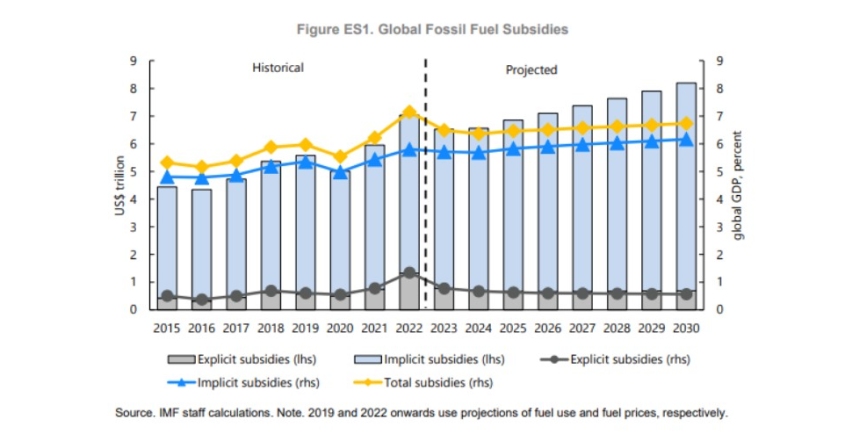
      d. All-time record fossil fuel subsidies ($7 trillion), linked to rigged fossil fuel price spikes;
      e. Public spending to compensate consumers for unaffordable price shocks linked to higher embedded energy costs.

    There is one solution: move away from fossil fuels. We need to do it fast, and we need to do it fairly. That is why at COP 28, Citizens’ Climate International is linking arms with many organisations and calling for a fossil fuel phaseout.

    By breaking free of coal, oil and gas, and replacing them with renewable energy sources, we will protect our planet and our economy.

    Summary

    The primary driver of inflation around the world is fossil fuels. In fact there is a term for it: fossilflation. There is a simple solution: move away from fossil fuels. We need to do it fast, and we need to do it fairly.

    That is why at COP 28, Citizens’ Climate International is linking arms with many organisations and calling for a fossil fuel phaseout. By breaking free of coal, oil and gas, and replacing them by renewable energy sources, we will protect our planet and our economy.

  • Citizen Climate International’s summary of the truth about fossil fuel subsidies and the fossil fuel industry’s decades long disinformation campaign!

    Citizen Climate International’s summary of the truth about fossil fuel subsidies and the fossil fuel industry’s decades long disinformation campaign!

    The IMF, Carbon Pricing and Explicit and Implicit Fossil Fuels Subsidies

    Here are two terms that anyone who wants to preserve a stable climate needs to know: explicit fossil fuel subsidies and implicit fossil fuel subsidies.

    Explicit fossil fuel subsidies from governments directly reduce the price of fossil fuels, thus making it attractive to investors and consumers to buy. Implicit fossil fuel subsidies are the costs taxpayers and insurance are paying for the air pollution and climate impacts experienced because of dirty fossil fuels.

    On August 24, 2023, the International Monetary Fund (IMF) released a report. The conclusion of this report was that subsidies for oil, coal, and natural gas cost the equivalent of 7.1%  of global gross domestic product.

    Explicit subsidies have more than doubled since 2020 but are still only 18% of the total subsidy amount, while nearly 60% is due to implicit subsidies.

    Here is a hopeful conclusion from the report: “Full fossil fuel price reform would reduce global carbon dioxide emissions to an estimated 43 percent below baseline levels in 2030 (in line with keeping global warming to 1.5-2C), while raising revenues worth 3.6 % of global GDP and preventing 1.6 million local air pollution deaths per year.”

    Making polluters pay (a.k.a carbon pricing) offers us the exact tool needed to ensure this price reform. In fact, the IMF Managing Director Kristalina Georgieva at the Paris Summit in June said, “Our analysis shows that without a carbon price, there is no chance that we will meet the 1.5 degrees Celsius target by 2030. We will miss it.”

    Our only home, Earth, has just passed through the hottest three months on record. With the fires, floods, horrendous storms, cryosphere melting and the threats to the Gulf Stream, it is obvious that the impacts of climate change are no longer just a concern for future generations, but are a very real threat at our doorstep. We must listen to the experts and cooperate to enact or strengthen our essential climate policies such as carbon pricing going forward. Happily there are 70 carbon pricing initiatives world wide and the African Summit issued a unanimous call for world leaders to support global price on carbon pollution on September 6, 2023.

    IMF Subsidies Report August 2023

    The Fossil Fuel Industry Funded Climate Disinformation for Decades

    Even to this day, there are individuals who deny or downplay the link between the burning of fossil fuels and the impacts that pollution has on our climate and health. How did this happen?

    Key players in the fossil fuel industry knew decades ago that burning coal, oil, and methane gas to warm our homes, power our cars, and generate electricity was warming the planet. Instead of acting on the knowledge, they began financing a massive disinformation campaign. Now, as a consequence, youth are having to fight for their inalienable right to have a safe and liveable future.

    Happily, when you inform people that the fossil fuel industry funded a climate disinformation campaign for decades, people are more likely to believe you when you present solutions.

    Suggested readings:

  • Fiddling while Rhodes burns, we can remind politicians there is a fair and just way to decarbonise….

    Fiddling while Rhodes burns, we can remind politicians there is a fair and just way to decarbonise….

    Both Labour and Conservative politicians have been spooked by the narrow by-election win in Uxbridge which has been squarely attributed to campaigning on the proposed extension of the Ulez scheme. Few commentators pointed out that Manchester, Bristol, Birmingham and Bradford received a combined £230m in Government funding for their scrappage schemes, but London and the South East have received none.

    Press coverage has rightly pointed out that people should not be made poorer by ill thought out schemes which could be said to put the cart before the horse. There are politicians in both parties who are calling for unpopular policies to be dropped or postponed but neither party is denying the need to reach net zero.

    Sam Hall, director of the Conservative Environment Network, told The Observer that …“Environmental policies are an electoral asset when they are fair, affordable, and deliver for people and their communities. I’d warn Conservatives against listening to calls to ditch environmental commitments following the Uxbridge result. Insulating people’s homes, building more renewables, and attracting investment into new clean industries are popular, bill-cutting and job-creating.” 

    A blog he wrote for CEN points out thatThe Conservatives secured a victory against the odds by focusing the campaign on ULEZ expansion. They effectively pulled off a protest vote against an unpopular mayor instead of the usual dynamic of voters protesting the government. This strategy won’t work at a general election, when the party will be asking for a fifth term in government. Senior Conservatives must resist calls to ditch conservative environmental policies. (Over 150 MPs and Peers have signed up to the CEN).

    What the by-election shows is that policies which create financial hardship won’t work and in fact will be as counter productive as the tax imposed in France which led to the Gilet Jaunes revolt. Climate Income along with grants or loans based on future carbon dividend payments would go a long way to achieving the decarbonisation of the economy without penalising most people (as outlined in our report published last October). 

    Whilst not asking directly for Climate Income the Times editorial today puts the case for a Carbon Tax…..The message from policymakers must be that mitigating climate change can best be tackled through the continual innovations that are characteristic of market economies. And that doing so, using the price mechanism to encourage new technologies, is practical. It is widely understood that a carbon tax would be highly effective in persuading consumers and businesses to switch their energy consumption and behaviour. This would need to apply to carbon consumption and not only production, lest richer countries merely outsource their production to poorer economies. Revenues from a carbon tax could be used to subsidise renewable sources of energy and thereby encourage their wide adoption.

    Update 25/7/23

    Today Lord Deben (outgoing Chair of the CCC) has asked that parties build a cross party consensus on tackling climate change and getting to net zero, based on the recommendation of Chris Skidmore’s UK Net Zero Review. ….“If I were leader of the Labour party at this moment, I know exactly what I’d do,” said Deben. “I would say to the current government: ‘Here is Mr Skidmore’s report, he is a Conservative ex-minister, he was asked to do this report to show how best to deliver net zero by Liz Truss. Now we will accept, if you put it forward, we will do the following basic things [acting on the report’s recommendations]. We will do that. We won’t oppose it. You put them forward, we’ll back it.’” ………..There are those who don’t really take onboard the urgency of climate change, and they are in all political parties.”

    Let’s remind our politicians that there is not only no justification for dropping commitments to net zero while Rhodes burns and people die, but also no need!

     Tomorrow’s national meeting will be dedicated to this action

  • A message of hope from Citizen Climate International….

    A message of hope from Citizen Climate International….

    The outcome of COP 27 in Sharm El Sheikh treated the consequences – loss & damage, but not the cause – fossil fuels.  It was a huge victory to get loss and damage funding. This is to be celebrated.

    We cannot rest yet. There is no mention of oil and gas in the COP 27 outcome. The math is simple: more fossil fuels burned means more adaptation and loss and damage costs. This victory is unbalanced.  Anything that is unbalanced is doomed.

    We have hope because it’s not the COP sessions that change the world, it’s the actual work that goes on after governments have made those promises.  We have hope because we have been working behind the scenes and monitoring progress at the G7, G20, the United Nations, the World Bank and the IMF for several years now. We have hope because our volunteers are doing fantastic work around the world. We have hope because we know that the tracks have been laid for a resilient and equitable future and the train is about to leave the station. Consequently, we have hope because we know that the transformation of the economy will not be linear.  

    Change is coming. Find out how you can help and spread hope.

    Hope

     And an added thought for fun. We need to name if we are to tame it:

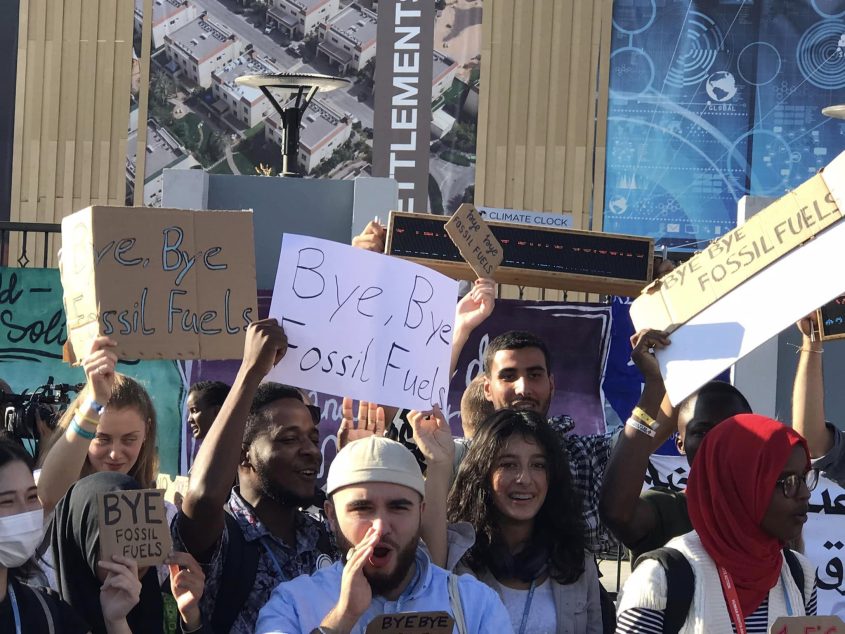
    Bye bye fossil fuels

  • Woodhouse Colliery decision makes no sense – climate and economy will lose

    I have just sent a quick email to my MP about the decision to approve Woodhouse Colliery. He, thanks to the efforts of our local CCL group, understands and supports the case for Climate Income but I would have written even if I was not campaignong for Climate Income. The decision makes no sense even under ours and Europe’s current carbon pricing system (ETS).

    I am perturbed that the Woodhouse colliery has been approved, ostensibly to prevent the need to import coking coal, yet….There are only two potential customers for this coal in the UK: Tata Steel and British Steel. Yet Chris McDonald, chief executive of the Materials Processing Institute, said earlier this year: “British Steel have said they cannot use the coal from this mine because the sulphur levels are too high. Tata Steel have said if the coal were available, then they may or may not use a small amount. There isn’t anyone in the steel industry who’s calling for the mine.” 

    This retrograde step delays the industrial changes needed to move away from fossil fuels and will decrease our future competitiveness. We will also lose the credibility and leadership we gained at COP26 with the Powering Past Coal Alliance. As the future for steel is acknowledged to be smelting using green hydrogen and electrolysis for recycling steel we would do better to invest in green hydrogen. According to the LGA Cumbria could have 6,000 new jobs by 2030 with the right investments in green infrastructure, with 600 in Copeland.

    BEIS has had a 250 million Clean Steel fund since 2019 and an Industrial Energy Transformation Fund, lets use it to get ahead of the game and future proof our industry. Germany and Sweden are already piloting the technology, we will fast lose any competitive edge if we stick to this outdated technology the industry doesn’t want. With a sensible carbon pricing mechanism like Climate Income the price of coal coking of steel would also soon lose any competitive advantage, and it may even do so under ETS. The decision could be called Luddite, or at least extremely short sighted!

    I think we need to show our MPs that the decision was foolhardy to say the least. Send them an email or maybe a Christmas card to show that bad decisions on energy and industrial strategy will always come home to roost!

  • How many more institutions and politicians, let alone protesters, have to say we need to keep fossil fuels in the ground?

    How many more institutions and politicians, let alone protesters, have to say we need to keep fossil fuels in the ground?

    On October 25th the Lancet published its annual Countdown on Health and Climate Change report in which it stated that world governments are “putting the health of all people alive today and future generations at risk” by locking in dependence on fossil fuels.

    On the same day a Unicef report warned that funding has to be increased to protect children and vulnerable communities from worsening heatwaves; a day later the United Nations reported that current NDCs will lead to 2.5C warming and that only 24 out of 193 nations had updated their plans as asked at COP26. The UN Secretary General, in an interview with the BBC stated that countries should not invest in more fossil fuels…. 

    This is the defining issue of our time, nobody has the right to sacrifice international action on climate change for any reason.……..We need to tell the truth. The truth is that the impact of climate change on a number of countries in the world, especially hotspots, is already devastating”.The most stupid thing is to bet on what has led us to this disaster.

    Also on the 25th Alok Sharma asked our government to ‘explain and demonstrate’ how new oil and gas development can align with the Net Zero target. The short answer is it can’t and it needn’t if investment in fossil fuels were to go to renewables and insulation projects instead. Meanwhile it was reported that BEIS data shows “that with existing and near-fully planned policies, the UK is projected to emit nearly double the amount of pollution as it should do under its 2030s goals”.

    There are signs that the government’s environmental policy may be taking steps in the right direction with the appointment of Therese Coffey as Secretary of State for Environment, Food and Rural Affairs and Rishi Sunak declaring that the moratorium on fracking will be retained.

    Climate Income of course would send the clear message that it pays to decarbonise whilst protecting households from rising fossil fuel costs during the transition.

    With change in the air now may be as good a time as any to write to your MP and, if you haven’t already done so, submit a response to the Net Zero Consultation. Thanks to all the members who have done so already, it does make a difference!

  • Members of the European Parliament called for a European Fossil Fuel Non-Proliferation Treaty today.

    Members of the European Parliament called for a European Fossil Fuel Non-Proliferation Treaty today.

    In an amendment to the European Parliament Resolution on COP27  today EU members of Parliamentarians Call for a Fossil Fuel Free Future asked European states to work on developing a Fossil Fuel Non-Proliferation Treaty. They are calling for European states to:

     End expansion of new fossil fuels projects

     Phase out current production in line with 1.5ºC

      Enable a global just transition for every worker, community & country.

    and:

    “phase out fossil fuels as soon as possible”

    “halt all new investments in fossil fuel extraction”

    “end fossil fuel subsidies”

    Parliamentarians Call for a Fossil Free Future is a global network of close to 500 legislators from every continent (including the UK) who have called for “new international commitments and treaties, complementing the Paris Agreement, to address the urgency of a swift and just transition away from fossil fuel energy”

    Marie Toussaint, French Member of the European Parliament said….

    “It was absolutely crucial, ahead of the COP27, to remind European leaders that they cannot use the ongoing energy crisis as an excuse to deepen our dependency on fossil fuels. The call made today by the European Parliament to adopt a Fossil Fuel Non-Proliferation Treaty and phase out all direct and indirect fossil fuel subsidies by 2025 must now be heard by the European Commission and Member States. The EU must also acknowledge its climate debt, and the fact it has been a major polluter, responsible for greenhouse gas emissions over centuries. We have to find ways, within this non proliferation treaty, to ensure justice at global level for those who won’t earn the money they could through fossil fuel extraction.”

    Risa Honiveros, Senator of the Philippines and initiator of the Parliamentarians’ Call for a Fossil Fuel Free Future , stated

    “In recent months, parliamentarians on every continent have called for new international commitments and treaties to address the urgency of a swift and just transition away from fossil fuel energy. It is great to see this gaining momentum with the proposed Fossil Fuel Non-Proliferation Treaty which has now been called for by the President of Vanuatu, the President of Timor-Leste, the Vatican and now the European Parliament.”

    The main European Parliament resolution on COP27 also stated that it …

    Welcomes the fact that several EU trading partners have introduced carbon trading or other carbon pricing mechanisms and invites the Commission to further promote this and similar policies on the global scale; looks forward to a speedy agreement with the Council on the proposal for a socially just EU carbon border adjustment mechanism that includes an effective carbon leakage mechanism and to its effect of pushing a global carbon price, which will contribute to reducing global carbon emissions and to the achievement of the Paris Agreement goals;

    It also acknowledged the need for Loss and Damage finance….

    Welcomes the fact that the Glasgow Climate Pact underlines the importance of adaptation and the need to scale up action to enhance adaptive capacity, strengthen resilience and reduce vulnerability to climate change; notes in this regard that 47 countries submitted Adaptation Communications or National Adaptation Plans in the last year, and expects other countries to submit their Communications in line with the Paris Agreement; welcomes the creation of a new Glasgow Dialogue on Loss and Damage which should focus on funding arrangements to avert, minimise and address loss and damage associated with the adverse impacts of climate change;

    Citizens’ Climate International has welcomed the Fossil Fuel Non-Proliferation Treaty initiative which was launched on September 2020 and has been working with them since 2021.

  • The IMF says that the world needs to mitigate climate change now using a form of Climate Income, the cost of procrastination will only get higher…

    The IMF says that the world needs to mitigate climate change now using a form of Climate Income, the cost of procrastination will only get higher…

    A Guardian report on the 5th October examines the predictions of a chapter in the current IMF half yearly World Economic Outlook report. It  has a chapter titled Near-Term Macroeconomic Impact of Decarbonization Policies. The chapter models the cost of delaying the tackling of climate change until ‘conditions are right’ and current global inflation has lowered; an IMF blog about it is titled.. ‘Further Delaying Climate Policies Will Hurt Economic Growth…The transition to a greener future has a price—but the longer countries wait to make the shift, the larger the costs’. 

    The blog argues that concerns about current cost have been perceived to be more real than the nebulous future threat of climate change, causing decades long procrastination …’despite overwhelming evidence that any short-term costs will be dwarfed by the long-term benefits (with respect to output, financial stability, health) of arresting climate change (October 2020 World Economic Outlook; IPCC 2022).  

    The current crisis has heightened the fear that climate mitigation would just raise inflation further and led to the claim that we need to double down on fossil fuels for energy security (as in the UK). Concurrently a Global Energy Monitor report states that…

    New oil and gas development in the North Sea could produce up to 984 megatonnes of CO2 equivalent and contribute to the United Kingdom exceeding its carbon budget for 2023-2037 by a factor of two.

    The IMF’s modelling uses the revenue from gradually rising greenhouse gas taxes returned in part to households to drive the transition….

    To assess the short-term impact of transitioning to renewables, we developed a model that splits countries into four regions—China, the euro area, the United States, and a block representing the rest of the world. We assume that each region introduces budget-neutral policies that include greenhouse gas taxes, which are increased gradually to achieve a 25 percent reduction in emissions by 2030, combined with transfers to households, subsidies to low-emitting technologies, and labor tax cuts.

    It argues that the policy, if started now would have a modest decline in GDP and rise in inflation, slowing global economic growth by 0.15 to 0.25% and rising inflation by 0.1 to 0.45; but if delayed until 2027 with the rationale of waiting until inflation is down the effect on the global economy would be worse….

    Is it reasonable to wait—as some have proposed—until inflation is down before implementing climate mitigation policies? We ran a scenario delaying implementation until 2027 that still achieves the same reduction in cumulative emissions in the long term. The delayed package is phased in more rapidly and requires a higher greenhouse gas tax, since a steeper decline in emissions is necessary to offset the accumulation of emissions from 2023 to 2026.

    The results are striking. Even in the most favorable circumstances when monetary policy is credible and the transition to decarbonized electricity is rapid, the output-inflation trade-off would rise significantly; GDP would have to drop by 1.5 percent below baseline over four years to drive inflation back to target. Delay beyond 2027 would require an even more rushed transition in which inflation can be contained only at significant cost to real GDP. The longer we wait, the worse the trade-off.

    The take home message? ….if the right measures are implemented immediately and phased in gradually over the next eight years, the costs will remain manageable and are dwarfed by the innumerable long-term costs of inaction.

    .

  • Heartening news from the UN General Assembly -Vanuatu leads the way in signing the Fossil Fuel Non-Proliferation Treaty

    Heartening news from the UN General Assembly -Vanuatu leads the way in signing the Fossil Fuel Non-Proliferation Treaty

    Despite the General Assembly being preoccupied with the war in Ukraine there was a groundbreaking moment when Vanuatu became the first nation state to sign the Fossil Fuel Non Proliferation Treaty.

    Press Release from the Fossil Fuel Non-Proliferation Treaty Organisation.

    NEW YORK CITY – 23 September 2022

    Today, Vanuatu called on other nations to join them in establishing a Fossil Fuel Non-Proliferation Treaty, a proposed international mechanism that aims to explicitly address the source of 86% of CO2 emissions that cause climate change: fossil fuels. 

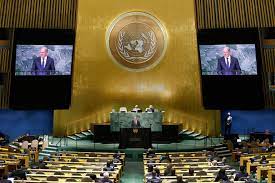
    The President of Vanuatu His Excellency Nikenike Vurobaravu made the historic call on the floor of the UN General Assembly, making Vanuatu the first nation-state to call for an international mechanism to stop the expansion of all new fossil fuel projects, and manage a global just transition away from coal, oil and gas. The President of Vanuatu will also launch their call for a Treaty to phase out fossil fuels on stage at the 2022 Global Citizen Festival in Central Park this Saturday.

    In his speech, President Nikenike Vurobaravu said: “Every day we are experiencing more debilitating consequences of the climate crisis. Fundamental human rights are being violated, and we are measuring climate change not in degrees of Celsius or tons of carbon, but in human lives. This emergency is of our own making. Our youth are terrified of the future world we are handing to them through expanding fossil fuel dependency, compromising intergenerational trust and equity. We call for the development of a Fossil Fuel Non-Proliferation Treaty to phase down coal, oil and gas production in line with 1.5ºC, and enable a global just transition for every worker, community and nation with fossil fuel dependence.”

    The call for a Fossil Fuel Treaty has already been endorsed by more than 65 cities and subnational governments around the globe, including London, Lima, Los Angeles, Kolkata, Paris and the Hawai’i State Legislature. Recently the proposal has also been supported by the Vatican and the World Health Organisation.

    Significant momentum has built behind the proposal in recent months and Vanuatu’s call for a Fossil Fuel Non-Proliferation Treaty is a pivotal step toward building formal diplomatic support for the proposal. Similar moments were pivotal in the legal pathway toward treaties to manage the threats of nuclear weapons and landmines.

    This historic call doubles down on Vanuatu’s commitment to climate action, following their submission earlier this month of one of the world’s most comprehensive climate targets under the UN. Vanuatu has also been leading a campaign to have the International Court of Justice issue an opinion on climate justice and human rights, which paves the way for a new era of international climate policy focused on equity and justice and addressing the biggest drivers of the climate crisis – coal, oil, and gas.

    Vanuatu, an already carbon-negative country that absorbs more emissions than it produces, is rated the country most at risk of natural disasters according to the United Nations. Countries on the frontlines of this crisis have been calling for urgent, tangible action on climate as they face the impacts of climate change and sea level rise in real-time. 

    Brianna Fruean, a Pacific Climate Warrior and 2022 Global Citizen Prize Winner said: “Vanuatu’s call today is a vital investment in our future. They’ve heard the call from our youth that there’s no future for us in fossil fuels and listened. It’s time for other world leaders to do the same”

    Pacific leadership has been essential to the international approach to climate change. Vanuatu’s call for an international framework to manage a just transition away from fossil fuel production sends a very strong message of hope, determination and urgency, both globally and regionally to Australia and New Zealand. 

    Kalo Afeaki, Pacific Climate Warrior from the Kingdom of Tonga, said: “Fossil fuels did this, and if we continue to burn them, we will see more islands in the Pacific, islands like my home of Tonga disappear. We need countries to be bold, because we have run out of time. The future scares me – we need to phase out fossil fuels, we need countries to endorse the Fossil Fuel Non-Proliferation Treaty and we need them to do so now.”

    Mary Gafaomalietoa Sapati Moeono-Kolio, Pacific Treaty Champion, New Zealand Climate Action Network Board said: “By calling for a Fossil Fuel Non Proliferation Treaty, Vanuatu has once again showed the world the Pacific’s climate leadership. The treaty will be a way forward and will complement the goals of Paris to limit emissions by cutting off supply and accelerating the Just Transition. There is no other way to 1.5 – the world must now respond.” 

    This historic first call reinforces the global momentum around the proposed Fossil Fuel Non-Proliferation Treaty. For the past two years, the proposed Fossil Fuel Treaty has gained support from thousands of civil society organisations, major cities, hundreds of Parliamentarians, Nobel Laureates, Indigenous peoples, trade unions, faith leaders, youth activists and health professionals. Now the proposal has been made by Vanuatu within the international policy arena.

    Here’s hoping the call to other states to follow will be heeded, hopefully supported by carbon pricing policies which make decarbonisation the logical path.