Tag: zero carbon

  • How did the debate on carbon emission charges go?

    How did the debate on carbon emission charges go?

    On November 1st the much anticipated debate on the Zero C petition was held in a extremely uncrowded Westminster Hall. Catherine Mckinnell (Newcastle upon Tyne Central, Lab) moved the petition, stating that its aim is  to impose a single carbon price across all sectors. ……

    In its simplest terms, the petition calls for the Government to work towards a single carbon price across almost all sectors. The campaign argues that a single carbon price would amalgamate the many existing price instruments, including the carbon price support and the UK emissions trading scheme—a different form of carbon charging—into a simple, transparent carbon charge. Zero Carbon points out that our current policies cover emissions across only about a third of the economy, giving the biggest polluters free allowances while the consumers are left to pay. I pay tribute to the petition’s creator, Isabella Goldstein, who is the senior campaign manager at the Zero Carbon campaign.

    The theory behind this form of carbon charging is straightforward. If we had, for example, a single carbon price of £75 per tonne of CO2, it would incentivise people and businesses to pursue any methods of emission reduction that cost less than £75. Hon. Members will be aware that we are far from having a single carbon price across sectors. Instead, we have a patchwork of policies that incentivise or disincentivise emissions in ways that are often unclear. While overall they have the effect of, for example, discouraging the burning of fossil fuels, the cost varies hugely depending on the source of the emissions. It is argued that the key benefit of working towards a uniform carbon price is that it avoids a situation where some sectors face higher carbon prices, and must therefore make more expensive carbon reductions, while others could more easily and cheaply reduce their emissions but do not.

    Mckinnell also pointed out that Zero C are asking for the policy to be fair and equitable…

     Alan Brown (Kilmarnock and Loudoun, SNP)……In a similar vein, I represent a former coalfield area. Carbon taxes had been applied to the extraction of coal over the years, but a few years ago, when the open-cast coal industry collapsed in my constituency, it left massive craters that needed reinstatement work at a cost of millions of pounds. Carbon taxes came from my constituency to the Treasury, but they just went into the black hole. When we asked for assistance for restoration work on those abandoned coalmines, the answer that came was, “No. Too bad. That money came in and it has been used. There is no money coming back to your constituency. It doesn’t work that way.” That shows the folly of not ring-fencing a tax for the purpose that it should be ring-fenced for. Again, transparency is utterly critical if we are to go forward.

    Jerome Mayhew (Broadland, Con) argued cogently for a Carbon Border Adjustment Mechanism policy, as he has been championing for a while. There was interest in CBAM earlier this year  but in July the Board of Trade published a report extolling free trade as the answer, the subject is still under review.

    Unfortunately although the speakers all argued that carbon pricing was necessary and should be fair there was no discussion on how to implement it, such as suggesting a solution like Climate Income. The argument for a single uniform carbon price wasn’t really debated, instead the arguments were vague, focussing on stating that the Net Zero Strategy isn’t doing this, that or the other, our party would spend more and be more equitable than the government and when will the ETS net zero consistent cap be announced. 

    This line of arguing therefore enabled the financial secretary to the treasury, Lucy Frazer, to argue that while “The petition specifically calls for a carbon charge to encourage industries and organisations to reduce their carbon emissions” the government is already doing this through the UK ETS scheme and Carbon Price Support, but she didn’t feel the need to address the petition’s main ask as no-one else had been discussing it.

    In summary the gist of the petition, arguing for a single, uniform carbon price seems to have been lost in the discussions about other aspects of the Net Zero Strategy and finance. 

    One has to wonder if the timing of the debate, falling as it did during COP26, inevitably led to the paucity of ideas and discussion, with no-one from the government, for instance, discussing the ideas leaked in July

  • What next for the climate emergency?

    What next for the climate emergency?

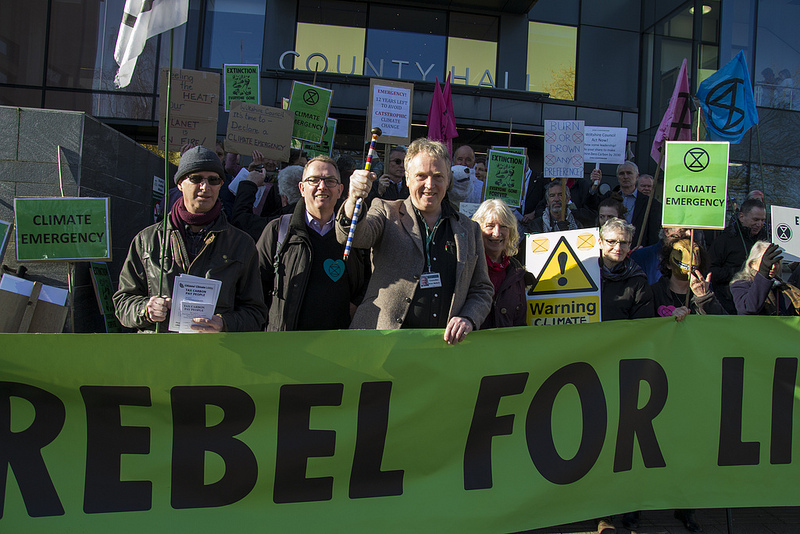
    So the first rule of attending a conference on climate change and what we can do about it is not to add to the carbon emitted by getting there. So, Milly, Dave and I all traveled up by train to Lancaster to the Climate Emergency conference.

    (I love trains but at £118 for the journey, it isn’t something everyone can afford, which is part of the problem in weaning people off their fossil fuel driven cars. Thank you to the regional Transition Network and Transition Marlborough for paying both mine and Milly’s train fares.)

    The purpose of the conference was, in a nutshell, what happens after declaring a climate emergency? “Declaring a climate emergency is the easy part – what do we do next?” said Cllr Colin Glover, leader of Carlisle City Council.

    It was incredibly well attended by 350 plus local councillors, activists, scientists, researchers, businesses and so on. A fantastic effort and the kind of next step response required by all the climate emergencies declared by local authorities.

    What were our takeaways?

    Milly (Transition Marlborough):

    • This is urgent. This is Huge. Nothing is more important at the moment. Viable, practiced solutions exist and they must be put in place and scaled up now. The biggest barrier to action is ineffective communication. Be courageous and act now.
    • Attendees were mostly white, middle-aged, middle class – how can we attract more diversity? Or are other people approaching this problem in other ways?

    Me:

    • MPs are aware of the climate change issues but don’t feel under pressure from constituents to do anything about it, so said Dr Becky Willis, researcher for Lancaster University and the Green Alliance. “Not enough constituents talk to their MPs about climate change,” she said. Actually I’m going to repeat that in capitals because it’s top of the CCL list of essential actions and anyone can do this and make a difference.
      NOT ENOUGH CONSTITUENTS TALK TO THEIR MP ABOUT CLIMATE CHANGE
    • We need a template list of actions for local councils to clean up their emissions, which includes what’s in their control as well as when they need to influence central government. I was hoping the conference would provide this but, really we’re still at first base on that front. So, for instance, how can a local council influence local farming and agricultural land use? And we’re back to influencing national policy and EU policy (for the time being at least) and councils having a strong Local Neighbourhood Plan.
    • Once again I was struck by how important the school climate strikes have been in grabbing the attention of young people and turning them into activists. There’s our future leaders in the shape of young people like twelve year old Ada Wood from Carlisle, who read from her inspiring, impassioned and very well composed letter to a minister who tried to belittle her concerns about climate change raised in BBC’s Question Time. “Twelve years is more like two years [referring to the IPPC report]. It takes time to set things up,” and, “I want you to act like your house is on fire – because it is.”
    • “Wouldn’t it be great if the weather report would also tell us how much money the wind was making for the economy?” – Paul Allen from Zero Carbon Britain on wind-generated power.
    • When you wake up in the morning think: will what I am doing today matter in 100 years to wildlife and people? – Cllr Simon Pickering, Stroud District Council
    • The science and the emergency is important, but we need to look after ourselves so we don’t become frozen by the extent of the problem.

    Dave (CCL UK / professor of geophysics / expert science witness for Wiltshire Council):

    • There’s lots of source material out there to work out a plan of action.
    • Find an example of success and good practice – Stroud District Council have gone a long way down this road and they aren’t that far away from our area, Marlborough. They have reduced their council emissions by 32 percent and were carbon neutral in 2015.
    • Councils need to set emission reduction targets in their local neighbourhood plan, to legally lock in commitment. They can review an existing local plan if there is a ‘substantial change’ – declaring a climate emergency counts.
    • Local government by law have to consult Natural England when they make changes to their local neighbourhood plan.

    My job at the conference was to connect with other activists and spread the word about carbon fee and dividend. Local governments can clean up their act – and, of course, this is very important, especially with regards public transport and energy generation – but, ultimately, there is only so much they can do.

    To change things substantially and quickly enough we need central government to create the right kind of carrots and sticks. Like carbon fee and dividend.

    The Climate & Environmental Emergency Conference took place at Lancaster Town Hall, 29 March 2019, and was organised by Climate Emergency UK.

  • Zero carbon London plans unveiled

    Zero carbon London plans unveiled

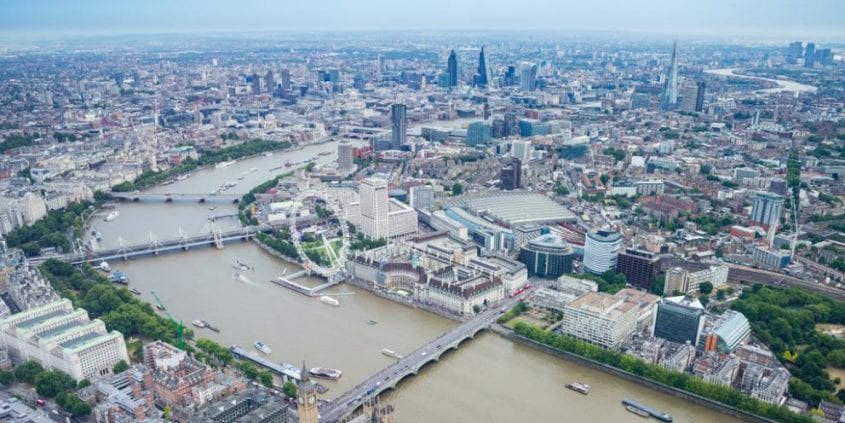
    An ambitious plan for London was unveiled today by Sadiq Khan – ‘Zero carbon London – a 1.5 degree compatible plan’.

    Stating the UK was in a climate emergency, the plan aims to bring down carbon dioxide emissions by 40 percent by 2022, and to zero from transport and buildings by 2050.

    But London can’t do it alone – national government is called upon to give more power and funding to London to make it happen.

    The plan rests on the energy efficiency of home and business buildings, decarbonisation of power from the national grid as well as more support for clean energy within the community, and converting Londoners to zero carbon public transport, walking and cycling.

    The plan includes actions points for all level, from government, GLA, business, London boroughs and Londoners themselves.

    Thanks to climateaction.org for the tip off.