Tag: MP

  • Why is respect important?

    Why is respect important?

    A gender equality charity reported recently its research on the representation of women in parliament.

    Only one third of MPs are women with only three female cabinet ministers.

    The reasons for this are many and varied, such as sexism or an absence of maternity or compassionate leave and sexism, but one stands out as something we, as constituents and activists, can all do our bit towards countering: The Fawcett Society found that seven out of ten women would not enter politics because of perceived potential abuse or harassment.

    I have witnessed this myself – the anger shown towards our politicians on social media; in town councils where unpaid councillors have been shouted out, belittled and berated.

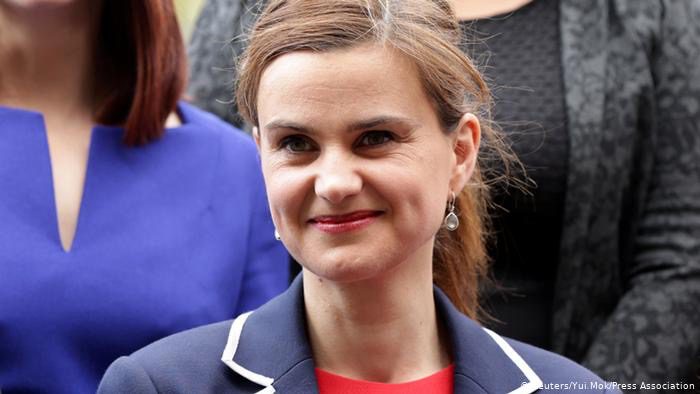
    And this isn’t just words, remember Jo Cox.

    What kind of elected representatives should we expect if we subject them to such an environment? Only the ones who can survive a deeply hostile environment and possibly thrive on the drama. Do we only want those sorts of people to represent us? Or do we want kind people, honest people, empathetic people? ‘Soft’ people?

    CCL’s key values include respect and gratitude for the work our elected representatives do, regardless of their politics. Our MPs are human beings who are there as our public servant and, as any of us do, respond better to praise.

    My MP has stated that his staff go through his correspondence and bin anything offensive – this was after the school meals extension vote (he voted along government lines, ie against) and constituents vented their passion in writing calling him ‘scum’ and the like. Despite my personal feelings on this matter, it’s important to work through those strong emotions before putting finger to keyboard. Your MP will far more likely respond to a reasonable counter argument, or a personal story as to the detrimental affect of such a vote. If you feel your MP is working off duff evidence, then direct them to fresh evidence. If you think their experience does not include the dire experience of not having enough food to feed their children, share that experience with them, kindly, and help build their empathy.

    And the best way to build empathy is for you to show empathy.

    Even better, write to them and politely ask for their reasons, get their best arguments out so you can respond to them with empathy. Another way to depersonalise an unhelpful stance – say, standing against climate change measures – is to ask them to pass your thoughts to the relevant minister and get back to you with an answer. Usually, if an MP values their position within their party they will vote along party lines, whipped or no, so it’s more relevant for them to pass comment along to the most senior minister with the power to affect policy.

    I aim to have a interesting conversation with my MP, one which invites their opinion and which they will be happy to continue.

    I hope that our brilliant and respectful members of CCL will be a reason that women (and people of all backgrounds, ethnicity and more) feel able to put themselves forward to do the important job of representing our interests in parliament.

    We can all do our bit in lowering the temperature over hot issues whether that’s in correspondence or on social media or personal interactions – increasing trust – but remaining firm – will get the job done faster than shaming and shouting – and help keep our MPs safe from harm.

    Everyone should feel able to do their job without fear of abuse and harassment, and that especially includes MPs.

    Pictured: Jo Cox

    If you haven’t already, I urge you to take part in our Motivational Interview training by Vince Schutt. He coaches us in the art of keeping on top of those reactive actions and how to open conversation up rather than closing it down, persuasion through trust.

  • The Climate Priorities of Danny Kruger

    The Climate Priorities of Danny Kruger

    The following was first published in Marlborough News Online and is effectively an open letter to the newly elected MP for the Devizes Constituency (which includes Marlborough).

    The election is over and, given its large majority in parliament, we’re likely to have a Conservative government for the next 5 years. At the same time, serious action on climate change needs to be taken within years, rather than decades, and so we must encourage the current government to take all the necessary steps. We don’t have the luxury of waiting for another government if you happen to not like the Boris Johnson one.

    I was therefore delighted when Danny Kruger dedicated his first blog, as our new Conservative MP, to the issue of climate change. I was also happy with his emphasis on the important role that innovation and free-market economics could play. There’s a Climate Crisis and we must throw everything we have at the problem.

    However, at the moment, you can make money from aggravating climate change (e.g. by finding oil) but you cannot make money from tackling climate change (e.g. by burying carbon dioxide underground). And guess what, our businesses therefore drive climate change because they’d go bust if they did anything else.

    So the markets themselves need to be changed and that can only be done through government policy. If it costs more money to pollute than it does to take climate action then climate action will follow. It’s therefore about taxing “bads” rather than “goods” but such taxes will have to be imposed in a way that does not hit the least well-off in our society. This is not difficult, as my previous column on returning climate-tax revenues to the population as a Climate Income discusses. It was great to see the Telegraph promoting this idea, too, in an article it published on Boxing Day.

    I’m also with Danny Kruger when he states, in his blog, that appropriate grazing methods can reduce (but not eliminate) the climate impact of livestock. But I disagree with his suggestion that grass-fed herds are the solution. To enhance burial of carbon in soils you need to use more radical approaches such as mob-grazing (cycling large herds through a number of small fields) and silvopasture (mixing grasslands, trees and livestock).

    I’ve got one final point of agreement with Danny but, this time, it’s somewhat reluctant. It concerns a comment he made at one of the hustings, leading up to the election, when he said he disliked the term “Climate Emergency”. This earned hisses from the audience but “emergency” is defined, in most dictionaries, as a situation which is both dangerous and unexpected. Climate change is not unexpected. Scientists have been accurately predicting the consequences of increased greenhouse gas levels since the 1890s (that’s not a typo). Perhaps “Climate Crisis” is a better phrase—“Crisis” is defined as a time of intense difficulty or danger. I think that describes the situation nicely.

    First Published in Marlborough News Online

  • How can we change people’s minds

    How can we change people’s minds

    I caught this programme on Radio 4 last night and realised that this is really relevant to our campaigning. Personally when I’m talking to volunteers many of them say that their MP ‘won’t listen’ or ‘they don’t do anything’ however this programme gave me an insight into how we can all change and how we can use this research in our work with MPs and others.

    Here’s the link to the programme – it’s well worth a listen https://www.bbc.co.uk/programmes/m0009z89 (30 mins)

    Here’s the blurb:

    “There’s a widespread belief that there’s no point talking to people you disagree with because they will never change their minds. Everyone is too polarized and attempts to discuss will merely result in greater polarization. But the history of the world is defined by changes of mind –that’s how progress (or even regress) is made: shifts in political, cultural, scientific beliefs and paradigms. So how do we ever change our minds about something? What are the perspectives that foster constructive discussion and what conditions destroy it?

    “Margaret Heffernan talks to international academics at the forefront of research into new forms of democratic discourse, to journalists involved in facilitating national conversations and to members of the public who seized the opportunity to talk to a stranger with opposing political views.”

  • Politicians don’t listen

    Politicians don’t listen

    But then, we don’t really talk to them. Some of us do though. It’s very easy now with social media. You can even tweet animated gifs at your MP. There are plenty to choose from, but it might be better to DM them, or email them. If you really want to go overboard, you can go out and buy a pen and some paper from WH Smith or some other stationery outlet.

    (more…)
  • October Campaign – results!

    October Campaign – results!

    MP letter
    Scottish MP Stephen Gethins reply to CCLUKer Charlie Webb

    Our campaign to galvanize Parliament in advance of the recent UN climate negotiations (COP 23) in Bonn – which has just ended – has resulted in a surge of action and some splendid results.

    The numbers tell just a small part of the story. CCLUK members have been talking up our policy up and down the country, sharing it with friends and family, posting it (in many imaginative ways) on Facebook, generally spreading the word.

    How many conversations did you find yourself taking part in? One volunteer signed up 21 letter-writers. Only seven of them actually produced the letters…But that was 21 conversations that wouldn’t have happened otherwise.  Experience has shown what a difference that can make. ( I’ve had people come back to me after a year to say, “Ah! Now I get it!”) (more…)

  • October campaign!

    October campaign!

    Target letter-send date: Friday 6 October 2017

    Over the next few weeks, we’re mobilising supporters and CCL UK campaigners across the country to send messages advocating Carbon Fee & Dividend to the new Climate Minister, Claire Perry (in the Dept. of Business, Energy & Industrial Strategy – BEIS), via their MPs.

    6 October is exactly one month before the UN Climate Change Conference in Bonn.

    Sending it via your MP is important because:

    • It shows the number of constituencies involved
    • Spreads the message among MPs themselves
    • Supports your relationship with your MP
    • Only your MP is required to correspond with you.

    If you ask your MP to discuss carbon fee and dividend with the Climate Minister and reply to you with the outcome, they are required to do this.

    If you need to find out more about Carbon Fee & Dividend, read this. (more…)