The Citizens’ Climate Lobby is all about solutions. It’s about how society can make the changes needed, to avoid climate catastrophe, as rapidly and equitably as possible. Our starting point is that global warming is real, dangerous and caused by humans.
This approach made a lot of sense until recently. There was broad political consensus that climate change was a serious issue and that the UK should aim to get its net emissions down to zero by 2050. Our politicians were proud to be world-leaders in this endeavour.
Unfortunately, that has changed. We now have anti-science politicians in the UK, and elsewhere, who openly dispute the need for net-zero. Instead, they champion a cynical philosophy in which every country pursues its own, blinkered self-interest even though this is a proven route to a poorer world for everyone.
As the impacts of climate change become ever more obvious, these short-sighted politicians will change their direction when it suits them to do so. But, in the meantime, when discussing CCL-UK policies we may find ourselves increasingly encountering push-back on whether greenhouse gas emission reductions are necessary at all.
The problem is anti-net-zero soundbites that have been well crafted to sound plausible even though they disintegrate on closer inspection. Examples I’ve heard, recently, from senior politicians include “2050 is an arbitrary target” and “We can’t afford net-zero”.
To counter these. I’ve set up a new website (netstupidzero.org) that takes these soundbites and explains, in simple terms, why they’re misleading. You may notice that the site name, itself, is a direct quote from the Reform Party’s Richard Tice who is, perhaps, the most prominent promoter, in the UK, of anti-science disinformation.
In my website I’ve tried to use common-sense rather than go into detailed scientific explanations. My aim is just to make it easy for anyone to counter anti-net-zero propaganda whenever and wherever it’s used. I hope you find it illuminating and useful.
The next UK government must address the cost of living crisis. It’s also clear from public data that the climate crisis is an ongoing concern for 75%. Now there is the opportunity to kill multiple birds with one stone. The latest developments in the EU Green Deal are contributing to international momentum on the subject of carbon pricing. If the UK wants a closer relationship with Europe, aligning on this key environmental policy offers a number of additional social and economic benefits.
Carbon pricing, also known as carbon taxation, is overwhelmingly the fastest and most effective tool to cut greenhouse gas emissions. No one claims carbon pricing solves everything, other policies are needed, just that it’s the most important thing to do. Carbon pricing is a cornerstone of the EU Green Deal and improves the effectiveness of all other climate policies. The World Bank tracks international carbon pricing development both in terms of coverage and price level, i.e. how many emissions are covered and at what price.
Currently the UK prices 40% of carbon via the Emissions Trading Scheme (ETS) which applies to large scale industry (and is almost invisible to consumers). The UK carbon price floor legislation adds strength and has been effective in dramatically reducing coal from UK electricity production. The EU is extending the ETS to Buildings and Road Transport (ETS2) with further expansion under discussion. The same approach in the UK would increase carbon pricing coverage to over 80% and have a direct impact on all households.
Although most poor and middle income families use much less energy than the richest, it’s a higher proportion of their income. This form of taxation is inherently regressive, hurting the poor more than the rich. Climate Income, where the proceeds of the tax are given back equally to people, makes the vast majority of poor families and most middle income families better off. Making carbon tax popular and progressive in this way is well understood.
The challenges for politicians in implementing Climate Income are that the public are wary that “tax” means they will likely be worse off, and industry is concerned about international trade competitiveness. The information on these first two issues has improved considerably, though there remains pressure from the fossil fuel lobby, which is still more powerful and better funded than the emerging green industry.
The recent OECD report International Attitudes Toward Climate Policies surveyed 40,000 citizens from 20 countries. It found that people want to know that the policy works, is fair, and how it will affect them. The report showed that 5 minute videos can build public support, showing fairness by redistributing revenue equally protects poorer households. For the UK, confidence in public support for Climate Income is reinforced by the Scottish Climate Assembly with 77% support for this specific policy.
Industry fears about “carbon leakage”, when trade and jobs are lost to companies in other countries with lower pollution costs, have often been highlighted as an economic risk. The EU has now taken on this issue directly with the Carbon Border Adjustment Mechanism (CBAM). It is prompting action in relation to carbon pricing from the US, China and India. Evidence from US industry implies that the UK not only has nothing to fear, but in fact has much to be gained. Energy intensive UK industry is highly competitive and is effectively leaving money on the table by not pricing international emissions.
Whatever the UK’s desired trading relationship with Europe, there are proven examples of Climate Income. Canada and the UK today have similar trading structures with the EU. Canada introduced The Greenhouse Gas Pollution Pricing Act in 2019 rebating 90% to households. Expert consensus is growing that this is the best solution for Canada. Switzerland is in the European Free Trade Agreement and outside the EU. In addition to an aligned EU ETS, as the UK has, Switzerland prices domestic fuel at €120 with 67% returned to households. Austria is in the EU, in the Customs Union and the Euro Zone. Specifically in preparation for the ETS2 Austria introduced KlimaBonus (Climate Bonus) returning 100% to households.
Being outside the EU may have advantages, EU member states have concerns about legislative complexity and price volatility. Especially when simpler alternatives like a national carbon price are encouraged by Sweden and considered in Germany, where civic society is demanding the government deliver the manifesto promise for KlimaGeld (Climate Money). The UK carbon price floor legislation has the potential to provide harmonised and less volatile pricing than either the ETS or ETS2. Predictability is very helpful to the longer term planning and certainty needs of industry highlighted in the FASTER principles for successful carbon pricing.
Climate Income is a zero cost policy that addresses two of the top concerns of the public. With the prevailing international winds blowing in support, it does more to reduce emissions than anything else. It’s good for international trade, the economy and jobs. Most households are better off. And it’s endorsed through the biggest statement by economists ever, including every living Nobel Laureate Economist. Time to act on the advice of experts.
N.B. This article argues for a similar policy advocated by the Young Liberal Democrats described as “A Progressive Carbon Tax” in their Policy Book from 2021. There is an updated European Young Liberal (LYMEC) policy “6.11 The Adoption of C02 Taxes and Tariffs by the EU” in their 2024 Policy Book that shows further support.
Article published in the Green Liberal Democrat Website and Challenge magazine, May 2024.
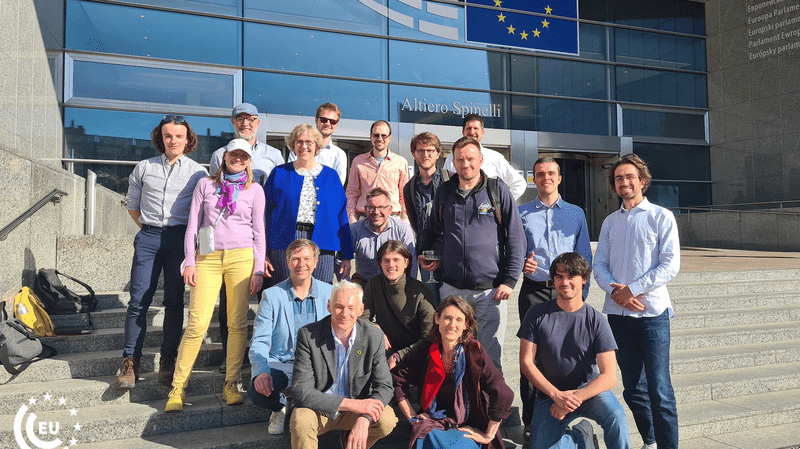
I am the Chair at Citizens’ Climate Europe and a Member of the EU Climate Change Expert Group for ETS2 Implementation. (Front left in photograph of Citizens’ Climate Europe members from CCL members from France, Germany, Belgium, Sweden, Finland, Poland, UK, Portugal and the Netherlands).
The report titled Empirically grounded technology forecasts and the energy transition derives from a collaboration between the Institute for New Economic Thinking at the Oxford Martin School, the Oxford Martin Programme on the Post-Carbon Transition, the Smith School of Enterprise & Environment at the University of Oxford, and SoDa Labs at Monash University.
Professor Doyne Farmer told BBC News that.. “Even if you’re a climate denier, you should be on board with what we’re advocating…..Our central conclusion is that we should go full speed ahead with the green energy transition because it’s going to save us money,” ($12tn by 2050!). The report cites examples of cost predictions made by the IPPC and in the UK by Philip Hammond which it claims are erroneous and have been a deterrent to investment.
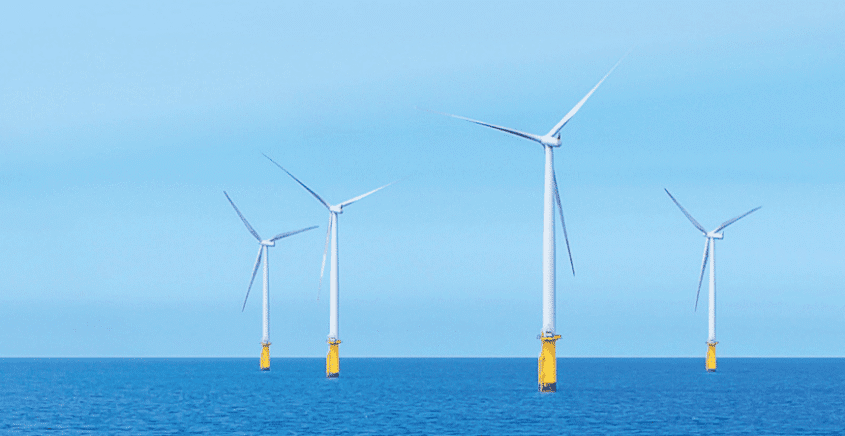
The report states that scaling up green technologies (solar and wind) will continue to drive down their costs. Why not also encourage the investment needed by putting a steadily rising price on the carbon content of fossil fuels to reflect their true cost to society and further encourage the uptake of renewables, returning the revenue to the populace to compensate for the rising prices of said fossil fuels during the transition period, aka Climate Income?
Christina Figureres wrote in the Guardian of June 1st about how many international institutions and corporate leaders are learning the lesson of governmental responses to Covid 19 to call for ambitious green economic stimulus packages.
Carbon taxes are a much discussed mechanism for using market mechanisms to incentivise a transition to a zero-carbon energy from fossil fuels, exploiting the innovation and flexibility that markets can provide.
However, detractors cite potential economic harm to those on low and middle incomes as a reason to avoid such action. Many such detractors turn out to be straight-up fossil fuel shills with no care whatsoever for the poor but who will use any arguments that come to hand to deflect policy makers from adopting a robust carbon tax.
A Carbon Fee and Dividend policy directly answers any such concerns, real or disingenuous, by turning carbon taxation into a progressive policy that actually redistributes wealth from the richest 20% to the poorest 40% while leaving the middle classes broadly unaffected.
Carbon taxes win Nobel Prizes
Carbon taxes have been found to be a highly effective and efficient way of driving the economy to adopt alternatives to fossil fuel energy. Notably, William Nordhaus of Yale University was been jointly awarded the 2018 Nobel Prize in Economic Sciences with Paul Romer for ‘integrating climate change into long-run macroeconomic analysis’.
Nordhaus has proved prescient on the progress of CO2 emissions, writing in 1974, :
I have performed a rough calculation of the atmospheric concentration of carbon dioxide… Assuming that 10% of the atmospheric carbon dioxide is absorbed annually (G. Skirrow), the concentration would be expected to rise from 340 ppm [parts per million] in 1970 to 487 ppm in 2030 – a 43% increase. Although this is below the fateful doubling of carbon dioxide concentration, it may well be too close for comfort.
It turns out we are right on track to hit 487 ppm of carbon dioxide in 2030. In two papers (Nordhaus 1975, 1977), he laid the groundwork for what is now an entire field on the economics of climate change.
Now, there is certainly valid criticism to be made at where Nordhaus and others would set carbon taxes to maximise global growth. Many believe that there is insufficient weight given to factors such as warming feedback and the fate of the poor global south and these are certainly issues of concern. Such concerns would lead to carbon taxes well above the $30/tCO2 that Nordhaus originally proposed. However, there is no doubt that Nordhaus has established carbon taxes as a powerful tool in how we re-shape the economy to prevent climate change.
Clutching at straws and crocodile tears
Of the various stages of climate change denial and resistance to action, one of the later symptoms is an unconvincing concern among opponents that imposing a carbon tax will hurt the poor.
Such attacks coincidentally always seem to come from politicians and lobbying groups closely aligned with the fossil fuel industry and with a long history of denying the existence or risk of climate change in the first place. Such people rarely have a track record of championing high taxes or corporate regulation or social policy that could benefit the poor in other contexts so their concern here is somewhat uncharacteristic.
But if we were to take their challenge seriously, do they have a point? Are carbon taxes bound to condemn the poor to further hardship?
Well, unsurprisingly, it turns out the answer is no.
Carbon Fee and Dividend is a progressive, redistributive policy
The Carbon Fee and Dividend policy has 3 central features:
Tax carbon on fossil fuels as they are sold into the economy
Implement a border adjustment tax system to impose tariffs on imported goods that didn’t bear comparable carbon pricing
Pay the revenues back to citizens as a flat per-head dividend
Imposing a carbon fee and border adjustment tax does raise prices, especially for fossil fuel energy. According to a review of the policy (as proposed by CCL) by Wharton School Public Policy initiative:
For the first year that a $15 per metric ton of CO2 carbon tax is implemented, the cost of gasoline would go up by 16 cents per gallon, natural gas by 19 cents per therm (a 7.4 percent increase), and electricity by 0.6 to 1.1 cents per kilowatt-hour (kWh), depending on whether its source is coal or natural gas.
Seeing the whole picture
So looking at this effect alone, you could be forgiven for imagining the poor suffering further under such a policy. But that’s before you apply a dividend. This is the secret sauce that turns the entire picture around, to the point that the poor become the main beneficiaries of the policy.
According to a comprehensive study carried out by the International Institute for Applied Systems Analysis to model the effects of a carbon fee and dividend policy:
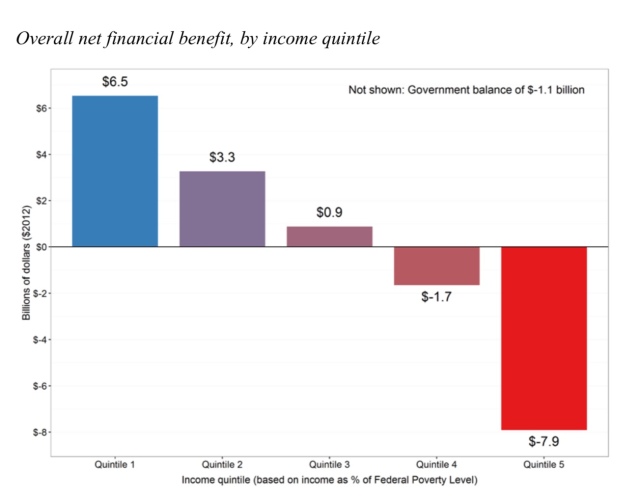
Given these assumptions, the policy confers a net financial benefit on 54% of households nationwide (59% of individuals). The distributional effects are highly progressive. Ninety percent of households living below the Federal Poverty Level are benefited by the policy. The average net benefit in this group is $342 per household, equivalent to nearly 3% of pre-tax income. Overall, the primary distributional effect is to shift purchasing power from the top quintile to the bottom two quintiles of the income distribution
This picture perhaps provides more instruction as to the motivation of rich, conservative fossil fuel lobbyists that oppose such a policy. Using the plight of the poor is nothing more that a disingenuous tactic designed to smear a progressive policy. For all those engaged in an honest debate, the facts are clear.
Only the top 20% by income (those best placed to deal with it) experience a significant net cost from the Carbon Fee and Dividend, leaving the middle class broadly unaffected, while those on low incomes are net beneficiaries.
A Carbon Fee and Dividend is therefore highly effective at mitigating entrenched inequality in society and gives the large majority of citizens a valuable stake in a fossil-fuel free future.