Tag: decarbonisation

  • The latest IPCC Report and the invasion of Ukraine emphasise why we need to ditch fossil fuels!

    The latest IPCC Report and the invasion of Ukraine emphasise why we need to ditch fossil fuels!

    The latest IPCC Report confirms that the most dire predicted consequences of climate change are happening to our planet right now and will only get worse if we don’t act immediately. There is a useful summary of the key points in this freely accessible Belfast Telegraph article and an in depth Q &A in Carbon Brief. For the Citizens Climate International analysis read here.

    The Russian invasion of Ukraine has also alerted Europe, particularly Germany, to its dangerous dependence on imported fossil fuels; prompting it to aim for an almost 100% renewable energy supply by 2035 rather than the previous vague ‘well before 2040’. Oil companies like BP and Shell are also pulling out their stakes in Russian owned oilfields and the Nordstrom pipeline. 

    Today’s Bloomberg Green newsletter reports that a Russian member of the IPPC research team apologised for the invasion in an UN organised virtual meeting last weekend, responding to this remark by Ukrainian researcher Svitlana Krakovska.

    “Someone could question us that IPCC is not a political body, and should only assess science related to climate change. Let me assure you that this human-induced climate change and war against Ukraine have direct connections and the same roots. They are fossil fuels and humanity’s dependence on them“.

    “While emissions of greenhouse gas have changed the energy balance of the planet, the ease of receiving energy from burning coal, oil and gas has changed the balance of power in the human world. We cannot change laws of the physical world but it is our responsibility to change laws of human civilization towards a climate resilient future“.

    We need to move away from fossil fuels sooner rather than later for the sake of the health of the planet and all its inhabitants. Countries must aim to be no longer beholden to the realpolitick of fossil fuel supply. 

    Climate Income is the most effective way to price fossil fuels out of the market without making life worse for people. 

    Finally this interesting article points out how a worldwide Climate Income could alleviate poverty worldwide

    …..We find that if all countries adopt the necessary uniform global carbon tax and then return the revenues to their citizens on an equal per capita basis, it will be possible to meet a 2 °C target while also increasing wellbeing, reducing inequality and alleviating poverty. These results indicate that it is possible for a society to implement strong climate action without compromising goals for equity and development. (The principle would stand for the new target of 1.5 degrees).  

  • Tackling fuel poverty during the great transition – 7 principles for climate activists

    Tackling fuel poverty during the great transition – 7 principles for climate activists

    CCL member Rob Paton explains how Climate Income can be used as a solution to the fuel price crisis as well as the environmental one.

    The fuel poverty facing many households and the climate crisis facing us all must be tackled in synch. If they are not dealt with together, each problem worsens the other.  Fuel poverty, accentuated by a price spike, has led to calls questioning support for renewable energy and has clear potential for social and political instability. Yet the necessary action on fuel poverty must not be at the expense of the climate.  Households on benefits, or with low and insecure earnings, will be the least able to protect themselves from the consequences of weaker climate policies.  

    Fuel poverty should be addressed primarily by increased income, not reduced fuel prices.  What those in fuel poverty need is more money.  They know their priorities. And it must be money they can rely on – not complicated special payments, or means tested and arriving late to tackle a spike in prices..

    What businesses and our economy need for the transition to zero carbon is an underlying trend of rising carbon prices.  Economists and business federations agree on this. Most businesses can deal with price fluctuations, or are learning how to. Carbon subsidies and tax reliefs are a part of the problem not part of the solution. 

    4   The direction of travel for public finances should be away from the present high degree of carbon reliance and towards sustainable, post-carbon sources of revenue.  An overhaul of the UK’s current mish-mash of fossil fuel taxes and subsidies is long overdue.  A coherent approach would raise more funds, be fairer and simpler, support the drive to carbon neutrality.  This is bound to take time – so the sooner the taxation system starts down this road the better.

    5  Likewise, the direction of travel for income support during the great transition should be from indirect to direct payments. That is, from transfers hidden in a tax or benefits system to discrete, climate-related payments, labelled as such and paid directly. Citizens need to know that they are being supported in tackling the climate crisis, and enabled to play their part.

    6   Consistent policy on carbon pricing, fiscal reform and income support requires a cross-party political consensus.  Surveys have repeatedly shown that the public mood is to find and sustain the common ground, and to get on with the job.  Political contestation on other issues – including other climate and environmental policies – can and should continue, both locally and nationally. But a framework to tackle the great work of this decades-long transition is needed. These are three essential elements for such a framework. 

    Communicate, communicate, communicate. Public trust in politicians needs to be restored if sometimes unpopular policies are to be sustained. A cross-party consensus in Westminster needs the backing of public opinion, and its calls will be taken more seriously by the public than party-political pronouncements. Especially when promised action follows. Nothing is clearer and more convincing than a payment direct to your bank account.  

    Climate income offers a way forward with the clear potential to satisfy all these principles.  It may not be the only one. But it is the only one I am aware of.        

    Rob Paton 02/02/22 

    We are not the only ones with this message, today’s Carbon Brief Daily reports on two interesting reactions to the Levelling Up White Paper (Business Green is paywalled) ..

    Business Green’s James Murray, analysing the paper, writes that “a government that properly prioritised the net-zero transition, rather than treated them as a separate silo, would find it much easier to embed climate action in its response to the gas price crisis.”

    In another comment on levelling up in Business Green, Prof Henrietta Moore writes that “without tax reform, the cost of funding net-zero will fall disproportionately on the shoulders of those least able to afford but most likely to suffer the consequences of a rapidly degrading environment”. 

    Happily the fuel price crisis mitigation measures announced by Rishi Sunak today do not involve tinkering with carbon pricing and leave all to play for!

  • What lessons should be learnt from the fuel crisis?

    What lessons should be learnt from the fuel crisis?

    The current fuel crisis is creating problems for governments in the UK and Europe. The conundrum is based on the combination of underlying energy costs, environmental taxation, poverty alleviation and climate policy all overlapping in a non-aligned mix. Finding a solution that keeps advocates of each policy and it’s raison d’etre supportive is challenging. Here we look at how Climate Income can be the sword that cuts the Gordian knot.

    First let’s examine some of the main policy elements at play …

    The political pressure is coming from the financial pain faced by families with rapidly rising fuel bills where energy use has already been reduced to a minimum with the bottom 50% of the population using energy consistent with a 1.5ºC pathway! Energy costs impact everyone, but low and middle income groups spend a higher proportion of their income on transport and household energy needs than the better paid.

    The main carbon pricing mechanism in the EU and UK is the Emissions Trading Scheme (ETS). The UK left the EU ETS and established an independent ETS which began in January 2021. ETS is considered to be a revenue raising mechanism (tax) as well as a carbon pricing tool. The revenue should be used for appropriate purposes but it is not used as a dividend to the householder to mitigate and thus enable a predictably rising carbon fee as with Climate Income. 

    The UK government has also historically put the burden of paying for the move to renewable electricity onto electricity bills, making this fuel, though increasingly greener than gas, considerably more expensive and adding about £200 to fuel bills. Environmental levies include the Renewable Obligation and the Contracts for Difference, which incentive and support renewable electricity generation, the Feed in Tariff to support solar panel installations, and the Energy Company Obligation, which has provided energy efficiency measures to more than two million households. EPC certificates have also compounded the injustice by rewarding the gas heating home owner over the electric heating owner!

    The government does need to mitigate the effect of rising fuel costs this winter. It refused to implement a post Brexit VAT cut on fuel, claimed to be too much of a ‘blunt instrument’ – although is it fair to just help the very poorest households and not the struggling middle classes? Even if implemented however, 5% of the projected £700 bill rise amounts to a mere £35 and the saving on the average dual fuel bill is estimated to be around £89. Removing the VAT may be a fair and wise move because of what it represents politically but it is not a solution to the underlying problems in our current carbon pricing policies.

    The suggested Warm Home Discount expansion will only target the very poorest and there are logistical problems in applying for the WHD –  meanwhile a targeted home upgrade grant for fuel-poor homes had been halved in the autumn budget! 

    A windfall tax as proposed by the opposition parties looks like an easy solution but it would be hard to implement and it would only cover the oil and gas we produce ourselves (only 40% of our gas is domestic and we imported 20 million tonnes of oil in 2020). It has also been argued that the perceived punitive nature of the tax could be used as a reason for reducing investment in carbon capture and more renewables. Like the other solutions it would be short term and not contribute much to the real solution – more renewables and the price of fossil fuels reliably reflecting their true price to society.

    The carbon price in the ETS (Emissions Trading Scheme) which is the main carbon pricing mechanism in the UK and EU is determined by the market, this led to it being too low to be effective during the recession and now so high that ‘Cost Containment Mechanisms’ has been and may be used to mitigate the immediate effects on industry. Cost Containment not only negates the claim that ETS is market driven rather than part of a command economy but also negates the effectiveness of ETS in encouraging decarbonisation. Under Climate Income Schemes the carbon price is designed to rise but in a predictable way which businesses can plan for.

    The Government had proposed last year that the ETS scheme would be extended to cover the other ⅔ of emissions including building and transport. This was similar to the proposed EU Building and Transport ETS which is meeting resistance in the countries historically dependent on coal (and colder!) such as Poland. The UK proposal was watered down (2nd item) through fear ‘it could trigger a political storm’ in November 2021 and it is no longer described as being about to be ‘radically’ expanded. (Marine and waste incineration emissions are still being considered with the possibility of agricultural emissions in the future).

    The Government had said it wouldn’t have a universal carbon fee back in February because it would raise the price of cheese and meat even though a universal carbon price would send a clear message on all products and eradicate most of the disincentives to electric heating and vehicles. In July the government seemed to be considering CI, which would of course offset the rising price of carbon dependent products while householders and manufacturers adjust, thus mitigating the problem of rising cheese and meat prices! In November at the debate prompted by the Zero C petition its briefing (current carbon charges 2nd para) referred not to the July proposals but back to the February statement on carbon pricing. That debate also took place when it had been decided to scale back the ETS extension but the briefing and government response doesn’t reflect that decision.  Please see Further information on the government response to the Zero C petition for a link to the government response to the petition.

    The government decided against a universal carbon price because of the costs to the householder. The preferred carbon pricing policies however are proving equally unpopular – especially the tariffs on electricity bills to pay for renewables and the VAT on fuel even though the low rate could be considered to be a hidden fossil fuel subsidy like frozen fuel duty. ETS is less visible at the moment – but would have been about to become extremely visible if the government hadn’t scrapped the extension to buildings and transport because of its likely unpopularity! As it is the government uses Cost Containment, whenever the carbon price seems to get too high for comfort – thus rendering ETS far less effective. 

    ETS  in its current form (without CI) can’t be effective without creating further problems for consumers, unpredictability for businesses and future short term cutting of the carbon price every time there is a fuel market crisis.

    Climate Income would mitigate the costs of rising fuel prices without the need to cut the carbon price (and thus reduce incentives to decarbonise) every time the market spikes. The predictably rising price would also allow businesses and households to plan ahead to decarbonise, especially if future carbon dividend payments could be offered as loans for retrofitting and industries could, among other tactics, have fees offset against carbon capture, usage and storage.

    It is unlikely that this current fuel price crisis is a one off – we need a carbon pricing policy which can weather this and future storms without having to be watered down each time. Climate Income is the answer!

    Catherine Dawson and James Collis
  • The response to the Covid 19 Emergency is influencing the response to the Climate Emergency (and mostly in a good way).

    The response to the Covid 19 Emergency is influencing the response to the Climate Emergency (and mostly in a good way).

    Christina Figureres wrote in the Guardian of June 1st about how many international institutions and corporate leaders are learning the lesson of governmental responses to Covid 19 to call for ambitious green economic stimulus packages.

  • Zero carbon London plans unveiled

    Zero carbon London plans unveiled

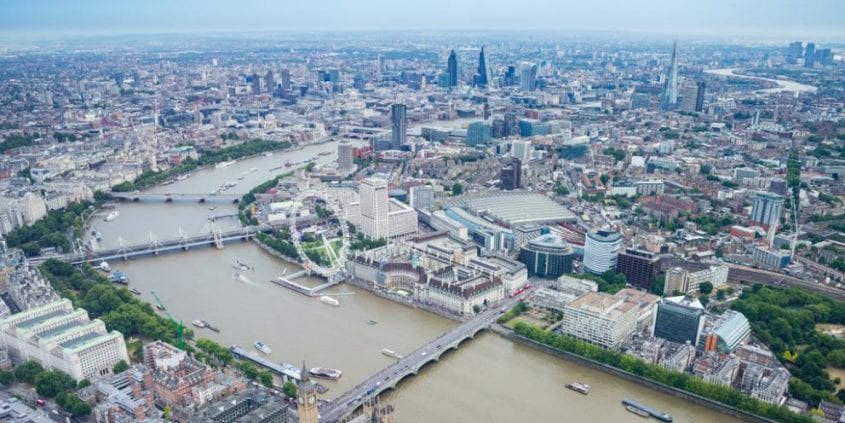
    An ambitious plan for London was unveiled today by Sadiq Khan – ‘Zero carbon London – a 1.5 degree compatible plan’.

    Stating the UK was in a climate emergency, the plan aims to bring down carbon dioxide emissions by 40 percent by 2022, and to zero from transport and buildings by 2050.

    But London can’t do it alone – national government is called upon to give more power and funding to London to make it happen.

    The plan rests on the energy efficiency of home and business buildings, decarbonisation of power from the national grid as well as more support for clean energy within the community, and converting Londoners to zero carbon public transport, walking and cycling.

    The plan includes actions points for all level, from government, GLA, business, London boroughs and Londoners themselves.

    Thanks to climateaction.org for the tip off.