Tag: climate income

  • Members respond to the IPPC report – Part 2

    Members respond to the IPPC report – Part 2

    Please note that these essays are not the official view of CCL UK but of some of our members…..

    Carbon Fee and Dividend is structured to provide subsidy to ordinary householders as they begin to confront the costs of transitioning to a net zero carbon economy.  

    In addition, Carbon Fee and Dividend can be expected to accelerate the overdue reallocation of capital towards regenerative enterprise that fossil fuel divestment, by for example pension funds, has already provoked.  For the mainstream of society this is vital, since a transition to a low carbon circular economy based on regeneration and sustainable limits will provide the worthwhile and purposeful new jobs needed.  Hopefully, much of this innovation will be local or even community based and so lead to a multiplier effect as more of the money circulates locally and in turn leads to yet more enterprise and benefits. 

    A capsule of the actual problems lying behind Alok Sharma’s IPPC derived warnings might read: 

    The words assumption, belief, self-interest and delusion are all words that apply to the economic model (Neoliberalism) that has grown ever since money was finally liberated, in 1971, from the limits that being tied to the gold standard imposed.  There were no externality (environmental) costs built in, not least because of lobbying and deception strategies operated by large corporations.

    They appear to overlook that their concept is also the source of inequality; or put another way “too many in Maslow Deficit” (lower 3 tiers) and moreover, that their concept is the source of the debt which begets the growth dependency needed to pay it down.  With externalities largely ignored this all translates into the environmental destruction / climate breakdown that is bringing the world to its knees!   

    Andrew Stott

    On the 9th August 2021, the Intergovernmental Panel on Climate Change (IPCC) released the first part, ‘Working Group I’, of its Sixth Assessment Report. Compiling over 14,000 scientific papers, the work of 234 scientists from 66 different countries, the report outlined and emphasised the need for immediate and drastic action to avoid a rise of over 2°C in the global temperature. A system where fossil fuels are taxed and the money returned to the public is one way to approach this, tackling both the environmental concern and dealing with the required economic traction to get it started. This is known as a carbon fee & dividend (CF&D) scheme.

    The declining cost of renewables

    Renewable energy prices are at the lowest they’ve ever been (according to an analysis by Lazard Ltd.) and the UK government predicts that levelised cost of electricity (LCOE) prices for renewables will drop even further while prices for fossil fuels will largely remain the same. 
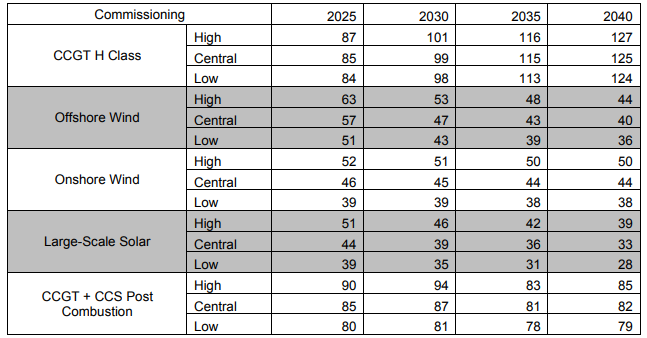
    Figure 1 – Table showing LCOE for the next 20 years in £/MWh as predicted by the UK government in their 2020 report on Electricity Generation Costs.

    The earlier a complete change to renewable energy happens, the more money that will be saved in the long run. A myriad of reasons have prevented the switchover to renewables, despite the apparent advantages they currently have over fossil fuels. The associated costs with starting a new energy plant, new fracking technology significantly lowering the cost of natural gas, existing contracts tied up with fossil fuel suppliers, increased electricity bills for the general public and seasonal inconsistencies with renewable electricity generation are just some of the reasons why, initially, a switch to renewables may not be as economically attractive as one first expects. This is why a carbon tax would ‘even the playing field’ so to speak and incentivise investment into renewables.

    The EU ETS and Britain’s departure

    Economic incentives for reducing carbon emissions are not a foreign idea to the UK. The country used to be part of a cap and trade scheme used throughout the EU. The European Union Emission Trading System (EU ETS) is the largest of its kind in the world and consists of a scheme designed to limit the CO2 released into the atmosphere by allocating emissions allowances to member nations. If a country needs to generate more emissions they can trade for these allowances from a country that has successfully reduced its own. Thus, creating an economic incentive for a country to reduce its emissions. 

    Unfortunately, on the 31st January 2020, Britain left the EU and with it the EU ETS. A similar system was designed and incorporated known as the UK ETS. Emissions trading would continue but between the 4 nations of the UK rather than the 27 member nations and 3 trading partners (Norway, Iceland and Liechtenstein) of the EU. However, the Grantham Research Institute on Climate Change and the Environment (GRICCE) indicated in their 2019 study that this would be “suboptimal” and a carbon tax would be more beneficial in reducing carbon emissions. Again, in 2019, the GRICCE theorised that “a tax of £40 per tonne of CO2 equivalent emissions turned into a £1000 annual return for UK households” would be one of the most ideal ways at reaching net zero emissions by 2050. It also recommends the £40 per tonne tax is just a starting point and the price should slowly be increased.

    How will the money be used?

    One of the main arguments against a carbon fee & dividend scheme is that the general public will bear the brunt of the tax and although environmentally beneficial, it will increase the cost of living. To low income families, an increase in the heating or electricity bill every month is very unappealing, especially as they would not experience the immediate benefits of reduced CO2 emissions. However, the scheme ensures that the money is equally distributed to everyone in a monthly dividend.
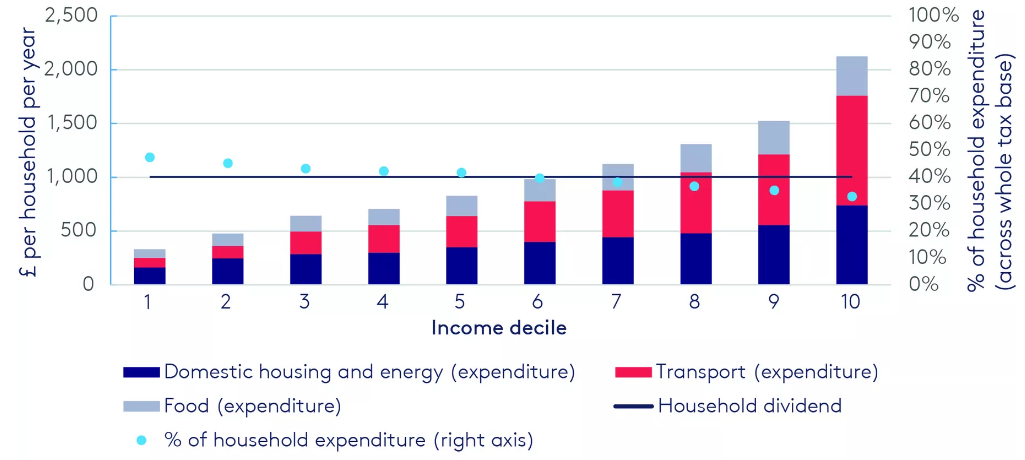
    Figure 2 – Courtesy of the Grantham Research Institute at LSE. Graph showing tax payments and dividend received by income decile.

    Looking at figure 2 we see that the lowest income decile households (1) would be better off with the flat £1000 dividend as it is a larger percentage of their total household expenditure. 

    Canada has a similar system and has been using it since as far back as 2008 (in British Columbia). Helen Mountford of the World Resources Institute states that citizens of Manitoba province, for example, would expect to see a rise of $174 CAD in cost due to the carbon tax. But receive a total rebate of $252 CAD resulting in a net gain of $78 CAD (~£45). Canada may only have a population of just over half of the UK but its CO2  emissions almost treble ours. If an industrial giant like Canada can implement a CF&D scheme and make it work, then so can we.

    The benefits of a CF&D scheme are clear. A switch to a more modern, cheaper and greener economy that will see benefits not only for our children and our children’s children but also us, we who are living currently. Alok Sharma’s warnings, ahead of COP26, are dire and desperately need to be listened to. Change is hard but if we don’t, our planet will.

    Luke Clews

  • The consensus is growing –  what surveys, petitions and the media are saying and what we can do about it…

    The consensus is growing – what surveys, petitions and the media are saying and what we can do about it…

    Reading the daily email alert from Carbon Brief is fascinating and getting more and more time consuming! I have certainly noticed a real shift of media opinion towards the climate emergency over the past year, as the effects of climate change are becoming more and more immediate. There are very few denial editorials these days even if the solutions are still hotly debated.

    The media is reporting growing support for the government to go further and faster such as a Guardian report that ‘Over-50s want climate crisis addressed ‘even if it leads to high prices’. There were also reports in the Independent and Daily Telegraph. It is noteworthy that The Times and Daily Telegraph have written about the threat of famine in Madagascar without disputing the first ‘climate change famine’ description.

    What I found most encouraging in today’s email alert was a report on an editorial entitled ‘Don’t let climate goals be lost in culture wars – cutting emissions means decarbonising the way we live, not giving it up’ which appeared in yesterday’s Financial Times.

    The editorial suggests how politicians and, by implication, campaigners should be approaching the issue of gaining public support for the changes needed to fight climate change now we can no longer rely on the low hanging fruit of removing coal from the energy mix…..

    “…trying to convince everyone they must change their lifestyles radically” in order to tackle climate change is “unlikely to work: demands that essentially put the onus on individuals will alienate too many people in an environment of insufficient knowledge about what net zero means and distrust about the intentions of politicians”..

    Instead, the message politicians must communicate is twofold. First, emphasise the facts: climate change is an urgent threat, it requires all of us to act – but if we act together, the sacrifices are far from prohibitive. Second, acknowledge that people will need help to take the right choices – and ensure that it is forthcoming. A consensus around mass adoption of carbon-reducing technologies can be achieved if adoption is rewarded and costless for those at the bottom. The alternatives – insufficient action, or calls for asceticism — will lead to division and failure.

    If that’s not an endorsement of Climate Income I don’t know what is! I also think it is a very useful hook for an email to a constituency MP, along with mentioning that over 100,000 people signed the ZeroC. petition  and even baby boomers are willing to put their money where their mouth is. (I am afraid I fit in that category but I am sure I am not alone in wanting more support and reassurance before I replace the fairly new gas boiler!)

    The UK has the chance to set an example to the world to make sure there will be no more climate change famines.

    If you email your MP please don’t forget to bcc us/forward to at [email protected].

  • CCL (UK) Members respond to the IPCC report.

    CCL (UK) Members respond to the IPCC report.

    Many thanks to all the members who responded to our request for comments and articles about the benefits of CF+D in relation to the IPCC report. It’s great to see a variety of points of view (remember they are members views and not official CCL policy).

    Here are the first 3……

    In light of the IPCC AR6, urgent action is needed to reduce our nation’s GHG emissions and transition to a carbon neutral economy.

    Why is the Carbon Fee & Dividend the right approach to this goal?

    Primarily, it targets the largest contributors to the climate crisis, the fossil fuel corporations.  The carbon fee will increase the cost of fossil fuel and make future investment into burning fossil fuels less profitable and as such we will incentivize a faster transition to cleaner renewable energy.

    The fee companies will pay a fee which is proportional to the amount of fossil fuels they burn, as a result of this fee the prices of carbon will rise and customers will be encouraged to swap to greener companies.

    CF&D redistributes wealth to all UK citizens, which is especially useful after the economic downturn onset by the pandemic, protecting the people that are most vulnerable during this transitional period.

    Our government can act quickly to address the climate crisis, with COP29 coming at the end of October, now is the perfect time to tackle the monumental challenge of decarbonising our economy.

    Lily Zayli

    Climate Change – A market failure

    November is rapidly approaching, and with it the UN COP26 climate meeting in Glasgow. The incredible sequence of natural disasters this year, including wildfires in the US and flooding in Germany, has only emphasised the need for international agreements to reduce fossil fuel use and prevent catastrophic climate change. And yet, little progress is being made.

    Economists have long agreed that climate change is a market failure: the normally efficient markets have not captured the true social cost of climate change in the price of fossil fuels. Markets instead price fuels at extraction cost, because markets left to themselves focus on costs incurred by buyers and sellers now, not at some future date when the climate has been damaged further. 

    It’s up to governments to create rules which ensure that markets account for future social costs of the carbon dioxide pollution which causes climate change. A carbon tax is the obvious government intervention which would make market economies such as the UK systemically recognise the social costs of burning coal, oil and gas. However, politicians around the world, naturally worried about passing further unpopular taxes, have largely resisted taxing carbon, especially after the French yellow-vest protests against Macron’s fuel tax. 

    Carbon taxes can in fact be made more politically palatable through the “carbon fee and dividend” policy, which would tax all fuels at point of extraction or import, and return the carbon tax revenue to taxpayers as a flat dividend per person. Returning the tax revenue to the public would mean that there would be no net tax burden and no unemployment caused. The flat dividend per taxpayer would also compensate lower income people who might otherwise be forced into “fuel poverty” by higher fuel prices. The higher cost of fossil fuels across the board would encourage their replacement with other energy sources. These benefits are the reason that Citizens Climate Lobby tries to encourage carbon fee and dividend. 

    The UK already has a carbon tax, but has not raised it to the point where fossil fuels are more expensive than renewable or nuclear power, which is the only way that markets will completely replace fossil fuels. The only way such increases in carbon taxes are likely to be acceptable to the public is through a policy of carbon fee and dividend. The UK should immediately take steps to raise its carbon tax through a carbon fee and dividend, and encourage other countries to follow its lead. Otherwise we are like to see in Glasgow yet another failed climate meeting. 

    Zeeshan Hasan

    Carbon fee and dividend and the levelling up agenda.

    In his book Poverty Safari, Darren McGarvey describes in often harrowing detail the experience of life on the Pollok housing estate near Glasgow. McGarvey blends powerful accounts of his emotional experiences with expressions of frustration at attempts by politicians and bureaucrats to address his community’s social deprivation. Some of the experiences McGarvey describes are recognisable from a short period when I lived on the Hulme estate in Manchester in the mid-1990s. I believe that McGarvey’s book is essential reading for those who want to advocate for policies such as Carbon Fee and Dividend. Let me try to explain why.

    The basic message of Poverty Safari is that the two poles of mainstream politics, right and left, have failed communities like Pollok, leaving people alienated and disillusioned. Yet both poles also capture what is best in such communities. On the one hand, the political right emphasises a culture of personal and financial responsibility and respect for people’s property. McGarvey’s father instilled such values in his son, but it is difficult to live up to them when one is struggling financially and when basic services such as schools and libraries barely function, and are often being actively run into the ground. On the other hand, the left emphasises concerns about social justice and solidarity that have a long history in places like Pollok.  However, mainstream left wing policies are often overly bureaucratic: the money invested often goes to paying well-meaning middle-class employees of what McGarvey calls the ‘poverty industry’.

    What does all this have to do with Carbon Fee and Dividend? I believe that, if well-designed and implemented, Carbon Fee and Dividend is a policy that would empower people in communities like Pollok, while addressing the disillusionment and frustration that McGarvey describes. In short, Carbon Fee and Dividend offers direct payments to individuals (the ‘dividend’). These payments are funded by ‘fees’ that are charged directly at the sources of greenhouse gases, such as industries that extract fossil fuels. On the one hand, this policy resonates with the culture of individual responsibility that McGarvey’s father valued: individuals are directly empowered to choose how they use their dividend. On the other hand, it also resonates with the culture of social justice: individuals are not left feeling that the costs of climate policies are being unfairly pushed onto them – and the direct nature of the payments mitigates the need for a bureaucratic ‘poverty industry’ to administer the policy.

    One might assume that issues such as climate change are distant concerns for people faced with the immediate consequences of social deprivation. Yet McGarvey’s description of a 30-year protest against the M77 motorway shows that the environment is an important issue for his community, and that environmental action can be a source of positive activity and a boost to self-esteem. Imagine what could be done if people had the resources and time to make their own choices about environmental issues.

    Of course, a policy like Carbon Fee and Dividend cannot, on its own, address all the issues that communities like Pollok face – and neither is it a single magic bullet solution for climate change. However, the policy is vital as a way to show that climate change policies can be fair and efficient – that they are not just a luxury that only the middle classes can afford. Carbon fee and dividend is a way for politicians who advocate a levelling up agenda to put their money where their mouth is.

    We need to get people in communities like Pollok on board with Carbon Fee and Dividend – and we should embrace the challenges this brings. McGarvey describes an incident in which a visiting politician was so frightened of the people he was talking to that he had to constantly doodle in a notebook to stop his hands from shaking. People in Pollok are not naïve: successfully explaining Carbon Fee and Dividend to them would be one of the best tests of its credibility we could hope for.

    John Pearson

  • Avoiding a shock to the system

    Avoiding a shock to the system

    No system is perfect. Corvid-19 has shown us that. As Britain grinds to a halt, what would have happened if we had tried to carry on as normal as the work dried up, employees laid off with no pay, companies went bust, and no benefits or sick pay for days? Our High Streets could close for good during a terrible recession, led by the biggest fall on the stock markets since 1987. 

    And, thank goodness, despite that we have a government traditionally of low taxation and a small welfare state, there was a quick realisation that our free market economy – which has given us a safe, stable country – could not cope. It was time to throw in a lifebelt and shore up the weaknesses of the system: relaxing benefit rules, paying salaries.

    From a fiscally-Conservative point of view it works because people still have jobs and money to spend which protects growth.

    From a socialist or populist-Conservative point-of-view it works because it looks after people.

    Now, think about something else that’s killed millions of people, not only those with underlying health conditions but, in fact, has given people underlying health conditions.

    Of course I’m talking climate change and air pollution. These are caused by another failure of the system: encouraging that which creates monetary wealth irrespective of the poverty it causes to the environment and climate.

    To abate this problem, we could simply stop burning fossil fuels (and meat farming).

    But the Coronavirus crisis has shown that putting the brakes on the usual run of things shocks the market and throws it under a bus. You save the climate but chuck the world into chaos. People lose their livelihoods. Anxiety and poverty is rife. And the effect would quickly be temporary.

    So we can’t ban burning fossil fuels overnight, even though that may feel the obvious solution to desperate times. We need to make them redundant, make them a bad investment by easing them out of our economy and giving the market fair warning. Prices will go up so people need a financial cushion before more cheap clean energy comes online. And the fix would stick.

    It works because it protects the economy, it protects jobs and the people the economy is there to serve.

    This is the beauty of a Climate Income.

  • Letter to Climate Assembly

    Letter to Climate Assembly

    We had a great response to our urgent action to contact the experts at the Climate Assembly -Many thanks to everyone who wrote. Here are a couple of examples.

    Dear Rebecca

    Thank you for your efforts on the Climate Assembly – it’s essential work and very exciting for our global future.

    I was lucky enough to be part of the Oxford Citizen’s Assembly on Climate Change. It was an amazing and enlightening experience. Often, how to change individual behaviour seemed to be the issue, especially as the majority of emissions were coming from buildings (space heating) and travel.

    How do we change behaviour? By making the desired behaviour the easiest option and/or the cheapest option, so making the right choices is a no-brainer.

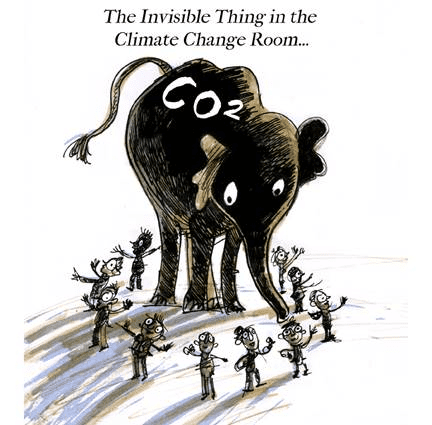
    Pricing carbon can make this happen. But we know a rise in prices for fuel is unpopular – see President Macron’s struggle with the Gilets Jaunes. So it seems that carbon pricing is avoided as a strategy – a bit of an elephant in the room.

    But it is possible to price carbon in a way that is fair, empowering, simple and visible.

    Carbon Dioxide is a difficult subject to inspire passion. Unlike plastic, it is invisible. When we emit it, we can’t see it. We can see the plastic trail that we leave, but it’s impossible to grasp what size your own carbon dioxide emission are. But carbon dioxide is key, because the blanket of greenhouse gases is making Earth warm, melting the arctic and Antarctic and pushing temperatures worldwide out of the range of recorded history, towards a new climate that none of us or other life-forms on earth are adapted for.

    But the good thing is, we CAN change this by shutting down the flood of CO2 leaking from humankind into the atmosphere.

    HOW can we take action on CO2?

    We can take action by putting a meaningful price on carbon, aiming towards $80-$100/tonne.

    It is the nudge the world needs. A puny 5p plastic bag charge drastically reduced plastic bag use by 85%. Pricing really changes behaviour “Our modern economy reflects countless choices, made by billions of people all over the world. A broad-based carbon price influences them all. Nothing else can.”

    But what is the best way to price carbon?

    I’ve compared different carbon pricing options. What I’ve discovered is:

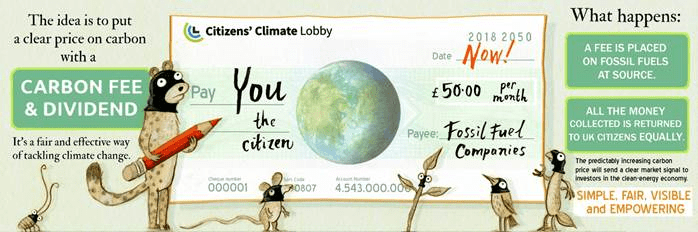
    A Carbon Fee and Dividend (Climate Income) stands out as the most fair, empowering, simple, and visible way to put a significant price on Carbon.

    What is Carbon Fee & Dividend?

    The government places a price on CO2 at source.

    The revenue is returned equally to all citizens via a monthly/annual lump sum or ‘dividend’

    I think it is the only way to make a carbon price that is high enough for effective change to be palatable.

    There are a few good things about a carbon fee and dividend plan. Here they are.

    It can appeal to people who call for social justice and want to battle inequality

    The lump sum system is progressive: it really benefits lower earners most. The richest (and largest users of CO2-intensive energy) benefit least. Anders Fremstad of Colorado State University and Mark Paul of Duke University calculate that taxing a tonne of CO2 at $49 would leave 59% of Americans worse off, including 75% of the bottom half, if the revenue were used to lower personal-income taxes. By contrast, recycling the receipts as lump-sum payments (Dividends) would leave 89% of the bottom half with an average net gain of $788.

    The 6 lowest income groups all break even or are better off, with the poorest getting the biggest benefits. The wealthiest, highest fuel users, are the worst off.

    Compared to tax rebates, it’s demonstrably fair as all get an equal dividend.

    It’s also possible to get dividends to the poorest and most marginalised sections of society, by, for example “investigating inventive ways of paying the dividend to ensure that the most vulnerable receive it. Linking the dividend to national insurance numbers would be one way to pay the dividend, but this may mean that the most vulnerable miss out. The Government should investigate whether new technology can be used to pay the dividend securely through a mobile app to ensure as many eligible people as possible receive it.” The Future of Carbon Pricing, policyexchange.org.uk

    It is motivating and empowering

    Through their dividend the public can support renewables in their choice of what energy to buy. The dividend is a visible sign of your purchasing power, and the public is trusted to choose how to spend it; wise choices bring a win-win virtuous spiral of energy-source-change away from fossil fuels. The dividend also gives voters an immediate interest in the fight against climate change – a lump sum arriving in your bank account is a very interesting event. All green energy sources benefit by becoming comparatively cheaper.

    It sends a signal to industry that the carbon price will be a permanent policy

    The Dividend, once people are used to it, is hard to withdraw by future governments (see what’s happened with UK Winter Fuel Payments) – and so acts as a pledge to industry that the carbon price will endure.

    These three aspects of carbon fee and dividend mean is can appeal to: Green and Social Groups who want action on climate change but also social justice; the general public who will find higher fuel prices unacceptable; businesses who want a clear steer to what the carbon future will be.

    Carbon is infused in all our lives and all our choices. We need to tackle climate change with a way that involves and empowers everybody, is fair and acceptable and progressive, and that also is able to set a high enough price for carbon to bring about change, in a way industry can see will not be overturned by a change of government.

    Carbon Fee & Dividend (Climate Income): fair, empowering, simple, visible.


    There’s more information, here: https://test.citizensclimatelobby.uk/carbon-fee-dividend/

    Please do include Climate Income/Carbon Fee & Dividend in your presentations and discussions on carbon pricing!

    I am convinced it is the one simple action that could change everything and alter the course this planet is currently on.

    Many thanks and best of luck with the rest of the Assembly,

    Mini

  • COP 25 and a future for an international carbon market

    COP 25 and a future for an international carbon market

    Under the 1992 United Nations Framework Convention on Climate Change (UNFCCC), most countries are treaty-bound to avoid “dangerous climate change”. Countries who signed and ratified the 2015 Paris Accord then had to produce nationally defined contributions (NDCs) to meet the decarbonisation targets.

    As the twenty-fifth annual UN Conference of the Parties (COP) begins in Madrid, attention has been focused on Article 6 of the Paris Accord and how this may shape global carbon markets.

    Article 6 of the Paris Accord lays out an opportunity to implement the NDCs through cooperation mechanisms. These mechanisms seek to assist the existing targets and raise the ambition of future targets and forms the legal framework to allow market-based solutions, with an option for a common, cross-border carbon market potentially also linked to existing schemes such as the EU emissions trading system (ETS). This could be de-centralised through bi-lateral cooperation or centralised through an international body designated by COP. And another sub-section in Article 6 leaves the door open for non-market-based approaches although this has yet to be defined. The best way to proceed and enact this Article is to be decided at this year’s COP.

    This is in response to the virtual collapse of the previous regime- the clean development mechanism (CDM). This was the world’s only global system for trading carbon which was designed to allow developed countries to achieve compliance through purchasing offsets from CDM projects in developing countries. This collapse was brought about by a myriad of factors coming together, such as the US’ refusal to ratify Kyoto; emerging economies classified as developing, such as China and India, meaning they have no emission reduction targets; and the recession and Eurozone crisis throughout Europe.

    Eighty-eight of the countries that have continued to commit to the Paris Accord, representing more than half of global emissions, have stated that they plan to use or are using carbon pricing as a tool.

    Now, the question is whether the tool will be fit-for-purpose and be all-encompassing. There is potential to create a sensible international carbon trading market that is fair for all countries- whether their economies are developing or developed. The simplest, transparent and most complete solution is the Climate Income from the Citizens’ Climate Lobby.

    The UK is a successful case-study in implementing a carbon price that has the desired effect. The carbon price floor (CPF) policy was initiated to support the ETS in 2013 and since then electricity generation using coal has decreased to almost zero. However, the CPF only covers electricity generation, which is not the largest sector of emissions, and the pound per tonne of carbon dioxide (£/tCO2) was frozen at £18/tCO2 in 2016. Although the CPF worked as designed it could be more ambitious by targeting all sectors equally; using  pound per tonne of carbon dioxide equivalent (£/tCO2e) to also capture methane emissions and other greenhouse gases; and not allowing a freeze on the price, instead investing more into the alternatives that mature or returning the revenue collected to the public, such as the Climate Income.

    Climate Income works by, through new legislation, charging the businesses that extract or import fossil fuels, according to the amount they burn (£/CO2e). Import fees are levied on products imported from countries without a price on carbon along with rebates to UK industries exporting to those countries, discouraging businesses from relocating where they can emit more greenhouse gases.

    So, a global carbon market that encourages participation across all countries, taxes the emitters at source, gives the revenue back to the citizens of the country from which the tax was collected, and accounts for importing or exporting sources of emissions sounds like the way forward and hopefully this will be discussed and realised at COP 25 with a commitment to implement this essential global carbon market.

  • Climate change is a problem of injustice

    Climate change is a problem of injustice

    Climate change is essentially a problem of injustice. People are not sufficiently aware of this. Worse still, the theme of justice and responsibility is anxiously avoided in the climate debate. And when it is discussed the focus is on individual responsibility, ignoring the fact that there are people in positions of power who bear an infinitely greater burden of guilt. After all, those who help to maintain an unjust system are surely much more guilty than those who only do their best to live/survive in this system, aren’t they? But as has often been shown, exploiting guilt is a very efficient tactic for silencing people and allowing the impasse to continue. Very little has been achieved in 25 years, and global annual CO2 emissions continue to rise, precisely because this injustice is not being addressed:

    (more…)
  • Why the dividend?

    Why the dividend?

    This week, someone wrote to CCL UK, saying they would like to campaign for a carbon tax but wondered if the dividend was the best use of money.

    This is a great question – why isn’t the money raised used to subsidise, for example, public transport, or house insulation?

    Here’s a few ideas why and something to put in your letter to your MEPs (pick the ones which best fit with their political bent):

    • The dividend is really what CCL is all about – it will probably be impossible to have a high enough carbon tax to make a difference to emissions without the dividend. (It’s also important to say it’s one tool in a range of measures to tackle climate change, albeit a highly effective one which focuses on emissions.)
    • Politically – especially centre and right – raising taxes are unpopular. The dividend ensure that, overall, taxes do not go up.
    • Raising carbon taxes – especially for vehicle petrol, heating and home energy – will cause a lot of impoverishment to the most vulnerable in society. The dividend is divided equally amongst the population and is, effectively, a redistribution of money. This will mean low and middle income families are better off as they buy less stuff and therefore have a lower carbon footprint. So they will receive more in dividends than they will spend on the inevitable higher prices, thus protecting them from impoverishment.
    • As a result, it rewards those who keep their carbon footprint low.
    • It does not judge people on their personal choices, or expect everyone doing their bit to change the world (it won’t) but pushes business and the economy into zero carbon options.
    • It taxes technology on emissions, rather than what looks like the shiny new technology toy or on a limited range of emissions (diesel cars?), thus encouraging true zero greenhouse gas solutions.

    Write to your MEPs about supporting an EU-wide Climate Income AKA carbon fee and dividend for our latest campaign.

    climateincome.org