Category: Psychology

  • What makes people support climate policy – especially CLIMATE INCOME ? Answer – a 5 minute video!

    What makes people support climate policy – especially CLIMATE INCOME ? Answer – a 5 minute video!

    A recent report discussed research on attitudes towards climate change and solutions which included Climate Income. The research covered 40,000 respondents from 20 countries representing 72% of global CO2 emissions. The results show climate policy support hinges on three key beliefs:

    • effectiveness – does it work ?
    • inequality – is it fair ?
    • household self-interest – will we be better off ?

    Good News:

    Over 80% of people agree that climate change is important and that their country should take measures to fight climate change.

    Bad News:

    Informing people about the impacts of climate change, with climate impact videos, has little effect…..(to quote a much loved TV character ‘We’re doomed’!)

    Good News:

    Addressing these concerns, with more positive climate policy videos, can substantially increase the support for climate policies. In particular, for carbon tax with transfers (Climate Income), policy support grew more than double any other policy type. Showing just the policy video, support increases on average by ~10%. In Europe that varies between 8% in France to 15% extra support in Italy. Showing both videos raised the average support across European countries by over 14%.

    It is interesting to note that, even before the video viewing, the concept of a carbon tax with the proceeds returned to household garnered wide support in high income European countries. Among those who expressed an opinion support for the policy ranged an average of 54% to 71%.

    We tested the video in Brussels with NGOs who have their own priorities for revenue and thus are often the most resistant to citizen rebates. It prompted interest and one particular quote:

    Now I see why the citizen dividend is needed !

    I heartily recommend sharing these videos with NGOs, public, etc, I suspect legislators will also be interested.

    The report on the survey

    The UK climate policy video

    In short: 5 minute videos can persuade most people to support Climate Income because it offers a solution to climate change rather than just making people feel either helpless or guilty.

    • Exposure to information on solutions is persuasive.
    • Additional exposure to information on climate impact helps, but only marginally.
  • Why is respect important?

    Why is respect important?

    A gender equality charity reported recently its research on the representation of women in parliament.

    Only one third of MPs are women with only three female cabinet ministers.

    The reasons for this are many and varied, such as sexism or an absence of maternity or compassionate leave and sexism, but one stands out as something we, as constituents and activists, can all do our bit towards countering: The Fawcett Society found that seven out of ten women would not enter politics because of perceived potential abuse or harassment.

    I have witnessed this myself – the anger shown towards our politicians on social media; in town councils where unpaid councillors have been shouted out, belittled and berated.

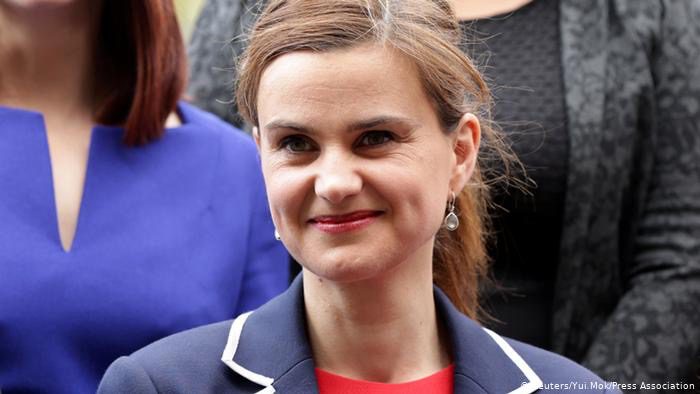
    And this isn’t just words, remember Jo Cox.

    What kind of elected representatives should we expect if we subject them to such an environment? Only the ones who can survive a deeply hostile environment and possibly thrive on the drama. Do we only want those sorts of people to represent us? Or do we want kind people, honest people, empathetic people? ‘Soft’ people?

    CCL’s key values include respect and gratitude for the work our elected representatives do, regardless of their politics. Our MPs are human beings who are there as our public servant and, as any of us do, respond better to praise.

    My MP has stated that his staff go through his correspondence and bin anything offensive – this was after the school meals extension vote (he voted along government lines, ie against) and constituents vented their passion in writing calling him ‘scum’ and the like. Despite my personal feelings on this matter, it’s important to work through those strong emotions before putting finger to keyboard. Your MP will far more likely respond to a reasonable counter argument, or a personal story as to the detrimental affect of such a vote. If you feel your MP is working off duff evidence, then direct them to fresh evidence. If you think their experience does not include the dire experience of not having enough food to feed their children, share that experience with them, kindly, and help build their empathy.

    And the best way to build empathy is for you to show empathy.

    Even better, write to them and politely ask for their reasons, get their best arguments out so you can respond to them with empathy. Another way to depersonalise an unhelpful stance – say, standing against climate change measures – is to ask them to pass your thoughts to the relevant minister and get back to you with an answer. Usually, if an MP values their position within their party they will vote along party lines, whipped or no, so it’s more relevant for them to pass comment along to the most senior minister with the power to affect policy.

    I aim to have a interesting conversation with my MP, one which invites their opinion and which they will be happy to continue.

    I hope that our brilliant and respectful members of CCL will be a reason that women (and people of all backgrounds, ethnicity and more) feel able to put themselves forward to do the important job of representing our interests in parliament.

    We can all do our bit in lowering the temperature over hot issues whether that’s in correspondence or on social media or personal interactions – increasing trust – but remaining firm – will get the job done faster than shaming and shouting – and help keep our MPs safe from harm.

    Everyone should feel able to do their job without fear of abuse and harassment, and that especially includes MPs.

    Pictured: Jo Cox

    If you haven’t already, I urge you to take part in our Motivational Interview training by Vince Schutt. He coaches us in the art of keeping on top of those reactive actions and how to open conversation up rather than closing it down, persuasion through trust.

  • How can we change people’s minds

    How can we change people’s minds

    I caught this programme on Radio 4 last night and realised that this is really relevant to our campaigning. Personally when I’m talking to volunteers many of them say that their MP ‘won’t listen’ or ‘they don’t do anything’ however this programme gave me an insight into how we can all change and how we can use this research in our work with MPs and others.

    Here’s the link to the programme – it’s well worth a listen https://www.bbc.co.uk/programmes/m0009z89 (30 mins)

    Here’s the blurb:

    “There’s a widespread belief that there’s no point talking to people you disagree with because they will never change their minds. Everyone is too polarized and attempts to discuss will merely result in greater polarization. But the history of the world is defined by changes of mind –that’s how progress (or even regress) is made: shifts in political, cultural, scientific beliefs and paradigms. So how do we ever change our minds about something? What are the perspectives that foster constructive discussion and what conditions destroy it?

    “Margaret Heffernan talks to international academics at the forefront of research into new forms of democratic discourse, to journalists involved in facilitating national conversations and to members of the public who seized the opportunity to talk to a stranger with opposing political views.”

  • You are exactly the right person to care about climate change

    You are exactly the right person to care about climate change

    When evangelical Christian Katharine Hayhoe is asked ‘do you believe in climate change?’, she answers, ‘no’.

    You’d be forgiven for thinking she’s just another religious climate denier. But you’d be wrong.

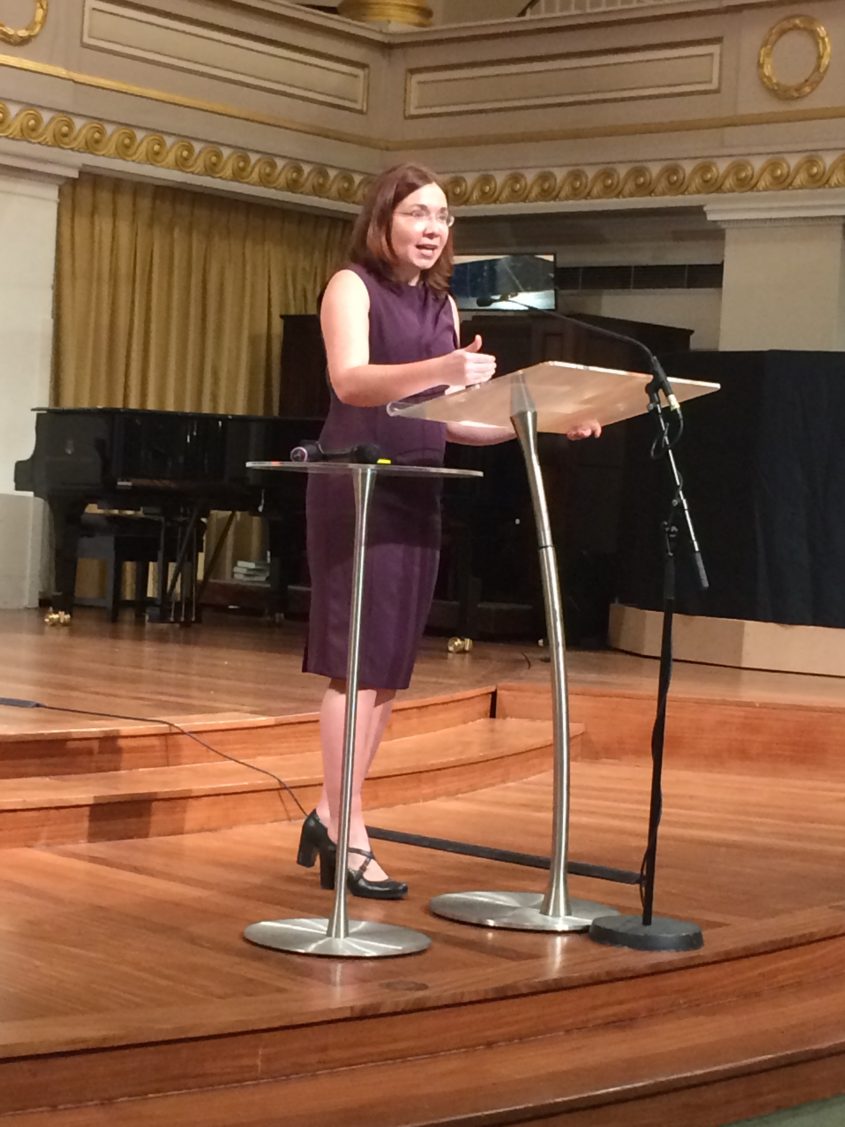
    Canadian-born Katharine is a professor of atmospheric science, number 15 on this year’s Fortune World Greatest Leaders list and scientific adviser to Citizens Climate Lobby US. Speaking at All Souls Church, London, last night, she told us the reason she said ‘no’.

    As in many times throughout her talk fusing Christianity and science, she begins with a bible passage, Hebrews 11:1, ‘Now faith is the substance of things hoped for, the evidence of things not seen’. She adds to it: ‘science is the evidence of things you can see’.

    Climate change is not something to believe in: the evidence is there for all to see. It’s provable fact; faith is irrelevant. (more…)

  • Pollution: Climate Change You Can See

    Pollution: Climate Change You Can See

    How can we make people care about climate change? Do we show them polar bears perched atop wobbly icebergs? Do we warn them about melting glaciers in Greenland? This seems to work, at least while we’re having the discussion. But then, they forget. They go back to their old ways. Ultimately, humans simply don’t have the mental energy to deal with this abstract, future threat.

    American conservation scientist M. Sanjayan has taken a keen interest in studying these issues. What can we do in the face of this well-meaning, but ultimately useless approach? Fortunately, he has an idea that has worked before.

    “We’ve faced enormous, scary climate issues before. Remember the hole in the ozone layer? As insurmountable as that seemed in the 1970’s and 80’s, we were able to wrap our heads around that and take action. People got this very simple, easy to understand, concrete image of this protective layer around the earth, kind of like a roof protecting us in this case from ultraviolet light (which, by the way, has the direct health consequence of potentially giving you skin cancer). Then, they came up with this fabulous term, “the ozone hole.” Terrible problem, great term.” People also got a concrete image of how we ended up with this problem; for decades chlorofluorocarbons (or CFCs) were a main ingredient in a lot of products like aerosol spray cans. Then, when scientists discovered that CFCs were actually destroying the atmospheric ozone, people could look at their own hairspray and say “do I want to destroy the planet because of my hairspray?” So, what’s interesting is that sales of hairspray and those kinds of products started dropping quite dramatically. People listened to scientists and took action, and now scientists predict that the hole in the ozone layer will be healed by around 2050.” – M. Sanjayan, VOX

    Sanjayan then goes on to discuss climate change, saying that if we had a concrete image – if we could see climate change – then we’d do something.

    The thing is, we can see climate change. At least, in a way.

    Throughout the UK and particularly in the Greater London Area, air pollution is a hot topic. Moreover, as capital-dwellers will tell you, we can both see and feel it, particularly on any high air-pollution alert day. As a recent resident of Beijing and Hong Kong, I can affirm that it only gets worse. More importantly, air pollution and climate change are intricately linked, as many compounds that are considered as pollution also count as greenhouse gases (CO2, nitrous oxide, ozone, and so on).

    Pollution is not a future threat, like climate change. It is affecting you now. According to the Guardian, air pollution kills 9 million around the world annually (more than 5 times as many as car accidents), with that figure set to rise. So, why not focus first on fighting pollution? The actions necessary, such as limiting vehicular emissions and transitioning from fossil fuel power sources (which can be done through Carbon Fee & Dividend!) will do equal work in fighting climate change down the road.

    (The following photos I took while hiking show a clear difference – a difference you can see, and act on!)

    Hong Kong on a clear day:

    Hong Kong on a smoggy day: