Category: Climate Income

  • The power of the pen/keyboard!

    The power of the pen/keyboard!

    The CCL Media Team (open to anyone) inspires members to write to newspapers and journals. We alert each other to opportunities and encourage each other’s efforts. It seems to be getting easier to get letters published because of the growing concern about climate change.

    I wrote a letter in response to the article by Mark Carney in the New Scientist back in March, not only was my letter published, but also a second letter responding to a criticism of my first letter!  This week another CCL Media team member, Gareth Ackland, has had his brilliant letter published: 

    Your excellent feature on the Climate Crisis was helpful in including a “What can I do?” section. While the impact of personal lifestyle changes is dwarfed by the impacts governments can make, if enough of us commit to reducing our carbon footprint, it can still accomplish a lot.

    However, the best option for an individual is surely to collapse that power gap. Organizations such as Hope for the Future and Citizens Climate Lobby insist that the most significant action an individual can take is to engage their elected representatives in the problems we face and their possible solutions. Those of us who live in democracies often forget that the wheels of power are intended to be subject to our views and interventions. If you’re not bending your government’s ear, then who is?

    Maybe I am being optimistic but three letters within two months seems to imply a growing interest in hearing about a fair and effective solution to creating the right conditions for a low carbon economy to take root. Our MPs and Councils may also be more receptive, especially if they are aware of the new IEA report!

    For further advice on letter writing or lobbying please see the Who supports a Climate Income, Climate Income/Carbon fee and dividend – further information and Take Action pages for inspiration and information and consider joining our media team for team support and inspiration (email here). Finally, in case you were wondering, our star letter writer is not standing in front of his letter to The New Scientist!

  • Launch of a new tool to track progress in reaching net zero.

    Launch of a new tool to track progress in reaching net zero.

    The 10 Point Plan and subsequent emission reduction targets were far from lacking in ambition. Many commentators, however, are saying that words are easier than actions and, for example, agriculture and hydrogen use strategy remain unpublished 6 months after the 10 Point Plan and 6 months before COP26.

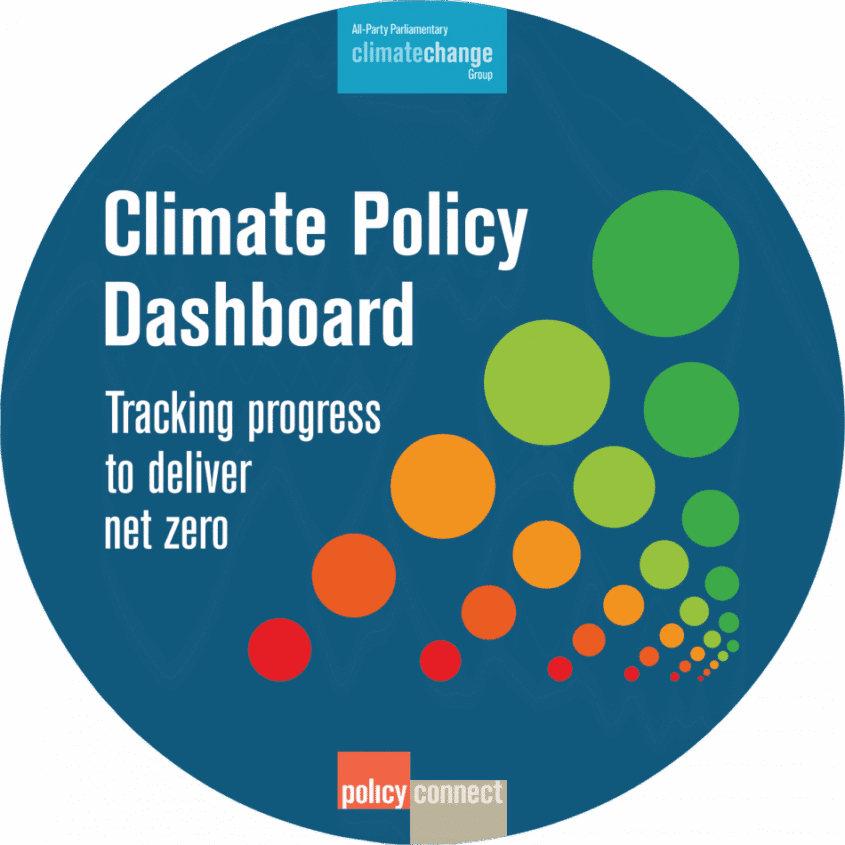
    I have just watched a presentation by the All Party Parliamentary Group on Climate Change on the launch of an online tracker which enables anyone to see what progress the government is making against the objectives stated in the Committee on Climate Change’s 6th Carbon Budget. 

    It looks like a very useful tool to use when preparing to write to/lobby your MP or Council to make the case that Climate Income would go a long way in smoothing the path to Net Zero.

    It was also encouraging to see the APPCC panel’s concern with the delays in policy formulation and implementation – although it was pointed out that MPs no longer have to spend their time trying to reason with climate change deniers in the House! I particularly appreciated the comment by the Chair, broadcaster Tom Heap, of how many trees could have been planted (and then stewarded) as part of a Covid exercise/mental health policy! I might add, as a range anxious EV car user, how many more EV chargers could have been installed over the last year!

    On the 18th May Policy Connect sent further information with useful links:

    The Dashboard is objectivemulti-levelconstructive and transparent. The Dashboard uses around 100 independent policy recommendations from the Climate Change Committee (CCC) to define good-practice in climate policy. Providing an in-depth analysis of each individual policy recommendation and aggregating this to provide an overall progress score for each sector, the Dashboard gives a multi-level perspective on policy development. The Dashboard provides constructive criticism and recommendations to the Government on how best to improve climate policy and, by publishing all workings and methodology, is a transparent assessment of progress.

    Government policy is most highly ranked in the power sector, which receives a 6/10 progress score, while the Government receives a score of 2/10, or critically insufficient, for its development of climate policy in the waste sector. The Dashboard will be updated as the Government releases new policies and the CCC provides new recommendations, and will continue to track Government progress in introducing policy to get the UK on track to meet its climate targets.

    All speakers agreed that the Dashboard was an excellent tool that would help parliamentarians, campaigners and the wider public support and scrutinise the Government in developing climate policy. Tom Heap summarised the Dashboard as “easy to use and available to all, providing excellent analysis on UK climate policy.”

    In the following discussion with MPs, a range of topics were discussed, including areas where the Government has been successful in introducing climate policy, areas where further action is essential and the need for cross-Governmental and cross-societal engagement in climate policy development and implementation. There was also specific discussion around the Hydrogen Strategy, the role of trees and nature-based solutions in meeting our climate targets, and decarbonising the buildings and transport sectors.…..see our write-up on the Policy Connect website. Take a look at the Climate Policy Dashboard, and to learn more about the APPCCG and their work in the run-up to COP26.

  • Might your local Council call for Carbon Fee & Dividend?

    Might your local Council call for Carbon Fee & Dividend?

    In the next few months such a call may well be made by Milton Keynes Council. Here is the back-story.

    First, the local context. MK has a hung Council with good green credentials – it was very early to declare a Climate Emergency, for example. MK also has a lively chapter of Citizens UK, which works through community organizing (building local alliances of civil society, faith institutions, and grass-roots groups). Our local chapter, Citizens:mk, working as part of a emerging Thames Valley Citizens, staged a pre-election Assembly, with the principal PCC candidates and the Council Leader candidates all invited and turning up. One of the Citizens:mk campaigns was for Action on Climate and the Environment (ACE) – other campaigns concerned Digital Exclusion, Police & Young people, Timely Burials and Action on Misogyny. So this was quite a complex programme with limited time to present supporting testimony as well as make the asks themselves, and to hear responses from the various candidates.

    The ACE campaign had three ‘asks’ prefaced by testimony from the Rt Rev Olivia, Bishop of Reading and from two remarkable primary School children. One ask, framed by COP 26 and pursuit of its 2030 carbon neutrality target, was

    Within three months of taking office as Council Leader, will you commit to seeking all-party support for a Council resolution that commends a national policy based on Carbon Fee & Dividend; and meeting with us to discuss appropriate wording for this?

    Through pre-meetings, the Council Leader hopefuls were aware that something on these lines would be presented. So how did they respond? The short answer is positively. All three were unequivocal about meeting, with this as the agenda item. One gave a clear-cut ‘yes’ to bringing such a resolution forward. Another was hopeful of agreeing to bring forward the resolution, but wanted to check it out further so as to be sure the poorest would not be adversely affected The third, drafted in at very short notice that afternoon (the Council Leader’s father had died) felt uneasy about committing on an area for which she was not the Cabinet Member.

    The tenor of their comments seemed as significant as these specific responses: all three, in different ways, acknowledged that this was a policy idea they had not come across, and said they found it attractive and credible. One gave an impromptu pitch for it, another expressed gratitude for having been introduced to it. All this in front of a zoom audience of 200+.

    What happens next? All we can be sure of is that we will have that meeting. I believe we are ‘odds on’ to get a resolution as well. However, without the election pressure, and in the face of so many competing calls on their attention, not to mention party loyalties and ambitions, some backsliding on the part of the next Council Leader would be no surprise, even understandable. Which is why the ACE campaign is working on the follow through: mobilising further support and preparing a range of options for how the resolution could be framed and to whom it would be directed (these matters were deliberately left open).

    What might this mean for you as a CF&D activist where the situation is very different? Perhaps there are other existing groupings and networks you can work through. Might there be support for an all-party resolution in your Council? Ask to have coffee with someone who has some sort of standing, to seek their advice…

    At the risk of sounding corny, nothing is as powerful as an idea whose time has come.

  • If you are a Labour Party member you can help persuade the party to adopt CF&D as a policy.

    If you are a Labour Party member you can help persuade the party to adopt CF&D as a policy.

    One of our members has noticed that an article on CF&D has been posted on the National Policy Forum (NPF). The article states that Labour should adopt CF&D as the key policy to achieve the UK’s climate ambition. The Forum is the main discussion platform for informing Labour policy and so it’s important that this post generates favourable comments and votes.

    If you are a Labour Party member please do vote and add your comments using the link above.  It would also be valuable for members to send letters to their Labour MP and a member of the Environment, Energy & Culture commission of the NPF.

  • Jim Hansen’s Letter to the PM

    I hope many of you caught the news of top climate scientist, Jim Hansen, and his letter to Boris. I’m reposting it in this blog with Jim’s permission but without further comment except to say that much of the, unreported, segment concerns carbon fee and dividend with CCL-UK being recommended as Boris’s next port of call!

  • A wise comment from The Wall Street Journal

    A wise comment from The Wall Street Journal

    I have rather belatedly succumbed to subscribing to Carbon Brief Daily (weekly is also an option) it is a very useful and free way to find out what is been reported about climate policy…….

    Carbon Brief is a UK based website covering the latest developments in climate science, climate policy and energy policy. We specialise in clear, data-driven articles and graphics to help improve the understanding of climate change, both in terms of the science and the policy response. We publish a wide range of content, including science explainers, interviews, analysis and factchecks, as well as daily and weekly email summaries of newspaper and online coverage.

    Amidst all the deservedly jubilant comments about Biden’s decisive U turn on Trump’s denialism, deregulation and support of fossil fuels there is a note of caution…..

    Holman W Jenkins Jr, a Wall Street Journal columnist writing in an article titled “Biden’s age of climate decadence”, (26/01/21) takes a negative look at the president’s actions. He writes that “no ideas are present in the climate spasms of the Biden administration, just a doubled helping of patronage handouts to established interest groups”. He continues: “Suppose you actually cared about climate change. You would not throw episodic subsidies at things that can survive only as long as you are subsidising them. You would try to set in motion long-term trends that have the advantage of being in accordance with existing trends”. Central to his suggestions is a carbon tax which would “spread a low-carbon incentive through every transaction in the economy”.

    Jenkins explains that Obama and Gore didn’t feel the need to use ‘unpopular’ carbon taxes as public opinion enabled the administration to support decarbonisation through subsidies and regulations. I would guess that had they gone down the carbon tax route and it had proved popular Trump wouldn’t have been able to have such a field day!

    At the moment our Government also seems set on using subsidy and regulation despite acknowledging in The Future of Carbon Pricing in the UK that….

    Placing a price on carbon creates the incentive for emissions to be reduced in a cost effective and technology-neutral way, while mobilising the private sector to invest in emissions reduction technologies and measures. While we recognise the merits of a Carbon Fee and Dividend policy, we do not propose to adopt it at this time.

    CCL US is working hard to lobby the US government to see the benefits of carbon pricing with some regulations, lobbying for the Energy Innovation and Carbon Dividend Act. Some regulation and subsidisation will be necessary where cost benefits of the greener option will not be adequate to encourage change (as with cars), but it works best in conjunction with carbon pricing.

    So keep in mind that we are campaigning for a sensible and tested solution which does not require complete societal and economic overhaul, is well regarded by economists and that carbon pricing in general is the preferred solution of the IMF and UN!

    PS On February 2nd an editorial in The Financial Times (paywall) reiterates this point: “conspicuous omissions that underline the vast political effort that will be required to turn policy into reality”. These include the order to pause new oil and gas leases that apply to federal land only, and his “failure to set out a detailed national plan for pricing carbon

    It is encouraging that the most respected mainstream financial media are making the same point!

  • Writing to your MP about the Climate Coalition 10 Point plan – a great opportunity to remind them of the benefits of CF&D which they have already acknowledged!

    Writing to your MP about the Climate Coalition 10 Point plan – a great opportunity to remind them of the benefits of CF&D which they have already acknowledged!

    Many members may have received an email from the Climate Coalition requesting that they email their MP about the Coalition’s 10 point plan, (or could go to the website and find out about how to get involved).

    There seems to be no place for easily mentioning the benefits of CF&D in the email template. I decided to add a piece after my name, so it is right at the start of the email. I have also used the government’s own words from the carbon pricing policy report to mention the benefits of CF&D! This is an easy way to remind MPs that the government itself is aware of the advantages of using CF&D to finance the move to net zero and beyond!

    My name is Catherine Dawson.  I am also a member of Citizens Climate Lobby UK  and have written to you about the benefits of Carbon Fee and Dividend and was involved in the Time is Now Zoom meeting in June. As you are aware the Government in  its report on carbon pricing policy acknowledged that …..Placing a price on carbon creates the incentive for emissions to be reduced in a cost effective and technology-neutral way, while mobilising the private sector to invest in emissions reduction technologies and measures…..  It would make it possible to achieve many aspects of the suggested ten point plan without crippling the economy or deterring the market led economic model.

  • Autumn Campaign  – Chance for the Government to implement a better form of carbon taxation, aka CF&D!

    Autumn Campaign – Chance for the Government to implement a better form of carbon taxation, aka CF&D!

    As you read this, the Government is writing the rules for the UK economy, post-Brexit. 

    As we leave the EU carbon-pricing scheme (the ETS), this is an unprecedented moment to push for Carbon Fee & Dividend (the official term for Climate Income).
     
    Choose your Action – or more than 1!
     1)  Write to your MP
     Point out that leaving the EU ETS offers the chance to shift to a simpler, more effective, fairer and less costly method of carbon-pricing: Carbon Fee & Dividend.  Emphasize that, unlike the ETS, CF&D will include the whole economy, provide a clear and predictable signal to industry, maximize public support, and shelter those on low incomes.
     You can also mention that CCL EU has established that, if necessary during a transition period,  CF&D can operate alongside a UK ETS.
     
    Ask for your letter to be forwarded to the ministers of the all the relevant departments:
     Alok Sharma, Secretary of State for BEIS (Business, Energy and Industrial Strategy),
    George Eustace, Secretary of State for the Environment, Food and Rural Affairs,
    Rishi Sunak, Chancelor of the Exchequer. 
    Remind your MP that the Government has accepted that CF&D is a good idea, as do 27 Nobel-prize-winning economists https://www.econstatement.org.
     
    Ask for a response, stressing  the urgent need for a green recovery that will benefit the whole economy and secure our future.
     
     2) Meet your MP
    If at all possible, meet your MP to show the strength of your concern, (offer a Skype or Zoom meeting).
     
    3) Write to the media
    Publicise as widely as possible that the government has already, in response to its own consultation, recognised the merit of CF&D – yet went on to say without explanation, that it was not proposing to adopt it.
    Local publications are particularly important to your MP; national publications can influence wider public opinion
     
    4) Spread the word
    Do you know anyone – especially someone in a different constituency – who might be persuaded to write their own MP, on a subject of such urgency?
     
    Please copy any responses or published media to [email protected]
    Many thanks,Ed, Gina, Louisa and Paul
    CCL UK steering committee
    test.citizensclimatelobby.uk/
    BACKGROUND TO THIS CAMPAIGN 
    The ETS (Emissions Trading Scheme) is a Cap & Trade system: the Government gives permits to certain industries that limit the amount of carbon they can emit (the Cap) and they trade these permits among themselves. It has been heavily criticized as being unfair, inadequate and over-complicated. For more information on carbon pricing systems, including a handy table of comparisons, see https://test.citizensclimatelobby.uk/2019/05/carbon-pricing-be-careful-what-you-ask-for/
    Our Government in its recent Response to the Consultation on the Future of Carbon Pricing acknowledges the merits of CF&D  but does not propose to adopt it at this time, preferring to continue with a UK ETS, an emissions reduction policy modelled after the EU ETS, despite acknowledging that:  https://assets.publishing.service.gov.uk/government/uploads/system/uploads/attachment_data/file/889037/Government_Response_to_Consultation_on_Future_of_UK_Carbon_Pricing.pdf
    Scroll to p.38 and 39
    Para 201: UK Government’s and Devolved Administrations’ response201.The preferred approach, expressed by the UK Government and Devolved Administrations in the consultation document and supported by scheme participants, is for an effective emissions reduction tool. Placing a price on carbon creates the incentive for emissions to be reduced in a cost effective and technology-neutral way, while mobilising the private sector to invest in emissions reduction technologies and measures. While we recognise the merits of a Carbon Fee and Dividend policy, we do not propose to adopt it at this time
    Background to Climate Fee and Dividend
    What is carbon fee and dividend?
    Look at the website page test.citizensclimatelobby.uk/policy-makers. A fee is placed on fossil fuels as they are extracted, or enter the UK. This rises each year until it is high enough to make burning fossil fuels uneconomical.
    The money collected is given back as a climate income equally to UK people; all adults receive the same amount, half for children.When fossil fuels are exported by UK businesses the fee is rebated. Countries with a similar carbon fee importing fossil fuels into the UK will not have to pay the UK fee.

    How does carbon fee and dividend/climate income work?It makes fossil fuels uneconomical and so removes their use.It supports UK household incomes (between two thirds and four fifths of households) and vulnerable people by giving them a financial cushion during the transition to clean energy.It supports business by allowing them to plan for the change to clean energy and stimulates investment in clean energy.


  • The Zero-Carbon Commission

    The Zero-Carbon Commission

    The Zero Carbon Campaign (ZCC) is about as different from CCL as two organisations, with similar aims and acronyms, can get. Both organisations campaign for carbon pricing and both organisations have concluded that a carbon-dividend is vital to ensure fairness and effectiveness. But CCL is a grass-roots band of citizens whilst ZCC was set up by the founder of OVO Energy and is a commission of experts (including a former chair of the Climate Change Committee and the current executive director of Greenpeace UK). This is not a criticism of ZCC; there’s strength in diversity.

    In September 2020, ZCC published its “White Paper”—a report on How Carbon Pricing Can Help Britain Achieve Net Zero By 2050. There’s much in there for CCL to cheer including a call for the UK government to announce “a clear carbon-price trajectory”, to use the proceeds to “cushion rises in household bills” and to “investigate options for a multilateral border carbon adjustment”.

    ZCC is not advocating 100% revenue recycling into a dividend, as CCL does, but this should not stop us making common cause with an organisation whose aims have far more similarities than differences with our own. The publication of the White Paper is also an opportunity for us to publicise “climate income” and CCL-UK as an advocate for that policy.

    So what happens next? ZCC are asking the public (and organisations) to sign their declaration and to lobby MPs (sounds familiar!) They’re also planning a media campaign to pressure the government to adopt carbon pricing ahead of COP-26 in Glasgow. This will be centred around a “mock COP” to run in the second week of November this year, i.e. a year ahead of the real COP. These are all things we, in CCL, would support or are already doing.

    I’ve been asked, by CCL’s steering group, to keep an eye on developments and to involve CCL where appropriate. I’ll try to keep you all up to date and please feel free to contact me, through the comments below, if you want to be involved too.

  • A good argument for Carbon Fee and Dividend by a Free Marketeer

    A good argument for Carbon Fee and Dividend by a Free Marketeer

    Ambrose Pritchard, writing in The Telegraph criticises the proposed Democrat Green Deal as being a dirigiste policy with an ulterior motive of ‘fuelling’ the trade war with China. He gives a very cogent explanation of the mechanics of carbon fee and dividend and why he prefers this market led method of carbon pricing. He also argues why the dividend should go directly to consumers…

    Mr Biden’s new age Gosplan is not to my taste. Should the Democrats be pledging to install 500 million solar panels and 60,000 wind turbines over the next four years? Is such dirigiste planning the American way?

    The laissez faire way is to set a carbon price that ratchets up predictably, letting business respond to the price signal, and letting Schumpeterian competition find its own answers. All former chairmen of the Federal Reserve and a cast of economists of all ideological stripes have backed HR 763, a bipartisan House bill for a carbon tax and dividend.  

    It starts at $15 a tonne and ratchets up $10 every year until CO2 emissions are almost eliminated. The money raised is rotated back into people’s pockets. The higher the carbon price, the bigger the cheque, and the poor do best. 

    Needless to say, Ursula von der Leyen’s variant in Europe aims to siphon off its carbon tax to fund the Commission’s apparatus. The EU seems to have learned little from the gilets jaunes and the sociology of revolt.