Category: Climate Change

  • Might your local Council call for Carbon Fee & Dividend?

    Might your local Council call for Carbon Fee & Dividend?

    In the next few months such a call may well be made by Milton Keynes Council. Here is the back-story.

    First, the local context. MK has a hung Council with good green credentials – it was very early to declare a Climate Emergency, for example. MK also has a lively chapter of Citizens UK, which works through community organizing (building local alliances of civil society, faith institutions, and grass-roots groups). Our local chapter, Citizens:mk, working as part of a emerging Thames Valley Citizens, staged a pre-election Assembly, with the principal PCC candidates and the Council Leader candidates all invited and turning up. One of the Citizens:mk campaigns was for Action on Climate and the Environment (ACE) – other campaigns concerned Digital Exclusion, Police & Young people, Timely Burials and Action on Misogyny. So this was quite a complex programme with limited time to present supporting testimony as well as make the asks themselves, and to hear responses from the various candidates.

    The ACE campaign had three ‘asks’ prefaced by testimony from the Rt Rev Olivia, Bishop of Reading and from two remarkable primary School children. One ask, framed by COP 26 and pursuit of its 2030 carbon neutrality target, was

    Within three months of taking office as Council Leader, will you commit to seeking all-party support for a Council resolution that commends a national policy based on Carbon Fee & Dividend; and meeting with us to discuss appropriate wording for this?

    Through pre-meetings, the Council Leader hopefuls were aware that something on these lines would be presented. So how did they respond? The short answer is positively. All three were unequivocal about meeting, with this as the agenda item. One gave a clear-cut ‘yes’ to bringing such a resolution forward. Another was hopeful of agreeing to bring forward the resolution, but wanted to check it out further so as to be sure the poorest would not be adversely affected The third, drafted in at very short notice that afternoon (the Council Leader’s father had died) felt uneasy about committing on an area for which she was not the Cabinet Member.

    The tenor of their comments seemed as significant as these specific responses: all three, in different ways, acknowledged that this was a policy idea they had not come across, and said they found it attractive and credible. One gave an impromptu pitch for it, another expressed gratitude for having been introduced to it. All this in front of a zoom audience of 200+.

    What happens next? All we can be sure of is that we will have that meeting. I believe we are ‘odds on’ to get a resolution as well. However, without the election pressure, and in the face of so many competing calls on their attention, not to mention party loyalties and ambitions, some backsliding on the part of the next Council Leader would be no surprise, even understandable. Which is why the ACE campaign is working on the follow through: mobilising further support and preparing a range of options for how the resolution could be framed and to whom it would be directed (these matters were deliberately left open).

    What might this mean for you as a CF&D activist where the situation is very different? Perhaps there are other existing groupings and networks you can work through. Might there be support for an all-party resolution in your Council? Ask to have coffee with someone who has some sort of standing, to seek their advice…

    At the risk of sounding corny, nothing is as powerful as an idea whose time has come.

  • April Action – Local Elections Count

    April Action – Local Elections Count

    As Kevin Frea, the speaker at last month’s national meeting told us, we need to seize the opportunity offered by these elections to tell our local representatives about Climate Income and gain their support for this brilliant policy. Climate Change is set to be on the agenda; the Liberal Democrat leader Sir Ed Davey, for example, has urged more council involvement in climate policies (BBC). There may even already be an environmental organisation in your area which is coordinating a campaign on this issue, such as Wiltshire Climate Alliance. The Alliance held a debate (Facebook, starts properly at 9.45 mins), involving the Wiltshire leaders of the main political parties on the 15th April.

    Although local councils have no say in national fiscal policy many are setting an example to the government by introducing greener policies in areas they do have control over such as social housing and transport, in advance of government regulations.

    Councillors can show MPs how much local support there is for green measures and thus, if they realise its benefit, could act as advocates for the policy of Climate Income to national politicians.

    We need to contact all the candidates of whatever political party or none.

     On THURSDAY MAY 6th there are elections covering:

    Local Councils, Mayoral and London Assembly, Police and Crime Commissioners and the Scottish and Welsh parliaments. All of these institutions have a great deal of influence.

    Full information about these elections can be found here:

    April 22nd’s action comes in 3 stages:

    1. Check you’ve received your polling card and know where to go to vote.

    If you need to register you must do so by 19th April. Apply here

    2. Check the names and contact details of the candidates:

    Local Elections: Look on your local council website for a list of candidates, do you personally know anyone you could contact?

    Mayors, Police and Parliamentarian: Once again if you have a personal contact use it.

    3. Contact:

    Even if you can’t contact them as a personal contact you can email and ask about their views on climate change and how their role or organisation can influence local and national policy to mitigate climate change. Include your name and postal address so they know you are in their area. Don’t forget to wish them good luck and ask for a response. You may have to look up their contact details on the Who Can I Vote For? website.

    Remember this is just the start of a conversation; you can carry on and explain the climate income policy once they have been elected.

    Our page on contacting your M.P gives ideas for emails and can easily be adapted:

  • Climate Income and how to influence your local MP!

    Climate Income and how to influence your local MP!

    I became interested in joining Citizens Climate Lobby after attending an excellent presentation on Climate Income (CF & D) in Devizes from CCL activist Dave Waltham in 2019. After Dave’s talk I decided that the best way to get CCL’s message across to our top politicians was to contact my local MP, who is obliged to respond to a letter from a constituent. Researching his website, I was able to find out his general interests and sign up for a copy of his regular Newsletter.

    I discovered that our MP, Danny Kruger, had established an organisation helping ex convicts and championed other social concerns before becoming a parliamentarian in 2019. It is a good idea to acknowledge the MP’s particular area of interest when you correspond with them, even if just to say I agree with so and so but not your choice of football team!

    Another useful website to refer to is They Work For You where you can find out a great deal about your local MP including their parliamentary roles, committee membership and voting history. The UK Parliament website is useful for checking how a MP prefers to be addressed and their email contact details. For further advice on letter writing you can email [email protected]. If you send an email to your MP please cc [email protected] so we can keep track of who has been written to.

    I would suggest a real letter for your initial correspondence, addressed to your MP’s correct title …

    The Right Hon Blah Blah, MP

    House of Commons,

    London,

    SW1A 0AA

    When writing on any subject do remember to praise your MP and their team for the work they are currently doing. It is helpful to encourage a considered response by asking a question and state that you are looking forward to their response. Unless your MP is in the Cabinet it is worth asking that they pass on your letter to the relevant cabinet member or department such as Alok Sharma or the Treasury Office.

    For an opposition MP it may be more realistic to ask them to pass your letter onto the relevant shadow minister. Follow up any communication received as persistence shows that you really care about the issue and want the Government to act on your concerns. The helpdesk can advise on how to respond to replies, especially when the BEIS are trying to blind you with science!

    My first letter to Danny was written just under a year ago. A year later, my correspondence, along with a few letters from other Devizes CCL members and lobbying from a local transition group has paid off! Our MP, who had admitted to little knowledge of, or interest in climate change a year ago, has since organised the Wiltshire Climate Summit and frequently fields questions to Alok Sharma!

    The photo features me hoping a glacier won’t melt too soon on a (pre-Covid) trip of a lifetime in Alaska!

    Good Luck!

    Richard Day

    CCL Devizes

  • Come back Mark Carney, we need you – Canada has already got it!

    Come back Mark Carney, we need you – Canada has already got it!

    If we still had Mark Carney as the Governor of the Bank of England we might have been looking forward to a COP 26 where the UK delegation steers the world away from climate change disaster. The UK would be encouraging other countries to follow its example by adopting CF&D and Border Carbon Adjustments. I have come to that depressing conclusion after reading an interview in the New Scientist (pay wall) in which he gives a convincing argument for CF&D.

    Mark is rightly hopeful about the technological advances which are making a zero carbon economy so much more doable than it was even a decade ago (which is what Boris is relying on, despite the fiscal policy doing little to encourage risky investments). Mark is, however, clear headed enough to see that the current fiscal and legislative regime doesn’t reveal the true cost of fossil fuels or prevent regressive legislative delays/short term policies in the building, steel, aviation, transport industries, to name but a few. Indeed, today’s Carbon Brief Daily, reporting on an article in Reuters, (paywall), says it all…..

    by not paying for their damaging effects on the climate and human health, US coal, natural gas and motor fuel producers (gain) “implicit benefits worth tens of billion of dollars a year”.

    Mark agrees with the interviewer that carbon pricing is necessary and cites the example of Canada to prove that the ‘gilets jaunes’ effect, which has obviously recently spooked Boris, can be avoided….

    The problem is that a uniform carbon price is a regressive tax. The amount the less well-off pay for petrol or the carbon embodied in their food or heating is a bigger proportion of their incomes than it is for the better-off. But it is important to have a uniform carbon price. The solution is to rebate individuals, as Canada has done with its recently designed scheme.

    The article concludes with an information ‘box’ (for want of a better description) written by the interviewer, Richard Webb. I can only wish that the rest of our media would get the message, and I don’t just mean the redtops…..

    In contrast, some of the schemes afoot now, for example in the European Union and Canada, plan to impose a flat tax per tonne of carbon dioxide or equivalent, with the aim of nudging entire economies away from polluting activities. As economies adjust, the carbon price is gradually raised, with the aim of promoting a virtuous circle of lower-carbon living.

    That has the potential to be very unpopular. For that reason, economists suggest the best move is to rebate the money raised to individual consumers, particularly the less well-off. It might seem pointless taking money and giving it back. But it means that products like food or fuel that are more carbon-intensive are also more expensive, and this could help change consumer behaviour – while not putting anyone at any overall economic disadvantage.

    Canada’s federal carbon tax plan has all these features. Its carbon price, currently $30 a tonne, is planned to rise to $170 a tonne by 2030. The system is designed so that people in the bottom two-thirds of the income bracket get a rebate that pays them more than they put in, in the form of a quarterly “carbon dividend” to their bank account. Richard Webb

    If you subscribe to New Scientist please consider writing to congratulate them and especially Richard Webb for this brilliant interview which is so much better than the interviews published elsewhere. Also do put in a plug for CCL, it would be great to get more New Scientist readers on board!

  • ‘A climate summit in every county’, pt.2

    ‘A climate summit in every county’, pt.2

    Our speaker at the March meeting was Kevin Frea, who is a Deputy leader of Lancaster City Council, Council Cabinet Member for Climate Emergency and Rural Affairs and founder of Climate Emergency UK. Kevin pointed out that while 3/4 of UK councils have declared a climate emergency and 126 councils have set a target to reach zero carbon by 2030, for some it has been just words.

    Interestingly the ambition to really put their money where their mouth is occurs across the political spectrum. Councils which have been ambitious and active include Lib Dem Cornwall, Labour Nottingham and Conservative Isle of Wight. Despite budget constraints councils like the above are doing what they can in areas they have control over such as social housing stock and public transport policy. Conservative led Wiltshire council, for instance, is building modular, zero carbon council homes, retrofitting older council homes and supporting housing associations to do the same.

    The Conservative Cabinet Member for Climate Change and Biodiversity at the Staffordshire Moorlands District Council here writes about the council’s Green Infrastructure Delivery Plan. And to top it all, borrowing a concept from the Cold War, Lewes and Amber Valley have joined Barcelona and Vancouver in signing the Fossil Fuel Non-Proliferation Treaty.

    The sole focus of CCL UK remains to campaign and lobby for a national carbon pricing policy to render all other strategies possible and probable. We are convinced, however, after our successful experience in Wiltshire, that it is worthwhile to engage with your council and other local environmentalists.

    Being involved in pushing council action ahead of the central government response can only help to persuade central government that the country is ready and willing to act on climate change with the most effective methods, including taxation! Some areas of the UK are holding citizen’s assemblies on climate change, and the clear message is that any transition must be fair…

    Reshaping the economy to fight climate change must not result in making life “even harder” for disadvantaged communities. (Susie Ventris-Field, Climate.Cymru Campaign.

    Campaigning with other local environmentalists can also help spread the word about the benefits of CF&D, and maybe even get your MP discussing the issue with Alok Sharma ahead of COP 26!

  • What engagement with our MP has led to……

    What engagement with our MP has led to……

    When the Devizes CCL group arranged a meeting with our new MP Danny Kruger in early 2020 he admitted that he was no expert on the issue of climate change and had no particular opinion on it but he was willing to learn more…..

    We were not disheartened and did our research on Danny’s concerns and how to engage with him. Thanks to the persistence of one of our members, Richard Day, in writing to Danny on the issue of CF&D, and the engagement of other local environmental groups such as Sustainable Devizes, Danny has recently hosted the Wiltshire Climate Summit (A.M) and P.M

    Judy Hindley, one of the founder members of CCL UK wrote a report on the summit for the online Marlborough News…….

    Roughly two years ago,  Wiltshire Council declared a climate emergency and called for Wiltshire to become carbon neutral by 2030.  On Friday, 19 February,  200 of us joined an all-day Zoom to begin for the first time to discuss, as a community, the specifics of how this might be achieved.

    The session included contributions from the Council, The MOD, (who are taking the security threat of climate change very seriously and acting fast), farmers, conservation and energy businesses, a Green Party representative, a government spokesman, our former MP Claire O’Neill and our local hero Joe Brindle…

    Eighteen-year-old Joe Brindle, leader of the Teach the Future Campaign (whose presentation was perhaps the best received of all), called for a new deal in schools, so that teachers are trained to convey the full facts of the changing climate, and pupils leave school with the right skills and knowledge to find secure, future-fit work in the green economy.

    Despite connection difficulties which were a sharp reminder of the shortcomings of the rural broadband roll out, CCL leader Louisa Davison delivered a strong argument for the CF&D policy…

    A Wiltshire farmer Tim Wade raised the unasked question of how much Johnson’s Ten Point Plan  – and this transition to Net Zero –  will cost.  ‘Who will pay?’ he asked.

    But immediately afterwards, Louisa Davison of Citizens’ Climate Lobby UK supplied a large part of the answer. 

    With Climate Income, the policy advocated by CCL UK,  fossil fuel companies themselves will start to do so,  via a steadily rising fee returned in equal shares to all of us citizens.  It’s been estimated that this policy alone will lower emissions by 40% in just 12 years – at no cost to government or tax-payer.

    With the environment constantly in the headlines at the moment (was there ever such a concern about the environmental effects of a forthcoming Budget?), now is the perfect time to get a dialogue going with your MP and other local environmental groups on local and national solutions to climate change including, of course, CF&D!

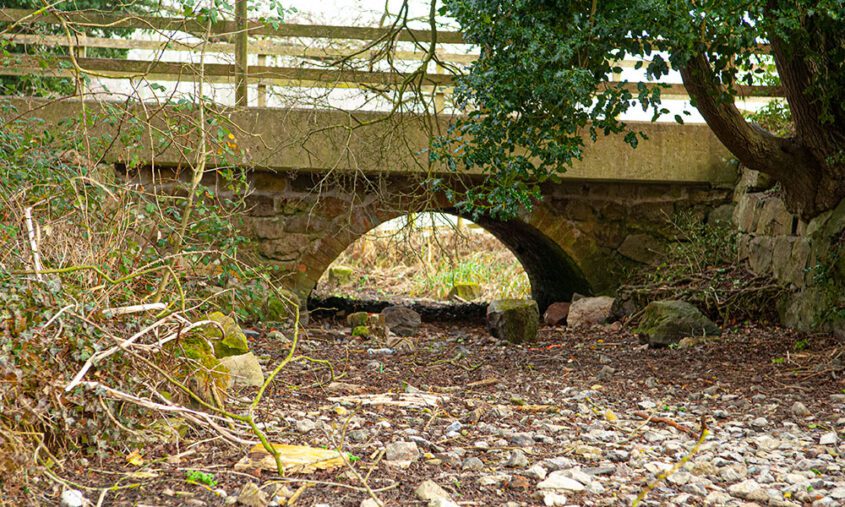
    Pictured above : The dried up River Kennet at Manton, Wilts last summer – a sign of things to come?

  • Jim Hansen’s Letter to the PM

    I hope many of you caught the news of top climate scientist, Jim Hansen, and his letter to Boris. I’m reposting it in this blog with Jim’s permission but without further comment except to say that much of the, unreported, segment concerns carbon fee and dividend with CCL-UK being recommended as Boris’s next port of call!

  • A wise comment from The Wall Street Journal

    A wise comment from The Wall Street Journal

    I have rather belatedly succumbed to subscribing to Carbon Brief Daily (weekly is also an option) it is a very useful and free way to find out what is been reported about climate policy…….

    Carbon Brief is a UK based website covering the latest developments in climate science, climate policy and energy policy. We specialise in clear, data-driven articles and graphics to help improve the understanding of climate change, both in terms of the science and the policy response. We publish a wide range of content, including science explainers, interviews, analysis and factchecks, as well as daily and weekly email summaries of newspaper and online coverage.

    Amidst all the deservedly jubilant comments about Biden’s decisive U turn on Trump’s denialism, deregulation and support of fossil fuels there is a note of caution…..

    Holman W Jenkins Jr, a Wall Street Journal columnist writing in an article titled “Biden’s age of climate decadence”, (26/01/21) takes a negative look at the president’s actions. He writes that “no ideas are present in the climate spasms of the Biden administration, just a doubled helping of patronage handouts to established interest groups”. He continues: “Suppose you actually cared about climate change. You would not throw episodic subsidies at things that can survive only as long as you are subsidising them. You would try to set in motion long-term trends that have the advantage of being in accordance with existing trends”. Central to his suggestions is a carbon tax which would “spread a low-carbon incentive through every transaction in the economy”.

    Jenkins explains that Obama and Gore didn’t feel the need to use ‘unpopular’ carbon taxes as public opinion enabled the administration to support decarbonisation through subsidies and regulations. I would guess that had they gone down the carbon tax route and it had proved popular Trump wouldn’t have been able to have such a field day!

    At the moment our Government also seems set on using subsidy and regulation despite acknowledging in The Future of Carbon Pricing in the UK that….

    Placing a price on carbon creates the incentive for emissions to be reduced in a cost effective and technology-neutral way, while mobilising the private sector to invest in emissions reduction technologies and measures. While we recognise the merits of a Carbon Fee and Dividend policy, we do not propose to adopt it at this time.

    CCL US is working hard to lobby the US government to see the benefits of carbon pricing with some regulations, lobbying for the Energy Innovation and Carbon Dividend Act. Some regulation and subsidisation will be necessary where cost benefits of the greener option will not be adequate to encourage change (as with cars), but it works best in conjunction with carbon pricing.

    So keep in mind that we are campaigning for a sensible and tested solution which does not require complete societal and economic overhaul, is well regarded by economists and that carbon pricing in general is the preferred solution of the IMF and UN!

    PS On February 2nd an editorial in The Financial Times (paywall) reiterates this point: “conspicuous omissions that underline the vast political effort that will be required to turn policy into reality”. These include the order to pause new oil and gas leases that apply to federal land only, and his “failure to set out a detailed national plan for pricing carbon

    It is encouraging that the most respected mainstream financial media are making the same point!

  • Good COP, Bad COP?

    COP26 Logo

    My confident prediction (for the up-coming climate conference, COP26) is that at least one national paper will use the above headline on the last day of the conference on Nov 12th.  If the final outcome is a bit of a fudge then maybe we’ll also get “COP out” whilst, if things go badly, we may end up with “not much COP”.  The Sun will, of course, go with “COP off” regardless of what happens.

    Hopefully, though, COP26 will see the world’s nations providing updated NDCs (their plans for emissions reductions over coming decades) and a clear agreement on how to monitor progress. So good COP, I hope!

    From CCL’s point of view the real work will start after that. Our flagship policy, of carbon fee and dividend (CF&D), is the most economically-efficient way for nations to achieve their NDC-objectives in a just and equitable way. I think our mission, over the months leading up to COP26, should be to try and get CF&D onto the agenda as the tool for turning good-COP-intentions into significant climate progress.

    So how do we do that?

    We need to be there and we need to prepare the ground. CCL will be there in the shape of Citizens Climate Education which has recognized observer status and should allow, perhaps, 5-10 CCL members from around the world to go. In addition, I’ve contacted the Cabinet Office (who are running the UK organization of COP) to request that we are given additional access as a UK-based NGO. I’ll let you all know if/when I hear anything.

    Our Glasgow-based members can also attend as volunteers. Go to https://ukcop26.org/the-conference/get-involved/ and take a look. This is an excellent way to get a few more CCL members involved and a great opportunity to be part of an historically important event.

    To prepare the ground, it will help to have a clear, simple “ask”—a short statement of what we’re looking for. What we’re looking for, of course, is widespread adoption of CF&D but, as I’m sure many of you have found out, getting across all the finer points of this policy is not straight-forward. Can we engage with others better by asking something simpler? Something like “can we make it cheaper to not pollute than it is to pollute?”

    I’m sure many of you won’t like that; it cuts out too much of what matters to us. But we have hundreds of members and I’m certain than someone out there can do better. So, I’d like to kick off COP-preparation with a competition. Send suggestions of what our “ask” should be. Just write it in the comment box below. If you can do that by Feb 15th that would be great. I’ll then read out the best ones at our next national meeting on Feb 16th.

  • Encouraging article on CF&D in The Guardian.

    Encouraging article on CF&D in The Guardian.

    Today, the 5th January 2021, there is an article in The Guardian endorsing CF&D as the best way to tax carbon, promote decarbonisation and create a fairer post pandemic world! It will be interesting to see the reaction to this article, it may signal wider acceptance of the benefits of CF&D across the political spectrum.

    In the article in the Opinion section of the Guardian Online (5/1/2021), Henry D Jacoby, Emiritus Professor of Management at MIT and former co-director of the MIT joint program on the science and policy of global change, gives an good summary of the CF&D policy, which he calls

    “so elegant that it seems too good to be true”. 

    Jacoby also discusses the main stumbling block for the promotion of CF&D, namely the public and governmental perception of the role of taxation. However he argues that, as governments are all having to go outside their policy comfort zones to mitigate the effects of the pandemic, now may be the best time for a radical new approach to carbon taxation….

    But if now isn’t the time to try bold new solutions – when we’ve seen that governments can move mountains in the right circumstances – then when is? And though it looks radical, the dividend really is just a rather elegant solution to a major problem, which neatly circumvents many of the usual political objections to increased taxation. It might even be the first highly popular tax.

    Happily I managed to get a letter about this article published in the Guardian on the 7th January, despite the tumultuous events over the pond!..

    In his article “There’s a simple way to green the economy – and it involves cash prizes for all (5/1/21)”Harold D Jacoby gives a brilliant analysis of the benefits of a Carbon Fee or Dividend (or Climate Income) carbon pricing policy and why there are some psychological barriers to its wider adoption. Citizens Climate Lobby is an international grassroots environmental group which has been respectfully encouraging politicians to consider adopting Carbon Fee and Dividend since 2007. 

    CF&D has successfully been adapted in Canada and Switzerland (although Switzerland does not currently tax fuel for energy while it moves towards the development of more renewable energy systems). Canadians could have replaced its implementer, Trudeau, last year and ditch the policy, they didn’t…. 

    Our Government acknowledged the merits of the tax in its recent Carbon Pricing Report but there is a psychological barrier as Jacoby points out…  Treasury doesn’t like hypothecated taxes or dividends! We at Citizens Climate Lobby UK are working hard to change their mind!. Do take a look at our website and consider supporting us.

    Catherine Dawson,

    Citizens Climate Lobby UK