Category: Fossil Fuel Non Proliferation Treaty

  • What happened at COP28?

    What happened at COP28?

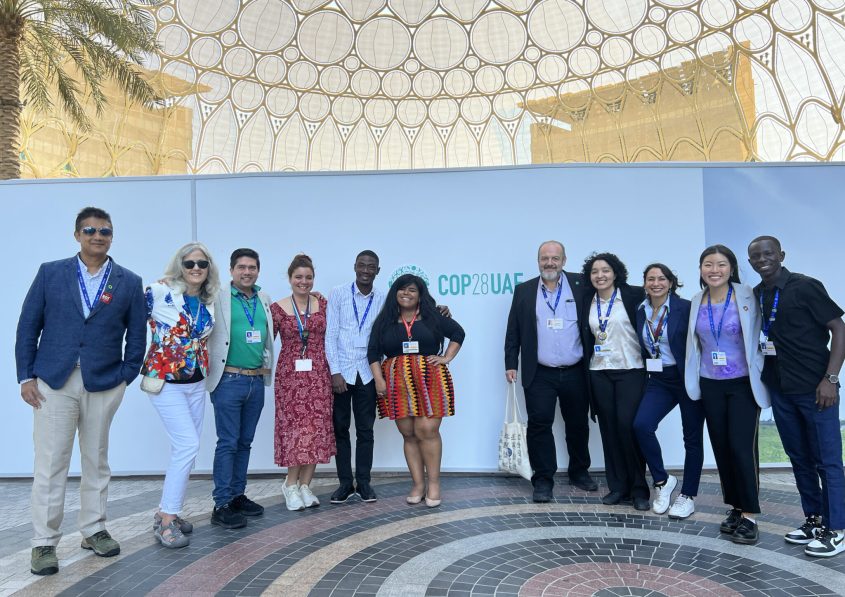
    This is an extract from the slideshow delivered by Cathy Orlando, CCI program director on the 20th December 2023 giving the CCI analysis of the outcome of COP28. The worst case scenario – that fossil fuels would get a free pass and the pledge to work to keep temperature rises within 1.5 Celsius would be dropped, was averted.

    CCI applauds the eventual operationalisation of the Loss and Damage Fund, the declarations on tripling renewables and doubling energy efficiency, and tackling the fossil fuel subsidy issue. Highlighting the role of agricultural systems and the effects of climate change on human health and the natural world as well as the need for the transition to be just were also welcome signs of progress and proof that COP conferences, while not perfect, are important and necessary.

    CCL UK agrees that COP28 confirms that CCI’s campaigning for the reform of financial systems is the path forward.

    Governments’ 2030 targets will lead to 2.5°C of warming by the end of the century: 0.1°C higher than last year. This change is due to weak existing targets rather than any major shifts in new NDC updates: we take the level of emissions anticipated under current policies for those countries that we expect to overachieve their weak 2030 targets.

    Since COP28 the FFNPT now has 12 nation states signed up, in September the State of California became the largest economy to endorse the call (the 5th largest economy in the world and the largest sub-national economy)…… California Senate Majority Whip Senator Lena A Gonzalez (D – Long Beach), said: “It is essential that we commit once and for all to ending our reliance on fossil fuels. People around the world, especially low-income people of color, are suffering the adverse health impacts of fossil fuel pollution, from asthma to cancer. The recent devastating fires and hurricanes emphasize the urgency of taking action, to prevent further extreme weather changes. The science has been clear for decades—fossil fuels are responsible for the climate crisis. We can prevent further harm to our communities, and that is why I am proud that California has now been added to the growing list of governments endorsing the Fossil Fuel Non-Proliferation Treaty. It is time for our nation to be a part of the solution, to forge strong unity and commitment to phasing out the use of fossil fuels.

    France and Kenya formally launched the ‘Taskforce on International Taxation to Scale Up Development, Climate, and Nature Action‘ with Barbados, Antigua, Barbuda, and Spain signing on as members.

    CCI and CCL UK members will continue to educate and campaign for the solutions that will enable the world’s financial resources to be unlocked to ensure a liveable future in 2024.
  • Members of the European Parliament called for a European Fossil Fuel Non-Proliferation Treaty today.

    Members of the European Parliament called for a European Fossil Fuel Non-Proliferation Treaty today.

    In an amendment to the European Parliament Resolution on COP27  today EU members of Parliamentarians Call for a Fossil Fuel Free Future asked European states to work on developing a Fossil Fuel Non-Proliferation Treaty. They are calling for European states to:

     End expansion of new fossil fuels projects

     Phase out current production in line with 1.5ºC

      Enable a global just transition for every worker, community & country.

    and:

    “phase out fossil fuels as soon as possible”

    “halt all new investments in fossil fuel extraction”

    “end fossil fuel subsidies”

    Parliamentarians Call for a Fossil Free Future is a global network of close to 500 legislators from every continent (including the UK) who have called for “new international commitments and treaties, complementing the Paris Agreement, to address the urgency of a swift and just transition away from fossil fuel energy”

    Marie Toussaint, French Member of the European Parliament said….

    “It was absolutely crucial, ahead of the COP27, to remind European leaders that they cannot use the ongoing energy crisis as an excuse to deepen our dependency on fossil fuels. The call made today by the European Parliament to adopt a Fossil Fuel Non-Proliferation Treaty and phase out all direct and indirect fossil fuel subsidies by 2025 must now be heard by the European Commission and Member States. The EU must also acknowledge its climate debt, and the fact it has been a major polluter, responsible for greenhouse gas emissions over centuries. We have to find ways, within this non proliferation treaty, to ensure justice at global level for those who won’t earn the money they could through fossil fuel extraction.”

    Risa Honiveros, Senator of the Philippines and initiator of the Parliamentarians’ Call for a Fossil Fuel Free Future , stated

    “In recent months, parliamentarians on every continent have called for new international commitments and treaties to address the urgency of a swift and just transition away from fossil fuel energy. It is great to see this gaining momentum with the proposed Fossil Fuel Non-Proliferation Treaty which has now been called for by the President of Vanuatu, the President of Timor-Leste, the Vatican and now the European Parliament.”

    The main European Parliament resolution on COP27 also stated that it …

    Welcomes the fact that several EU trading partners have introduced carbon trading or other carbon pricing mechanisms and invites the Commission to further promote this and similar policies on the global scale; looks forward to a speedy agreement with the Council on the proposal for a socially just EU carbon border adjustment mechanism that includes an effective carbon leakage mechanism and to its effect of pushing a global carbon price, which will contribute to reducing global carbon emissions and to the achievement of the Paris Agreement goals;

    It also acknowledged the need for Loss and Damage finance….

    Welcomes the fact that the Glasgow Climate Pact underlines the importance of adaptation and the need to scale up action to enhance adaptive capacity, strengthen resilience and reduce vulnerability to climate change; notes in this regard that 47 countries submitted Adaptation Communications or National Adaptation Plans in the last year, and expects other countries to submit their Communications in line with the Paris Agreement; welcomes the creation of a new Glasgow Dialogue on Loss and Damage which should focus on funding arrangements to avert, minimise and address loss and damage associated with the adverse impacts of climate change;

    Citizens’ Climate International has welcomed the Fossil Fuel Non-Proliferation Treaty initiative which was launched on September 2020 and has been working with them since 2021.

  • Heartening news from the UN General Assembly -Vanuatu leads the way in signing the Fossil Fuel Non-Proliferation Treaty

    Heartening news from the UN General Assembly -Vanuatu leads the way in signing the Fossil Fuel Non-Proliferation Treaty

    Despite the General Assembly being preoccupied with the war in Ukraine there was a groundbreaking moment when Vanuatu became the first nation state to sign the Fossil Fuel Non Proliferation Treaty.

    Press Release from the Fossil Fuel Non-Proliferation Treaty Organisation.

    NEW YORK CITY – 23 September 2022

    Today, Vanuatu called on other nations to join them in establishing a Fossil Fuel Non-Proliferation Treaty, a proposed international mechanism that aims to explicitly address the source of 86% of CO2 emissions that cause climate change: fossil fuels. 

    The President of Vanuatu His Excellency Nikenike Vurobaravu made the historic call on the floor of the UN General Assembly, making Vanuatu the first nation-state to call for an international mechanism to stop the expansion of all new fossil fuel projects, and manage a global just transition away from coal, oil and gas. The President of Vanuatu will also launch their call for a Treaty to phase out fossil fuels on stage at the 2022 Global Citizen Festival in Central Park this Saturday.

    In his speech, President Nikenike Vurobaravu said: “Every day we are experiencing more debilitating consequences of the climate crisis. Fundamental human rights are being violated, and we are measuring climate change not in degrees of Celsius or tons of carbon, but in human lives. This emergency is of our own making. Our youth are terrified of the future world we are handing to them through expanding fossil fuel dependency, compromising intergenerational trust and equity. We call for the development of a Fossil Fuel Non-Proliferation Treaty to phase down coal, oil and gas production in line with 1.5ºC, and enable a global just transition for every worker, community and nation with fossil fuel dependence.”

    The call for a Fossil Fuel Treaty has already been endorsed by more than 65 cities and subnational governments around the globe, including London, Lima, Los Angeles, Kolkata, Paris and the Hawai’i State Legislature. Recently the proposal has also been supported by the Vatican and the World Health Organisation.

    Significant momentum has built behind the proposal in recent months and Vanuatu’s call for a Fossil Fuel Non-Proliferation Treaty is a pivotal step toward building formal diplomatic support for the proposal. Similar moments were pivotal in the legal pathway toward treaties to manage the threats of nuclear weapons and landmines.

    This historic call doubles down on Vanuatu’s commitment to climate action, following their submission earlier this month of one of the world’s most comprehensive climate targets under the UN. Vanuatu has also been leading a campaign to have the International Court of Justice issue an opinion on climate justice and human rights, which paves the way for a new era of international climate policy focused on equity and justice and addressing the biggest drivers of the climate crisis – coal, oil, and gas.

    Vanuatu, an already carbon-negative country that absorbs more emissions than it produces, is rated the country most at risk of natural disasters according to the United Nations. Countries on the frontlines of this crisis have been calling for urgent, tangible action on climate as they face the impacts of climate change and sea level rise in real-time. 

    Brianna Fruean, a Pacific Climate Warrior and 2022 Global Citizen Prize Winner said: “Vanuatu’s call today is a vital investment in our future. They’ve heard the call from our youth that there’s no future for us in fossil fuels and listened. It’s time for other world leaders to do the same”

    Pacific leadership has been essential to the international approach to climate change. Vanuatu’s call for an international framework to manage a just transition away from fossil fuel production sends a very strong message of hope, determination and urgency, both globally and regionally to Australia and New Zealand. 

    Kalo Afeaki, Pacific Climate Warrior from the Kingdom of Tonga, said: “Fossil fuels did this, and if we continue to burn them, we will see more islands in the Pacific, islands like my home of Tonga disappear. We need countries to be bold, because we have run out of time. The future scares me – we need to phase out fossil fuels, we need countries to endorse the Fossil Fuel Non-Proliferation Treaty and we need them to do so now.”

    Mary Gafaomalietoa Sapati Moeono-Kolio, Pacific Treaty Champion, New Zealand Climate Action Network Board said: “By calling for a Fossil Fuel Non Proliferation Treaty, Vanuatu has once again showed the world the Pacific’s climate leadership. The treaty will be a way forward and will complement the goals of Paris to limit emissions by cutting off supply and accelerating the Just Transition. There is no other way to 1.5 – the world must now respond.” 

    This historic first call reinforces the global momentum around the proposed Fossil Fuel Non-Proliferation Treaty. For the past two years, the proposed Fossil Fuel Treaty has gained support from thousands of civil society organisations, major cities, hundreds of Parliamentarians, Nobel Laureates, Indigenous peoples, trade unions, faith leaders, youth activists and health professionals. Now the proposal has been made by Vanuatu within the international policy arena.

    Here’s hoping the call to other states to follow will be heeded, hopefully supported by carbon pricing policies which make decarbonisation the logical path.