Category: COP26

  • Heartening news from the UN General Assembly -Vanuatu leads the way in signing the Fossil Fuel Non-Proliferation Treaty

    Heartening news from the UN General Assembly -Vanuatu leads the way in signing the Fossil Fuel Non-Proliferation Treaty

    Despite the General Assembly being preoccupied with the war in Ukraine there was a groundbreaking moment when Vanuatu became the first nation state to sign the Fossil Fuel Non Proliferation Treaty.

    Press Release from the Fossil Fuel Non-Proliferation Treaty Organisation.

    NEW YORK CITY – 23 September 2022

    Today, Vanuatu called on other nations to join them in establishing a Fossil Fuel Non-Proliferation Treaty, a proposed international mechanism that aims to explicitly address the source of 86% of CO2 emissions that cause climate change: fossil fuels. 

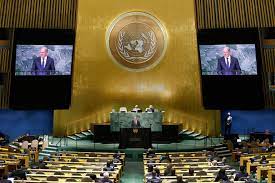
    The President of Vanuatu His Excellency Nikenike Vurobaravu made the historic call on the floor of the UN General Assembly, making Vanuatu the first nation-state to call for an international mechanism to stop the expansion of all new fossil fuel projects, and manage a global just transition away from coal, oil and gas. The President of Vanuatu will also launch their call for a Treaty to phase out fossil fuels on stage at the 2022 Global Citizen Festival in Central Park this Saturday.

    In his speech, President Nikenike Vurobaravu said: “Every day we are experiencing more debilitating consequences of the climate crisis. Fundamental human rights are being violated, and we are measuring climate change not in degrees of Celsius or tons of carbon, but in human lives. This emergency is of our own making. Our youth are terrified of the future world we are handing to them through expanding fossil fuel dependency, compromising intergenerational trust and equity. We call for the development of a Fossil Fuel Non-Proliferation Treaty to phase down coal, oil and gas production in line with 1.5ºC, and enable a global just transition for every worker, community and nation with fossil fuel dependence.”

    The call for a Fossil Fuel Treaty has already been endorsed by more than 65 cities and subnational governments around the globe, including London, Lima, Los Angeles, Kolkata, Paris and the Hawai’i State Legislature. Recently the proposal has also been supported by the Vatican and the World Health Organisation.

    Significant momentum has built behind the proposal in recent months and Vanuatu’s call for a Fossil Fuel Non-Proliferation Treaty is a pivotal step toward building formal diplomatic support for the proposal. Similar moments were pivotal in the legal pathway toward treaties to manage the threats of nuclear weapons and landmines.

    This historic call doubles down on Vanuatu’s commitment to climate action, following their submission earlier this month of one of the world’s most comprehensive climate targets under the UN. Vanuatu has also been leading a campaign to have the International Court of Justice issue an opinion on climate justice and human rights, which paves the way for a new era of international climate policy focused on equity and justice and addressing the biggest drivers of the climate crisis – coal, oil, and gas.

    Vanuatu, an already carbon-negative country that absorbs more emissions than it produces, is rated the country most at risk of natural disasters according to the United Nations. Countries on the frontlines of this crisis have been calling for urgent, tangible action on climate as they face the impacts of climate change and sea level rise in real-time. 

    Brianna Fruean, a Pacific Climate Warrior and 2022 Global Citizen Prize Winner said: “Vanuatu’s call today is a vital investment in our future. They’ve heard the call from our youth that there’s no future for us in fossil fuels and listened. It’s time for other world leaders to do the same”

    Pacific leadership has been essential to the international approach to climate change. Vanuatu’s call for an international framework to manage a just transition away from fossil fuel production sends a very strong message of hope, determination and urgency, both globally and regionally to Australia and New Zealand. 

    Kalo Afeaki, Pacific Climate Warrior from the Kingdom of Tonga, said: “Fossil fuels did this, and if we continue to burn them, we will see more islands in the Pacific, islands like my home of Tonga disappear. We need countries to be bold, because we have run out of time. The future scares me – we need to phase out fossil fuels, we need countries to endorse the Fossil Fuel Non-Proliferation Treaty and we need them to do so now.”

    Mary Gafaomalietoa Sapati Moeono-Kolio, Pacific Treaty Champion, New Zealand Climate Action Network Board said: “By calling for a Fossil Fuel Non Proliferation Treaty, Vanuatu has once again showed the world the Pacific’s climate leadership. The treaty will be a way forward and will complement the goals of Paris to limit emissions by cutting off supply and accelerating the Just Transition. There is no other way to 1.5 – the world must now respond.” 

    This historic first call reinforces the global momentum around the proposed Fossil Fuel Non-Proliferation Treaty. For the past two years, the proposed Fossil Fuel Treaty has gained support from thousands of civil society organisations, major cities, hundreds of Parliamentarians, Nobel Laureates, Indigenous peoples, trade unions, faith leaders, youth activists and health professionals. Now the proposal has been made by Vanuatu within the international policy arena.

    Here’s hoping the call to other states to follow will be heeded, hopefully supported by carbon pricing policies which make decarbonisation the logical path.

  • UN General Assembly to discuss a just solution to Loss and Damage reparations.

    UN General Assembly to discuss a just solution to Loss and Damage reparations.

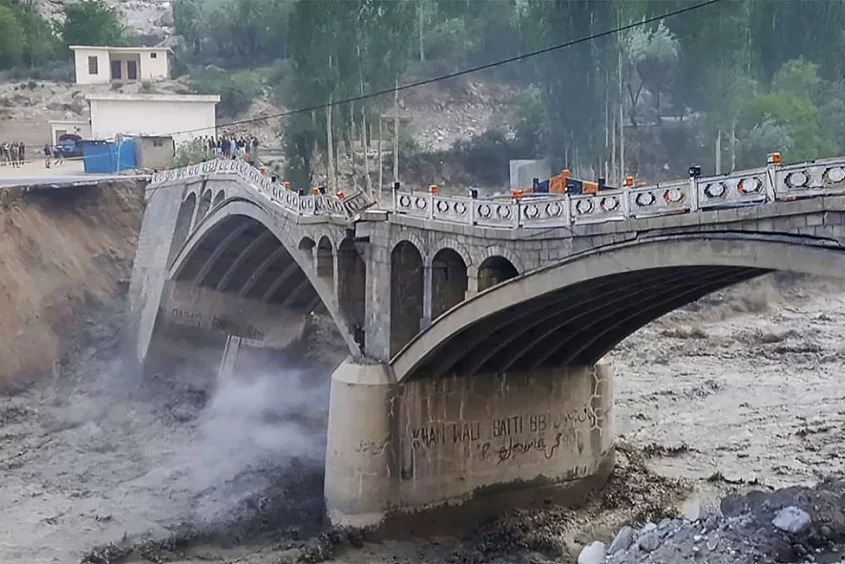
    Worldwide adverse weather events this summer have reinforced the moral imperative of Loss and Damage funding, in particular the damage caused by flooding in Pakistan, a nation which contributes less than 1% of worldwide greenhouse gas emissions.

    Last year there were several papers which argued for the solution of a global Climate Income policy to level the playing field between those who have historically benefited from fossil fuels and the global south. Oxfam is also interested in the concept. On Monday the 19th September the Guardian reported that a discussion paper has been prepared for the UN General Assembly meeting this week to ask for a ‘climate related and justice-based global tax’, possibly raised by a global carbon tax.

    Antigua and Barbuda have also submitted a discussion paper to the Assembly, warning that increasing sea and air temperatures in the Caribbean could create a superstorm within years that would wreak £7.9bn of damage in the island nation alone, six times its annual GDP. Walton Webson, Antigua and Barbuda’s ambassador to the UN and chair of the Alliance of Small Island States, said: “[We] deserve to live without the looming fear of debt and destruction. Our islands are bearing the heaviest burden of a crisis we did not cause, and the urgent establishment of a dedicated loss and damage response fund is key to sustainable recovery. We are experiencing climate impacts that become more and more extreme with each passing year.”

    Here’s hoping that the discussions will be productive; at the very least that an agreed framework for the delivery of Loss and Damage funding can be agreed at COP27, if not sooner, and ideally that the case for a socially just global carbon price will be heard and agreed!

  • Three former UNFCCC Executive Secretaries speak out.

    Three former UNFCCC Executive Secretaries speak out.

    On the 1st June three former UN climate chiefs, Christian Figueres (2010-16), Yvo de Beor (2006-10) and Michael Zammit Cutajar (1991-2002) wrote a joint article in the Guardian. They state that in February the world’s governments endorsed the IPPC report on Impacts, Adaptation and Vulnerability and thus the statement that…

    “The cumulative scientific evidence is unequivocal: Climate change is a threat to human wellbeing and planetary health…. Any further delay in concerted anticipatory global action on adaptation and mitigation will miss a brief and rapidly closing window of opportunity to secure a liveable and sustainable future for all.” 

    Despite this the trajectory of current worldwide climate policies would lead to a temperature rise of between 2.7C and a catastrophic 3.6C above pre-industrial levels. Governments can’t act as if other crises such as health, poverty and security can be tackled whilst ignoring the climate crisis, they are interlinked. Perhaps, they argue… 

    If science has not persuaded most governments to act, perhaps economics will. The IPCC provides clear evidence that societies will be more prosperous in a world where climate change is constrained, than in one left to burn. In the energy sector, evidence of the zero-carbon transition is all around us. Wind and solar generation shows compound growth of about 20% a year and is cheaper almost everywhere than the alternatives. Electric car sales doubled between 2020 and 2021.

    Unless one is invested in fossil fuels, there is now no reason not to take the clean energy path. Many corporate actors understand the need for early action on this front. But governments still need to incentivise the transition. The evolving Just Energy Transition packages may yet offer an investment pathway that can accelerate deployment in emerging and developing countries. Corporate action towards other targets such as reduction of methane emissions, also needs to be encouraged.

    Carbon pricing, we might add, would reinforce the argument for decarbonisation if it applied in a way that enables forward planning and enhances the economic well being of the majority of people, as with Climate Income.

  • Jim Hansen’s Letter to the PM

    I hope many of you caught the news of top climate scientist, Jim Hansen, and his letter to Boris. I’m reposting it in this blog with Jim’s permission but without further comment except to say that much of the, unreported, segment concerns carbon fee and dividend with CCL-UK being recommended as Boris’s next port of call!

  • Good COP, Bad COP?

    COP26 Logo

    My confident prediction (for the up-coming climate conference, COP26) is that at least one national paper will use the above headline on the last day of the conference on Nov 12th.  If the final outcome is a bit of a fudge then maybe we’ll also get “COP out” whilst, if things go badly, we may end up with “not much COP”.  The Sun will, of course, go with “COP off” regardless of what happens.

    Hopefully, though, COP26 will see the world’s nations providing updated NDCs (their plans for emissions reductions over coming decades) and a clear agreement on how to monitor progress. So good COP, I hope!

    From CCL’s point of view the real work will start after that. Our flagship policy, of carbon fee and dividend (CF&D), is the most economically-efficient way for nations to achieve their NDC-objectives in a just and equitable way. I think our mission, over the months leading up to COP26, should be to try and get CF&D onto the agenda as the tool for turning good-COP-intentions into significant climate progress.

    So how do we do that?

    We need to be there and we need to prepare the ground. CCL will be there in the shape of Citizens Climate Education which has recognized observer status and should allow, perhaps, 5-10 CCL members from around the world to go. In addition, I’ve contacted the Cabinet Office (who are running the UK organization of COP) to request that we are given additional access as a UK-based NGO. I’ll let you all know if/when I hear anything.

    Our Glasgow-based members can also attend as volunteers. Go to https://ukcop26.org/the-conference/get-involved/ and take a look. This is an excellent way to get a few more CCL members involved and a great opportunity to be part of an historically important event.

    To prepare the ground, it will help to have a clear, simple “ask”—a short statement of what we’re looking for. What we’re looking for, of course, is widespread adoption of CF&D but, as I’m sure many of you have found out, getting across all the finer points of this policy is not straight-forward. Can we engage with others better by asking something simpler? Something like “can we make it cheaper to not pollute than it is to pollute?”

    I’m sure many of you won’t like that; it cuts out too much of what matters to us. But we have hundreds of members and I’m certain than someone out there can do better. So, I’d like to kick off COP-preparation with a competition. Send suggestions of what our “ask” should be. Just write it in the comment box below. If you can do that by Feb 15th that would be great. I’ll then read out the best ones at our next national meeting on Feb 16th.

  • Writing to your MP about the Climate Coalition 10 Point plan – a great opportunity to remind them of the benefits of CF&D which they have already acknowledged!

    Writing to your MP about the Climate Coalition 10 Point plan – a great opportunity to remind them of the benefits of CF&D which they have already acknowledged!

    Many members may have received an email from the Climate Coalition requesting that they email their MP about the Coalition’s 10 point plan, (or could go to the website and find out about how to get involved).

    There seems to be no place for easily mentioning the benefits of CF&D in the email template. I decided to add a piece after my name, so it is right at the start of the email. I have also used the government’s own words from the carbon pricing policy report to mention the benefits of CF&D! This is an easy way to remind MPs that the government itself is aware of the advantages of using CF&D to finance the move to net zero and beyond!

    My name is Catherine Dawson.  I am also a member of Citizens Climate Lobby UK  and have written to you about the benefits of Carbon Fee and Dividend and was involved in the Time is Now Zoom meeting in June. As you are aware the Government in  its report on carbon pricing policy acknowledged that …..Placing a price on carbon creates the incentive for emissions to be reduced in a cost effective and technology-neutral way, while mobilising the private sector to invest in emissions reduction technologies and measures…..  It would make it possible to achieve many aspects of the suggested ten point plan without crippling the economy or deterring the market led economic model.

  • Claire O’Neill dumped as COP26 president

    Claire O’Neill dumped as COP26 president

    The first thing that came to mind when I heard Claire O’Neill (formerly Perry, formerly my MP and formerly the minister for clean energy) had been dumped as president for this year’s crunch UN conference on climate change in Glasgow (COP26) was they couldn’t cope with a ballsy woman. Or should I say a titsy woman?

    According to The Guardian:
    “She also issued a putdown to David Davis when he confused her with another female Tory minister, Caroline Nokes. Referring to Davis’s previous campaigning slogan, she is reported to have told him: “David, let me help you: Caroline is a C cup, I am a double D.”

    I remember the sexist vitriol she suffered in the papers, and her edgy outbursts about giving blowjobs to have a say (a quote you could source back to original female hero Ripley in movie Aliens from 1986, and that was probably taken from a real world quote). The embarrassment was not because they were rude but because they put the reality of a woman working in Westminster under a harsh spotlight.

    After all, the current PM and his closest allies aren’t strangers to public gaffs and causing upsets when it suits, and yet they survive.

    Claire has been often, it seems to me, at odds with her role and the establishment. Sometimes she would totally toe the Tory whip line, to protect her position it seemed, and other times she would stick her neck out and rebel, as she did for a time over Brexit.

    She is a hard working and often effective advocate for the climate, instrumental in the net zero legislation, and yet, as a minister, also supported fracking and voted for the third Heathrow runway.

    Is it harder for a woman in Westminster, and harder for anyone trying to have a meaningful family life, to stay true to personal values (and keep their job) in an apparently toxic atmosphere of Punch and Judy politics?

    Former Labour Minister Harriet Harmon recounted at Swindon Festival of Literature that bunking off from an important Commons vote was okay for an extra-marital liaison but not for her child’s birthday.

    When Claire took a sabbatical from her cabinet ministerial position earlier this year due to a family illness, she told me in a CCL local meeting that MPs had no working rights and this was the first time this had been allowed, and only possible with the support of the then PM, Theresa May.

    Fast forward a few months to Boris’ new regime and she found herself relegated to the back benches.

    Whatever the real story behind Claire’s COP26 sacking, the political system needs to be less brutal, more nurturing. These are the people whose job is to care about our interests.

    Fixing the climate isn’t about finding the most economical solution, though we at CCL have to sometimes employ this argument. It’s not about tackling climate change because doing nothing is the most expensive option. To really stop causing this problem now, and different problems in the future, we have to be capable of empathy; to care for and respect ourselves and each other and our liveable world.

    And we, at Citizens’ Climate Lobby, have to leave bitter thoughts at our MP’s door when exploring that crucial common ground, and act how we wish it to be. Our caring and respectful actions and words will help make it so.

    Louisa Davison is on CCL’s Steering Committee. These are her personal opinions and not necessarily the official opinion of CCL.