Category: ETS

  • Climate Income – How this powerful climate policy can address the cost of living crisis.

    Climate Income – How this powerful climate policy can address the cost of living crisis.

    The next UK government must address the cost of living crisis. It’s also clear from public data that the climate crisis is an ongoing concern for 75%. Now there is the opportunity to kill multiple birds with one stone. The latest developments in the EU Green Deal are contributing to international momentum on the subject of carbon pricing. If the UK wants a closer relationship with Europe, aligning on this key environmental policy offers a number of additional social and economic benefits.

    Carbon pricing, also known as carbon taxation, is overwhelmingly the fastest and most effective tool to cut greenhouse gas emissions. No one claims carbon pricing solves everything, other policies are needed, just that it’s the most important thing to do. Carbon pricing is a cornerstone of the EU Green Deal and improves the effectiveness of all other climate policies. The World Bank tracks international carbon pricing development both in terms of coverage and price level, i.e. how many emissions are covered and at what price.

    Currently the UK prices 40% of carbon via the Emissions Trading Scheme (ETS) which applies to large scale industry (and is almost invisible to consumers). The UK carbon price floor legislation adds strength and has been effective in dramatically reducing coal from UK electricity production. The EU is extending the ETS to Buildings and Road Transport (ETS2) with further expansion under discussion. The same approach in the UK would increase carbon pricing coverage to over 80% and have a direct impact on all households.

    Although most poor and middle income families use much less energy than the richest, it’s a higher proportion of their income. This form of taxation is inherently regressive, hurting the poor more than the rich. Climate Income, where the proceeds of the tax are given back equally to people, makes the vast majority of poor families and most middle income families better off. Making carbon tax popular and progressive in this way is well understood.

    The challenges for politicians in implementing Climate Income are that the public are wary that “tax” means they will likely be worse off, and industry is concerned about international trade competitiveness. The information on these first two issues has improved considerably, though there remains pressure from the fossil fuel lobby, which is still more powerful and better funded than the emerging green industry.

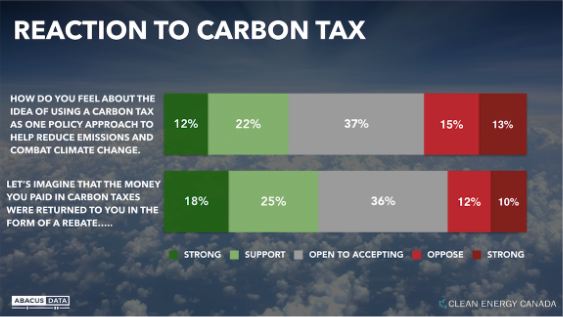
    The recent OECD report International Attitudes Toward Climate Policies surveyed 40,000 citizens from 20 countries. It found that people want to know that the policy works, is fair, and how it will affect them. The report showed that 5 minute videos can build public support, showing fairness by redistributing revenue equally protects poorer households. For the UK, confidence in public support for Climate Income is reinforced by the Scottish Climate Assembly with 77% support for this specific policy.

    Industry fears about “carbon leakage”, when trade and jobs are lost to companies in other countries with lower pollution costs, have often been highlighted as an economic risk. The EU has now taken on this issue directly with the Carbon Border Adjustment Mechanism (CBAM). It is prompting action in relation to carbon pricing from the US, China and India. Evidence from US industry implies that the UK not only has nothing to fear, but in fact has much to be gained. Energy intensive UK industry is highly competitive and is effectively leaving money on the table by not pricing international emissions.

    Whatever the UK’s desired trading relationship with Europe, there are proven examples of Climate Income. Canada and the UK today have similar trading structures with the EU. Canada introduced The Greenhouse Gas Pollution Pricing Act in 2019 rebating 90% to households. Expert consensus is growing that this is the best solution for Canada. Switzerland is in the European Free Trade Agreement and outside the EU. In addition to an aligned EU ETS, as the UK has, Switzerland prices domestic fuel at €120 with 67% returned to households. Austria is in the EU, in the Customs Union and the Euro Zone. Specifically in preparation for the ETS2 Austria introduced KlimaBonus (Climate Bonus) returning 100% to households.

    Being outside the EU may have advantages, EU member states have concerns about legislative complexity and price volatility. Especially when simpler alternatives like a national carbon price are encouraged by Sweden and considered in Germany, where civic society is demanding the government deliver the manifesto promise for KlimaGeld (Climate Money). The UK carbon price floor legislation has the potential to provide harmonised and less volatile pricing than either the ETS or ETS2. Predictability is very helpful to the longer term planning and certainty needs of industry highlighted in the FASTER principles for successful carbon pricing.

    Climate Income is a zero cost policy that addresses two of the top concerns of the public. With the prevailing international winds blowing in support, it does more to reduce emissions than anything else. It’s good for international trade, the economy and jobs. Most households are better off. And it’s endorsed through the biggest statement by economists ever, including every living Nobel Laureate Economist. Time to act on the advice of experts.

    N.B. This article argues for a similar policy advocated by the Young Liberal Democrats described as “A Progressive Carbon Tax” in their Policy Book from 2021. There is an updated European Young Liberal (LYMEC) policy “6.11 The Adoption of C02 Taxes and Tariffs by the EU” in their 2024 Policy Book that shows further support.

    Article published in the Green Liberal Democrat Website and Challenge magazine, May 2024.

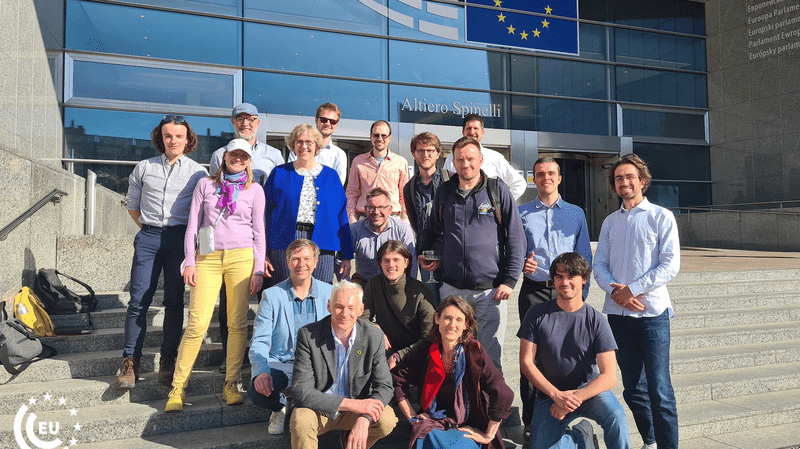
    I am the Chair at Citizens’ Climate Europe and a Member of the EU Climate Change Expert Group for ETS2 Implementation. (Front left in photograph of Citizens’ Climate Europe members from CCL members from France, Germany, Belgium, Sweden, Finland, Poland, UK, Portugal and the Netherlands).
  • A simple, fair and effective solution to the UK cost of living crisis – Climate Income.

    A simple, fair and effective solution to the UK cost of living crisis – Climate Income.

    I posted this article on the Linked In Citizens’ Climate Europe page on the 22nd January and have been asked to reproduce it here. I hope you find it a helpful ‘take’ on the current crisis.

    The current fuel crisis is creating problems for governments in the UK and Europe. The conundrum is based on the combination of underlying energy costs, environmental taxation, poverty alleviation and climate policy, all overlapping in a complex mix. Finding a solution that keeps advocates of each policy and it’s raison d’etre supportive is challenging. Here we look at how leaving the EU offers the UK a simpler approach. Climate Income can be used to address the short term imperatives of the rising gas prices, “levelling up” the inequality in the UK, provide a clear pathway to NetZero and make the UK economy more competitive.

    Some of the main elements in the mix …

    Gas prices are rising, and will continue for up to 2 years. Average household energy costs are set to rise by around £600 p.a. in 2022. Energy costs impact everyone, but while low and middle income families use less energy it’s a higher proportion of their income, hence why governments implement policies to address this.

    To protect the vulnerable, old and poor, there have been various means tested financial supports introduced roughly every decade: in 1988 Cold Weather Payments; in 1997 Winter Fuel Payments; and in 2011 Warm Home Discounts. All essentially aiming to reduce the number of people suffering from cold or hunger in our first world economy.

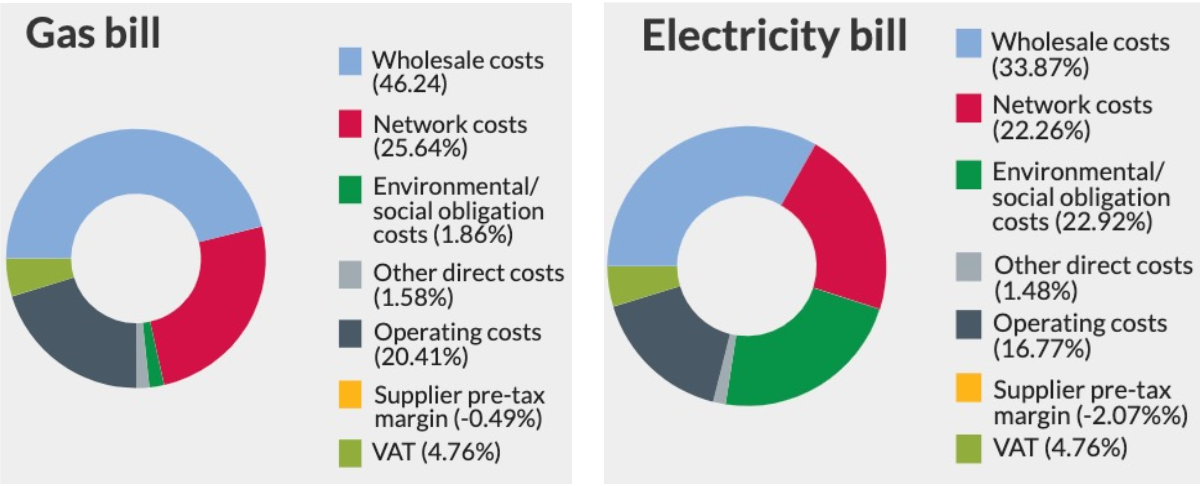
    In 2013 the UK Gov introduced the “Environmental and social levies” to fund energy efficiency, encouraging low carbon generation and reducing fuel poverty. The levies are 10x higher for electricity bills than gas bills. At the time 35% of the UK’s electricity production was from coal, the most harmful fossil fuel for the climate and air quality.

    No alt text provided for this image

    Consequently in 2013 the UK Gov also introduced the Carbon Floor price, initially at £16 (above the EU-ETS at the time) and set to rise to £30 by 2020 (which would now be below the EU-ETS). This has seen Coal reduced to 2% or less (20x smaller) for electricity production. The UK established (EU approved) measures to protect industry and now the EU itself is driving international dialogue on Carbon Border Adjustments.

    Whilst prices fluctuate over time, these policies raise prices for things that pollute (or used to pollute), and at the same time try to alleviate the financial burden on the poorest. The apparently conflicting problems of poverty and climate change. Ironically most of the people living a lifestyle compatible with 1.5ºC are the poorest in society, with the richest 10% causing as much pollution as the other 90% combined.

    Climate Income – the solution?

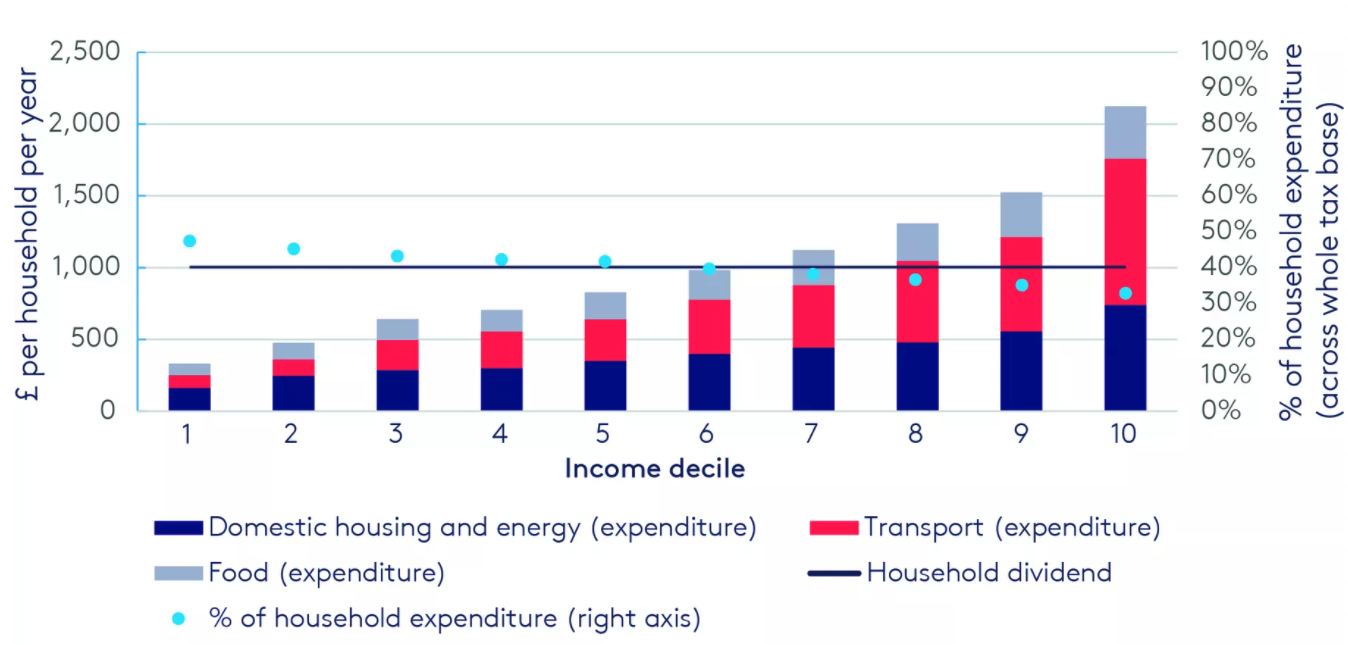
    Climate Income is a revenue neutral, steadily increasing price on pollution fully rebated to all citizens. Revenue neutral means there is no cost to the government, and, significantly, no revenue for the government. The steadily increasing Carbon Price follows the polluter pays principle embedded in UK legislation for nearly 50 years. The key part is returning the money to all citizens equally in a fair monthly payment, much like how child benefits or pensions are paid. Despite the rising costs, the poorest 20% could be £500 better off, enough to match the one of the current UK government suggestions.

    No alt text provided for this image

    London School of Economics data from 2019.

    The rest of society would be proportionally affected depending on the pollution they cause. Once the gas price spike settles over half the population would be better off. The exact amount depends on the level of price introduced. LSE modelled a £40 /tCO2 charge, above the current £18 and the planned £30 level, though significantly below the current UK ETS price circa £75.

    No alt text provided for this image

    This type of approach is intrinsically fair, sharing the responsibility and rewards equally on everyone. In Canada a form of Climate Income has been operational since 2019 and the public increasingly understand and support it, re-electing in 2021 parties in favour.

    Above all, it must be clear to the public that this represents a rebalancing of the tax base, in order to incentivise greener technologies and activities, and not simply a backdoor way of the Treasury taking more cash from their pockets.

    What does this mean for the Net Zero goal?

    A clear path to NetZero is supported by aligning the steadily increasing price to the data from the IPCC 1.5ºC report and the latest International Energy Authority report which suggest most (70%+) of NetZero can be achieved with such pricing. What this illustrates is that the long term NetZero objective actually helps clarify how the UK Gov might proceed with other related policy options currently under discussion. 

    e.g.

    1. Subsuming the current Environmental and social levies – reducing the bias against cleaner electricity and shifting the costs more to polluting gas, whilst delivering on the environmental and social objectives.
    2. Removing VAT from household energy bills would be a cost to the treasury that would enable a higher Carbon price, reinforcing 1 above.
    3. Both above measures reduce pressure on the various means tested support programs over time. As the Carbon price rises each year the policy is increasingly progressive, enabling simplification and reduced bureaucratic burden on people and the state.
    4. Windfall taxes might also reduce the immediate financial burden on the treasury enabling more of the existing carbon price (via the UK ETS) to be returned to citizens.
    5. Rebating the money to citizens gives industry the confidence to pass costs on to consumers regardless of how the price rises domestically.
    6. The ETS (copied from the EU) could be replaced by a simpler and more predictable economy-wide carbon price that allows industry to plan and invest with more certainty.
    7. Such pricing strengthens the UK economy to exploit the international trade advantage that already exists in the eyes of this US assessment as the EU and others pursue Border Carbon Adjustments. It also helps create the investment case for industry in the inevitable green revolution the world needs over the next 30 years.

    It could be argued, however, that the current path, with various different ways to raise energy prices and tax revenue whilst only offering minimal and creeping support for the most vulnerable mirrors exactly what unfolded in France with the Yellow Vest movement. Indeed the parallel is further matched by a spike in prices being the trigger to public discontent to such policy creep. In France it was an oil price spike after 4 years of gradual price increases that drew public anger, today it’s gas.

    So to round up here’s a summary other expert opinions that endorse some or all of what is proposed in Climate Income:

    None of these experts are saying this is a magic bullet that fixes everything. They all broadly agree that it is the single most important tool to address climate change. It can also show us how to navigate the short term energy price spike and re-align our worthy intentions in other areas. As Our World in Data summarises: 

    “What’s frustrating about the challenge of climate change is not that we have no options, but that we do not take the options we have. “

    No alt text provided for this image

  • What lessons should be learnt from the fuel crisis?

    What lessons should be learnt from the fuel crisis?

    The current fuel crisis is creating problems for governments in the UK and Europe. The conundrum is based on the combination of underlying energy costs, environmental taxation, poverty alleviation and climate policy all overlapping in a non-aligned mix. Finding a solution that keeps advocates of each policy and it’s raison d’etre supportive is challenging. Here we look at how Climate Income can be the sword that cuts the Gordian knot.

    First let’s examine some of the main policy elements at play …

    The political pressure is coming from the financial pain faced by families with rapidly rising fuel bills where energy use has already been reduced to a minimum with the bottom 50% of the population using energy consistent with a 1.5ºC pathway! Energy costs impact everyone, but low and middle income groups spend a higher proportion of their income on transport and household energy needs than the better paid.

    The main carbon pricing mechanism in the EU and UK is the Emissions Trading Scheme (ETS). The UK left the EU ETS and established an independent ETS which began in January 2021. ETS is considered to be a revenue raising mechanism (tax) as well as a carbon pricing tool. The revenue should be used for appropriate purposes but it is not used as a dividend to the householder to mitigate and thus enable a predictably rising carbon fee as with Climate Income. 

    The UK government has also historically put the burden of paying for the move to renewable electricity onto electricity bills, making this fuel, though increasingly greener than gas, considerably more expensive and adding about £200 to fuel bills. Environmental levies include the Renewable Obligation and the Contracts for Difference, which incentive and support renewable electricity generation, the Feed in Tariff to support solar panel installations, and the Energy Company Obligation, which has provided energy efficiency measures to more than two million households. EPC certificates have also compounded the injustice by rewarding the gas heating home owner over the electric heating owner!

    The government does need to mitigate the effect of rising fuel costs this winter. It refused to implement a post Brexit VAT cut on fuel, claimed to be too much of a ‘blunt instrument’ – although is it fair to just help the very poorest households and not the struggling middle classes? Even if implemented however, 5% of the projected £700 bill rise amounts to a mere £35 and the saving on the average dual fuel bill is estimated to be around £89. Removing the VAT may be a fair and wise move because of what it represents politically but it is not a solution to the underlying problems in our current carbon pricing policies.

    The suggested Warm Home Discount expansion will only target the very poorest and there are logistical problems in applying for the WHD –  meanwhile a targeted home upgrade grant for fuel-poor homes had been halved in the autumn budget! 

    A windfall tax as proposed by the opposition parties looks like an easy solution but it would be hard to implement and it would only cover the oil and gas we produce ourselves (only 40% of our gas is domestic and we imported 20 million tonnes of oil in 2020). It has also been argued that the perceived punitive nature of the tax could be used as a reason for reducing investment in carbon capture and more renewables. Like the other solutions it would be short term and not contribute much to the real solution – more renewables and the price of fossil fuels reliably reflecting their true price to society.

    The carbon price in the ETS (Emissions Trading Scheme) which is the main carbon pricing mechanism in the UK and EU is determined by the market, this led to it being too low to be effective during the recession and now so high that ‘Cost Containment Mechanisms’ has been and may be used to mitigate the immediate effects on industry. Cost Containment not only negates the claim that ETS is market driven rather than part of a command economy but also negates the effectiveness of ETS in encouraging decarbonisation. Under Climate Income Schemes the carbon price is designed to rise but in a predictable way which businesses can plan for.

    The Government had proposed last year that the ETS scheme would be extended to cover the other ⅔ of emissions including building and transport. This was similar to the proposed EU Building and Transport ETS which is meeting resistance in the countries historically dependent on coal (and colder!) such as Poland. The UK proposal was watered down (2nd item) through fear ‘it could trigger a political storm’ in November 2021 and it is no longer described as being about to be ‘radically’ expanded. (Marine and waste incineration emissions are still being considered with the possibility of agricultural emissions in the future).

    The Government had said it wouldn’t have a universal carbon fee back in February because it would raise the price of cheese and meat even though a universal carbon price would send a clear message on all products and eradicate most of the disincentives to electric heating and vehicles. In July the government seemed to be considering CI, which would of course offset the rising price of carbon dependent products while householders and manufacturers adjust, thus mitigating the problem of rising cheese and meat prices! In November at the debate prompted by the Zero C petition its briefing (current carbon charges 2nd para) referred not to the July proposals but back to the February statement on carbon pricing. That debate also took place when it had been decided to scale back the ETS extension but the briefing and government response doesn’t reflect that decision.  Please see Further information on the government response to the Zero C petition for a link to the government response to the petition.

    The government decided against a universal carbon price because of the costs to the householder. The preferred carbon pricing policies however are proving equally unpopular – especially the tariffs on electricity bills to pay for renewables and the VAT on fuel even though the low rate could be considered to be a hidden fossil fuel subsidy like frozen fuel duty. ETS is less visible at the moment – but would have been about to become extremely visible if the government hadn’t scrapped the extension to buildings and transport because of its likely unpopularity! As it is the government uses Cost Containment, whenever the carbon price seems to get too high for comfort – thus rendering ETS far less effective. 

    ETS  in its current form (without CI) can’t be effective without creating further problems for consumers, unpredictability for businesses and future short term cutting of the carbon price every time there is a fuel market crisis.

    Climate Income would mitigate the costs of rising fuel prices without the need to cut the carbon price (and thus reduce incentives to decarbonise) every time the market spikes. The predictably rising price would also allow businesses and households to plan ahead to decarbonise, especially if future carbon dividend payments could be offered as loans for retrofitting and industries could, among other tactics, have fees offset against carbon capture, usage and storage.

    It is unlikely that this current fuel price crisis is a one off – we need a carbon pricing policy which can weather this and future storms without having to be watered down each time. Climate Income is the answer!

    Catherine Dawson and James Collis