Category: Border Adjustment Tax

  • How did the debate on carbon emission charges go?

    How did the debate on carbon emission charges go?

    On November 1st the much anticipated debate on the Zero C petition was held in a extremely uncrowded Westminster Hall. Catherine Mckinnell (Newcastle upon Tyne Central, Lab) moved the petition, stating that its aim is  to impose a single carbon price across all sectors. ……

    In its simplest terms, the petition calls for the Government to work towards a single carbon price across almost all sectors. The campaign argues that a single carbon price would amalgamate the many existing price instruments, including the carbon price support and the UK emissions trading scheme—a different form of carbon charging—into a simple, transparent carbon charge. Zero Carbon points out that our current policies cover emissions across only about a third of the economy, giving the biggest polluters free allowances while the consumers are left to pay. I pay tribute to the petition’s creator, Isabella Goldstein, who is the senior campaign manager at the Zero Carbon campaign.

    The theory behind this form of carbon charging is straightforward. If we had, for example, a single carbon price of £75 per tonne of CO2, it would incentivise people and businesses to pursue any methods of emission reduction that cost less than £75. Hon. Members will be aware that we are far from having a single carbon price across sectors. Instead, we have a patchwork of policies that incentivise or disincentivise emissions in ways that are often unclear. While overall they have the effect of, for example, discouraging the burning of fossil fuels, the cost varies hugely depending on the source of the emissions. It is argued that the key benefit of working towards a uniform carbon price is that it avoids a situation where some sectors face higher carbon prices, and must therefore make more expensive carbon reductions, while others could more easily and cheaply reduce their emissions but do not.

    Mckinnell also pointed out that Zero C are asking for the policy to be fair and equitable…

     Alan Brown (Kilmarnock and Loudoun, SNP)……In a similar vein, I represent a former coalfield area. Carbon taxes had been applied to the extraction of coal over the years, but a few years ago, when the open-cast coal industry collapsed in my constituency, it left massive craters that needed reinstatement work at a cost of millions of pounds. Carbon taxes came from my constituency to the Treasury, but they just went into the black hole. When we asked for assistance for restoration work on those abandoned coalmines, the answer that came was, “No. Too bad. That money came in and it has been used. There is no money coming back to your constituency. It doesn’t work that way.” That shows the folly of not ring-fencing a tax for the purpose that it should be ring-fenced for. Again, transparency is utterly critical if we are to go forward.

    Jerome Mayhew (Broadland, Con) argued cogently for a Carbon Border Adjustment Mechanism policy, as he has been championing for a while. There was interest in CBAM earlier this year  but in July the Board of Trade published a report extolling free trade as the answer, the subject is still under review.

    Unfortunately although the speakers all argued that carbon pricing was necessary and should be fair there was no discussion on how to implement it, such as suggesting a solution like Climate Income. The argument for a single uniform carbon price wasn’t really debated, instead the arguments were vague, focussing on stating that the Net Zero Strategy isn’t doing this, that or the other, our party would spend more and be more equitable than the government and when will the ETS net zero consistent cap be announced. 

    This line of arguing therefore enabled the financial secretary to the treasury, Lucy Frazer, to argue that while “The petition specifically calls for a carbon charge to encourage industries and organisations to reduce their carbon emissions” the government is already doing this through the UK ETS scheme and Carbon Price Support, but she didn’t feel the need to address the petition’s main ask as no-one else had been discussing it.

    In summary the gist of the petition, arguing for a single, uniform carbon price seems to have been lost in the discussions about other aspects of the Net Zero Strategy and finance. 

    One has to wonder if the timing of the debate, falling as it did during COP26, inevitably led to the paucity of ideas and discussion, with no-one from the government, for instance, discussing the ideas leaked in July

  • If you can’t beat them, join them!

    If you can’t beat them, join them!

    I have just read an article in the Bloomberg Green newsletter which discusses carbon pricing. Indonesia has announced that it will impose a carbon tax of about $5 per ton of emissions in order to raise revenue as well as meet climate goals. Whilst this is about a tenth of the current EU ETS carbon price it will be welcomed by the IMF which recently suggested that low-income emerging markets should aim for a price of $25 a ton by 2030 (with advanced countries at $75). The IEA is also arguing for international carbon pricing, stating that advanced economies should be at $250 a ton and emerging markets $55 a ton by 2050.

    Carbon pricing is often criticised as an own goal – will it lead to importing countries taking advantage with non carbon priced imports? Canada and the EU are in the process of establishing a Carbon Border Adjustment Mechanism (CBAM) so that importing countries will pay higher tariffs or offset them by imposing their own carbon prices.

    The CBAM ‘threat’ is already having an effect, in the process of watching an ERCST (European Roundtable on Climate Change and Sustainable Transition) discussion today I learnt that it is estimated that Turkish exporters would have to pay 580 million euros in CBAM tariffs and lose 1.125 million jobs in the heavy industry sector. Establishing their own ETS system could raise revenue of 13 billion euros. Could the threat of CBAM also be part of the reason for the Chinese ETS system being established?

    In the Bloomberg Green article Akshat Rathi states that carbon pricing doesn’t raise prices as high as critics claim. According to the Energy Transitions Commission (also arguing for international carbon prices)…..Taking into account all the costs for making zero-carbon cement, steel and plastic, for example, only boosts the price of a house by 3%, a car by 1% and a soda bottle by 1%.

    Akshat then goes on to discuss carbon pricing with Sam Fankhauser, professor of climate change economics and policy at Oxford University. Sam points out the need for an economy wide carbon price, especially in developing countries like Indonesia where emissions are more likely to be generated by agriculture than heavy industry.

    Sam then argues for the Climate Income method (he cites British Columbia)……..,

    Taxes aren’t popular. What’s the best way to overcome that perception?

    The argument should be that a carbon tax is about making polluters pay—it’s not simply yet another way for states to extract more money from people and businesses. In Canada’s British Columbia, they’ve found some clever ways to deal with the problem by sending citizens regular checks from the carbon tax revenues raised.

    Note the Canadian federal backstop ‘Climate Action Incentive Payment’, like the British Columbia policy Sam cites, has been used in Ontario, Manitoba, Yukon, and Nunavut since early 2019….The federal carbon pollution pricing system is not about raising revenues. It is about recognizing that pollution has a cost, empowering Canadians, and encouraging cleaner growth and a more sustainable future. Under the federal approach to pricing carbon pollution, all direct proceeds are returned to the province or territory of origin.

    Sam also argues against the claim that taxing carbon will lead to lower economic growth…..

    What about the argument that taxing carbon may lead to lower economic growth?

    Lower relative to what? If it’s relative to other regulations that cut emissions, then a carbon tax is probably cheaper because it can more efficiently reduce emissions across the economy. That’s one of the attractions for a carbon tax. Lower relative to what? If it’s relative to other regulations that cut emissions, then a carbon tax is probably cheaper because it can more efficiently reduce emissions across the economy. That’s one of the attractions for a carbon tax.

    But if it’s relative to a world where there are no carbon regulations, then countries like Indonesia need to ask, why do they want to cut emissions? Would the cost of climate change in the long term be more affordable? That’s unlikely.

    Some of the hits to the economy of a carbon tax are short-term costs that come from structural adjustment, moving an economy from high carbon to low carbon. That’s not easy. But once you come out at the other end, the penalty will disappear.

    His final comment, on the EU’s CBAM policy, is corroborated by what I heard about Turkey …. From a developing country perspective, they might think, why should I let the Europeans tax my industry and keep that revenue when I can do it myself?

  • The reality of climate change can no longer be ignored in North America but what is the best policy to combat it?

    The reality of climate change can no longer be ignored in North America but what is the best policy to combat it?

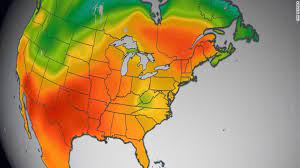
    The reality of climate change has hit hard over the past week with the deadly heatwave in the Pacific NW. The issue of how to combat rising emissions can no longer be kept off the front pages. On Friday 2nd Carbon Brief Daily reported that a frontpage story in the Times stated that “ministers have drawn up radical plans to reduce carbon emissions that would increase gas bills and the cost of running a car by hundreds of pounds a year”. They are proposing a carbon reduction scheme, copying the EU ETS plan to cover emissions caused by heating buildings and transport. The paper states that it “has been told that the prime minister does not want to include petrol in the scheme amid concerns that it would penalise motorists”, while the government “said last night that no decisions had been made”. This is the trouble with designing a regressive policy which will adversely affect most households. To be cynical is this a ‘leak’ in the hope that a backlash will mean it can be scrapped? 

    On Sunday there was an editorial in the Washington Daily Post arguing why a carbon fee and dividend plan would be a far more effective means of mitigating climate change in the US than Biden’s current strategy. One of the authors, Republican nonogenarian James A Baker co-authored the 2018 Baker Shultz Carbon Dividends Plan (this is not the plan supported by CCL US but shares similar principles). 

    The editorial points out the elephant in the room in discussions about climate change mitigation. Republicans in the US are worried that Biden’s plans, based on limiting US fossil fuel production without any plan to affect the price of imports, will reduce its competitiveness with China….Most nations won’t risk their own economic well-being in the hope of reversing what is clearly a global problem……  A plan co-authored by Secretary Baker and the late George P. Shultz holds the key to placing market pressure on China and other nations to start doing their part. It would place a fee on all carbon emissions in the United States, an approach that most economists believe is the most efficient and effective way to reduce such emissions.

    But rather than giving that money to the federal government, all of the revenue from the fee would be returned to Americans in the form of a quarterly dividend. A household of four would receive $2,000 annually, enough to provide the vast majority of households with more money than they would pay in higher energy costs. As a result, this fee would not expand the federal government, and therefore should not be considered a tax.

    But it would incentivize the private sector to find new and better ways to reduce emissions. This is a far better route than forcing the United States to wean itself from fossil fuels (while other nations fail to do so) because it harnesses a set of critically important strategic assets of our country: our abundance of affordable and cleaner energy, and our unmatched powers of innovation. 

    It discusses the European Carbon Border Adjustment Mechanism (CBAM) plans  to place a tariff equivalent to the carbon price  on imports which have not had a price imposed in the country of origin – probably easier than trying to talk them into equally restricting their output!  It points out that…..The economic upside here is unmistakable. U.S. steelmakers, for example, are far more efficient in low-carbon production than their major global competitor, according to a recent study commissioned by the Climate Leadership Council. By applying a carbon fee to domestic and imported steel, U.S. industry would win across the board. Overall, the study found, the U.S. economy is 40 percent more carbon efficient than the world average, and nearly every U.S. industrial sector enjoys a carbon advantage over most of our key trading partners.

  • Time to Push BCAs?

    Time to Push BCAs?

    BCAs are currently quite a hot topic. The Sun recently reported that UK Secretary of State for International Trade (Liz Truss) will promote them at the G7 meeting in June. BCAs are also a key component of the EU’s “Green New Deal” and may well be introduced by the EU from the start of 2023.

    So, perhaps this is the moment for us to promote one specific component of a carbon-fee and dividend scheme. Perhaps the time has come for a big push for BCAs. We could start by writing to our MPs to suggest they ask Liz Truss to engage with the free-allocations consultation. She may not even be aware of it and may not have yet made the link between BCAs and ETS free-allocations. Something like:

    Dear XXX

    As a constituent deeply concerned about climate change, I was delighted to see that our International Trade Secretary (Liz Truss) has become interested in Border Carbon Adjustments (BCAs, as reported by The Sun on March 30th). Could you possibly ask the Trade Secretary, on my behalf, if she is aware of the current Government Consultation on free allocations in the UK-ETS? Could you also ask her whether discussions within BEIS have looked at the option of phasing out free-allocations and replacing them by BCAs?

    Yours sincerely

    Further information on BCAs:

    Canada Laser talk on Border Carbon Adjustments (BCA)

    Current Developments in Domestic Climate Mitigation Measures (by WTO) – downloads powerpoint presentation

    BCAs – powerful if combined with just transition, article by OECD

    BCAs in the EU – report by European Roundtable on Climate Change and Sustainable Transition

    Article by Centre for Strategic and International Studies

  • The Zero-Carbon Commission

    The Zero-Carbon Commission

    The Zero Carbon Campaign (ZCC) is about as different from CCL as two organisations, with similar aims and acronyms, can get. Both organisations campaign for carbon pricing and both organisations have concluded that a carbon-dividend is vital to ensure fairness and effectiveness. But CCL is a grass-roots band of citizens whilst ZCC was set up by the founder of OVO Energy and is a commission of experts (including a former chair of the Climate Change Committee and the current executive director of Greenpeace UK). This is not a criticism of ZCC; there’s strength in diversity.

    In September 2020, ZCC published its “White Paper”—a report on How Carbon Pricing Can Help Britain Achieve Net Zero By 2050. There’s much in there for CCL to cheer including a call for the UK government to announce “a clear carbon-price trajectory”, to use the proceeds to “cushion rises in household bills” and to “investigate options for a multilateral border carbon adjustment”.

    ZCC is not advocating 100% revenue recycling into a dividend, as CCL does, but this should not stop us making common cause with an organisation whose aims have far more similarities than differences with our own. The publication of the White Paper is also an opportunity for us to publicise “climate income” and CCL-UK as an advocate for that policy.

    So what happens next? ZCC are asking the public (and organisations) to sign their declaration and to lobby MPs (sounds familiar!) They’re also planning a media campaign to pressure the government to adopt carbon pricing ahead of COP-26 in Glasgow. This will be centred around a “mock COP” to run in the second week of November this year, i.e. a year ahead of the real COP. These are all things we, in CCL, would support or are already doing.

    I’ve been asked, by CCL’s steering group, to keep an eye on developments and to involve CCL where appropriate. I’ll try to keep you all up to date and please feel free to contact me, through the comments below, if you want to be involved too.

  • A good argument for Carbon Fee and Dividend by a Free Marketeer

    A good argument for Carbon Fee and Dividend by a Free Marketeer

    Ambrose Pritchard, writing in The Telegraph criticises the proposed Democrat Green Deal as being a dirigiste policy with an ulterior motive of ‘fuelling’ the trade war with China. He gives a very cogent explanation of the mechanics of carbon fee and dividend and why he prefers this market led method of carbon pricing. He also argues why the dividend should go directly to consumers…

    Mr Biden’s new age Gosplan is not to my taste. Should the Democrats be pledging to install 500 million solar panels and 60,000 wind turbines over the next four years? Is such dirigiste planning the American way?

    The laissez faire way is to set a carbon price that ratchets up predictably, letting business respond to the price signal, and letting Schumpeterian competition find its own answers. All former chairmen of the Federal Reserve and a cast of economists of all ideological stripes have backed HR 763, a bipartisan House bill for a carbon tax and dividend.  

    It starts at $15 a tonne and ratchets up $10 every year until CO2 emissions are almost eliminated. The money raised is rotated back into people’s pockets. The higher the carbon price, the bigger the cheque, and the poor do best. 

    Needless to say, Ursula von der Leyen’s variant in Europe aims to siphon off its carbon tax to fund the Commission’s apparatus. The EU seems to have learned little from the gilets jaunes and the sociology of revolt. 

  • How Carbon Fees would save British Steel

    How Carbon Fees would save British Steel

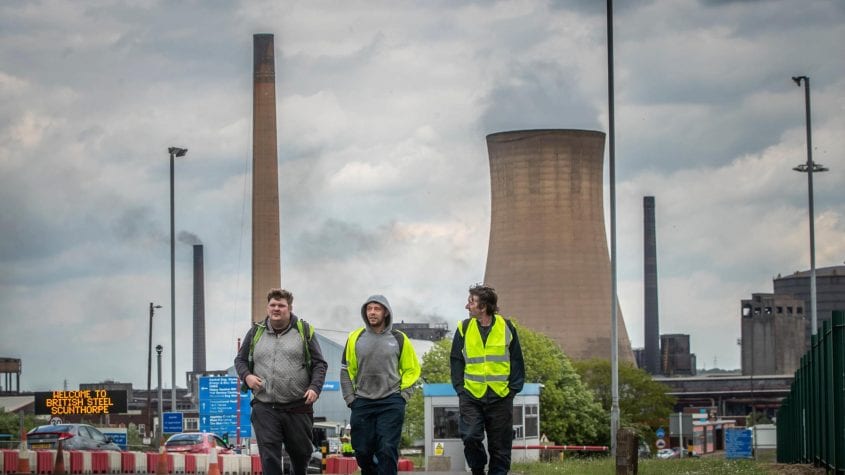
    British Steel, an icon of the industrial heritage of the very nation that initiated the Industrial Revolution is on the brink of collapse. Its decline since the 1970s has been precipitous and it is now facing the closure of its last plant in Scunthorpe.

    Carbon taxes have been squarely blamed for driving up costs that the business can no longer bear and so it faces collapse. While this is superficially true, the real root cause is the failure of the market to properly price carbon from all sources, domestic and foreign. It’s a failure of the design of the European ETS. In short, this is not a case of too much carbon pricing – it’s a case of not enough.

    A Carbon Fee with effective border adjustment taxes would simultaneously action four key goals:

    • properly price steel, factoring in its carbon emissions,
    • incentivise reductions in carbon emissions from the sector
    • protect the British heavy industry from dirty, unfair competition, and
    • preserve, and indeed nurture, a vital strategic industry

    20th Century Policy for a 21st Century Problem

    The immediate problem for British Steel is the bill for Carbon Credits that has come due under the European Emissions Trading Scheme (ETS). The company has sought a loan of £100M from the U.K. government to pay this bill but it has no obvious sources of revenue to repay the loan, making propping up British Steel a very risky prospect from the taxpayer’s point of view.

    But ultimately, the pressure is coming from British Steel’s inability to raise enough revenue from sales due to the crushing competition that the company faces from cheap imports of steel into the EU from China.

    Not only is the steel industry in China directly subsidised, it actually enjoys a huge and undercounted subsidy due to the inadequate carbon pricing that exists in China. The price is almost negligible at present (roughly $5.50/tCO2 vs $28.50/tCO2 in the EU) and more importantly, most of the economy, including the steel industry, is exempt altogether.

    So while the ETS is trying to correct the market failures associated with the externalised costs of fossil fuels used in European production, there is no accounting for the massive emissions embedded in imported steel coming from China, leaving European manufacturers at a huge disadvantage.

    Border taxes level the playing field for carbon

    A border adjustment tax on carbon imposes tariffs on imports from countries that are not adequately pricing carbon themselves. This immediately strips out the cost advantage of imports from dirty economies associated with underpriced carbon in those economies. In fact, as the carbon price rises, these tariffs dominate the cost of such dirty imports and they become completely uncompetitive.

    Furthermore, to keep the market fair in the opposite direction, for exports from the clean producer to the high-carbon economy, the relevant carbon fees are refunded to the producer on export, removing the advantage that the dirty producer has, even in their own territory.

    What about the effect on consumer prices?

    A common objection to tariffs is that they raise consumer prices, often punishing those who can least afford higher prices. This is an especially prevalent concern in a time of incipient trade wars and the economic distress they cause.

    This is where the Dividend element of the Carbon Fee & Dividend policy comes in. All revenues from the carbon pricing, whether from domestic producers or tariffs on imports are fully distributed to citizens. This not only protects low and middle earners, it actually benefits them overall.

    Price ALL carbon to rebuild British industry

    The U.K. has made significant progress decarbonising its energy supply and just recently it boasted the longest period of coal-free energy production since 1882. But at present, the U.K., and relatively low-carbon economies like France, have no way to fully monetise their cleaner power sector when it comes to international trade.

    Plentiful cheap clean energy combined with fees on imported carbon can reverse the decline of the British steel industry

    This can be directly addressed by a Carbon Fee & Dividend policy, and when it is, it will give shelter to traditional industries that are being unfairly eroded by dirty imports and will provide a huge boost to investment in new, clean industrial production that can leverage the burgeoning low-carbon energy sector that the U.K. is building.