Category: Blog

  • A message of hope from Citizen Climate International….

    A message of hope from Citizen Climate International….

    The outcome of COP 27 in Sharm El Sheikh treated the consequences – loss & damage, but not the cause – fossil fuels.  It was a huge victory to get loss and damage funding. This is to be celebrated.

    We cannot rest yet. There is no mention of oil and gas in the COP 27 outcome. The math is simple: more fossil fuels burned means more adaptation and loss and damage costs. This victory is unbalanced.  Anything that is unbalanced is doomed.

    We have hope because it’s not the COP sessions that change the world, it’s the actual work that goes on after governments have made those promises.  We have hope because we have been working behind the scenes and monitoring progress at the G7, G20, the United Nations, the World Bank and the IMF for several years now. We have hope because our volunteers are doing fantastic work around the world. We have hope because we know that the tracks have been laid for a resilient and equitable future and the train is about to leave the station. Consequently, we have hope because we know that the transformation of the economy will not be linear.  

    Change is coming. Find out how you can help and spread hope.

    Hope

     And an added thought for fun. We need to name if we are to tame it:

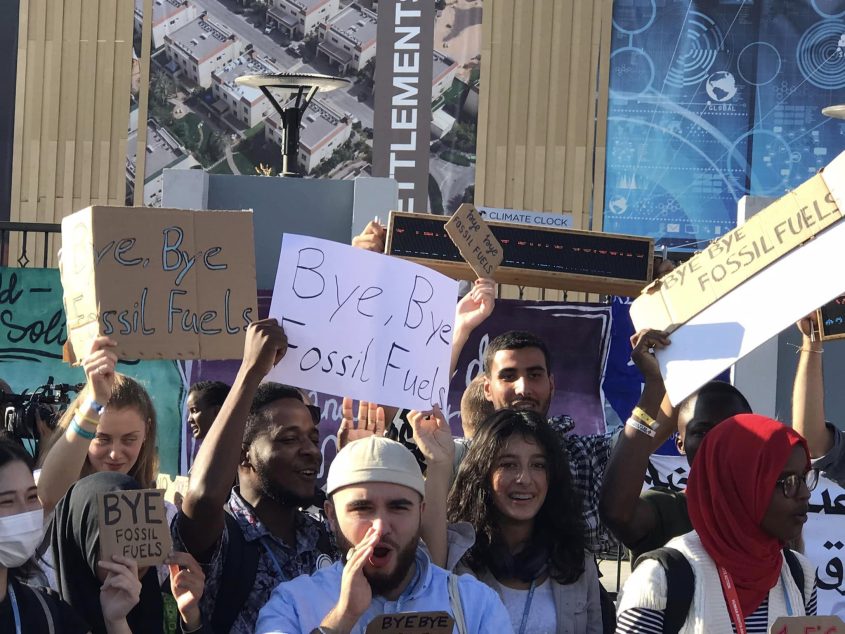
    Bye bye fossil fuels

  • Woodhouse Colliery decision makes no sense – climate and economy will lose

    I have just sent a quick email to my MP about the decision to approve Woodhouse Colliery. He, thanks to the efforts of our local CCL group, understands and supports the case for Climate Income but I would have written even if I was not campaignong for Climate Income. The decision makes no sense even under ours and Europe’s current carbon pricing system (ETS).

    I am perturbed that the Woodhouse colliery has been approved, ostensibly to prevent the need to import coking coal, yet….There are only two potential customers for this coal in the UK: Tata Steel and British Steel. Yet Chris McDonald, chief executive of the Materials Processing Institute, said earlier this year: “British Steel have said they cannot use the coal from this mine because the sulphur levels are too high. Tata Steel have said if the coal were available, then they may or may not use a small amount. There isn’t anyone in the steel industry who’s calling for the mine.” 

    This retrograde step delays the industrial changes needed to move away from fossil fuels and will decrease our future competitiveness. We will also lose the credibility and leadership we gained at COP26 with the Powering Past Coal Alliance. As the future for steel is acknowledged to be smelting using green hydrogen and electrolysis for recycling steel we would do better to invest in green hydrogen. According to the LGA Cumbria could have 6,000 new jobs by 2030 with the right investments in green infrastructure, with 600 in Copeland.

    BEIS has had a 250 million Clean Steel fund since 2019 and an Industrial Energy Transformation Fund, lets use it to get ahead of the game and future proof our industry. Germany and Sweden are already piloting the technology, we will fast lose any competitive edge if we stick to this outdated technology the industry doesn’t want. With a sensible carbon pricing mechanism like Climate Income the price of coal coking of steel would also soon lose any competitive advantage, and it may even do so under ETS. The decision could be called Luddite, or at least extremely short sighted!

    I think we need to show our MPs that the decision was foolhardy to say the least. Send them an email or maybe a Christmas card to show that bad decisions on energy and industrial strategy will always come home to roost!

  • How many more institutions and politicians, let alone protesters, have to say we need to keep fossil fuels in the ground?

    How many more institutions and politicians, let alone protesters, have to say we need to keep fossil fuels in the ground?

    On October 25th the Lancet published its annual Countdown on Health and Climate Change report in which it stated that world governments are “putting the health of all people alive today and future generations at risk” by locking in dependence on fossil fuels.

    On the same day a Unicef report warned that funding has to be increased to protect children and vulnerable communities from worsening heatwaves; a day later the United Nations reported that current NDCs will lead to 2.5C warming and that only 24 out of 193 nations had updated their plans as asked at COP26. The UN Secretary General, in an interview with the BBC stated that countries should not invest in more fossil fuels…. 

    This is the defining issue of our time, nobody has the right to sacrifice international action on climate change for any reason.……..We need to tell the truth. The truth is that the impact of climate change on a number of countries in the world, especially hotspots, is already devastating”.The most stupid thing is to bet on what has led us to this disaster.

    Also on the 25th Alok Sharma asked our government to ‘explain and demonstrate’ how new oil and gas development can align with the Net Zero target. The short answer is it can’t and it needn’t if investment in fossil fuels were to go to renewables and insulation projects instead. Meanwhile it was reported that BEIS data shows “that with existing and near-fully planned policies, the UK is projected to emit nearly double the amount of pollution as it should do under its 2030s goals”.

    There are signs that the government’s environmental policy may be taking steps in the right direction with the appointment of Therese Coffey as Secretary of State for Environment, Food and Rural Affairs and Rishi Sunak declaring that the moratorium on fracking will be retained.

    Climate Income of course would send the clear message that it pays to decarbonise whilst protecting households from rising fossil fuel costs during the transition.

    With change in the air now may be as good a time as any to write to your MP and, if you haven’t already done so, submit a response to the Net Zero Consultation. Thanks to all the members who have done so already, it does make a difference!

  • Members of the European Parliament called for a European Fossil Fuel Non-Proliferation Treaty today.

    Members of the European Parliament called for a European Fossil Fuel Non-Proliferation Treaty today.

    In an amendment to the European Parliament Resolution on COP27  today EU members of Parliamentarians Call for a Fossil Fuel Free Future asked European states to work on developing a Fossil Fuel Non-Proliferation Treaty. They are calling for European states to:

     End expansion of new fossil fuels projects

     Phase out current production in line with 1.5ºC

      Enable a global just transition for every worker, community & country.

    and:

    “phase out fossil fuels as soon as possible”

    “halt all new investments in fossil fuel extraction”

    “end fossil fuel subsidies”

    Parliamentarians Call for a Fossil Free Future is a global network of close to 500 legislators from every continent (including the UK) who have called for “new international commitments and treaties, complementing the Paris Agreement, to address the urgency of a swift and just transition away from fossil fuel energy”

    Marie Toussaint, French Member of the European Parliament said….

    “It was absolutely crucial, ahead of the COP27, to remind European leaders that they cannot use the ongoing energy crisis as an excuse to deepen our dependency on fossil fuels. The call made today by the European Parliament to adopt a Fossil Fuel Non-Proliferation Treaty and phase out all direct and indirect fossil fuel subsidies by 2025 must now be heard by the European Commission and Member States. The EU must also acknowledge its climate debt, and the fact it has been a major polluter, responsible for greenhouse gas emissions over centuries. We have to find ways, within this non proliferation treaty, to ensure justice at global level for those who won’t earn the money they could through fossil fuel extraction.”

    Risa Honiveros, Senator of the Philippines and initiator of the Parliamentarians’ Call for a Fossil Fuel Free Future , stated

    “In recent months, parliamentarians on every continent have called for new international commitments and treaties to address the urgency of a swift and just transition away from fossil fuel energy. It is great to see this gaining momentum with the proposed Fossil Fuel Non-Proliferation Treaty which has now been called for by the President of Vanuatu, the President of Timor-Leste, the Vatican and now the European Parliament.”

    The main European Parliament resolution on COP27 also stated that it …

    Welcomes the fact that several EU trading partners have introduced carbon trading or other carbon pricing mechanisms and invites the Commission to further promote this and similar policies on the global scale; looks forward to a speedy agreement with the Council on the proposal for a socially just EU carbon border adjustment mechanism that includes an effective carbon leakage mechanism and to its effect of pushing a global carbon price, which will contribute to reducing global carbon emissions and to the achievement of the Paris Agreement goals;

    It also acknowledged the need for Loss and Damage finance….

    Welcomes the fact that the Glasgow Climate Pact underlines the importance of adaptation and the need to scale up action to enhance adaptive capacity, strengthen resilience and reduce vulnerability to climate change; notes in this regard that 47 countries submitted Adaptation Communications or National Adaptation Plans in the last year, and expects other countries to submit their Communications in line with the Paris Agreement; welcomes the creation of a new Glasgow Dialogue on Loss and Damage which should focus on funding arrangements to avert, minimise and address loss and damage associated with the adverse impacts of climate change;

    Citizens’ Climate International has welcomed the Fossil Fuel Non-Proliferation Treaty initiative which was launched on September 2020 and has been working with them since 2021.

  • The IMF says that the world needs to mitigate climate change now using a form of Climate Income, the cost of procrastination will only get higher…

    The IMF says that the world needs to mitigate climate change now using a form of Climate Income, the cost of procrastination will only get higher…

    A Guardian report on the 5th October examines the predictions of a chapter in the current IMF half yearly World Economic Outlook report. It  has a chapter titled Near-Term Macroeconomic Impact of Decarbonization Policies. The chapter models the cost of delaying the tackling of climate change until ‘conditions are right’ and current global inflation has lowered; an IMF blog about it is titled.. ‘Further Delaying Climate Policies Will Hurt Economic Growth…The transition to a greener future has a price—but the longer countries wait to make the shift, the larger the costs’. 

    The blog argues that concerns about current cost have been perceived to be more real than the nebulous future threat of climate change, causing decades long procrastination …’despite overwhelming evidence that any short-term costs will be dwarfed by the long-term benefits (with respect to output, financial stability, health) of arresting climate change (October 2020 World Economic Outlook; IPCC 2022).  

    The current crisis has heightened the fear that climate mitigation would just raise inflation further and led to the claim that we need to double down on fossil fuels for energy security (as in the UK). Concurrently a Global Energy Monitor report states that…

    New oil and gas development in the North Sea could produce up to 984 megatonnes of CO2 equivalent and contribute to the United Kingdom exceeding its carbon budget for 2023-2037 by a factor of two.

    The IMF’s modelling uses the revenue from gradually rising greenhouse gas taxes returned in part to households to drive the transition….

    To assess the short-term impact of transitioning to renewables, we developed a model that splits countries into four regions—China, the euro area, the United States, and a block representing the rest of the world. We assume that each region introduces budget-neutral policies that include greenhouse gas taxes, which are increased gradually to achieve a 25 percent reduction in emissions by 2030, combined with transfers to households, subsidies to low-emitting technologies, and labor tax cuts.

    It argues that the policy, if started now would have a modest decline in GDP and rise in inflation, slowing global economic growth by 0.15 to 0.25% and rising inflation by 0.1 to 0.45; but if delayed until 2027 with the rationale of waiting until inflation is down the effect on the global economy would be worse….

    Is it reasonable to wait—as some have proposed—until inflation is down before implementing climate mitigation policies? We ran a scenario delaying implementation until 2027 that still achieves the same reduction in cumulative emissions in the long term. The delayed package is phased in more rapidly and requires a higher greenhouse gas tax, since a steeper decline in emissions is necessary to offset the accumulation of emissions from 2023 to 2026.

    The results are striking. Even in the most favorable circumstances when monetary policy is credible and the transition to decarbonized electricity is rapid, the output-inflation trade-off would rise significantly; GDP would have to drop by 1.5 percent below baseline over four years to drive inflation back to target. Delay beyond 2027 would require an even more rushed transition in which inflation can be contained only at significant cost to real GDP. The longer we wait, the worse the trade-off.

    The take home message? ….if the right measures are implemented immediately and phased in gradually over the next eight years, the costs will remain manageable and are dwarfed by the innumerable long-term costs of inaction.

    .

  • Heartening news from the UN General Assembly -Vanuatu leads the way in signing the Fossil Fuel Non-Proliferation Treaty

    Heartening news from the UN General Assembly -Vanuatu leads the way in signing the Fossil Fuel Non-Proliferation Treaty

    Despite the General Assembly being preoccupied with the war in Ukraine there was a groundbreaking moment when Vanuatu became the first nation state to sign the Fossil Fuel Non Proliferation Treaty.

    Press Release from the Fossil Fuel Non-Proliferation Treaty Organisation.

    NEW YORK CITY – 23 September 2022

    Today, Vanuatu called on other nations to join them in establishing a Fossil Fuel Non-Proliferation Treaty, a proposed international mechanism that aims to explicitly address the source of 86% of CO2 emissions that cause climate change: fossil fuels. 

    The President of Vanuatu His Excellency Nikenike Vurobaravu made the historic call on the floor of the UN General Assembly, making Vanuatu the first nation-state to call for an international mechanism to stop the expansion of all new fossil fuel projects, and manage a global just transition away from coal, oil and gas. The President of Vanuatu will also launch their call for a Treaty to phase out fossil fuels on stage at the 2022 Global Citizen Festival in Central Park this Saturday.

    In his speech, President Nikenike Vurobaravu said: “Every day we are experiencing more debilitating consequences of the climate crisis. Fundamental human rights are being violated, and we are measuring climate change not in degrees of Celsius or tons of carbon, but in human lives. This emergency is of our own making. Our youth are terrified of the future world we are handing to them through expanding fossil fuel dependency, compromising intergenerational trust and equity. We call for the development of a Fossil Fuel Non-Proliferation Treaty to phase down coal, oil and gas production in line with 1.5ºC, and enable a global just transition for every worker, community and nation with fossil fuel dependence.”

    The call for a Fossil Fuel Treaty has already been endorsed by more than 65 cities and subnational governments around the globe, including London, Lima, Los Angeles, Kolkata, Paris and the Hawai’i State Legislature. Recently the proposal has also been supported by the Vatican and the World Health Organisation.

    Significant momentum has built behind the proposal in recent months and Vanuatu’s call for a Fossil Fuel Non-Proliferation Treaty is a pivotal step toward building formal diplomatic support for the proposal. Similar moments were pivotal in the legal pathway toward treaties to manage the threats of nuclear weapons and landmines.

    This historic call doubles down on Vanuatu’s commitment to climate action, following their submission earlier this month of one of the world’s most comprehensive climate targets under the UN. Vanuatu has also been leading a campaign to have the International Court of Justice issue an opinion on climate justice and human rights, which paves the way for a new era of international climate policy focused on equity and justice and addressing the biggest drivers of the climate crisis – coal, oil, and gas.

    Vanuatu, an already carbon-negative country that absorbs more emissions than it produces, is rated the country most at risk of natural disasters according to the United Nations. Countries on the frontlines of this crisis have been calling for urgent, tangible action on climate as they face the impacts of climate change and sea level rise in real-time. 

    Brianna Fruean, a Pacific Climate Warrior and 2022 Global Citizen Prize Winner said: “Vanuatu’s call today is a vital investment in our future. They’ve heard the call from our youth that there’s no future for us in fossil fuels and listened. It’s time for other world leaders to do the same”

    Pacific leadership has been essential to the international approach to climate change. Vanuatu’s call for an international framework to manage a just transition away from fossil fuel production sends a very strong message of hope, determination and urgency, both globally and regionally to Australia and New Zealand. 

    Kalo Afeaki, Pacific Climate Warrior from the Kingdom of Tonga, said: “Fossil fuels did this, and if we continue to burn them, we will see more islands in the Pacific, islands like my home of Tonga disappear. We need countries to be bold, because we have run out of time. The future scares me – we need to phase out fossil fuels, we need countries to endorse the Fossil Fuel Non-Proliferation Treaty and we need them to do so now.”

    Mary Gafaomalietoa Sapati Moeono-Kolio, Pacific Treaty Champion, New Zealand Climate Action Network Board said: “By calling for a Fossil Fuel Non Proliferation Treaty, Vanuatu has once again showed the world the Pacific’s climate leadership. The treaty will be a way forward and will complement the goals of Paris to limit emissions by cutting off supply and accelerating the Just Transition. There is no other way to 1.5 – the world must now respond.” 

    This historic first call reinforces the global momentum around the proposed Fossil Fuel Non-Proliferation Treaty. For the past two years, the proposed Fossil Fuel Treaty has gained support from thousands of civil society organisations, major cities, hundreds of Parliamentarians, Nobel Laureates, Indigenous peoples, trade unions, faith leaders, youth activists and health professionals. Now the proposal has been made by Vanuatu within the international policy arena.

    Here’s hoping the call to other states to follow will be heeded, hopefully supported by carbon pricing policies which make decarbonisation the logical path.

  • UN General Assembly to discuss a just solution to Loss and Damage reparations.

    UN General Assembly to discuss a just solution to Loss and Damage reparations.

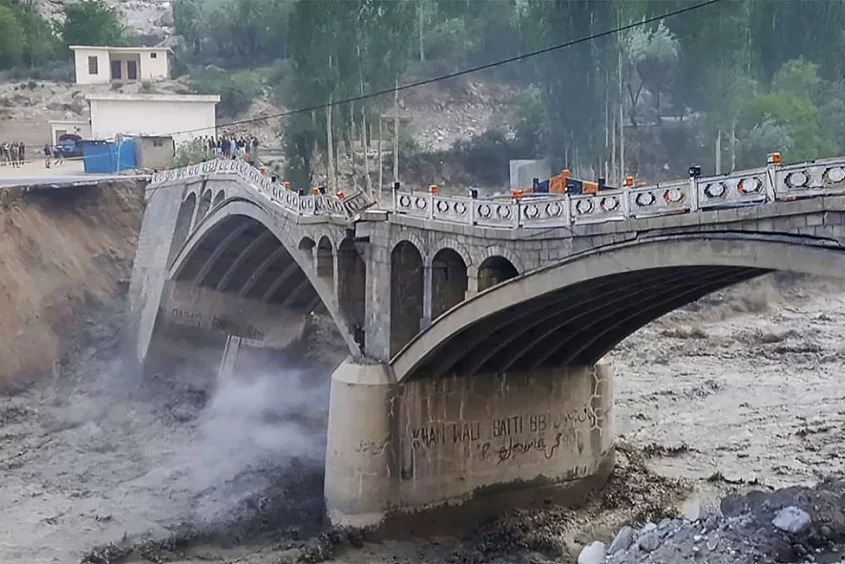
    Worldwide adverse weather events this summer have reinforced the moral imperative of Loss and Damage funding, in particular the damage caused by flooding in Pakistan, a nation which contributes less than 1% of worldwide greenhouse gas emissions.

    Last year there were several papers which argued for the solution of a global Climate Income policy to level the playing field between those who have historically benefited from fossil fuels and the global south. Oxfam is also interested in the concept. On Monday the 19th September the Guardian reported that a discussion paper has been prepared for the UN General Assembly meeting this week to ask for a ‘climate related and justice-based global tax’, possibly raised by a global carbon tax.

    Antigua and Barbuda have also submitted a discussion paper to the Assembly, warning that increasing sea and air temperatures in the Caribbean could create a superstorm within years that would wreak £7.9bn of damage in the island nation alone, six times its annual GDP. Walton Webson, Antigua and Barbuda’s ambassador to the UN and chair of the Alliance of Small Island States, said: “[We] deserve to live without the looming fear of debt and destruction. Our islands are bearing the heaviest burden of a crisis we did not cause, and the urgent establishment of a dedicated loss and damage response fund is key to sustainable recovery. We are experiencing climate impacts that become more and more extreme with each passing year.”

    Here’s hoping that the discussions will be productive; at the very least that an agreed framework for the delivery of Loss and Damage funding can be agreed at COP27, if not sooner, and ideally that the case for a socially just global carbon price will be heard and agreed!

  • Oxford University report argues that switching to renewable energy would be as good for the pocket as the planet.

    Oxford University report argues that switching to renewable energy would be as good for the pocket as the planet.

    The report titled Empirically grounded technology forecasts and the energy transition derives from a collaboration between the Institute for New Economic Thinking at the Oxford Martin School, the Oxford Martin Programme on the Post-Carbon Transition, the Smith School of Enterprise & Environment at the University of Oxford, and SoDa Labs at Monash University.

    Professor Doyne Farmer told BBC News that.. “Even if you’re a climate denier, you should be on board with what we’re advocating…..Our central conclusion is that we should go full speed ahead with the green energy transition because it’s going to save us money,” ($12tn by 2050!). The report cites examples of cost predictions made by the IPPC and in the UK by Philip Hammond which it claims are erroneous and have been a deterrent to investment. 

    The report states that scaling up green technologies (solar and wind) will continue to drive down their costs. Why not also encourage the investment needed by putting a steadily rising price on the carbon content of fossil fuels to reflect their true cost to society and further encourage the uptake of renewables, returning the revenue to the populace to compensate for the rising prices of said fossil fuels during the transition period, aka Climate Income?

  • Three former UNFCCC Executive Secretaries speak out.

    Three former UNFCCC Executive Secretaries speak out.

    On the 1st June three former UN climate chiefs, Christian Figueres (2010-16), Yvo de Beor (2006-10) and Michael Zammit Cutajar (1991-2002) wrote a joint article in the Guardian. They state that in February the world’s governments endorsed the IPPC report on Impacts, Adaptation and Vulnerability and thus the statement that…

    “The cumulative scientific evidence is unequivocal: Climate change is a threat to human wellbeing and planetary health…. Any further delay in concerted anticipatory global action on adaptation and mitigation will miss a brief and rapidly closing window of opportunity to secure a liveable and sustainable future for all.” 

    Despite this the trajectory of current worldwide climate policies would lead to a temperature rise of between 2.7C and a catastrophic 3.6C above pre-industrial levels. Governments can’t act as if other crises such as health, poverty and security can be tackled whilst ignoring the climate crisis, they are interlinked. Perhaps, they argue… 

    If science has not persuaded most governments to act, perhaps economics will. The IPCC provides clear evidence that societies will be more prosperous in a world where climate change is constrained, than in one left to burn. In the energy sector, evidence of the zero-carbon transition is all around us. Wind and solar generation shows compound growth of about 20% a year and is cheaper almost everywhere than the alternatives. Electric car sales doubled between 2020 and 2021.

    Unless one is invested in fossil fuels, there is now no reason not to take the clean energy path. Many corporate actors understand the need for early action on this front. But governments still need to incentivise the transition. The evolving Just Energy Transition packages may yet offer an investment pathway that can accelerate deployment in emerging and developing countries. Corporate action towards other targets such as reduction of methane emissions, also needs to be encouraged.

    Carbon pricing, we might add, would reinforce the argument for decarbonisation if it applied in a way that enables forward planning and enhances the economic well being of the majority of people, as with Climate Income.

  • Growing interest in the merits of carbon pricing in general and Climate Income in particular as the old arguments against it are losing ground….

    Growing interest in the merits of carbon pricing in general and Climate Income in particular as the old arguments against it are losing ground….

    It seems appropriate to be writing about a blog by an Oxfam researcher on this Jubilee weekend as the biblical purpose of Jubilee years was to release the indebted and restore their land to them. Climate change is a symptom of global economic and social injustice. In the debate about solutions carbon pricing is often criticised as a regressive and ineffectual policy favoured by those who want to keep the economic status quo – of course supporters of Climate Income know better! 

    James Morrissey, Senior Researcher at  Oxfam US recently wrote a blog titled – The best answer to climate change – or a regressive policy set to fail? A guide to the arguments over carbon pricing.  Morrissey has highlighted the issues about current carbon pricing policies which are also acknowledged by proponents of Climate Income…….

     IT’S CLEAR THAT CURRENT CARBON PRICES ARE TOO LOW

    Before we get to the arguments about whether carbon pricing can work, it’s essential to point out that carbon prices are currently inadequate to address climate change. In the vast majority of cases, prices are too low, and not applied to enough of the economy to drive decarbonisation at the rate necessary. The graph below shows how prices are generally below $50 per tonne of CO2 (they need to be closer to $100/tCO2) and only cover 15% of the global economy (they need to be at 100%). Despite these problems, it’s notable that carbon pricing is seeing increasing uptake over time – with more and more countries adopting prices and more of the global economy under a price.

     CARBON PRICING DOES NOT AFFECT EMISSIONS

    First is the argument that placing a price on carbon does not affect emissions. The empirical literature doesn’t support this claim. Numerous empirical studies of carbon pricing, using a variety of methods, demonstrate that carbon pricing has reduced emissions. There is some question over whether the emissions reductions have been large enough, but this really comes down to what you consider “large” and what sort of reductions might be expected at what prices. In general reductions in emissions have been small, but significant, especially considering the low prices in place.

    IT WON’T BE ENOUGH BY ITSELF TO TACKLE CLIMATE CHANGE

    The second argument against carbon pricing’s effectiveness is that alone, it is inadequate to tackle climate change, because consumers don’t behave like economists assume: as rational cost minimisers. For example, people don’t just buy the cheapest car for their needs; they buy cars based on ideas of status and brand loyalty, among others. This is true and uncontroversial, we need more than price signals to move consumers. However, this argument is also something of a straw doll: most of the literature on carbon pricing acknowledges that carbon pricing will need to be complemented with other policies if it is to be effective in averting climate catastrophe. To this end, advocates of a carbon price who suggest it’s the only policy we need should be viewed with scepticism. 

    Note that CCI doesn’t call for Climate Income to be a stand alone policy and it has not been implemented as such in the countries like Canada which have adopted it thus far.

    IT WILL HURT THE POOREST PEOPLE WHEREVER IT’S IMPLEMENTED

    A big concern around carbon pricing is that increasing the cost of energy derived from fossil fuels will drive regressive impacts.

    Since energy is central to the functioning of the global economy, and we currently generate around 83% of primary energy from fossil fuels, a carbon price will make almost all goods in the economy more expensive. Because low-income groups tend to spend a greater portion of their income on energy-intensive goods, a carbon price will have a disproportionately large negative impact on their well-being compared to wealthy households – making the policy notably regressive.

    However, a huge advantage of carbon pricing is that the price also generates revenues. Importantly, wealthy groups tend to consume more energy-intensive goods than low-income groups (even though they spend a smaller proportion of their income on these goods). What this means is that, despite regressive cost-side impacts, you can use the revenues to make carbon pricing substantially progressive. There are a number of ways to do this, but the simplest is to just return all the revenues to everyone, equally (ie on a per capita basis). Doing so would result in low-income populations receiving more than they pay in increased prices, while the opposite would be true for wealthy populations. (My emphasis).

    Morrisey does point out that the policy has to overcome public antipathy to the concept of increasing taxation, which also makes the policy easier for opponents to criticise than less visible regulations and subsidies. He argues, however, that these alternative policies also encounter opposition and are no more capable of solving the problem of climate change on their own than is carbon pricing. He concludes that if there is some momentum for carbon pricing NGOs should support it with the caveats that ….

    The revenues produced by carbon pricing must be used to effectively address all regressive impacts created by the price. Prices must either be set high enough to drive ambitious emissions reductions or, if prices are to start low and increase over time to overcome political opposition, the process for increasing prices needs to be automatic and insulated from political push-back. (My emphasis).

    Carbon pricing can be effective but, by itself, it will not be enough to address climate change. Any carbon price will require complementary policies. The most important will relate to addressing other market failures (such as the need for public investment in research and development) and addressing network problems (such as supporting electric vehicle charging infrastructure), but will also include policies for numerous markets where price signals are insufficient to shift behaviour.  

    Along with the recent reports in Nature and by the Autonomy think tank, this blog and the related Oxfam primer on carbon pricing show growing support for the concept that a Climate Income policy will not only alleviate climate change but also the gross inequalities impeding sustainable development in the Global South. 

    Finally I must mention a very apposite blog by fellow Citizens’ Climate Europe member Brigitte Vangerven about the idea that protecting the climate requires sacrifice. …

    Pricing pollution will make polluting products more expensive than clean products. The price difference will make people and companies choose the clean alternatives. It will greatly accelerate decarbonisation and the widespread deployment of clean alternatives. The proceeds are used to support the people in the energy transition.

    Everybody receives a Climate Income. Most households, especially low and mid incomes are better off or break even through this policy.

    It is simple, transparent, just and effective, and I hope that for many people it will dispel their reservations.

    This makes it possible to implement an ambitious climate policy, that will receive broad support from the people. There is no longer a conflict.