Author: Michael Rudge

  • How Carbon Fees would save British Steel

    How Carbon Fees would save British Steel

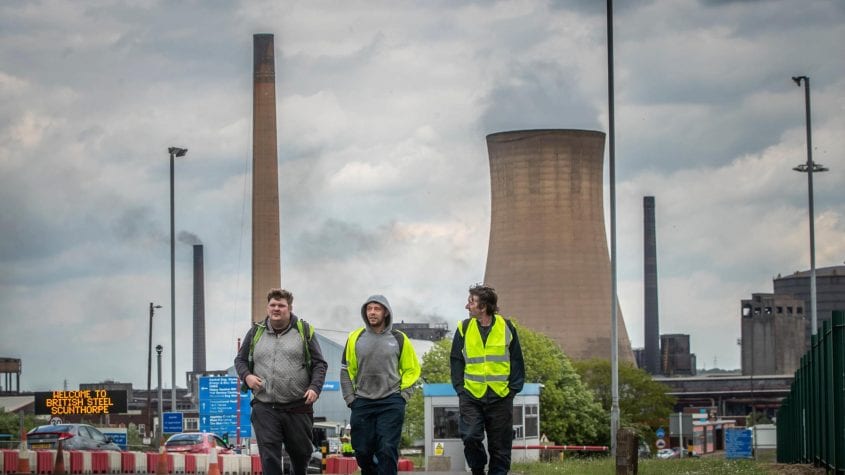
    British Steel, an icon of the industrial heritage of the very nation that initiated the Industrial Revolution is on the brink of collapse. Its decline since the 1970s has been precipitous and it is now facing the closure of its last plant in Scunthorpe.

    Carbon taxes have been squarely blamed for driving up costs that the business can no longer bear and so it faces collapse. While this is superficially true, the real root cause is the failure of the market to properly price carbon from all sources, domestic and foreign. It’s a failure of the design of the European ETS. In short, this is not a case of too much carbon pricing – it’s a case of not enough.

    A Carbon Fee with effective border adjustment taxes would simultaneously action four key goals:

    • properly price steel, factoring in its carbon emissions,
    • incentivise reductions in carbon emissions from the sector
    • protect the British heavy industry from dirty, unfair competition, and
    • preserve, and indeed nurture, a vital strategic industry

    20th Century Policy for a 21st Century Problem

    The immediate problem for British Steel is the bill for Carbon Credits that has come due under the European Emissions Trading Scheme (ETS). The company has sought a loan of £100M from the U.K. government to pay this bill but it has no obvious sources of revenue to repay the loan, making propping up British Steel a very risky prospect from the taxpayer’s point of view.

    But ultimately, the pressure is coming from British Steel’s inability to raise enough revenue from sales due to the crushing competition that the company faces from cheap imports of steel into the EU from China.

    Not only is the steel industry in China directly subsidised, it actually enjoys a huge and undercounted subsidy due to the inadequate carbon pricing that exists in China. The price is almost negligible at present (roughly $5.50/tCO2 vs $28.50/tCO2 in the EU) and more importantly, most of the economy, including the steel industry, is exempt altogether.

    So while the ETS is trying to correct the market failures associated with the externalised costs of fossil fuels used in European production, there is no accounting for the massive emissions embedded in imported steel coming from China, leaving European manufacturers at a huge disadvantage.

    Border taxes level the playing field for carbon

    A border adjustment tax on carbon imposes tariffs on imports from countries that are not adequately pricing carbon themselves. This immediately strips out the cost advantage of imports from dirty economies associated with underpriced carbon in those economies. In fact, as the carbon price rises, these tariffs dominate the cost of such dirty imports and they become completely uncompetitive.

    Furthermore, to keep the market fair in the opposite direction, for exports from the clean producer to the high-carbon economy, the relevant carbon fees are refunded to the producer on export, removing the advantage that the dirty producer has, even in their own territory.

    What about the effect on consumer prices?

    A common objection to tariffs is that they raise consumer prices, often punishing those who can least afford higher prices. This is an especially prevalent concern in a time of incipient trade wars and the economic distress they cause.

    This is where the Dividend element of the Carbon Fee & Dividend policy comes in. All revenues from the carbon pricing, whether from domestic producers or tariffs on imports are fully distributed to citizens. This not only protects low and middle earners, it actually benefits them overall.

    Price ALL carbon to rebuild British industry

    The U.K. has made significant progress decarbonising its energy supply and just recently it boasted the longest period of coal-free energy production since 1882. But at present, the U.K., and relatively low-carbon economies like France, have no way to fully monetise their cleaner power sector when it comes to international trade.

    Plentiful cheap clean energy combined with fees on imported carbon can reverse the decline of the British steel industry

    This can be directly addressed by a Carbon Fee & Dividend policy, and when it is, it will give shelter to traditional industries that are being unfairly eroded by dirty imports and will provide a huge boost to investment in new, clean industrial production that can leverage the burgeoning low-carbon energy sector that the U.K. is building.


  • The Myth that Carbon Taxes hurt the Poor

    The Myth that Carbon Taxes hurt the Poor

    Carbon taxes are a much discussed mechanism for using market mechanisms to incentivise a transition to a zero-carbon energy from fossil fuels, exploiting the innovation and flexibility that markets can provide.

    However, detractors cite potential economic harm to those on low and middle incomes as a reason to avoid such action. Many such detractors turn out to be straight-up fossil fuel shills with no care whatsoever for the poor but who will use any arguments that come to hand to deflect policy makers from adopting a robust carbon tax.

    Carbon Fee and Dividend policy directly answers any such concerns, real or disingenuous, by turning carbon taxation into a progressive policy that actually redistributes wealth from the richest 20% to the poorest 40% while leaving the middle classes broadly unaffected.

    Carbon taxes win Nobel Prizes

    Carbon taxes have been found to be a highly effective and efficient way of driving the economy to adopt alternatives to fossil fuel energy. Notably, William Nordhaus of Yale University was been jointly awarded the 2018 Nobel Prize in Economic Sciences with Paul Romer for ‘integrating climate change into long-run macroeconomic analysis’.

    Nordhaus has proved prescient on the progress of CO2 emissions, writing in 1974, :

    I have performed a rough calculation of the atmospheric concentration of carbon dioxide… Assuming that 10% of the atmospheric carbon dioxide is absorbed annually (G. Skirrow), the concentration would be expected to rise from 340 ppm [parts per million] in 1970 to 487 ppm in 2030 – a 43% increase. Although this is below the fateful doubling of carbon dioxide concentration, it may well be too close for comfort.

    It turns out we are right on track to hit 487 ppm of carbon dioxide in 2030. In two papers (Nordhaus 1975, 1977), he laid the groundwork for what is now an entire field on the economics of climate change.

    Now, there is certainly valid criticism to be made at where Nordhaus and others would set carbon taxes to maximise global growth. Many believe that there is insufficient weight given to factors such as warming feedback and the fate of the poor global south and these are certainly issues of concern. Such concerns would lead to carbon taxes well above the $30/tCO2 that Nordhaus originally proposed. However, there is no doubt that Nordhaus has established carbon taxes as a powerful tool in how we re-shape the economy to prevent climate change.

    Clutching at straws and crocodile tears

    Of the various stages of climate change denial and resistance to action, one of the later symptoms is an unconvincing concern among opponents that imposing a carbon tax will hurt the poor.

    Such attacks coincidentally always seem to come from politicians and lobbying groups closely aligned with the fossil fuel industry and with a long history of denying the existence or risk of climate change in the first place. Such people rarely have a track record of championing high taxes or corporate regulation or social policy that could benefit the poor in other contexts so their concern here is somewhat uncharacteristic.

    But if we were to take their challenge seriously, do they have a point? Are carbon taxes bound to condemn the poor to further hardship?

    Well, unsurprisingly, it turns out the answer is no.

    Carbon Fee and Dividend is a progressive, redistributive policy

    The Carbon Fee and Dividend policy has 3 central features:

    1. Tax carbon on fossil fuels as they are sold into the economy
    2. Implement a border adjustment tax system to impose tariffs on imported goods that didn’t bear comparable carbon pricing
    3. Pay the revenues back to citizens as a flat per-head dividend

    Imposing a carbon fee and border adjustment tax does raise prices, especially for fossil fuel energy. According to a review of the policy (as proposed by CCL) by Wharton School Public Policy initiative:

    For the first year that a $15 per metric ton of CO2 carbon tax is implemented, the cost of gasoline would go up by 16 cents per gallon, natural gas by 19 cents per therm (a 7.4 percent increase), and electricity by 0.6 to 1.1 cents per kilowatt-hour (kWh), depending on whether its source is coal or natural gas.

    Seeing the whole picture

    So looking at this effect alone, you could be forgiven for imagining the poor suffering further under such a policy. But that’s before you apply a dividend. This is the secret sauce that turns the entire picture around, to the point that the poor become the main beneficiaries of the policy.

    According to a comprehensive study carried out by the International Institute for Applied Systems Analysis to model the effects of a carbon fee and dividend policy:

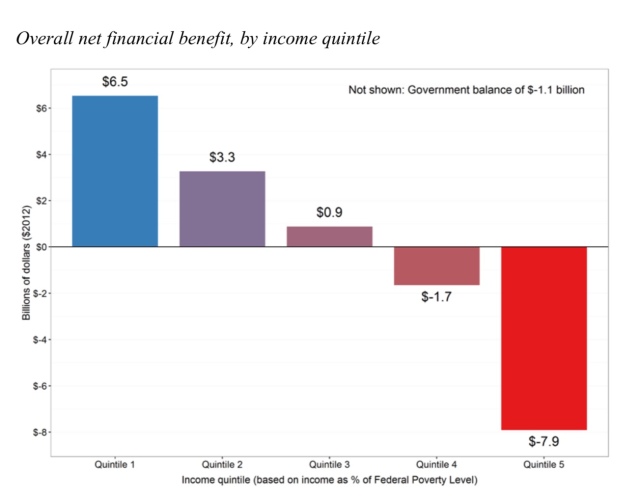
    Given these assumptions, the policy confers a net financial benefit on 54% of households nationwide (59% of individuals). The distributional effects are highly progressive. Ninety percent of households living below the Federal Poverty Level are benefited by the policy. The average net benefit in this group is $342 per household, equivalent to nearly 3% of pre-tax income. Overall, the primary distributional effect is to shift purchasing power from the top quintile to the bottom two quintiles of the income distribution

    This picture perhaps provides more instruction as to the motivation of rich, conservative fossil fuel lobbyists that oppose such a policy. Using the plight of the poor is nothing more that a disingenuous tactic designed to smear a progressive policy. For all those engaged in an honest debate, the facts are clear.

    Only the top 20% by income (those best placed to deal with it) experience a significant net cost from the Carbon Fee and Dividend, leaving the middle class broadly unaffected, while those on low incomes are net beneficiaries.

    A Carbon Fee and Dividend is therefore highly effective at mitigating entrenched inequality in society and gives the large majority of citizens a valuable stake in a fossil-fuel free future.

  • How international trade makes saints out of sinners.

    A common refrain among those who oppose action on climate change is something along the lines of “Why should we take action? It won’t matter what we do, if China doesn’t do anything.”

    There is a superficial logic to this statement, but it lacks a proper understanding of the root causes of many global emissions and how they are allocated to players on the international stage.

    First, it’s right to acknowledge that China is the world’s leading carbon emitter, a mantle that it took over from the USA in 2005 as it went through a huge expansion of its coal-fired power sector.

    During that period of rapid increase in China, countries like the U.K. congratulated themselves as they wound down their coal-fired power sectors and reduced emissions. Today, the U.K. government continuously touts its achievement of bringing down emissions down 44% since 1990.

    Sinners into saints

    However that is really only a conclusion that you can arrive at if you use very incomplete accounting.

    According to CarbonBrief,

    Even though domestic emissions have fallen 27% in the UK between 1990 and 2014, once CO2 imports from trade are considered this drops to only an 11% reduction. Similarly, a 9% increase in domestic US emissions since 1990 turns out to be a 17% increase when trade is included.

    This puts the performance of the US into even sharper contradiction with its political protestations about China’s emissions.

    While the US has seen tiny incremental reductions in its officially accounted emissions between 2014 and 2017, it exported 352 million tonnes of carbon emissions in just the year 2014. And even the most apparently virtuous stewards of nature are not immune to shaming when their trade in carbon emissions is evaluated.

    In one extreme case, Switzerland’s emissions are 209% higher (more than three times as large) once CO2 imports are taken into account, due to large imports and exports containing little in the way of embedded carbon.

    So if the U.K. and the US are effectively exporting their carbon emissions to other countries, then where are they being exported to?

    China acts like the advanced world’s Picture of Dorian Gray

    Well, no prizes for guessing, they are being exported to low-cost, highly carbon intensive manufacturing economies with China at the head of the list for pretty much every advanced country that is currently crowing about its progress on reducing emissions.

    In 2014, China imported 1.37 billion tonnes of carbon emissions from trading partners, equivalent to 13% of its total emissions. With a growing economy, growing connection to new markets with the One Belt One Road strategy and growing share of global trade, that number is likely to be rising.

    None of this is to say that China is anything but a grave threat to the climate and that it does not need to radically and rapidly reform its energy system. But when opponents of domestic action on climate change bleat about China being to blame for everything, remind them that China is in fact just doing our dirty work (literally) and that the true picture of responsibility for emissions shows that we lack a lot of the moral authority that we think we have.

    Border Adjustment Taxes protect domestic industry and lay bare true responsibility for emissions

    The Carbon Fee and Dividend model of carbon pricing includes a border adjustment tax that applies tariffs on imports from countries that do not sufficiently price carbon themselves. This restores proper responsibility for the emissions to the importer of the goods.

    It also has the effect of levelling the playing field for domestic producers bearing the downstream effects of carbon fees from unfair competition from overseas producers using cheap but dirty energy. Indeed as the domestic energy supply decarbonises and the carbon fees applied diminish, the domestic producer gains a bigger and bigger differential advantage against dirty imports as its carbon costs fall while border adjustment taxes continue to apply to carbon-intensive imports.

    Given the current trajectory of the energy system in the U.K. in contrast to that in China, Carbon Fee and Dividend provides a strong, fair and effective protection of the U.K. manufacturing sector against unfairly cheap competition from China, which has been exploiting its unsustainable practices for years to systematically erode U.K. manufacturing.

    CF&D is therefore a jobs- and economy-friendly measure for U.K. industry.