Author: Louisa Davison

  • Why is respect important?

    Why is respect important?

    A gender equality charity reported recently its research on the representation of women in parliament.

    Only one third of MPs are women with only three female cabinet ministers.

    The reasons for this are many and varied, such as sexism or an absence of maternity or compassionate leave and sexism, but one stands out as something we, as constituents and activists, can all do our bit towards countering: The Fawcett Society found that seven out of ten women would not enter politics because of perceived potential abuse or harassment.

    I have witnessed this myself – the anger shown towards our politicians on social media; in town councils where unpaid councillors have been shouted out, belittled and berated.

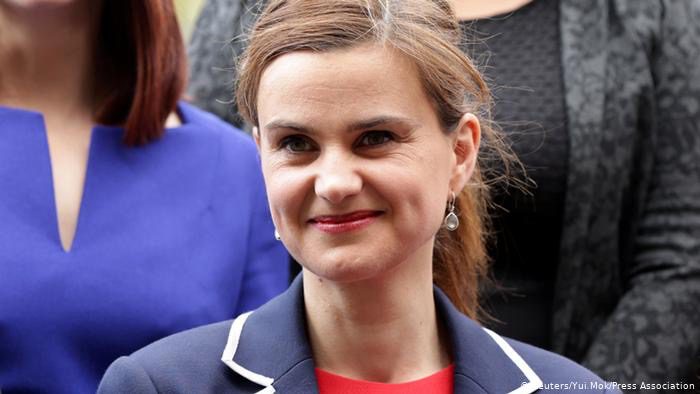
    And this isn’t just words, remember Jo Cox.

    What kind of elected representatives should we expect if we subject them to such an environment? Only the ones who can survive a deeply hostile environment and possibly thrive on the drama. Do we only want those sorts of people to represent us? Or do we want kind people, honest people, empathetic people? ‘Soft’ people?

    CCL’s key values include respect and gratitude for the work our elected representatives do, regardless of their politics. Our MPs are human beings who are there as our public servant and, as any of us do, respond better to praise.

    My MP has stated that his staff go through his correspondence and bin anything offensive – this was after the school meals extension vote (he voted along government lines, ie against) and constituents vented their passion in writing calling him ‘scum’ and the like. Despite my personal feelings on this matter, it’s important to work through those strong emotions before putting finger to keyboard. Your MP will far more likely respond to a reasonable counter argument, or a personal story as to the detrimental affect of such a vote. If you feel your MP is working off duff evidence, then direct them to fresh evidence. If you think their experience does not include the dire experience of not having enough food to feed their children, share that experience with them, kindly, and help build their empathy.

    And the best way to build empathy is for you to show empathy.

    Even better, write to them and politely ask for their reasons, get their best arguments out so you can respond to them with empathy. Another way to depersonalise an unhelpful stance – say, standing against climate change measures – is to ask them to pass your thoughts to the relevant minister and get back to you with an answer. Usually, if an MP values their position within their party they will vote along party lines, whipped or no, so it’s more relevant for them to pass comment along to the most senior minister with the power to affect policy.

    I aim to have a interesting conversation with my MP, one which invites their opinion and which they will be happy to continue.

    I hope that our brilliant and respectful members of CCL will be a reason that women (and people of all backgrounds, ethnicity and more) feel able to put themselves forward to do the important job of representing our interests in parliament.

    We can all do our bit in lowering the temperature over hot issues whether that’s in correspondence or on social media or personal interactions – increasing trust – but remaining firm – will get the job done faster than shaming and shouting – and help keep our MPs safe from harm.

    Everyone should feel able to do their job without fear of abuse and harassment, and that especially includes MPs.

    Pictured: Jo Cox

    If you haven’t already, I urge you to take part in our Motivational Interview training by Vince Schutt. He coaches us in the art of keeping on top of those reactive actions and how to open conversation up rather than closing it down, persuasion through trust.

  • 10 Point Plan for green recovery?

    10 Point Plan for green recovery?

    Ahead of the ratifying its Paris Agreement targets (NDCs – Nationally Determined Targets) on 12th December, the UK government have released its ’10 Point Plan for a Green Industrial Revolution’.

    Top of the list is power in the form of offshore wind, hydrogen and nuclear. Transport is highlighted through electric vehicles – and the headline-grabbing phasing out of combustion engines by 2030 – public transport, cycling and walking, and, the elusive ones, ‘Jet Zero’ and shipping. The big emitter, home and business heating, is covered via insulation and heat pumps. Finally, carbon capture and storage development, ‘nature’ (tree planting and conservation), and green innovation.

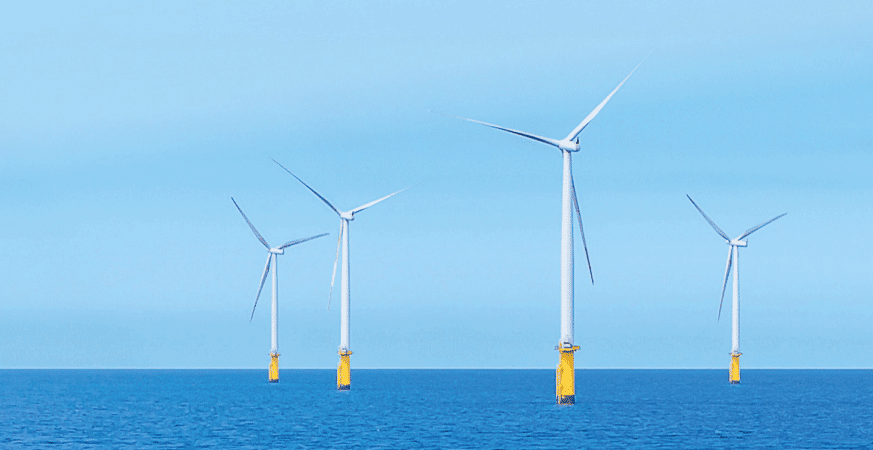
    10 Point Plan offshore wind image

    Conspicuous by its absence in the overview was no reference to ‘climate change’ and, instead, ‘net zero’. Also ignored was urban air pollution and, instead, the Conservative-friendly ‘nature’.

    Carbon brief covers the range of media reaction, and the tempering by the Chancellor’s spending review this week, which cut foreign aid (which may hamper beneficiary countries from investing in their own green revolution and sully the UK’s influence) and pledged a big spend on road building.

    Although Corunavirus may have caused emissions to fall for a while it now threatens the aeroplane’s major alternative, Eurostar, which is currently running at 1 percent of its usual capacity and is asking the government for the same emergency deal as airlines. Covid-19 is also, according to a government adviser in a meeting CCL attended this week, causing an amplification of short termism by government, who now approaches policy on a week-by-week basis – worrying for the kind of longterm vision required to fix climate change.

    Meanwhile, the Climate Coalition is drumming up support for its own Ten Point Plan, aimed at COP26 (but no mention of a carbon price) as is ZeroC which launched its declaration in favour of a carbon charge.

  • Avoiding a shock to the system

    Avoiding a shock to the system

    No system is perfect. Corvid-19 has shown us that. As Britain grinds to a halt, what would have happened if we had tried to carry on as normal as the work dried up, employees laid off with no pay, companies went bust, and no benefits or sick pay for days? Our High Streets could close for good during a terrible recession, led by the biggest fall on the stock markets since 1987. 

    And, thank goodness, despite that we have a government traditionally of low taxation and a small welfare state, there was a quick realisation that our free market economy – which has given us a safe, stable country – could not cope. It was time to throw in a lifebelt and shore up the weaknesses of the system: relaxing benefit rules, paying salaries.

    From a fiscally-Conservative point of view it works because people still have jobs and money to spend which protects growth.

    From a socialist or populist-Conservative point-of-view it works because it looks after people.

    Now, think about something else that’s killed millions of people, not only those with underlying health conditions but, in fact, has given people underlying health conditions.

    Of course I’m talking climate change and air pollution. These are caused by another failure of the system: encouraging that which creates monetary wealth irrespective of the poverty it causes to the environment and climate.

    To abate this problem, we could simply stop burning fossil fuels (and meat farming).

    But the Coronavirus crisis has shown that putting the brakes on the usual run of things shocks the market and throws it under a bus. You save the climate but chuck the world into chaos. People lose their livelihoods. Anxiety and poverty is rife. And the effect would quickly be temporary.

    So we can’t ban burning fossil fuels overnight, even though that may feel the obvious solution to desperate times. We need to make them redundant, make them a bad investment by easing them out of our economy and giving the market fair warning. Prices will go up so people need a financial cushion before more cheap clean energy comes online. And the fix would stick.

    It works because it protects the economy, it protects jobs and the people the economy is there to serve.

    This is the beauty of a Climate Income.

  • Claire O’Neill dumped as COP26 president

    Claire O’Neill dumped as COP26 president

    The first thing that came to mind when I heard Claire O’Neill (formerly Perry, formerly my MP and formerly the minister for clean energy) had been dumped as president for this year’s crunch UN conference on climate change in Glasgow (COP26) was they couldn’t cope with a ballsy woman. Or should I say a titsy woman?

    According to The Guardian:
    “She also issued a putdown to David Davis when he confused her with another female Tory minister, Caroline Nokes. Referring to Davis’s previous campaigning slogan, she is reported to have told him: “David, let me help you: Caroline is a C cup, I am a double D.”

    I remember the sexist vitriol she suffered in the papers, and her edgy outbursts about giving blowjobs to have a say (a quote you could source back to original female hero Ripley in movie Aliens from 1986, and that was probably taken from a real world quote). The embarrassment was not because they were rude but because they put the reality of a woman working in Westminster under a harsh spotlight.

    After all, the current PM and his closest allies aren’t strangers to public gaffs and causing upsets when it suits, and yet they survive.

    Claire has been often, it seems to me, at odds with her role and the establishment. Sometimes she would totally toe the Tory whip line, to protect her position it seemed, and other times she would stick her neck out and rebel, as she did for a time over Brexit.

    She is a hard working and often effective advocate for the climate, instrumental in the net zero legislation, and yet, as a minister, also supported fracking and voted for the third Heathrow runway.

    Is it harder for a woman in Westminster, and harder for anyone trying to have a meaningful family life, to stay true to personal values (and keep their job) in an apparently toxic atmosphere of Punch and Judy politics?

    Former Labour Minister Harriet Harmon recounted at Swindon Festival of Literature that bunking off from an important Commons vote was okay for an extra-marital liaison but not for her child’s birthday.

    When Claire took a sabbatical from her cabinet ministerial position earlier this year due to a family illness, she told me in a CCL local meeting that MPs had no working rights and this was the first time this had been allowed, and only possible with the support of the then PM, Theresa May.

    Fast forward a few months to Boris’ new regime and she found herself relegated to the back benches.

    Whatever the real story behind Claire’s COP26 sacking, the political system needs to be less brutal, more nurturing. These are the people whose job is to care about our interests.

    Fixing the climate isn’t about finding the most economical solution, though we at CCL have to sometimes employ this argument. It’s not about tackling climate change because doing nothing is the most expensive option. To really stop causing this problem now, and different problems in the future, we have to be capable of empathy; to care for and respect ourselves and each other and our liveable world.

    And we, at Citizens’ Climate Lobby, have to leave bitter thoughts at our MP’s door when exploring that crucial common ground, and act how we wish it to be. Our caring and respectful actions and words will help make it so.

    Louisa Davison is on CCL’s Steering Committee. These are her personal opinions and not necessarily the official opinion of CCL.

  • Who’s best for the climate in UK elections?

    Who’s best for the climate in UK elections?

    Number one priority?

    Where did climate change feature in manifestos, and how often was it mentioned?

    This is not an analysis of how realistic or effective their policies could be – we’ll leave that up to you to decide.

    The parties that seemed to best understand climate change and how it impacts every aspect of life, referring to it throughout their manifestos, were the Green Party, Labour and the Liberal Democrats.

    Also read our post on how each party fared on climate income.

    Joint 1st – Green Party of England and Wales
    Climate = first out of five headline priorities

    Primary mechanism to tackle Climate Change: Green New Deal
    First mention is the second sentence (after Brexit) then throughout.
    Priorities in order: Green New Deal, Brexit, Democracy, Quality of Life (inc NHS/education/crime), Taxation
    ‘Above all, the climate and environmental emergency rages from the Amazon to the Arctic. The science is clear – the next ten years are probably the most important in our history.’
    Net zero greenhouse gas emissions (GHGs) by 2030.
    Track record: a Green Bristol councillor secured the first declaration of a climate emergency; Brighton MP Caroline Lucas kick started the climate change debates in parliament this year.

    Joint 1st – Labour Party
    Climate = first out of five headline priorities

    Primary mechanism to tackle Climate Change: Green Industrial Revolution
    First mention – second paragraph in foreword (after Brexit) then throughout.
    Priorities in order: a green Industrial Revolution, public services, poverty and inequality, Brexit, internationalism (inc defense)
    ‘This is our last chance to tackle the climate emergency.’
    Net zero GHGs – unclear – energy by 2030, food by 2040
    Track record – Created the Climate Change Act in 2008 and set up the Committee on Climate Change, and entered the UK into the EU emissions trading system in 2003.

    Joint third – Liberal Democrats
    Climate = Third and eighth out of eight headline priorities

    Primary mechanism to tackle Climate Change: Green Revolution
    First mention – first paragraph in foreword (after Brexit) fifth paragraph in introduction (after Brexit), then throughout.
    Priorities in order: Brexit, Economy, Education, Green Society/economy, Health care, fair society, rights and equality, better politics, international
    ‘We will deliver a ten-year emergency programme to cut emissions substantially straight away, and phase out emissions from the remaining hard-to-treat sectors by 2045 at the latest.’
    Net zero GHGs – by 2045 ‘at the latest’
    Track record‘Thanks to Liberal Democrat policies in government, the UK has made major strides in cutting emissions from power generation…’

    Joint Third – Plaid Cymru
    Climate = first of five ‘key priorities’

    Primary mechanism to tackle Climate Change: Welsh Green Jobs Revolution / Renewables Revolution
    First mention: although the Green Jobs Revolution is the number one priority, climate change itself is not mentioned until page 25, and then in detail on page 63.
    ‘We understand that climate change, together with the global collapse of biodiversity, is the defining challenge of our time.’
    Priorities in order: Green jobs, caring, families, housing, crime.
    Net zero GHGs: carbon-free / 100 percent self-sufficient in renewable energy by 2030
    Track record: While they were MPs, Plaid Cymru’s team recently received a 100% rating in the Guardian’s analysis of MPs’ records on 16 indicative climate votes between 2008 and 2018, reflecting our long-standing support for ambitious long-term climate targets.

    Fifth – Scottish National Party
    Climate = 10th out of 11 headline priorities

    Primary mechanism to tackle Climate Change: Green New Deal
    First mention: ‘Protect the environment’ is in the tenth paragraph; ‘climate emergency’ on page five.
    Priorities in order: Independence, Brexit, NHS, austerity, poverty/inequality, drugs, pensions, migration, devolution, climate emergency, Trident.
    Net Zero GHGs: latest 2045 ‘…a 75% reduction in emissions by 2030, net zero carbon emissions no later than 2040 and net zero of all emissions by 2045…’
    Track record: ‘Scotland has the world’s most ambitious emissions reductions targets in law’

    Sixth – Conservative and Unionist Party
    Climate = 16th out of 17 priorities

    Primary mechanism to tackle Climate Change: Environment Bill
    First mention – a reference to carbon emissions in the foreword, point six (‘My guarantee’, after Brexit, NHS, police, immigration, and education) and second page of the introduction. ‘Climate change’ is first mentioned specifically on page 12.
    Priorities in order: Brexit, ‘your priorities’, Britain’s potential (including the Environment Bill), international (including climate change), ‘put you first’.
    Net zero GHGs: 2050
    ‘…[dementia is] one of the ‘grand challenges’ that will define our future along with the impact of climate change or artificial intelligence.’
    ‘We will also prioritise the environment in the next Budget…’

    Track record: first in the world to enshrine in law a net zero GHG emissions target, established UK as the ‘world’s leader in offshore wind’, began the process for a Citizens’ Assembly for Climate Change, ‘doubled international Climate Finance.’

    Seventh – Democratic Unionist Party (Northern Ireland)
    Climate = 23rd to 25th out of 37 priorities

    Primary mechanism to tackle Climate Change: cleaner transport and cleaner air
    Priorities in order: NI Assembly, NHS, schools, economy, welfare, abortion and childcare, environment/agriculture/fishing, animal welfare, communities, crime
    First mention: net zero is mentioned in the manifesto summary, but not climate change specifically until page 18, and then only within the bounds of rural matters.
    Net Zero GHGs: net C02 by 2050

    Eighth – Brexit Party
    Climate = no priority

    Primary mechanism to tackle Climate Change: tree planting
    First mention – no mention
    Priorities in order: Brexit, political reform, investment, living costs, economy, immigration, NHS, education, housing
    ‘Invest in the Environment: in addition to planting millions of trees to capture CO2 we will promote a global initiative at the UN.’
    Net zero GHGs: no mention

    Want more?

    Carbon Brief – a very comprehensive manifesto comparison based on energy and climate change

    BBC – choose your beef and country

    Friends of the Earth – have your election candidates signed the climate pledge?

    Friends of the Earth Manifesto analysis has Labour on top

    Greenpeace analysis has the Green Party on top

  • Why the dividend?

    Why the dividend?

    This week, someone wrote to CCL UK, saying they would like to campaign for a carbon tax but wondered if the dividend was the best use of money.

    This is a great question – why isn’t the money raised used to subsidise, for example, public transport, or house insulation?

    Here’s a few ideas why and something to put in your letter to your MEPs (pick the ones which best fit with their political bent):

    • The dividend is really what CCL is all about – it will probably be impossible to have a high enough carbon tax to make a difference to emissions without the dividend. (It’s also important to say it’s one tool in a range of measures to tackle climate change, albeit a highly effective one which focuses on emissions.)
    • Politically – especially centre and right – raising taxes are unpopular. The dividend ensure that, overall, taxes do not go up.
    • Raising carbon taxes – especially for vehicle petrol, heating and home energy – will cause a lot of impoverishment to the most vulnerable in society. The dividend is divided equally amongst the population and is, effectively, a redistribution of money. This will mean low and middle income families are better off as they buy less stuff and therefore have a lower carbon footprint. So they will receive more in dividends than they will spend on the inevitable higher prices, thus protecting them from impoverishment.
    • As a result, it rewards those who keep their carbon footprint low.
    • It does not judge people on their personal choices, or expect everyone doing their bit to change the world (it won’t) but pushes business and the economy into zero carbon options.
    • It taxes technology on emissions, rather than what looks like the shiny new technology toy or on a limited range of emissions (diesel cars?), thus encouraging true zero greenhouse gas solutions.

    Write to your MEPs about supporting an EU-wide Climate Income AKA carbon fee and dividend for our latest campaign.

    climateincome.org

  • Net Zero – what next?

    Net Zero – what next?

    Charles Appleby, of Saving Our Planet, give his thoughts on the next step for Net Zero

    The UK Government commitment to Net Zero Greenhouse gas emissions by 2050 is very welcome.

    This higher commitment by the UK Government is an important first step by a major economy towards tackling the global Climate Emergency. This the right thing to do morally, and the only decision that stands a chance of protecting the future of our children and future generations.

    Much further work is required internationally: by national governments, local governments, businesses and individuals across the world in order to limit global warming to the 1.5C, as recommended by the IPCC. 

    But here is the work still required by the UK Government:

    • Emissions could be cut by 40 percent in just over a decade by the introduction of Carbon Fee and Dividend. Please could all parties give this detailed consideration for early implementation both in the UK and all major economies.
    • To achieve Net Zero earlier, ideally, than 2050
    • To monitor progress against this commitment, at least annually, to ensure the UK keeps on track to meet the 2050 target, and by meeting milestones, particularly for 2030
    • To ensure this commitment is not diluted at the 5 year review point
    • The UK Government needs now to work to get others countries to make a similar – or stronger – higher commitment, particularly the EU and other of the 19 countries in the Carbon Neutrality Coalition
    • The UK Govt must also work with UNFCCC to encourage other major countries also to make a higher commitment
    • As reductions in CO2 emissions begin to be achieved, it is critically important that these translate into real reductions in the use of fossil fuels – so it is critical for governments to find effective ways to restrict fossil fuels from being taken out of the ground.
    • Measures need to be put in place to ensure UK industries do not face unfair competition from overseas companies operating under less strict CO2 emissions regulations
    • It is important that the UK achieves Net Zero without using International Carbon Credits
    • Instead, tree-planting and other nature-based solutions to climate change should not be used to remove ADDITIONAL amounts of CO2 emissions.
    • As part of early quick wins for this policy of Net Zero emissions, the UK Government needs urgently now to stop fracking and to stop coal mining in the UK
    • The UK should also look to remove subsidies on fossil fuels – and to use this money towards the cost of transition to a low-carbon economy
  • What next for the climate emergency?

    What next for the climate emergency?

    So the first rule of attending a conference on climate change and what we can do about it is not to add to the carbon emitted by getting there. So, Milly, Dave and I all traveled up by train to Lancaster to the Climate Emergency conference.

    (I love trains but at £118 for the journey, it isn’t something everyone can afford, which is part of the problem in weaning people off their fossil fuel driven cars. Thank you to the regional Transition Network and Transition Marlborough for paying both mine and Milly’s train fares.)

    The purpose of the conference was, in a nutshell, what happens after declaring a climate emergency? “Declaring a climate emergency is the easy part – what do we do next?” said Cllr Colin Glover, leader of Carlisle City Council.

    It was incredibly well attended by 350 plus local councillors, activists, scientists, researchers, businesses and so on. A fantastic effort and the kind of next step response required by all the climate emergencies declared by local authorities.

    What were our takeaways?

    Milly (Transition Marlborough):

    • This is urgent. This is Huge. Nothing is more important at the moment. Viable, practiced solutions exist and they must be put in place and scaled up now. The biggest barrier to action is ineffective communication. Be courageous and act now.
    • Attendees were mostly white, middle-aged, middle class – how can we attract more diversity? Or are other people approaching this problem in other ways?

    Me:

    • MPs are aware of the climate change issues but don’t feel under pressure from constituents to do anything about it, so said Dr Becky Willis, researcher for Lancaster University and the Green Alliance. “Not enough constituents talk to their MPs about climate change,” she said. Actually I’m going to repeat that in capitals because it’s top of the CCL list of essential actions and anyone can do this and make a difference.
      NOT ENOUGH CONSTITUENTS TALK TO THEIR MP ABOUT CLIMATE CHANGE
    • We need a template list of actions for local councils to clean up their emissions, which includes what’s in their control as well as when they need to influence central government. I was hoping the conference would provide this but, really we’re still at first base on that front. So, for instance, how can a local council influence local farming and agricultural land use? And we’re back to influencing national policy and EU policy (for the time being at least) and councils having a strong Local Neighbourhood Plan.
    • Once again I was struck by how important the school climate strikes have been in grabbing the attention of young people and turning them into activists. There’s our future leaders in the shape of young people like twelve year old Ada Wood from Carlisle, who read from her inspiring, impassioned and very well composed letter to a minister who tried to belittle her concerns about climate change raised in BBC’s Question Time. “Twelve years is more like two years [referring to the IPPC report]. It takes time to set things up,” and, “I want you to act like your house is on fire – because it is.”
    • “Wouldn’t it be great if the weather report would also tell us how much money the wind was making for the economy?” – Paul Allen from Zero Carbon Britain on wind-generated power.
    • When you wake up in the morning think: will what I am doing today matter in 100 years to wildlife and people? – Cllr Simon Pickering, Stroud District Council
    • The science and the emergency is important, but we need to look after ourselves so we don’t become frozen by the extent of the problem.

    Dave (CCL UK / professor of geophysics / expert science witness for Wiltshire Council):

    • There’s lots of source material out there to work out a plan of action.
    • Find an example of success and good practice – Stroud District Council have gone a long way down this road and they aren’t that far away from our area, Marlborough. They have reduced their council emissions by 32 percent and were carbon neutral in 2015.
    • Councils need to set emission reduction targets in their local neighbourhood plan, to legally lock in commitment. They can review an existing local plan if there is a ‘substantial change’ – declaring a climate emergency counts.
    • Local government by law have to consult Natural England when they make changes to their local neighbourhood plan.

    My job at the conference was to connect with other activists and spread the word about carbon fee and dividend. Local governments can clean up their act – and, of course, this is very important, especially with regards public transport and energy generation – but, ultimately, there is only so much they can do.

    To change things substantially and quickly enough we need central government to create the right kind of carrots and sticks. Like carbon fee and dividend.

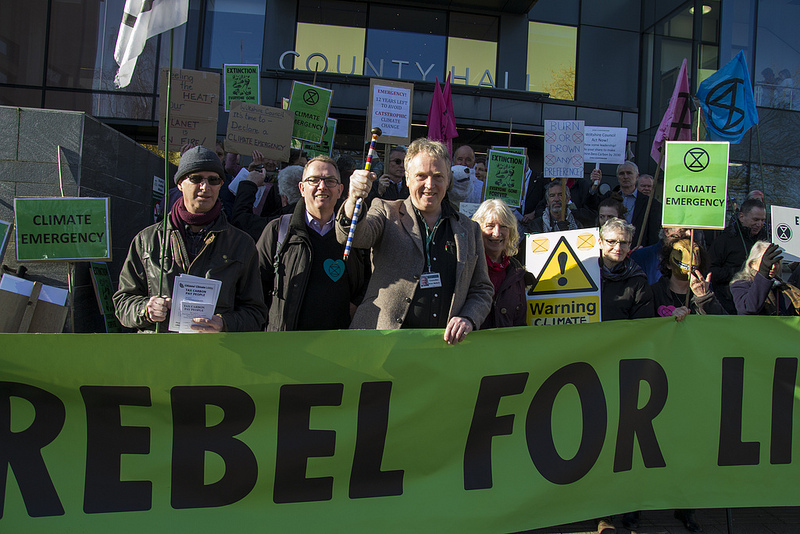
    The Climate & Environmental Emergency Conference took place at Lancaster Town Hall, 29 March 2019, and was organised by Climate Emergency UK.

  • Zero carbon London plans unveiled

    Zero carbon London plans unveiled

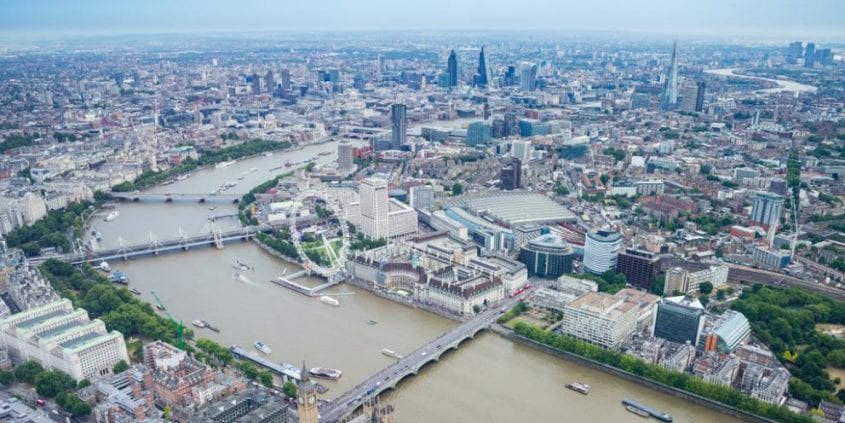
    An ambitious plan for London was unveiled today by Sadiq Khan – ‘Zero carbon London – a 1.5 degree compatible plan’.

    Stating the UK was in a climate emergency, the plan aims to bring down carbon dioxide emissions by 40 percent by 2022, and to zero from transport and buildings by 2050.

    But London can’t do it alone – national government is called upon to give more power and funding to London to make it happen.

    The plan rests on the energy efficiency of home and business buildings, decarbonisation of power from the national grid as well as more support for clean energy within the community, and converting Londoners to zero carbon public transport, walking and cycling.

    The plan includes actions points for all level, from government, GLA, business, London boroughs and Londoners themselves.

    Thanks to climateaction.org for the tip off.

  • Letter to Claire Perry MP re carbon pricing report

    Letter to Claire Perry MP re carbon pricing report

    Here’s an example of a letter which could be written regarding the carbon pricing report:

    (more…)