Author: Ed Atkinson

  • A Voice from Our History –  The 1833 Slavery Abolition Act

    A Voice from Our History –  The 1833 Slavery Abolition Act

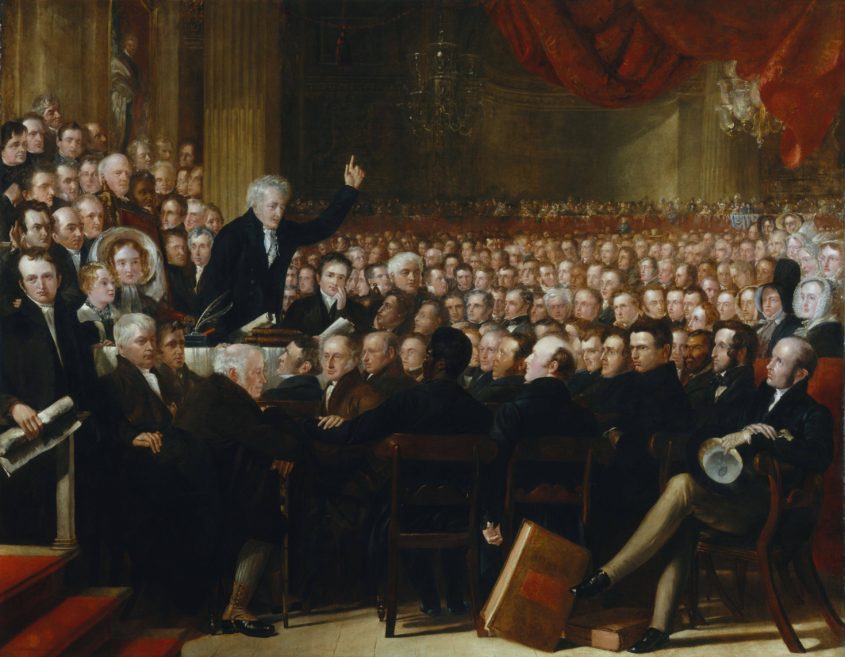
    On Friday 1st August 1834 the Slavery Abolition Act, which had been passed the previous year in Parliament, came into force.  The gradual freeing of slaves throughout the British Empire began and was complete by 1838 (except in India which was a few years later).   The Act was principally passed not for economic or political reasons, but because the majority of the British electorate came to conclude that the facts and ethics of slavery made the case for Abolition compelling.

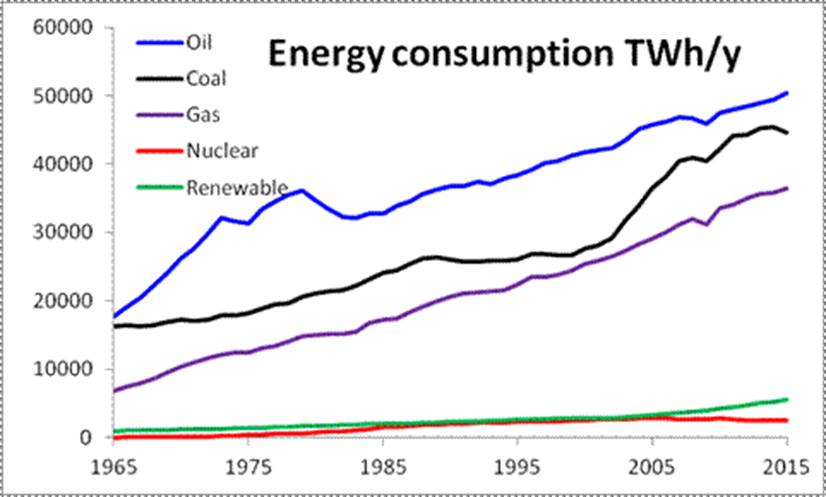
    There are parallels here with global campaigns to cease high carbon emissions to our atmosphere.  Certainly, action equivalently drastic to Abolition is required because emissions are still rising despite decades of international agreements and targets.  The graph below shows how energy use is still rising and is dominated by fossil fuels.  Brutal action is required, not more of the same.  We can celebrate achievements so far, as the abolitionists could celebrate the 1807 Act for the Abolition of the Slave Trade, but we know that the big step is still ahead.
    A simple parallel are the Deniers: people who cannot accept the evidence.  In the case of slavery, they maintained that slaves were not fully human or that they benefited from slavery or that slavery was sanctioned by God.  With hindsight we now know that such views can be overcome.  A yet more encouraging parallel, I trust, is success after perseverance; the Abolitionists must have overcome much disheartenment.  While the campaign started with the Quakers centuries before 1833, the active movement that eventually saw Abolition began with Clarkson & Wilberforce in about 1787.  The Abolition Act received its third reading just three days before Wilberforce died.  All the many supporters made longstanding efforts as well, one example was denying themselves sugar, which was a principal product of the Caribbean slave estates.   Campaigning lasted nearly 50 years.

    Artwork from the famous campaigning medallion manufactured by Abolition supporter Josiah Wedgwood at his own expense
    Artwork from the famous campaigning medallion manufactured by Abolition supporter Josiah Wedgwood at his own expense

    It seems that gradually the case was won, and what appeared like something that would never happen suddenly became reality.  The turnaround seemed to be prompted by two events – the Christmas 1831 slave revolt in Jamaica, with subsequent Parliament inquiries, and the Reform Act of 1832, which widened the electorate and so brought more abolitionists into Parliament.  All those feelings of hopelessness, after nearly 50 years of campaigning without the main prize, were blown away.  I imagine that the strong measures required to address global warming comprehensively will be implemented suddenly, prompted by the hard work of long term campaigning together with events that change circumstances quickly and unexpectedly.  A policy such as the CCL one, which can attract cross-party and popular support, is ideal for this circumstance.

    Another parallel is the need for imagination to understand and have empathy over the harm we are producing.  There were no BBC reports from the slave plantations, even photography was not yet invented.  The public just had drawings, lithographs and reports to help them imagine the harm.  For us we also have to trust those giving us the information on the harms that global warming will produce for people, especially in less economically developed countries, and for the environment.   If Michael Buerk could report from a famine in 2084 clearly caused by our carbon emissions, as he did report from the 1984 Ethiopian famine, then action would be immediate and robust.

    We can again be encouraged by a further parallel, the massive vested interests, especially for those in power.  The British upper class were those benefiting from exploiting the misery of slaves and were also those able to exercise power in Parliament.  In fact, as we will see, this extended down to many in the middle class as well.  In order to introduce robust action to address climate change, we must overcome the vested interests of the fossil fuel multinationals, the lobbyists, even the SUV owners and the frequent flyers.  1833 informs us that this can be done.  Again the CCL policy of Fee and Dividend is well suited because it does not outlaw the SUV owner or oil boss in the same way that slave investors were treated sensitively in the 1830s.

    The abolitionists must have needed to overcome the fears for the economy, which may have been seen as depended on slavery.  A notable example is the Lancashire cotton industry dependent on slave-produced cotton from the American deep south.  Of course, that was no longer a part of the British empire in 1833, but the fears would still need to be addressed.  The Director of the Centre for the Study of the Legacies of British Slave-ownership at University College London, Dr Nicholas Draper, claims that as many as one fifth of wealthy Victorian Britons derived all or part of their fortunes from the slave economy and that up to 10 per cent of Britons who died in the 18th century had benefited.   A sufficiently robust policy to address climate change that can be shown not to adversely impact the economy is required.  The CCL policy of a Carbon Fee and a Dividend to households has been shown to prompt healthy growth in the economy and to produce the massive reductions in carbon emissions we require.

    My final parallel is one I find most interesting.  In 1834 there was a need to compensate slave owners and this was implemented.  In fact the compensation of Britain’s 46,000 slave owners was apparently the largest ‘bailout’ in British history until the bailout of the banks in 2009.  A total of £20million was passed on as compensation, which was 5% of the British GDP at that time.  Interestingly, records show that many normal middle class people living in Britain, not in the slave colonies, were included as they had invested in plantations holding slaves, or had inherited them.  This total compensation was vast and itself a potential threat to government finances.  £15million had to be borrowed from banks, and amazingly, it was only finally paid back fully in 2015.  Today the fossil fuel companies hold assets fully declared in their accounts: the value of the reserves of oil, gas and coal that they hold.  Many of our pension funds have investments tied to those assets.  But if we are to limit global warming, those reserves must largely stay unused in the ground.  They are estimated to be worth about $20 trillion which is about 25% of the global economy of $80 trillion p.a.   It is a vast sum, that could be addressed over time rather than the sudden need for compensation after Abolition.

    The example of Abolition, shows that this can be accommodated.  An analysis has concluded “The amount of money available to the compensation fund reflects how much influence elite Victorians had on the UK government of the day. The fiscal injection of cash into the economy had textbook consequences including an increase in GDP, high inflation and rising asset prices. It is an interesting economic event from Great Britain’s distant past, albeit one generated from the horrors of slavery.”

    Once the will is there and a policy fair to all is on offer, then change can occur amazingly rapidly.  We have that policy, let’s make sure people know about it when the time arrives.

  • Cheap Energy – Problem or Opportunity?

    Cheap Energy – Problem or Opportunity?

    I was looking at my electricity bill the other day and I noticed how little of it was paying for actual energy. In fact only 41% of what SSE charged me went to

    Buying the energy our customers use

    It is mostly admin, distribution, profit and tax or quasi-tax (5% VAT and 12% government ‘schemes’). It made me wonder how much of the money I pay for electricity gets spent on fuel and how much on everything else. I chose the worst polluting fuel source from the point of view of climate change – coal. If all my electricity came from coal, how much of the 15.77p per kWh that SSE charges me is to pay for the coal needed? I give the calculation and my sources below*, it comes to a meagre 10% of the cost. That is not much more than the SSE profits of 6% and a lot less than the 17p going to government.

    So when I buy electricity I am not buying the energy so much as the cost of converting the energy into electricity and delivering it to my home. Like when I buy a sculpture I am not really buying the marble but what people do with it.

    Now having bought our electricity how expensive really is it? Let’s take a villain-of-the-piece for many green minded people – the tumble dryer. Imagine a single parent struggling with both time and money. Even if they efficiently hang out their washing and retrieve it without having to dodge showers, then it will still take, say, a quarter of an hour to process the equivalent of one load in a tumble dryer. And even if they are on a salary as low as the National Minimum Wage (£7.83 per hour from 1.4.18) their cost in terms of time is roughly £2. So that is a minimum for the cost of the clothes line. If they already have a tumble dryer, say it came with the flat they are renting, what is the cost of using it instead? This helpful website gives the cost and carbon footprint of such things. It comes to about 40p. So should they lose the £2’s worth of their stretched time or spend 40p? The low price of electricity massively incentivises them to use the tumble dryer.

    In terms of the overall economy, we can consider the price of the actual energy here, i.e. the coal needed to dry the clothes. That comes to only 10% of the 40p, or 4p. So it is 4p against £2. That is why we rely on energy so much, it is so amazingly cheap. It is one reason why global CO2 emissions are relentlessly rising, as we find new ways and people to use energy we find that the cost of the fuel is often a minor factor. Imagine if we decided to increase the cost of the coal to the level required to make the washing line equivalent to the tumble dryer? We’d need to add £1.60 to the cost of the coal which is a 4000% increase from the 4p.

    I found another example when I looked at my water bill. Thames Water charge me £2.08 to supply me with 1m3 of water and then clean it up again after I’ve used it. Surely that is a tiny cost compared against the cost of heating up the water to bath or shower temperature? I did a quick calculation and actually, No, the costs are only another £2, about the same.

    So the cost of the energy seems to be a problem for addressing climate change. Is it also an opportunity? It certainly is in this respect, the change from fossil fuels to other energy sources may cause some energy price increases, which is a reason why politicians are worried about implementing the severe changes required. But a significant increase in energy price leads to only a small increase in the price of goods and services. Even if the 4p coal cost imbedded in the tumble dryer example was doubled to 8p, it would still be small compared against the 40p electricity cost and extremely small compared against the £2 in labour.

    Let’s see how this impacts on coal because it is such a large contributor to CO2 emissions. The problem is that nearly all the energy in coal is released by combining carbon atoms with oxygen atoms to make CO2, while for gas there are up to 4 hydrogen atoms with each carbon atom, and these release energy making benign H2O. So anything to de-incentivise coal will be a quick hit on global CO2 emissions. As recently as 2013 about 85% of the CO2 emissions associated with electricity generation in the UK was due to burning coal. But coal was only 40% of sector. A doubling of the cost of coal has a large impact on driving out this harmful fuel and yet that would not strongly affect even the struggling parent using his tumble dryer, and that is the opportunity.

    The Citizens’ Climate Lobby’s policy of a rising fee and dividend is perfectly matched to this opportunity. In contrast to the taxes on my SSE bill, the fee is on carbon, not on electricity. The Fee is targeted at precisely the problem. Gas, with its lower carbon impact, will be taxed at less than a third of the rate and initially will take over from coal even at the low levels of the Fee in the early years. This will lead to enormous and early carbon reductions. Later, as the fee increases, gas will become uneconomic compared to carbon free energy and even gas will be driven out of electricity production. All the while the impact on my electricity bill will be relatively modest and energy overall will remain cheap. Meanwhile, the dividend may well more than compensate for slight increases. Studies have shown that the poorest 2/3 of us will be equally or better off under the new system.

    Another opportunity is the current tax on my electricity, a total of 17% of my bill is passed to the government. If the tax was targeted at the carbon as CCL advocate, rather than the electricity, the impact would be huge.

    Imagine there was a need to preserve marble, would you tax all sculpture whatever it is made from, or put a fee on marble?

    As I close here is a surprising epilogue: in the UK what I have just been discussing has already happened. Coal use in the UK has plummeted since 2013 and now accounts for less than 10% of electricity and is still falling. And what is more, the major cause was a carbon tax: the “the carbon floor price” moved from £8 to £18 and made the economics of coal “terrible”. Surely grist for another blog in this series.


    How I derived my fact – 10% of the electricity cost is the coal.

    So my estimate of 10.3% of my electricity cost is if anything an overestimate.


  • Is technology the constraint to solving climate change?

    Is technology the constraint to solving climate change?

    Is technology constraint the main reason we have been unable to drive carbon out of the economy? Is there a stark choice between on the one hand cutting back on our high carbon burning lifestyles in the West and on the other hand allowing global warming to damage the most vulnerable? Or are there viable technology solutions that allow our lifestyles to continue?

    The answers to these questions, when widely known, will change the way the public responds to climate change. If people think that it is a choice between their lifestyle and the environment, then it is human nature that they will do all they can to resist the message of man-made climate change. They don’t want to give up so much that is precious to them just because some ‘experts’ they don’t understand say they must.

    So what is the answer regarding technology? Imagine a single solar panel array laid out in the desert and of sufficient size to provide all the global energy needs. That is the energy needs for all factories, homes, transport, agriculture and all. All the energy for heating, power and other uses that produce our full lifestyles . Using a single solar panel in one place would be ridiculous, but it is interesting to imagine to get the scale of the problem. How big would it need to be? As you guessed the image above shows that panel in the northern Sahara desert. The panels needed to serve the EU and the MENA (Middle East and North Africa region) are also shown. These seem pretty modest in terms of how much land surface is needed, if solar panels are viable on price.

    Areas of Sahara needed to supply solar power for different regions of the world

    Solar panels are now competitive with fossil fuels on price. Supplying the worlds energy needs without burning fossil fuels is now technically possible. Certainly there are challenges in storing and distributing the power, but it is not a simple choice between lifestyle and the planet. There is even a city, Georgetown, in that bosom of climate change denial – Texas – that as far back as 2014 opted to use 100% renewable energy in the form of wind and solar power. It was to save cash, not the planet. It was not a decision about going green, a city official said:

    I’m probably the furthest thing from an Al Gore clone you could find

    What all this implies is that the economy is ready to transfer away from burning fossil fuels if it can be induced to do so. Policies to induce that will not end in hitting a brick wall of technical impossibility and neither will they be certain to prompt popular backlash as people’s lifestyles are interrupted. But this cannot happen by itself because our energy subsidy, distribution and storage is currently set up around fossil fuels. Policy intervention is required and further technical innovations will contribute.

    The Citizens’ Climate Lobby proposes a simple policy intervention that will enable lifestyles to be retained by those willing to pay while driving carbon out of the economy. It will drive investment in further technical innovation and will cause people and businesses to change technologies to save money not because the ‘experts’ say they must.

    It is a win for the planet and the economy.