Author: Dave Waltham

  • National Emergency Briefing

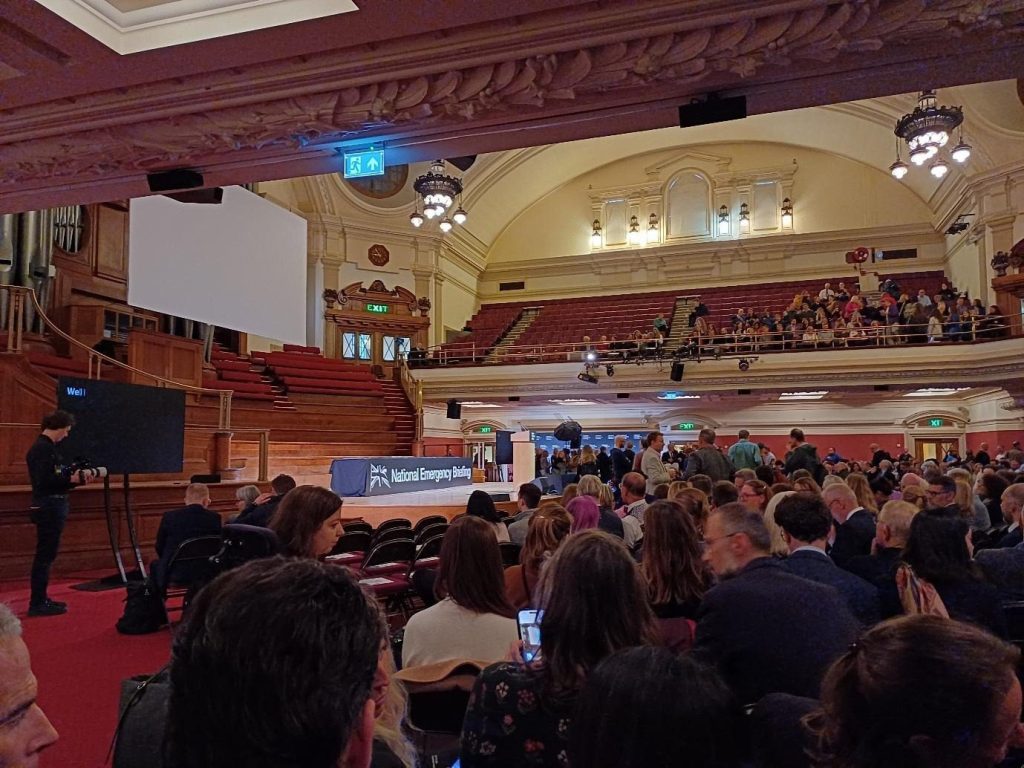
    On November 27th, last year, I was privileged to attend the National Emergency Briefing at Central Hall, Westminster. The briefing was primarily aimed at MPs and Peers but was also attended by around 2000 invited members of the public from climate campaigners to celebrities.

    The queue, when I arrived, stretched around the block but the organisers got us in efficiently and I found myself sitting next to the sustainability manager of Sainsbury’s. However, there wasn’t much time to chat as the talks started. We kicked off with an introduction from Chris Packham and a preview of what to expect from the main meeting organiser, Pofessor Mike Berners-Lee of “How Bad are Bananas?” fame. Then we were into the main part of the meeting, a series of 15 minute talks from some of the UK’s most eminent experts on the impacts of climate change from Health, to National Security and Economics as well as several talks on the science of climate itself.

    I’ve waited until now, to write this blog, because I didn’t want to be writing a long boring description of each talk. Instead, the talks are now all available on-line for you to watch for yourself. Go to https://www.nebriefing.org/ and select each of the talks under “Expert Briefings”. I really can’t recommend these talks highly enough.

    The main message I took away from the meeting is perhaps summed up by a sentence from Lt Gen Richard Nugee’s talk on National Security. In that context he stated that “the threat position is changing faster than expected”. This is true of all the aspects covered by the speakers.

    Another reason for wanting you to go to the NEB website itself is that you can then sign the open letter to Keir Starmer calling for a televised emergency briefing. Please all sign up.

  • How to respond to spouters of ‘Net Zero stupid’

    The Citizens’ Climate Lobby is all about solutions. It’s about how society can make the changes needed, to avoid climate catastrophe, as rapidly and equitably as possible. Our starting point is that global warming is real, dangerous and caused by humans.

    This approach made a lot of sense until recently. There was broad political consensus that climate change was a serious issue and that the UK should aim to get its net emissions down to zero by 2050. Our politicians were proud to be world-leaders in this endeavour.

    Unfortunately, that has changed. We now have anti-science politicians in the UK, and elsewhere, who openly dispute the need for net-zero. Instead, they champion a cynical philosophy in which every country pursues its own, blinkered self-interest even though this is a proven route to a poorer world for everyone.

    As the impacts of climate change become ever more obvious, these short-sighted politicians will change their direction when it suits them to do so. But, in the meantime, when discussing CCL-UK policies we may find ourselves increasingly encountering push-back on whether greenhouse gas emission reductions are necessary at all.

    The problem is anti-net-zero soundbites that have been well crafted to sound plausible even though they disintegrate on closer inspection. Examples I’ve heard, recently, from senior politicians include “2050 is an arbitrary target” and “We can’t afford net-zero”.

    To counter these. I’ve set up a new website (netstupidzero.org) that takes these soundbites and explains, in simple terms, why they’re misleading. You may notice that the site name, itself, is a direct quote from the Reform Party’s Richard Tice who is, perhaps, the most prominent promoter, in the UK, of anti-science disinformation.

    In my website I’ve tried to use common-sense rather than go into detailed scientific explanations. My aim is just to make it easy for anyone to counter anti-net-zero propaganda whenever and wherever it’s used. I hope you find it illuminating and useful.

  • Why Labour is right to stop future UK oil and gas development

    Why Labour is right to stop future UK oil and gas development

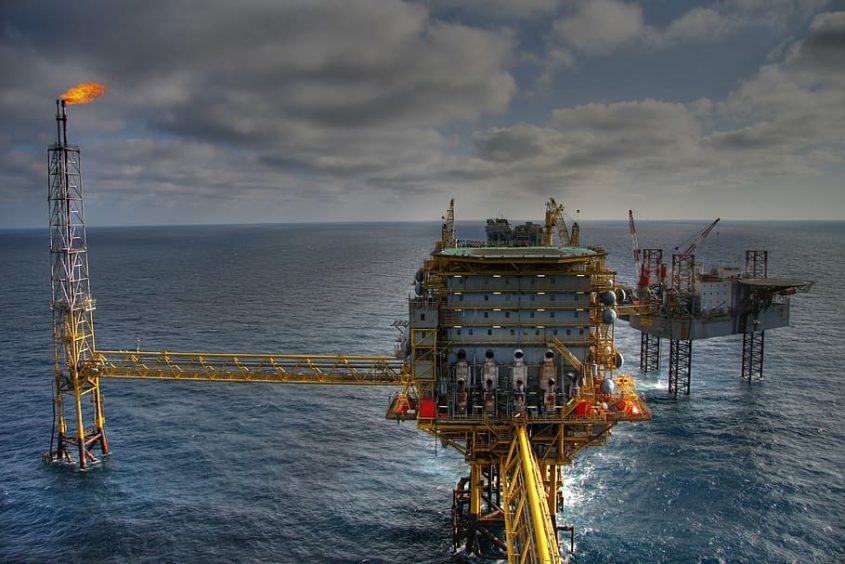
    The Labour Party has announced that it intends to stop the development of any new oil and gas fields in UK territory if it forms the next government.

    The move will have far-reaching consequences, leading to a rapid contraction of the UK’s oil and gas industry over the next decade. So it’s no surprise that much of the reaction from newspapers, businesses and trade unions has been very negative. The current prime minister, Rishi Sunak, has gone so far as to call Labour’s proposed policy “bizarre” and the product of “eco-zealots”.

    But Labour is currently well ahead in the polls, and with an election due by early 2025, there’s a real possibility that banning further fossil fuel development could become official UK government policy within the next two years.

    So, it’s important to know if Sunak is right. Is Labour’s vow to halt new oil and gas fields ill-advised and even “bizarre”?

    In fact, according to my calculations, burning all the UK’s existing oil and gas reserves will already produce more than the UK’s fair share of greenhouse gas emissions under the 2015 Paris Climate Agreement – so suggesting we look for more seems bizarre to me.

    It only makes sense if the people making such decisions have no intention of sticking to the UK’s international obligations to tackle climate change.

    Limiting temperature rise

    Under the Paris Agreement, nearly every country in the world is legally obliged to prevent dangerous climate change. Signatories are committed to pursuing efforts to limit global heating to 1.5℃ above pre-industrial levels.

    Recent estimates suggest that in order to meet this target, we must emit no more than the equivalent of 250 billion tonnes (250 gigatonnes) of CO₂ globally. To put this in context, we’ve already emitted 1,500 gigatonnes of CO₂ since the industrial revolution, meaning about 86% of all the emissions we can get away with have already been released into the atmosphere.

    The consequences of exceeding 1.5℃ of global warming will be severe. Temperatures have already risen 1.2℃ above pre-industrial times, and at this level of heating, we are seeing increasingly frequent and intense heat, precipitation, droughts, hurricanes and glacier loss. So, even 1.5℃ of global warming may be too much.

    Emissions from existing reserves

    If the global budget of emissions for keeping temperature rise below 1.5℃ is shared equally across the world’s population, then the UK should contribute no more than 2.5 gigatonnes. Yet 43% of our emissions are “embedded”, meaning they are produced when the goods we buy are manufactured abroad. Our domestic emissions should therefore be no more than the remaining 57% – that’s just 1.4 gigatonnes.

    How does this stack up against the future emissions from the UK’s oil and gas reserves?

    The UK government’s own estimate of reserves (oil and gas remaining in existing fields and likely developments of them) is around 4 billion barrels. A barrel is the oil industry’s rather odd way to measure volume (it equates to about 160 litres). Setting fire to a barrel of oil releases roughly 430 kg of CO₂ into the atmosphere.

    Taking this figure into account, 1.7 gigatonnes of CO₂ would be released into the atmosphere if all of the UK’s reserves were extracted and burned. That’s 300,000 tonnes more than the UK’s remaining emissions budget.

    Stop fossil fuel exploration

    The message is clear: in the UK, we cannot safely burn all of the oil and gas reserves we already have. So, it make no sense to invest money and jeopardise our collective futures by developing new fields.

    Doing so will result in two unfavourable scenarios. Either we will be left with hydrocarbons that we cannot sell as the world transitions to alternative energy sources, or we will burn it anyway and disregard the climate consequences.

    That’s why, in my opinion, it’s “bizarre” to develop new fields. And I’m someone who has spent 40 years working in or with the hydrocarbon exploration industry. Simple arithmetic tells us we have to stop, but it’s arithmetic that many of our political leaders have yet to grasp.

    The same is true on a global scale. The world’s oil reserves are still going up because, every year, we find more oil than we use.

    The latest estimate of global reserves stands at 1,757 billion barrels. Following the same calculations as before, these reserves would generate the equivalent of 760 gigatonnes of CO₂ when burned. That’s three times the world’s safe emissions limit.

    If released, these CO₂ emissions would take global temperatures over 2℃ above the pre-industrial level – a clear breach of the Paris agreement.

    I’m not the first person to point this out. In fact, the International Energy Agency (a multi-government organisation set up in 1974 to promote the security of oil supplies) stated last year that “there is no need for investment in new fossil fuel supply in our net zero pathway”.

    If the International Energy Agency says we should stop developing new fields, then perhaps we should listen. Several nations, including Denmark, Ireland, France and Costa Rica, paid attention and have announced they will discourage continued investment in increasing the production of oil and natural gas. It’s time the UK joined them.

    This article is republished from The Conversation under a Creative Commons license. Read the original article.
  • Time to Push BCAs?

    Time to Push BCAs?

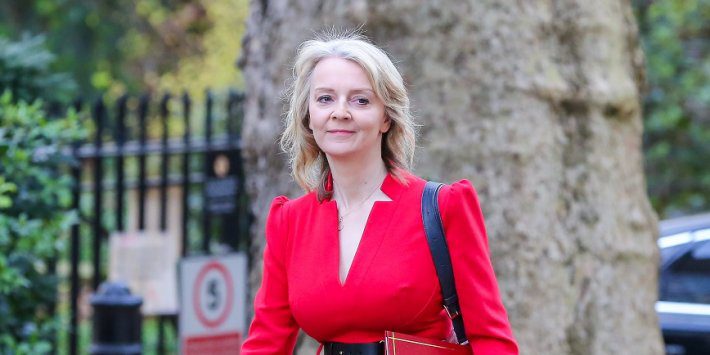
    BCAs are currently quite a hot topic. The Sun recently reported that UK Secretary of State for International Trade (Liz Truss) will promote them at the G7 meeting in June. BCAs are also a key component of the EU’s “Green New Deal” and may well be introduced by the EU from the start of 2023.

    So, perhaps this is the moment for us to promote one specific component of a carbon-fee and dividend scheme. Perhaps the time has come for a big push for BCAs. We could start by writing to our MPs to suggest they ask Liz Truss to engage with the free-allocations consultation. She may not even be aware of it and may not have yet made the link between BCAs and ETS free-allocations. Something like:

    Dear XXX

    As a constituent deeply concerned about climate change, I was delighted to see that our International Trade Secretary (Liz Truss) has become interested in Border Carbon Adjustments (BCAs, as reported by The Sun on March 30th). Could you possibly ask the Trade Secretary, on my behalf, if she is aware of the current Government Consultation on free allocations in the UK-ETS? Could you also ask her whether discussions within BEIS have looked at the option of phasing out free-allocations and replacing them by BCAs?

    Yours sincerely

    Further information on BCAs:

    Canada Laser talk on Border Carbon Adjustments (BCA)

    Current Developments in Domestic Climate Mitigation Measures (by WTO) – downloads powerpoint presentation

    BCAs – powerful if combined with just transition, article by OECD

    BCAs in the EU – report by European Roundtable on Climate Change and Sustainable Transition

    Article by Centre for Strategic and International Studies

  • CCL-UK Launches Helpdesk

    CCL-UK Launches Helpdesk

    Photo by Alex Kotliarskyi on Unsplash

    It takes courage to write a letter to your MP (or any of the many other people we lobby in CCL) and we’re incredibly proud of all of those members who have done so. Every letter makes a difference!

    But once you’ve made that first contact you may find, as many members have, that the reply is a standard letter that ignores your key points or is jargon-filled and almost incomprehensible. What do you do next?

    The temptation is to give up and move on; life is too short for “wading through treacle”. However, as many members have again seen for themselves, this can be the critical moment—an opportunity to clinch true engagement. Most correspondents do give up at this point and so you will stand out if you persist.

    However, we know that this next step is daunting and that’s why we’ve created a helpdesk, an email account you can contact if you’ve had a reply and you’re not sure how to respond. It’s not quite as fancy as the picture above (it’s just three of us working from home) but we’ll do what we can to help. Just email us (if that link doesn’t start your email, right click on it and copy the address manually into an email). Attach any reply that you’ve had. We’ll get back to you and see if we can help find a constructive and respectful, yet incisive, way to take your correspondence to the next stage.

  • Jim Hansen’s Letter to the PM

    I hope many of you caught the news of top climate scientist, Jim Hansen, and his letter to Boris. I’m reposting it in this blog with Jim’s permission but without further comment except to say that much of the, unreported, segment concerns carbon fee and dividend with CCL-UK being recommended as Boris’s next port of call!

  • Good COP, Bad COP?

    COP26 Logo

    My confident prediction (for the up-coming climate conference, COP26) is that at least one national paper will use the above headline on the last day of the conference on Nov 12th.  If the final outcome is a bit of a fudge then maybe we’ll also get “COP out” whilst, if things go badly, we may end up with “not much COP”.  The Sun will, of course, go with “COP off” regardless of what happens.

    Hopefully, though, COP26 will see the world’s nations providing updated NDCs (their plans for emissions reductions over coming decades) and a clear agreement on how to monitor progress. So good COP, I hope!

    From CCL’s point of view the real work will start after that. Our flagship policy, of carbon fee and dividend (CF&D), is the most economically-efficient way for nations to achieve their NDC-objectives in a just and equitable way. I think our mission, over the months leading up to COP26, should be to try and get CF&D onto the agenda as the tool for turning good-COP-intentions into significant climate progress.

    So how do we do that?

    We need to be there and we need to prepare the ground. CCL will be there in the shape of Citizens Climate Education which has recognized observer status and should allow, perhaps, 5-10 CCL members from around the world to go. In addition, I’ve contacted the Cabinet Office (who are running the UK organization of COP) to request that we are given additional access as a UK-based NGO. I’ll let you all know if/when I hear anything.

    Our Glasgow-based members can also attend as volunteers. Go to https://ukcop26.org/the-conference/get-involved/ and take a look. This is an excellent way to get a few more CCL members involved and a great opportunity to be part of an historically important event.

    To prepare the ground, it will help to have a clear, simple “ask”—a short statement of what we’re looking for. What we’re looking for, of course, is widespread adoption of CF&D but, as I’m sure many of you have found out, getting across all the finer points of this policy is not straight-forward. Can we engage with others better by asking something simpler? Something like “can we make it cheaper to not pollute than it is to pollute?”

    I’m sure many of you won’t like that; it cuts out too much of what matters to us. But we have hundreds of members and I’m certain than someone out there can do better. So, I’d like to kick off COP-preparation with a competition. Send suggestions of what our “ask” should be. Just write it in the comment box below. If you can do that by Feb 15th that would be great. I’ll then read out the best ones at our next national meeting on Feb 16th.

  • The Zero-Carbon Commission

    The Zero-Carbon Commission

    The Zero Carbon Campaign (ZCC) is about as different from CCL as two organisations, with similar aims and acronyms, can get. Both organisations campaign for carbon pricing and both organisations have concluded that a carbon-dividend is vital to ensure fairness and effectiveness. But CCL is a grass-roots band of citizens whilst ZCC was set up by the founder of OVO Energy and is a commission of experts (including a former chair of the Climate Change Committee and the current executive director of Greenpeace UK). This is not a criticism of ZCC; there’s strength in diversity.

    In September 2020, ZCC published its “White Paper”—a report on How Carbon Pricing Can Help Britain Achieve Net Zero By 2050. There’s much in there for CCL to cheer including a call for the UK government to announce “a clear carbon-price trajectory”, to use the proceeds to “cushion rises in household bills” and to “investigate options for a multilateral border carbon adjustment”.

    ZCC is not advocating 100% revenue recycling into a dividend, as CCL does, but this should not stop us making common cause with an organisation whose aims have far more similarities than differences with our own. The publication of the White Paper is also an opportunity for us to publicise “climate income” and CCL-UK as an advocate for that policy.

    So what happens next? ZCC are asking the public (and organisations) to sign their declaration and to lobby MPs (sounds familiar!) They’re also planning a media campaign to pressure the government to adopt carbon pricing ahead of COP-26 in Glasgow. This will be centred around a “mock COP” to run in the second week of November this year, i.e. a year ahead of the real COP. These are all things we, in CCL, would support or are already doing.

    I’ve been asked, by CCL’s steering group, to keep an eye on developments and to involve CCL where appropriate. I’ll try to keep you all up to date and please feel free to contact me, through the comments below, if you want to be involved too.

  • Car Park Fee and Dividend

    Car Park Fee and Dividend

    CCL’s policy of carbon fee and dividend1 is designed to operate at a national level. Fees are levied when fossil fuels are extracted or imported into a nation and the revenue is distributed as an equal income to all citizens of the same country. But there’s a need for climate action at other levels too. CCL should be just as relevant in the personal, workplace, local government and international arenas. We should be offering solutions in these areas that are as beautiful and effective as fee-and-dividend at the national level.

    But, at first sight, fee-and-dividend doesn’t translate easily to other levels. Or does it? I think we can even apply it to running a local car park.

    I’ve been thinking about the University where I work and what we are doing about the Climate Crisis. Sadly, the answer is “almost nothing” but that’s starting to change. In fact, I’ve been asked to give a talk there about CCL and that got me thinking. Could we introduce a fee-and-dividend scheme for car parking to encourage staff and students to use public transport? The idea is simple, a fee for car-parking is introduced but, instead of the University keeping the money, it redistributes the income as a flat-fee to staff and students. The beauty of this is that you can set a high parking fee, to ensure a strong incentive to walk/cycle/catch the bus, without actually penalizing people very much (because the dividend would offset the full cost).

    There are a few details to work on. The scheme would probably need to be split into three separate parts, one for staff, one for students who live off campus and one for students who live on campus. This would recognize that the car-parking needs of these three groups are quite different. There are also tax-implications for staff who get a net-payment (students could just get a discount on their fees). But these are minor issues that I believe could be overcome.

    The same idea might also work for councils but it’s a bit trickier in that context. Parking price-hikes in return for council-tax rebates would penalize those not living in town centres and it would also drive even more of us away from the high streets. Perhaps this could only work if done in conjunction with introduction of greatly improved public transport. Still, it’s worth thinking about.

    At the international level, too, there is scope for fee-and-dividend approaches. The recent COP meeting in Madrid largely failed because of arguments over which countries should pay into a mitigation-fund and which should benefit from it. The answer could be that everyone should pay in and everyone should get payments out. For example, if we set a carbon price of $10 per tonne of CO2(eq), that would produce a dividend of about $65 per person. The UK, for example, would then pay in about $5 billion but get back a refund of $4.35 billion.

    The beauty of this is that, as with my car-parking example, incentives are magnified by the imposition of a relatively high fee whilst keeping the true cost relatively small because of the refund. Perhaps the fee-and-dividend approach to carbon pricing can be used across a wider range of applications than we’ve generally considered. It’s certainly worth thinking about.

    1. Sorry, I’m not calling it “Climate Income” here but only because my title wouldn’t work if I did.

  • The Climate Priorities of Danny Kruger

    The Climate Priorities of Danny Kruger

    The following was first published in Marlborough News Online and is effectively an open letter to the newly elected MP for the Devizes Constituency (which includes Marlborough).

    The election is over and, given its large majority in parliament, we’re likely to have a Conservative government for the next 5 years. At the same time, serious action on climate change needs to be taken within years, rather than decades, and so we must encourage the current government to take all the necessary steps. We don’t have the luxury of waiting for another government if you happen to not like the Boris Johnson one.

    I was therefore delighted when Danny Kruger dedicated his first blog, as our new Conservative MP, to the issue of climate change. I was also happy with his emphasis on the important role that innovation and free-market economics could play. There’s a Climate Crisis and we must throw everything we have at the problem.

    However, at the moment, you can make money from aggravating climate change (e.g. by finding oil) but you cannot make money from tackling climate change (e.g. by burying carbon dioxide underground). And guess what, our businesses therefore drive climate change because they’d go bust if they did anything else.

    So the markets themselves need to be changed and that can only be done through government policy. If it costs more money to pollute than it does to take climate action then climate action will follow. It’s therefore about taxing “bads” rather than “goods” but such taxes will have to be imposed in a way that does not hit the least well-off in our society. This is not difficult, as my previous column on returning climate-tax revenues to the population as a Climate Income discusses. It was great to see the Telegraph promoting this idea, too, in an article it published on Boxing Day.

    I’m also with Danny Kruger when he states, in his blog, that appropriate grazing methods can reduce (but not eliminate) the climate impact of livestock. But I disagree with his suggestion that grass-fed herds are the solution. To enhance burial of carbon in soils you need to use more radical approaches such as mob-grazing (cycling large herds through a number of small fields) and silvopasture (mixing grasslands, trees and livestock).

    I’ve got one final point of agreement with Danny but, this time, it’s somewhat reluctant. It concerns a comment he made at one of the hustings, leading up to the election, when he said he disliked the term “Climate Emergency”. This earned hisses from the audience but “emergency” is defined, in most dictionaries, as a situation which is both dangerous and unexpected. Climate change is not unexpected. Scientists have been accurately predicting the consequences of increased greenhouse gas levels since the 1890s (that’s not a typo). Perhaps “Climate Crisis” is a better phrase—“Crisis” is defined as a time of intense difficulty or danger. I think that describes the situation nicely.

    First Published in Marlborough News Online